


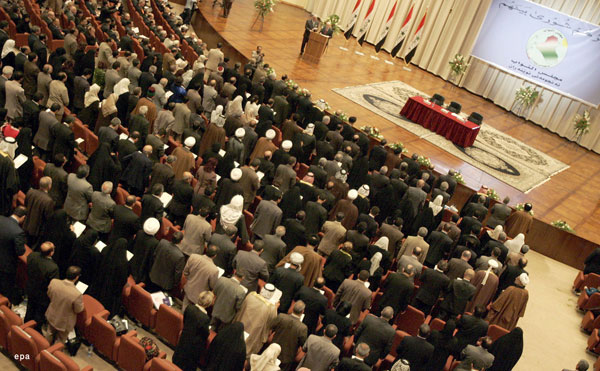
In contrast, a high school teacher or a doctor in a public hospital each earns about $650 a month. A Baghdad taxi driver can make up to $700 in a good month. In the government - Iraq's biggest employer - a mid-level employee's basic salary rarely exceeds $600.
Lawmakers justify high salaries and benefits saying they risk their lives participating in the political process.
"We are exposed to violent incidents in our houses, on the streets, and even in the parliament," said Sheik Haidar al-Jorani, a Basra lawmaker with the prime minister's State of Law party. He said he had to repair his family home in Basra after it was damaged by a nearby bomb blast.
Moving around the country safely and frequent trips abroad cost money, as do the formal receptions and parties lawmakers are expected to hold, he added.
But many Iraqis feel parliament members just want their posts out of greed, not an urge to serve the country.
The disconnect in pay makes lower-level government employees feel justified in taking bribes, said Judge Raheem Hassan al-Uqailee, president of the independent Commission of Integrity, which fights government corruption.
[...] chronic fraud waste and abuse within the Pentagon or how the current administration has helped Iraqi politicians perpetuate a culture of cronyism? You all know our taxes paid for these people to run a dishonest [...]
[...] reported recently on the excessive salaries and expenses being drawn by Iraq’s parliamentarians — it now seems the country has run out of money [...]