


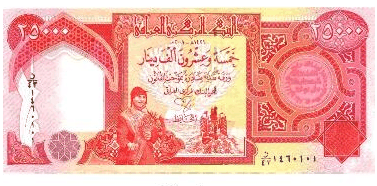
NIQASH met up with a number of people who’ve been doing this kind of bogus banking regularly. “The visa stamps on our passports are forged,” one of them told NIQASH. “The exchange shops stamp the visas on our passports so that we can show it to the bank employees in order to convince them that we are travelling abroad.”
Some of the queue-standers said the bank employees had been catching on. Some were distrustful, others demanded a cut of the profits before they would do the exchange.
As a result of all of the above, there have been plenty of criticisms made of the way the Iraqi Central Bank and the Iraqi government are handing the currency crisis.
Sadrist MP Jawad al-Shuhaili, a member of the Iraqi parliament’s integrity committee, told NIQASH that the dinar’s decline could be traced back to the removal of the former Central Bank governor, Sinan al-Shabibi. Al-Shabibi, who is generally seen to have revitalised the Central Bank after 2003, tightened up several fiscal procedures that meant smuggling money from Iraq to Iran became much harder; eventually he had an arrest warrant issued against him.
Al-Shabibi was replaced by former Minister for Human Rights, Abdel Basset Turki. And now, al-Shabibi says, “the new administration of the bank is unable to control the dollar smuggling operations”.
The integrity committee is looking into Turki’s supervision of the Central Bank, al-Shabibi said. “Initial reports indicate that the monetary policies of the central bank are not very effective and that there are corrupt officials there who must be held accountable for the country’s ineffective monitory policies,” he said.
MP Majda al-Tamimi, a member of the parliamentary finance committee, says she expects the Iraqi dinar to decline further – and not just because of the black market exchange rates. It’s a systemic problem, she says. “There is no cooperation between the state institutions,” al-Tamimi explains. “And there’s no real supervision of ministries importing products from outside Iraq, such as the ministries of health and trade.”
However it’s also obvious there are no easy solutions to these problems. “The government should reconsider its fiscal policy and it should enact financial reforms for the banking and investment sectors,” economist Basem Antoine gives NIQASH a long to-do list for the Iraqi dinar’s recovery. “It needs to enhance the role of the private sector and fight administrative and financial corruption.”
Abdel Basit Turki needs to resign as the list of his embarrasing mistakes is getting longer by the day.
I really miss Governor Sinan Al-Shabibi's administration as the dinar remained stable during the 2006-2007 sectarian strife, remained stable when the Syrian civil war broke up and when the sanctions on Iran were fully imposed. The impact of these events were minimized on the iraqi citizen.
Abdel Basit Turki has been in charge since last october and the result is Dodgy Dinar, Fake Passports in Bogus Banking, and a Currency Crisis
Simply put, having two monetary systems is the problem. Iraq should look around and learn from the neighoring systems. Lebanon is only the country that allows a dual monetary system, and look at the fate of its currency. Iraq should stop the dual system, banks should stop being exchange shops, and exhcnages should apply official rate for USD/IQD until the rate is fully flaoted. Banks should only accept and dispense Iraqi Dinars, while depositors can have accounts in any foreign currency they prefer. Another thing, the government should stop runing commercial banks. Al Rafidain, Al Rasheed, TBI and the other smaller state owned banks should be valued and sold to public and listed on the stock exhcnage or shut dissolved if their business plan prove uneconomic. Private sector is always more efficient when it comes to managing and corruption will be hugely reduced.