


By John Lee.
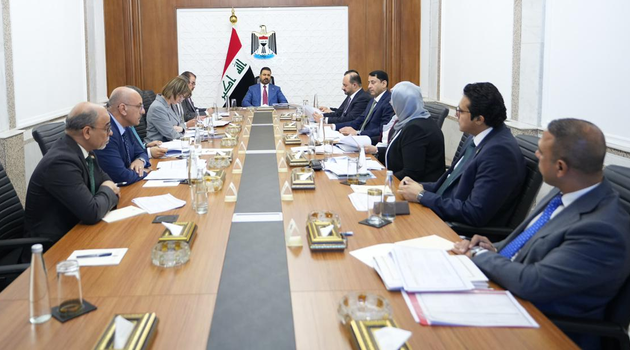
Iraq's Supreme Population Council has held its first session, chaired by Prime Minister Ali al-Zaidi, with ministers of education, labour, water resources, youth and sport, and environment in attendance, along with the Secretary-General of the Council of Ministers and the head of the Kurdistan Regional Government representation in Baghdad.
According to the Prime Minister's Office, the session covered resolutions from the seventh regular session of the Arab Council for Population and Development, held in Baghdad, as well as a review of implementation progress by the National Committee for Population Policies.
The council issued the following recommendations:
- Commission a study to evaluate the national strategy for family planning and birth spacing, and support programmes to reduce unmet family planning needs by 2030.
- Expand the number of health centres offering family planning services, particularly in rural and remote areas, to help reduce maternal mortality rates.
- Adopt a national programme to strengthen neonatal care services in government health facilities, with the aim of reducing infant mortality by 2030.
- Raise the loan ceiling for women provided by the Ministry of Labour and Social Affairs, simplify application procedures, and explore establishing a small enterprise support fund for women in coordination with the National Women's Authority.
- Adopt the results of the 2024 General Population and Housing Census as the primary database for planning, and require all sectoral ministries to update their strategic plans using the census data.
- Establish a permanent higher committee, chaired by the Ministry of Planning, to manage demographic transition, monitor age structure and urban growth indicators, and submit annual reports to the Supreme Population Council.
(Source: Prime Minister's Office)

No comments yet.