


By Bassam Raad, for the Al-Bayan Center for Planning and Studies. Any opinions expressed are those of the author(s), and do not necessarily reflect the views of Iraq Business News.
The Development of Exchange Rate Policy in Iraq between 2020 and 2026
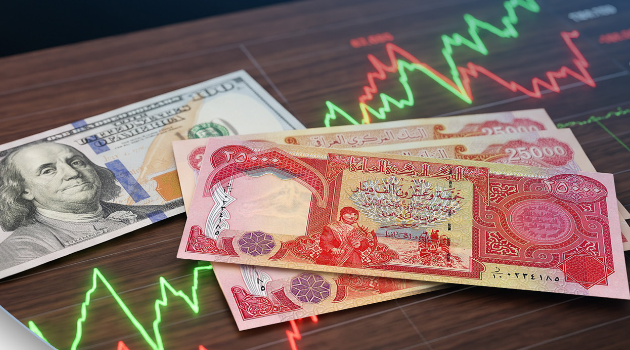
Exchange rate policy is one of the fundamental pillars of macroeconomic stability, but how well it performs depends on how diversified the productive base is and on the structure of the domestic economy. In Iraq's case, the Central Bank of Iraq (CBI) operates a conventional fixed exchange rate regime, pegged to the US dollar, as a nominal monetary anchor to contain inflationary expectations and protect the purchasing power of the dinar. However, this regime operates in an exposed environment characterised by what is known as Fiscal-Oil Dominance.
This dominance takes the form of the Iraqi economy's excessive dependence on oil, which accounts for more than 90 percent of public revenue and is the main source of foreign currency inflows. Within this structure, liquidity is generated through the Ministry of Finance's monopoly over the dollar revenues from oil exports. The Ministry exchanges these with the Central Bank to be "monetised" into local currency in order to cover public expenditure, particularly current spending.
This structural arrangement produces a severe distortion in the function of the exchange rate. Rather than serving as a tool to promote productive competitiveness or correct balance of payments imbalances, as the international economic literature assumes, it is reduced to a lagging accounting and financing function: converting dollar oil revenues into dinar liquidity to meet budget obligations. As a result, monetary policy has become a variable dependent on public finances and their growing financing needs, instead of an independent authority managing the money supply flexibly.
In addition, this mechanism has created an exclusive, monopolistic foreign exchange market in which the Central Bank is the sole supplier of foreign currency to the private sector. The Central Bank is constantly forced to use its international reserves as administrative tools to defend a relatively overvalued exchange rate, in the absence of a domestic productive base capable of import substitution. This contradiction, between an expansionary fiscal policy that raises current spending and demand for imported goods on one side, and a monetary policy that tries to hold the rate steady and curb inflation on the other, leads to a continual drain on dollar resources. It also generates successive inflationary and structural pressures that weigh heavily on the domestic economy.
Click here to read the full article [Arabic].
To browse our comprehensive library of reports on Iraq, click here.



No comments yet.