


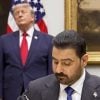
10 Key Takeaways from PM Al-Zaidi's Washington Visit
Posted on 21 July 2026 .
By Guest Blogger. Any opinions expressed are those of the author(s), and do not necessarily reflect the views of Iraq Business News.
1. A historic volume of agreements - 48 in total
A total of 48 agreements, memoranda of understanding, cooperation agreements and partnership declarations were signed between public and private sector entities in Iraq and the United States during the five-day visit. In total, Iraq's initial agreements with US firms, spanning the energy, healthcare and technology sectors, are worth more than $60 billion.
2. Major oil and energy companies ink deals
The agreements include cooperation and partnerships involving the Iraqi ministries of oil and electricity with ExxonMobil, KBR, GE Vernova, Shell and Halliburton. Chevron also signed two additional agreements with Iraq focused on boosting oil production.
3. Iraq-Syria crude oil pipeline to be revived
Iraq and Syria signed a cooperation agreement to reconstruct the long-defunct Iraq-Syria oil pipeline, which runs from the oil-rich Kirkuk region in northern Iraq to Syria's Mediterranean port of Banias [Baniyas]. Iraq's state news agency reported that Chevron would carry out the project. The US Department of State welcomed the plan, stating that upon rehabilitation the pipeline would have an initial transport capacity of two million barrels per day.
4. Pipeline deal framed as making Hormuz "an afterthought"
US ambassador to Türkiye Tom Barrack said Iraq's latest oil pipeline agreements would lead to a programme "that will make the Strait of Hormuz an afterthought." The deals come as Baghdad seeks to move away from dependence on the Strait of Hormuz, where shipping and oil exports have been heavily disrupted due to the US-Israel war against Iran.
5. Starlink deal for satellite internet services
Iraq signed a deal with Starlink to introduce services to the country. This forms part of a broader push to attract US companies across the technology sector.
6. Oil production ambitions front and center
Al-Zaidi said Iraq seeks to increase oil production to seven million barrels per day over the next three years, up from its current output of about 4.5 million bpd. A sovereign wealth fund structured around oil exports was also discussed as a vehicle for funding future development.
7. US companies given priority across key sectors
Al-Zaidi's government said it would prioritise US companies in energy, communications, technology and development projects, with the prime minister stating his goal is to move bilateral relations "from a phase of security cooperation to a sustainable economic partnership."
8. Deals signed at a US-Iraq Business Summit
The preliminary deals were signed at a US-Iraq business summit at the US Chamber of Commerce in Washington. Al-Zaidi told attendees: "We are using an open-door policy. Everybody who has a project can come and talk to us. We will not make it difficult for anyone."
9. Corruption crackdown cited as a confidence-builder for investors
Al-Zaidi has launched a corruption crackdown, with raids yielding millions of dollars in seized assets, a signal intended to reassure US partners that Baghdad is serious about improving the business environment.
10. Strategic shift from security to economic partnership
Al-Zaidi said discussions with Trump focused on strengthening bilateral relations, expanding economic cooperation and creating opportunities for American companies to participate in development projects in Iraq, particularly in the energy sector, stressing the importance of building commercial ties rather than focusing solely on military cooperation.
Posted in Investment, Iraq Banking & Finance News, Iraq Industry & Trade News, Iraq Oil & Gas News, Politics, Security 1 Comment

Iraqi PM in Washington: What His Trip Actually Means for the Dinar
Posted on 15 July 2026 .
By Guest Blogger. Any opinions expressed are those of the author(s), and do not necessarily reflect the views of Iraq Business News.
Ali al-Zaidi in Washington: What His Trip Actually Means for the Dinar
The forums have been buzzing. Iraq's prime minister is in Washington. He met Trump in the Oval Office. There were handshakes, warm words, and promises of deals. For the segment of dinar holders who treat every piece of Iraqi news as a potential trigger for the long-awaited revaluation, this week's visit looked like exactly the kind of high-level momentum they have been waiting for.
So let's look at what actually happened, what it means, and what it doesn't.
What al-Zaidi Was There to Discuss
Trump and al-Zaidi met at the White House on Tuesday, with both leaders pledging to deepen economic ties and boost Iraq's oil output. The visit was al-Zaidi's first international trip since taking office in May, and the agenda was clear well before the handshakes. Oil and gas agreements were expected to be signed, with US companies set to boost Iraq's production capacity and reduce reliance on the Strait of Hormuz.
Al-Zaidi was expected to sign several agreements, including a deal to establish a fund into which Iraq will deposit half a million barrels of oil per day in exchange for the US helping to boost the country's electricity supply. In a show of support for al-Zaidi's administration, the US also resumed cash shipments for Iraq's oil revenue, which have been handled by the Federal Reserve Bank of New York since 2003.
Trump's framing was characteristically direct. He said "massive" new oil deals with Iraq would be announced soon, adding: "Iraq has tremendous potential because of their oil and because of other things. We're going to create a lot of jobs for both countries, and we're going to be taking out a lot of oil. A lot of oil is coming out, and the American companies are doing it."
Al-Zaidi, for his part, described a shift in the relationship's character. He said: "On the 30th of September, the US forces will be out of Iraq, while these companies will be inside Iraq. The social relations is about like economy, it's not about like military relations."
The Security Dimension
The visit was not only about oil. The disarming of pro-Iran Iraqi armed factions and restricting weapons under state authority, as well as Baghdad's relationship with Tehran, were expected to be among the issues the US side would raise. Al-Zaidi has set a September 30, 2026 deadline for all armed factions to disarm, which aligns with the withdrawal of the international coalition's military troops.
That deadline is significant, and not only for security reasons. Washington's willingness to resume dollar shipments to Iraq, and to deepen the oil investment relationship, is directly connected to Baghdad's progress on militia disarmament. The Trump administration has issued sanctions on Iran-backed militias, including Kata'ib Hizballah and Asa'ib Ahl Al-Haqq. The economic partnership being discussed this week is inseparable from the political conditions the US expects Baghdad to meet.
Shortly before al-Zaidi's departure, the Islamic Resistance in Iraq, an umbrella group of Iran-backed armed groups, rejected the prime minister's visit and its outcomes. That rejection is a reminder that the September disarmament deadline is an aspiration, not a settled outcome.
What the Dinar Forums Are Saying - and Why They're Wrong
Predictably, parts of the dinar speculation community have interpreted this week's visit as a bullish signal. A US-backed prime minister, Oval Office optics, Trump talking about "massive deals" - for those primed to read every development as a precursor to revaluation, the ingredients are all there.
They are not.
Nothing discussed in Washington this week has any bearing on the exchange rate of the Iraqi dinar. The agenda was oil production, electricity infrastructure, militia disarmament, and the withdrawal of US troops. The Central Bank of Iraq sets exchange rate policy, not the prime minister, and not the White House. As noted in our November 2025 coverage, the CBI issued a formal statement confirming there is "no intention whatsoever to amend the exchange rate of the Iraqi dinar," explicitly calling revaluation rumours "speculation aimed at disrupting the market and undermining economic stability." That statement has not been withdrawn or updated. No CBI official was in Washington this week.
The resumption of dollar cash shipments to Iraq, which some forum commentators have flagged as significant, is also being misread. The US resumed those shipments as a signal of support for al-Zaidi's administration - a diplomatic tool, not a monetary one. The dollar pipeline from the Federal Reserve Bank of New York exists to allow Iraq to pay for imports and manage its oil revenues. It is not a mechanism for dinar revaluation, and its resumption says nothing about where the IQD/USD exchange rate is headed.
What the Visit Actually Represents
Taken on its own terms, the Washington trip was a genuine diplomatic achievement for al-Zaidi. His administration has prioritised anti-corruption investigations, including "Operation Dawn," which resulted in 67 arrests and the seizure of 375 kilograms of gold. That kind of concrete action gave him something real to show Washington, and the warmth of the reception reflected it.
Al-Zaidi has said he wants to move the relationship "beyond crisis management to opportunity creation, particularly opportunities that have a measurable economic impact." That framing is credible in the context of what was actually discussed: US companies entering Iraq's oil and gas sector, electricity infrastructure investment, and a structured path toward ending the US military presence.
These are meaningful developments for Iraq's long-term economic trajectory. A more stable fiscal position, deeper US investment, and a functioning relationship with Washington are all positive for the country. None of them, individually or together, creates a mechanism by which foreign holders of physical Iraqi banknotes profit.
The Bottom Line
Al-Zaidi's Washington visit was about oil, security, and the future shape of the US-Iraq relationship. It was a successful first international trip by a prime minister who needed to demonstrate credibility in Washington, and by most accounts he achieved that. The deals being discussed - energy agreements, electricity investment, alternative export routes - are the substance of a serious bilateral relationship.
For holders of physical Iraqi dinars waiting for a life-changing revaluation, however, the calculus is unchanged. The Central Bank has not altered its position. The exchange rate was not on the agenda at the White House. Trump's enthusiasm for Iraqi oil is enthusiasm for American companies extracting and profiting from that oil - not a signal that the dinar is about to multiply in value.
The forums will find reasons to be excited. They always do. But the question worth asking, before the next intel call tells you that the Oval Office handshake was a coded signal, is a simpler one: was the word "revaluation" spoken anywhere in Washington this week?
It wasn't.
This article does not constitute financial or investment advice. If you are holding Iraqi dinars and considering your options, consult a licensed, regulated financial advisor - not an online forum.
For more information on the Iraqi dinar, check out IBN's Dinar Page.
Posted in Iraq Banking & Finance News, Iraq Industry & Trade News 2 Comments

What a New Iraqi PM means for Your Dinars
Posted on 30 April 2026 .
By Guest Blogger. Any opinions expressed are those of the author(s), and do not necessarily reflect the views of Iraq Business News.
Iraq Has a New Prime Minister. Here's What It Means for Your Dinars (Spoiler: Not What the Forums Are Saying)
After five months of political deadlock, Iraq finally has a prime minister-designate. Ali al-Zaidi, a successful 40-year-old businessman with no prior political experience, was nominated by the Coordination Framework, Iraq's largest Shiite parliamentary bloc, on April 27, 2026, breaking an impasse that had pushed the country past its constitutional deadline.
So what does this nomination actually mean for Iraq, and for those holding physical Iraqi dinars in hope of a dramatic revaluation?
Who Is Ali al-Zaidi?
According to media accounts, Al-Zaidi was born in Baghdad in 1986 into a family from the southern Dhi Qar province. He holds a master's degree in banking and finance and is a member of the Iraqi Bar Association. He has extensive business experience, owning the Taawon Hypermarket shopping centres in Baghdad, the Al Awees holding company, and the local news outlet Dijlah TV.
This is the first time in Iraq's modern history that a businessman with no previous political experience has been named prime minister, according to Nabil Al-Marsoomi, an economics professor at Basra University. That is a genuinely notable development. Iraq's post-2003 prime ministers have all been career politicians shaped, and constrained, by the country's entrenched sectarian power-sharing system. Al-Zaidi arrives without that baggage, and without those alliances.
Al-Zaidi has friendly relations with much of Iraq's political elite, including figures aligned with both Iran and the United States, and would bring a strong business background to the office. A number of Kurdish and Sunni politicians have expressed openness to supporting his bid to form a government.
His political anonymity was the asset that got him here. He arrived at the nomination without enemies, and without allies of his own. In Iraq's fractured system, that made him the path of least resistance.
See also: 4 Top Profiles of the New Iraqi PM Designate
The Banking Question That Won't Go Away
The most significant complication in al-Zaidi's background, and the one most relevant to dinar holders, involves his former role in Iraq's banking sector.
He was chairman of Al-Janoob Islamic Bank for Investment and Finance, one of eight Iraqi commercial banks banned from engaging in US dollar transactions since early 2024. The ban was imposed by the Central Bank of Iraq, reportedly at the direction of the US Treasury and Federal Reserve Bank of New York, which cited concerns over fraud, money laundering and other illegal use of US currency.
This matters because Iraq's currency stability, oil revenues, and access to dollar reserves are all ultimately dependent on its relationship with US financial institutions. A prime minister whose previous banking role was linked to an institution sanctioned for dollar smuggling, in a country where dollar smuggling to Iran has been a persistent flashpoint with Washington, faces a obvious credibility test.
That said, some important nuance is worth noting. Legal sources familiar with the issue told Al-Monitor that there are no US sanctions on either Al-Janoob Islamic Bank or Zaidi personally. The sources said that the block was "due to the risks associated with the bank's ownership," adding that an independent review found no evidence of any direct outflow of funds from the bank to malign actors. And al-Zaidi is reported to have stepped down as chairman of Al-Janoob Islamic Bank in 2019, five years before the dollar transaction ban was imposed.
The distinction matters, but it does not make the association disappear. Washington will not judge the new prime minister by his CV. It will judge him by his cabinet appointments, his relationship with Iran-backed militias, and whether Iraq's banking system is used as a conduit for sanctions evasion.
The Geopolitical Tightrope
Al-Zaidi's nomination cannot be separated from the wider regional picture, which is as difficult as it has been in years.
The Coordination Framework's decision came after a weeks-long deadlock in which former prime minister Nouri al-Maliki had been the initial candidate. His candidacy was withdrawn after US President Donald Trump threatened to withhold Iraq's access to dollars over al-Maliki's pro-Iranian stance. Al-Zaidi is, in this sense, a compromise forced partly by Washington's veto power over Iraq's financial lifelines.
The Trump administration has made clear its opposition to Iran-backed militias operating in Iraq, and the US embassy in Baghdad offered only cautious "best wishes" to al-Zaidi -- signalling engagement without explicit endorsement. Washington emphasised benchmarks of counter-terrorism, prosperity and sovereignty.
Meanwhile, the economic context remains challenging. The closure of the Strait of Hormuz has forced Iraq to slash crude production to around one third of its pre-conflict export level of nearly 4.3 million barrels per day, depriving OPEC's second-largest oil producer of most of its hard-currency resources. The Wall Street Journal reported that the Trump administration suspended nearly $500 million in US dollar shipments to Iraq in a bid to push Baghdad to dismantle Iran-backed armed groups.
Al-Zaidi walks into office inheriting a fiscal crisis not of his making, a regional war on his doorstep, and an impatient Washington holding significant leverage over his country's finances.
What the Dinar Forums Are Getting Wrong
Predictably, some corners of the dinar speculation community have greeted al-Zaidi's nomination as a bullish signal, a business-minded technocrat who will "finally" push through the economic reforms that lead to revaluation. Some have gone further, interpreting the end of the political deadlock as itself a precursor to the long-promised "RV."
This reading misunderstands how currency policy works at almost every level.
The Central Bank of Iraq, not the prime minister, sets exchange rate policy, and the CBI issued a formal statement as recently as November 2025 confirming there is "no intention whatsoever to amend the exchange rate of the Iraqi dinar," explicitly calling revaluation rumours "speculation aimed at disrupting the market and undermining economic stability." A new prime minister, however business-friendly, does not override that institutional position. Nor would any serious economist advise him to.
The conditions that would theoretically support a significant dinar appreciation -- diversified revenue streams, a stable and transparent banking sector, full dollar access, low inflation, strong foreign reserves, and a resolution of the militia problem -- are not things any prime minister can deliver in a 30-day cabinet formation window, or indeed within a single term. They are generational projects.
Al-Zaidi now has 30 days to construct a cabinet that satisfies Iraq's entrenched sectarian power-sharing system and secure an absolute parliamentary majority, minister by minister, without the political base that has anchored every prime minister before him. That is the reality of his immediate situation. Currency reform does not feature in it.
Is There Any Genuinely Good News Here?
Yes, and it is worth acknowledging. A business-oriented prime minister with cross-sectarian acceptability and no obvious factional debts is, on paper, a better starting point for economic governance than a return to Maliki-era political entrenchment. Al-Zaidi promised to focus on making Iraq "a balanced country, regionally and internationally," and multiple senior political figures across sectarian lines have expressed support for his nomination.
His CV touts a "comprehensive national vision, focused on strong institutions, productive economy, modern education and international partnerships." These are the right words. Whether he can act on them within a system specifically designed to resist economic reform by distributing spoils among political factions is an entirely different question, and one that Iraq-watchers have been asking about every new government since 2003.
Iraq is a country with huge potential. It has real oil wealth, a young population, and a private sector that has demonstrated resilience through extraordinary adversity. None of that is in dispute. But a country with a promising new prime minister is not the same thing as a country on the verge of a currency revaluation, and the dinar promotion industry's habit of treating every political development as a stepping stone to the "RV" does its followers no favours.
The Bottom Line
Ali al-Zaidi's nomination is genuinely interesting news for Iraq. It ends a damaging five-month paralysis, introduces a leader with real economic credentials, and crucially, was not blocked by Washington, which matters enormously for Iraq's dollar access and financial stability. These are not trivial positives.
But for holders of physical Iraqi dinars waiting for a life-changing revaluation, the calculus has not changed. The Central Bank has not changed its position. The structural barriers to a dramatic exchange rate shift remain intact. And a new prime minister, however capable, faces a 30-day deadline to form a cabinet in a system designed to reward political loyalty over economic rationality, all while managing a fiscal crisis caused by a war he had no part in starting.
The forums will find reasons to be excited. They always do. The more useful question, the one worth asking before the next "intel call", is not whether this prime minister is good for Iraq. He might well be. The question is whether anything he could plausibly do in office would turn a shoebox full of banknotes into a retirement fund.
The answer to that question has not changed.
This article does not constitute financial or investment advice. If you are holding Iraqi dinars and considering your options, consult a licensed, regulated financial advisor -- not an online forum.
For more information on the Iraqi dinar, check out IBN's Dinar Page here: https://www.iraq-businessnews.com/the-dinar-page/?swcfpc=1
See also:
"Deleting the Zeros": What Iraq Actually Said, and What It Means for Your Investment
Top 10 Dinar Articles from March
Dinar-Dollar Demand Shifts as Import Dynamics Adjust
You Bought Iraqi Dinars. Now What?
Is the Dinar Your Retirement Plan?
IQD in the Crossfire: What a Trump-Iran Conflict Could Mean for Iraq's Dinar
If Trump Strikes Iran: Mapping the Oil Disruption Scenarios
Dinar Weakness: CBI "Not Responsible"
Iraqi Banks Restricted from US Dollar Transactions: FULL LIST [Amended]
2026: The Year Iraqi Dinar Speculators Finally Strike Gold?
Posted in Investment, Iraq Banking & Finance News Comments Off on What a New Iraqi PM means for Your Dinars
"Deleting the Zeros": What Iraq Actually Said, and What It Means for Your Investment
Posted on 16 April 2026 .
By Guest Blogger. Any opinions expressed are those of the author(s), and do not necessarily reflect the views of Iraq Business News.
"Deleting the Zeros" -- What Iraq Actually Said, and What It Means for Your Investment
Few phrases in the Iraqi dinar speculation world generate more excitement than "deleting the zeros." It surfaces in forums, YouTube videos, and "guru" intel calls as a signal that something transformative is imminent -- that the Iraqi government is quietly preparing a currency reboot that will reward patient holders of physical dinars.
The problem is that this excitement rests on a fundamental misreading of what the phrase actually means, a misreading that is, in some cases, deliberately encouraged by the people selling the currency.
Here is what the record actually shows.
Two Different Things, One Deliberate Confusion
The confusion starts with terminology. "Revaluation" and "redenomination" are not interchangeable, despite being routinely treated as such in dinar promotion circles.
Revaluation, as defined by standard monetary economics, is a calculated upward adjustment to a country's official exchange rate -- the currency actually becomes worth more relative to other currencies. This is what dinar holders are hoping for: a decision by the Central Bank of Iraq (CBI) to declare that the dinar is suddenly worth, say, one US dollar instead of 0.076 cents. That would, in theory, multiply the dollar value of a dinar holding by over a thousand times.
Redenomination, by contrast, is a purely administrative process. It changes the face value printed on banknotes without changing what those notes can actually buy. As Wikipedia's entry on the subject states plainly, redenomination "is considered symbolic as it does not have any impact on a country's exchange rate in relation to other currencies." If Iraq removes three zeros, your 1,000,000 dinar note becomes a 1,000 dinar note -- but a loaf of bread that previously cost 1,000 dinars now costs 1 dinar. Nothing has changed in real terms. You have not made a penny.
What Iraq Has Actually Said
Iraq's "delete the zeros" plan has been discussed, announced, postponed, and re-discussed for well over a decade. As far back as June 2011, the Deputy Governor of the Central Bank of Iraq was explicit: "Deleting zeros from the currency of Iraq had nothing to do with the price and exchange rate." He went further: "Some imagine that the state wants to influence the price or exchange rate by deleting the zeros -- this is invalid."
That was 2011. By 2012, the project had already been pushed back to 2014, with a parliamentary committee member noting the Iraqi environment was "currently unprepared for this operation." 2014 came and went. So did every year since.
Governor Ali Al-Alaq has described it as an ongoing internal technical project. No new banknotes have been printed. No public education campaign has launched. No timeline has been announced. The Central Bank has explicitly linked any future redenomination to achieving economic stability first -- not the other way around.
Then, in November 2025, the CBI went further still. It issued a formal public statement rejecting rumours of any exchange rate change, stating there is "no intention whatsoever to amend the exchange rate of the Iraqi dinar," and explicitly calling such rumours "speculation aimed at disrupting the market and undermining economic stability." The statement added that any external claims about changing the exchange rate "do not express the Central Bank's position."
It is difficult to imagine a clearer official denial. And yet the forums continue.
What Redenomination Actually Does -- And Doesn't Do
To understand why "deleting the zeros" is not good news for foreign speculators, it helps to look at how it has worked elsewhere.
Turkey's redenomination in 2005 is the example most often cited as a success story. Turkey removed six zeros from the lira -- one million old lira became one new lira. Before the reform, a cinema ticket cost 7,500,000 lira. After, it cost 7.50. Inflation fell, the banking system modernised, and the economy strengthened. But someone holding old Turkish lira notes outside Turkey did not become wealthy. Their purchasing power was preserved, not multiplied.
Brazil's 1994 currency reform is another frequently cited case. With inflation running at over 2,000 percent, the government introduced a new currency, the Real, alongside significant fiscal tightening. The reform worked because it addressed root causes -- not because holding old notes suddenly became lucrative.
Zimbabwe, by contrast, redenominated twice in 2008, with inflation ultimately reaching 231 million percent, and eventually abandoned its currency entirely. The lesson: redenomination is a tool for accounting tidiness and psychological reset. It is not, by itself, a source of value. As a standard accounting and monetary analysis confirms: "In all cases, no legitimate income effect was recorded from the act of redenomination itself."
The "Guru" Interpretation
This is where the deliberate exploitation of the confusion becomes visible. A common claim in dinar speculation communities is that redenomination will actually benefit foreign holders of old-format notes -- that Iraq will somehow offer above-market exchange rates, or that the transition period creates a window for profit.
One forum post from as recently as April 2026 makes the argument that during redenomination, Iraqis will be forced to bring their dinars to banks to exchange for new notes, and that this somehow benefits external holders. It doesn't. A redenomination exchange is exactly that -- an exchange at the redenomination ratio, not a windfall. And as multiple official sources have confirmed, any redenomination would apply within Iraq, for Iraqis, using domestic banking infrastructure. Foreign holders of physical banknotes are not part of the plan, and there is no mechanism by which they would benefit.
Why Iraq Is Actually Discussing It
The legitimate reason Iraq keeps revisiting redenomination is straightforward and has nothing to do with enriching foreign speculators. As a senior CBI advisory panel member explained as far back as 2011, there are currently trillions of dinars in circulation represented by enormous volumes of physical banknotes of varying small denominations. This creates genuine practical problems: Iraqis making large purchases -- a car, for example -- resort to using US dollars rather than carrying bags of cash. The Central Bank wants to reduce that dollar dependency, streamline accounting across government and commerce, and modernise the payments infrastructure. Redenomination, when Iraq is ready for it, is a housekeeping measure.
The CBI's current position is that it is building the preconditions -- expanding digital payments, strengthening the legal framework, improving banking sector oversight -- before any redenomination could realistically proceed. This is sensible central banking. It has no bearing on the investment thesis being sold to dinar holders outside Iraq.
The Bottom Line
Iraq has been discussing removing zeros from its currency for at least fifteen years. Every time it has come up, the Central Bank has said the same thing: this is an administrative reform, not a revaluation, and it will not change the exchange rate. The most recent official CBI statement, issued in November 2025, went out of its way to reject even the rumour of an exchange rate change and to condemn speculation as harmful to Iraq's economic stability.
If and when Iraq eventually redenominates its currency, it will be good news for Iraqi businesses, Iraqi accounting departments, and the Iraqi banking sector. It will not be good news for people holding physical banknote bundles in other countries, waiting for a life-changing windfall.
The confusion between these two things is not accidental. It is the engine that keeps the dinar speculation industry running.
This article does not constitute financial or investment advice. If you are holding Iraqi dinars and considering your options, consult a licensed, regulated financial advisor -- not an online forum.
For more information on the Iraqi dinar, check out IBN's Dinar Page here: https://www.iraq-businessnews.com/the-dinar-page/?swcfpc=1
See also:
Top 10 Dinar Articles from March
Dinar-Dollar Demand Shifts as Import Dynamics Adjust
You Bought Iraqi Dinars. Now What?
Is the Dinar Your Retirement Plan?
IQD in the Crossfire: What a Trump-Iran Conflict Could Mean for Iraq's Dinar
If Trump Strikes Iran: Mapping the Oil Disruption Scenarios
Dinar Weakness: CBI "Not Responsible"
Iraqi Banks Restricted from US Dollar Transactions: FULL LIST [Amended]
2026: The Year Iraqi Dinar Speculators Finally Strike Gold?
Posted in Investment, Iraq Banking & Finance News Comments Off on "Deleting the Zeros": What Iraq Actually Said, and What It Means for Your Investment

You Bought Iraqi Dinars. Now What?
Posted on 26 March 2026 .
By Guest Blogger. Any opinions expressed are those of the author(s), and do not necessarily reflect the views of Iraq Business News.
You Bought Iraqi Dinars. Now What?
You made the purchase some time ago -- maybe a few years back, maybe longer. You heard the pitch: Iraq sits on some of the world's largest proven oil reserves, the dinar is trading at a fraction of what it once was, and when the country finally gets its act together, holders of today's cheap banknotes will be rewarded handsomely. So you bought. And now, with a regional war disrupting Iraqi oil exports and Baghdad struggling to pay its own civil servants, you are wondering what to do next.
This article is not going to tell you that Iraq is a basket case. It isn't. But it is going to be honest with you about what the numbers say -- and what your actual options are.
What You're Really Holding
Let's start with a basic fact that dinar dealers tend to gloss over. The Iraqi dinar is not a traded currency in any conventional sense. Major banks do not offer exchange in Iraqi dinars. The currency is only available for purchase or sale by selected brokers or money exchangers, and since no formal exchange exists for the Iraqi dinar, dealers can charge whatever they want to buy and sell it.
This matters enormously when you think about getting out, because dealers who sell IQD will only buy it back at drastically lower rates. As a concrete example, buying one million Iraqi dinars from one online platform costs $1,220 -- but selling one million dinars back to the same platform returns only $625. That means the dinar's value against the US dollar would need to increase by approximately 95% just for a buyer to break even.
Read that again. You need a near-doubling of the dinar's value just to recover your original outlay. The "investment" was compromised the moment you handed over your money.
Brokers typically charge a fee of 30% or more over and above the authorized exchange rate when selling dinars, and bid 30% under the formal exchange rate when buying them back. Purchasing and selling IQD could therefore lead to a loss of 50% or more without any movement in the exchange rate whatsoever.
The "RV" That Isn't Coming
The pitch for the dinar has always rested on the idea of an imminent "revaluation" -- a sudden, dramatic official increase in the dinar's exchange rate. Online forums buzz with excitement over every piece of Iraqi economic news, with each development analyzed for signs of the imminent RV that will supposedly occur overnight, catapulting dinar holders into wealth.
A survey conducted in early 2025 revealed that more than half of respondents expected the dinar to revalue by at least 1,000 times within the first 100 days of the new US presidential term. Such expectations are not grounded in reality.
The Central Bank of Iraq (CBI) has stated repeatedly that no such revaluation is planned, and anyone with a basic understanding of economics would know that it would be impossible, yet speculative revaluation claims continue to circulate.
There is also a persistent and deliberate confusion being exploited by promoters between two very different things. Many promoters confuse a revaluation -- a rare, dramatic jump in a currency's value -- with a redenomination, which adjusts the currency by removing zeroes without increasing purchasing power. Iraq has publicly discussed redenomination, not revaluation, multiple times. If Iraq removes three zeroes from its currency, your one million dinars becomes one thousand new dinars -- worth exactly the same amount. You have not made a penny.
The Kuwait Comparison Doesn't Hold Up
The origin story of dinar speculation is worth understanding, because it explains the persistence of the myth. The speculation originated from a misunderstanding of why the value of the Kuwaiti dinar recovered after the First Gulf War, leading to an assumption that the Iraqi dinar would follow suit. However, there are substantial differences in economic and political conditions between Iraq now and Kuwait then.
The main reason the Kuwaiti currency recovered was that its money supply had not been compromised, and it had a clear path back to normal. Iraq, on the other hand, had printed vast quantities of dinars; the comparison was always flawed, and two decades of non-revaluation have confirmed it.
So What Are Your Options?
If you are holding dinars right now, there are three realistic paths forward. None of them involves getting rich.
Option 1: Sell now and cut your losses.
This is the option most financial advisors would recommend, and the math supports it. You will take a significant loss on the spread, but you will recover something -- and you can redeploy that capital into an investment that has a realistic thesis behind it. The dinar's buy and sell rates differ widely depending on where and how you sell, and transaction fees can be substantial, so it pays to shop around before committing to a sale. Look for a licensed, regulated dealer and compare multiple buyback rates before you transact.
Option 2: Hold, but set a hard exit date.
If you cannot bring yourself to sell at a loss, at least impose discipline on yourself. Pick a date -- say, twelve months from now -- and commit to selling regardless of what the forums are saying. The psychology of dinar speculation shares characteristics with other speculative bubbles: confirmation bias leads believers to interpret any news as supporting their thesis while dismissing contrary evidence, and the sunk cost fallacy makes it psychologically difficult to admit error after years of waiting. A hard deadline is the only reliable defence against both.
Option 3: Treat it as a collectible and write it off mentally.
Some people buy dinars in quantities small enough that the loss, while real, is not life-altering. If that describes you, you can simply regard the notes as a curiosity -- they are, after all, legal tender in a real country with a real history -- and stop thinking of them as an investment. This is not a financially productive approach, but it is an honest one.
What Iraq Actually Looks Like Right Now
To be fair to Iraq: the country has real economic assets and genuine momentum in some areas. Iraq's foreign exchange reserves stood at approximately $94-97 billion in mid-2025, and the economy is forecast to grow by 4.4% in 2026. Iraq issued 1,867 licences for new industrial projects during 2025 alone, spanning the whole range of industry sectors. These are not the indicators of a collapsed state.
But a growing economy and a revalued currency are two entirely different things. The Iraqi dinar is expected to remain range-bound and largely flat, with no credible indicators of a sharp revaluation. The currency's fixed exchange rate, limited accessibility, and dependence on oil exports constrain its potential for significant appreciation. Iraq's economic recovery will benefit Iraqis, but it will not deliver a windfall to foreign holders of physical banknotes.
A Word About the People Selling You the Dream
Multiple US state agencies have issued formal warnings to investors that there is no place outside Iraq to exchange the dinar, that it is typically sold by dealers at inflated prices, and that there is little evidence to substantiate the claims of significant appreciation due to revaluation.
The forums, the "gurus," the YouTube channels, the "intel calls" -- these are not news services. They are, at best, communities of wishful thinkers reinforcing each other's hopes. At worst, some of them are actively profiting from keeping you in the trade: every month you hold is another month a dealer is not asked to buy back your dinars at the price they sold them to you.
The Bottom Line
Iraq is a country worth watching, and its long-term economic trajectory could be very exciting. But the specific proposition that holders of physical Iraqi dinars outside Iraq will one day see a dramatic, overnight increase in their currency's value has no credible economic foundation, has been explicitly denied by the Central Bank of Iraq, and has been waiting to come true for over twenty years.
The question is not whether the RV is coming. The question is what you are going to do while you wait for something that is not going to happen.
This article does not constitute financial or investment advice. If you are holding Iraqi dinars and considering your options, consult a licensed, regulated financial advisor -- not an online forum.
For more information on the Iraqi dinar, check out IBN's Dinar Page here: https://www.iraq-businessnews.com/the-dinar-page/?swcfpc=1
See also:
Is the Dinar Your Retirement Plan?
IQD in the Crossfire: What a Trump-Iran Conflict Could Mean for Iraq's Dinar
If Trump Strikes Iran: Mapping the Oil Disruption Scenarios
Dinar Weakness: CBI "Not Responsible"
Iraqi Banks Restricted from US Dollar Transactions: FULL LIST [Amended]
2026: The Year Iraqi Dinar Speculators Finally Strike Gold?
Posted in Investment, Iraq Banking & Finance News 3 Comments

Is the Dinar Your Retirement Plan?
Posted on 19 March 2026 .
By Guest Blogger. Any opinions expressed are those of the author(s), and do not necessarily reflect the views of Iraq Business News.
Iraq's Payroll Cliff: Why the Dinar Can't Be Your Retirement Plan
For two decades, promoters of the Iraqi dinar as an investment have pointed to the country's oil wealth and whispered of an imminent revaluation -- an "RV" -- that would transform modest stacks of Iraqi banknotes into life-changing fortunes. The pitch has always depended on a single assumption: that Iraq's oil revenues would eventually give Baghdad the financial muscle to dramatically revalue its currency upward.
Today, that assumption is under more stress than ever, and the cracks are showing in the most concrete way possible: the Iraqi government may soon be unable to meet its own payroll.
A Quarter of the Country on the State's Books
Understanding the scale of the problem requires stepping back from currency speculation for a moment and looking at Iraq's fiscal architecture. More than 10.5 million Iraqi citizens, roughly a quarter of the nation's total population, receive a monthly salary from the state, according to a report from Iraq's Parliamentary Finance Committee. The Ministry of Finance must secure 8 trillion Iraqi dinars every single month to cover the salaries of government employees, retirees, and social protection beneficiaries.
This is not a new problem, but it is an accelerating one. More than 40 percent of Iraq's workforce is employed in the public sector or state-owned enterprises, which consumed 59 percent of all federal government expenditures in the first half of 2025. In 2023 alone, the federal government added more than 800,000 people to the public payroll, either hiring them into an already swollen public sector or enrolling them in social benefits programs.
The political logic behind this expansion is not hard to follow. Iraq's power-sharing arrangement divides key governmental positions among political parties representing Arab Shia, Arab Sunnis, and Kurds, and partitions rents from public funds and contracts among those same parties. Ministries are often treated as party fiefdoms, primarily serving the interests of their respective parties rather than the public good. Hiring is patronage. Payroll is political glue. And cutting it, as one prime minister discovered, triggers mass protests.
When Oil Money Runs Short
All of this might be sustainable if oil revenues stayed high. They haven't. The oil price required to balance Iraq's budget has risen to $84 per barrel, according to an IMF estimate, while oil prices had been hovering around $67. Iraq's petroleum revenues, which account for more than 93 percent of total government income, are no longer sufficient to cover planned expenditures.
Now add a war Iraq didn't start. The US and Israeli strikes on Iran have effectively halted Gulf oil shipping, including Iraqi exports, and the immediate fiscal consequences for Baghdad are severe. Informed sources have told local outlets that Iraq's financial resources are no longer sufficient to secure public sector salaries and pensions, that state-owned banks have significantly depleted their liquidity, and that payment delays are increasingly likely unless urgent solutions are found. Iraqi Kurdish officials have warned that Baghdad could fail to meet its public-sector payroll within weeks.
The real-world consequences of payroll failures are already visible: teachers and school administrators have gone on strike in protest of non-payment, leaving students out of class. Health workers have walked out, limiting services to emergency care. Doctors, facing financial pressure, have turned to private practice, hollowing out the public hospital system for patients who can't afford private care.
What This Means for the Dinar, and for "RV" Believers
This is where the currency speculation community deserves a direct and honest word.
The fundamental argument for a massive dinar revaluation has always been that Iraq's oil wealth would eventually force the Central Bank to jack up the dinar's value, rewarding patient holders with stratospheric returns. The Central Bank of Iraq (CBI) has repeatedly stated it has no plans for a major revaluation. Such statements are routinely dismissed by true believers as disinformation designed to conceal the secret until the big announcement. This is faith-based investing, not analysis.
The economics work against it at every level. For the dinar to experience a dramatic increase in value, Iraq would need to undergo an extraordinary economic transformation. The large money supply means that any attempt to revalue the currency would require a substantial reduction in the number of dinars in circulation, a move that is logistically and economically unfeasible.
Promoters frequently argue that Iraq's oil reserves guarantee dramatic revaluation. The reality is that while Iraq has significant oil reserves, they rank fifth globally, not first, and oil reserves alone don't determine currency strength. Kuwait has oil. Venezuela has oil. Currency strength is built on institutions, diversification, rule of law, and fiscal discipline, none of which Iraq has yet consolidated.
Meanwhile, the practical obstacles for investors are punishing even before geopolitics enter the picture. The Iraqi dinar has extremely poor liquidity. Dealers who sell IQD will only buy it back at drastically lower rates, meaning the dinar's value would need to increase dramatically just for investors to break even, let alone profit. Since no formal exchange exists for the Iraqi dinar, dealers can charge whatever they want to buy and sell it. The spread alone will eat your returns.
Confused about the difference between "revaluation" and "redenomination"? You're in good company, and that confusion is deliberate. Scammers regularly misinterpret Iraq's discussions about removing zeros from the currency as evidence of impending revaluation. Removing zeros is an administrative process that changes the face value of currency without changing its actual worth; if Iraq removed three zeros, 1,000 old dinars would become 1 new dinar, but purchasing power remains identical. You'd still be holding the same value. The casino didn't change the denomination on your chips.
Iraq Isn't Going Away, But Your Investment Logic Might Be
None of this is to say Iraq is a failed state. It is a resilient country that has survived invasion, occupation, civil war, the rise and fall of ISIS, and grinding political dysfunction while still producing oil, holding elections, and maintaining a functioning, if strained, central bank. Iraq's economy is projected to return to positive growth in 2026, and the government holds significant foreign reserves. These are real assets.
But a country managing a payroll crisis, dependent on oil revenues for over 90 percent of government income, caught in a regional war it didn't choose, and carrying a public-sector workforce that consumes the majority of its budget is not a country primed for a currency moonshot. It is a country focused on keeping the lights on and the salaries flowing, month by month, increasingly on a knife's edge.
For those holding dinars, 2026 will likely unfold like previous years: a mixture of hope, disappointment, and moving goalposts as predicted revaluation dates come and go. The promoters will find new reasons why next year is the year. The forums will buzz. The "gurus" will post. And somewhere, a retiree with savings in a shoebox full of Iraqi banknotes will wait for an announcement that the Central Bank has explicitly said is not coming.
Iraq deserves better analysis than it gets from the dinar speculation community. And investors deserve better than the false hope being sold to them.
This article does not constitute financial or investment advice. If you are considering any currency investment, consult a licensed financial advisor, not an online forum.
For more information on the Iraqi dinar, check out IBN's Dinar Page here: https://www.iraq-businessnews.com/the-dinar-page/?swcfpc=1
See also:
IQD in the Crossfire: What a Trump-Iran Conflict Could Mean for Iraq's Dinar
If Trump Strikes Iran: Mapping the Oil Disruption Scenarios
Dinar Weakness: CBI "Not Responsible"
Iraqi Banks Restricted from US Dollar Transactions: FULL LIST [Amended]
2026: The Year Iraqi Dinar Speculators Finally Strike Gold?
Posted in Investment, Iraq Banking & Finance News Comments Off on Is the Dinar Your Retirement Plan?

IQD in the Crossfire: What a Trump-Iran Conflict Could Mean for Iraq's Dinar
Posted on 27 February 2026 .
By Guest Blogger. Any opinions expressed are those of the author(s), and do not necessarily reflect the views of Iraq Business News.
The Iraqi Dinar Caught in the Crossfire: What a Trump-Iran Military Conflict Would Mean for Iraq's Currency
The Middle East is once again on the edge. The United States has assembled its largest concentration of naval and air power in the region since the 2003 invasion of Iraq, two carrier strike groups, dozens of warships, and hundreds of warplanes now positioned within striking distance of Iran.
Negotiations between Trump's envoy Steve Witkoff and Iranian officials in Geneva have reportedly yielded "significant progress", but the ultimate outcome may hinge on whether Iran is prepared to offer concessions significant enough for Trump to call a victory. With diplomacy fragile and military options on the table, one often-overlooked casualty of any escalation would be Iraq's currency, the dinar.
Iraq: The Battlefield Between Two Worlds
To understand what a US-Iran military conflict would do to the Iraqi dinar, you have to first understand Iraq's precarious geopolitical position. The country is simultaneously a close security partner of the United States and an economy deeply enmeshed with Iran. Iraq spends roughly $900 million monthly on Iranian goods, a major portion of this historically going to electricity and gas. Iranian-backed militias are embedded within Iraq's state institutions. US troops remain on Iraqi soil. Iraq's government walks a tightrope between US alliance and Iranian influence, and its currency walks the same tightrope with it.
The Iraqi dinar's journey has been one of the most dramatic in monetary history. The currency dropped substantially from 3 IQD per USD before 1991 to about 1,310 IQD per USD today. Decades of war, sanctions, and corruption have slowly eroded its value. In recent years, Iraq has made modest progress: the International Monetary Fund (IMF) has provided structural guidance, oil revenues have been strong, and the Central Bank of Iraq (CBI) has maintained a managed peg to the dollar. Iraq's position as OPEC's second-largest oil producer and strong international support drive steady economic improvements. But all of that relative stability would face severe pressure the moment US bombs begin falling on Iranian soil.
Scenario One: A Limited Strike
The most likely immediate military scenario, and the one that has been most openly discussed in Washington, involves a targeted, time-limited campaign against Iranian military and nuclear infrastructure. Trump may order a targeted attack on select military sites inside Iran to pressure the country's leaders into agreeing to an acceptable deal, demonstrating US threats of action are real. The targets could include ballistic missile sites, facilities connected to Iran's nuclear program, or buildings used by the Islamic Revolutionary Guard Corps.
In this scenario, the Iraqi dinar's fate would be shaped by several competing forces. On one hand, oil prices would almost certainly spike, and for Iraq, higher oil prices are a lifeline. Iraq's state budget is overwhelmingly dependent on petroleum revenues, and a sudden surge in global crude prices triggered by conflict fears would, in theory, fill state coffers. A better-funded government can defend its exchange rate more effectively.
On the other hand, a limited strike would almost certainly trigger Iranian retaliation, and Iraq would be squarely in the blast radius. Iran's kinetic retaliation plan relies on a reconstituted arsenal of over 3,000 ballistic missiles capable of striking US bases and allied territory across the region, and many of those bases are in Iraq. US embassies in Iraq and other Arab states began to evacuate personnel in response to Iranian threats on American bases as far back as the lead-up to last year's Operation Midnight Hammer. Iranian-backed Iraqi militias like Kataib Hezbollah have already issued explicit warnings: leader Ahmad al-Hamidawi warned that any strike on Iranian soil would trigger a "total war" involving militias across the Levant.
For the dinar, this translates to a severe confidence crisis. When violence erupts on Iraqi soil, even if Iraq is not the primary combatant, foreign capital flees, domestic savers rush to convert dinars to dollars, and the black market premium widens dramatically. The Central Bank of Iraq, which sells dollars at auction to defend its peg, would come under enormous pressure. Its foreign exchange reserves, while substantial, are not unlimited, and a sustained capital flight could force a de facto devaluation.
Scenario Two: Sustained Military Campaign or Regime Change
Current contingency planning in the Pentagon is configured for sustained, weeks-long operations against Iran if so ordered by Trump. A broader campaign aimed at degrading Iran's military capacity, or worse, one that tips into regime change, would represent a qualitatively different shock to the Iraqi economy.
Iraq's energy dependence on Iran is the most acute vulnerability. If war disrupts those supply lines, through Iranian cut-offs, infrastructure damage, or US sanctions enforcement, Iraqi power grids would come under renewed pressure. Blackouts would damage industry, commerce, and ordinary life. Economic output would contract sharply, and the government's ability to pay civil servant salaries and maintain social order would erode. In such conditions, the dinar would face significant downward pressure regardless of what the oil price is doing.
There is also the migration and refugee dimension. A major war with Iran, a country of over 90 million people, could produce refugee flows that would dwarf anything the region has seen since 2003. Iraq, which shares a long border with Iran and already hosts displaced populations from earlier conflicts, would be on the front lines of that humanitarian wave. The fiscal and social cost could be immense.
For currency markets, the historical parallel is instructive. During the 2003 US invasion of Iraq itself, Iraqi currency markets experienced extreme dislocations. Capital flight, hoarding of hard currency, and the collapse of normal economic activity all preceded any formal devaluation. A war next door, one that also engulfs Iraqi militias and potentially Iraqi territory, could produce similar dynamics even without Iraq being the primary target.
The Oil Price Paradox
One of the most important, and often misunderstood, dynamics in this scenario is the double-edged nature of oil prices. A major US-Iran conflict would almost certainly send crude prices sharply higher, at least initially. Iran is a significant oil producer, and any conflict that threatens the Strait of Hormuz, through which roughly 20% of the world's oil supply passes, would trigger immediate panic buying in global energy markets.
For Iraq, this creates a cruel paradox. Higher oil revenues would, in theory, improve the government's fiscal position and its ability to defend the dinar. But the same conflict that pushes oil prices up would simultaneously disrupt Iraq's own oil export infrastructure, close off Iranian energy imports that keep the lights on, trigger militia violence, scare away foreign investment, and force emergency spending on security. The net effect on the dinar would almost certainly be negative, as the costs outweigh the revenue windfall.
The Sanctions and Banking Dimension
Any escalation would also intensify the already complex sanctions environment that shapes how the Iraqi economy interfaces with the global financial system. The Trump administration focuses on selective sanctions against Iraqi banks while conditioning waivers for Iranian energy purchases. This policy could soon affect Iraq's economic partnerships and currency stability. Banks found to be facilitating Iranian transactions face being cut off from dollar-clearing networks, a potentially devastating punishment in an economy that relies so heavily on the greenback.
This creates a further squeeze on the dinar. If Iraqi banks are penalised for maintaining ties with Iran, ties that are partly economically necessary and partly politically unavoidable, the result is a fragmentation of Iraq's banking sector, reduced access to dollar liquidity, and a wider spread between the official and parallel exchange rates. Ordinary Iraqis, who already prefer to hold savings in US dollars rather than dinars, would accelerate that dollarisation, further undermining confidence in the local currency.
Historical Lessons: What 2003 Tells Us
The 2003 US invasion of Iraq offers a partial precedent, though the situations differ significantly. In the immediate aftermath of the invasion, the Iraqi currency market experienced extreme volatility. The old Saddam-era dinar was eventually replaced with a new currency, and a managed peg to the dollar was established. Over time, with massive oil revenues and international support, the new dinar stabilised.
But the early years of post-invasion Iraq were characterised by exactly the kind of dynamics a new conflict would recreate: capital flight, dollarisation, black market currency trading, and a gap between official and street exchange rates. The key difference now is that Iraq is not the direct target of military action, but it is the unavoidable collateral victim, geographically, economically, and politically sandwiched between the two combatants.
What Investors and Observers Should Watch
For those tracking the dinar, whether as currency speculators, businesses operating in Iraq, or observers of the wider regional economy, the key indicators to monitor are:
The Central Bank of Iraq's foreign exchange auction volumes and reserves. A sharp drop in reserves or a sudden suspension of dollar auctions would signal that the peg is under existential pressure. The spread between the official exchange rate and the parallel market rate. Historically, this spread widens during periods of political and security stress, and a significant widening would be an early warning of impending devaluation. The status of Iranian energy supplies to Iraq. If gas flows are disrupted and the lights go out, the economic fallout would be rapid and severe. And crucially, the behaviour of Iraq's Iranian-backed militias. If they activate in response to US strikes on Iran, Iraq would transition from bystander to active warzone, and the dinar would face its most serious crisis since 2003.
Conclusion: A Currency with No Good Options
The Iraqi dinar is, at its core, a hostage to forces far beyond Baghdad's control. Iraq's government has limited ability to insulate its currency from a major military confrontation between the United States and Iran, a conflict whose epicentre would be on its doorstep and whose shockwaves would run directly through its energy sector, banking system, and political fabric.
Administration officials have been unclear about what their objectives are as they confront Iran, and that uncertainty itself is a risk factor for the dinar. Markets hate ambiguity, and a conflict with no clear endgame is the worst of all possible scenarios for a currency already carrying the weight of decades of instability.
In the best case, a short, sharp military strike followed by a rapid return to negotiations, the dinar would likely suffer a temporary shock: a flight to dollars, a widening of the parallel market premium, and a drawdown of central bank reserves, but ultimately a manageable correction. In the worst case, a sustained campaign, militia activation across Iraq, energy supply disruption, and a regional war, the dinar would face its most severe test since the 2003 invasion. The outcome would depend not just on what the US military does to Iran, but on whether Iraq can remain a bystander in a war that, by its very geography, it cannot escape.
This article reflects the geopolitical and economic situation as of late February 2026. It does not constitute financial or investment advice.
For more information on the Iraqi dinar, check out IBN's Dinar Page here: https://www.iraq-businessnews.com/the-dinar-page/?swcfpc=1
See also:
If Trump Strikes Iran: Mapping the Oil Disruption Scenarios
Dinar Weakness: CBI "Not Responsible"
Iraqi Banks Restricted from US Dollar Transactions: FULL LIST [Amended]
2026: The Year Iraqi Dinar Speculators Finally Strike Gold?
Dinar Explainer 1: Why Iraq has Two Exchange Rates
Donald Trump and the "Great Iraqi Dinar Revaluation"
(Picture: The U.S. Navy aircraft carrier USS Gerald R. Ford (CVN-78), currently on route to the region).
Posted in Iraq Banking & Finance News, Iraq Industry & Trade News, Security Comments Off on IQD in the Crossfire: What a Trump-Iran Conflict Could Mean for Iraq's Dinar
One Year of Trump: Iraqi Dinar Speculators Still Waiting
Posted on 15 January 2026 .
By Guest Blogger. Any opinions expressed are those of the author(s), and do not necessarily reflect the views of Iraq Business News.
One Year of Trump: Iraqi Dinar Speculators Still Waiting for a Miracle That Will Never Come
As Donald Trump marks his first anniversary back in the White House on 20th January, one group of investors remains stubbornly committed to a fantasy: Iraqi dinar speculators still convinced that their fortunes will suddenly multiply a thousandfold. Many of these speculators think Trump's presence in the White House will be the catalyst for that revaluation (or 'RV', as they call it).
Twelve months of economic reality have done nothing to shake their faith, even as every metric confirms what experts have been saying all along -- there will be no massive revaluation.
The question is not whether the dinar will skyrocket in value. The question is: how much longer can speculators ignore the overwhelming evidence that their investment strategy is fundamentally flawed?
The Current Reality
As the anniversary of Trump's inauguration approaches, the official USD/IQD exchange rate remains unchanged from a year ago, while anecdotally the unofficial "street" value of the dinar has weakened a little.
While the weakening, if real, may be small, some would argue that any apparent softening of the currency indicates the general direction of travel, and that has been against the speculators.
Oil Prices Slump
Far from creating conditions for currency appreciation, Trump's first year has coincided with a marked deterioration in Iraq's fiscal position. With oil prices around $62 per barrel, Iraq's petroleum revenues, which account for more than 90 percent of total government income as of 2025, are no longer sufficient to cover planned public expenditures.
Despite a rise in recent days, Brent crude is down more than 20% since Trump regained power, and IMF estimates assume no major price increases this year.
Trump's Policies Have Made Things Worse
Rather than helping Iraq as some speculators imagined, Trump's policies have created additional headwinds. His aggressive stance towards Iran has disrupted Iraq's energy security, whilst his broader trade policies have contributed to oil price volatility.
For Iraq, caught between its dependence on Iranian energy imports and pressure from Washington, Trump's approach has created economic uncertainty rather than opportunity.
The Devaluation Risk
Perhaps most tellingly, experts are warning not of revaluation but of potential devaluation. A leading Iraqi economist has warned that Trump's pressure to reduce oil prices could harm the Iraqi economy and potentially lead to devaluation of the Iraqi dinar, according to reporting from earlier in 2025.
Iraq has precedent for currency devaluation when faced with fiscal pressure. In December 2020, amidst a collapse in oil prices, the Central Bank of Iraq devalued the dinar by 22.7 percent, changing the official rate from 1,190 to 1,460 dinars to the U.S. dollar. The current economic pressures are severe enough that another devaluation cannot be ruled out -- the exact opposite of what speculators expect.
The Psychology of Denial
What's remarkable about dinar speculation is not just the gap between expectation and reality, but the psychological mechanisms that keep believers invested despite overwhelming contrary evidence.
The psychology of dinar speculation shares characteristics with other speculative bubbles and get-rich-quick schemes, with confirmation bias leading believers to interpret any news as supporting their thesis whilst dismissing contrary evidence.
This pattern has been evident throughout Trump's first year. When the president makes any comment about the Middle East, speculators interpret it as a sign that revaluation is imminent. When oil prices rise temporarily, it's seen as vindication. When predictions fail to materialise, the goalposts simply move to the next date.
There's no economic mechanism by which a sudden, massive revaluation could occur without devastating consequences, as such a move would instantly make Iraqi goods and services prohibitively expensive, destroy the country's export competitiveness, and potentially trigger economic chaos.
The Human Cost
Beyond the economic analysis lies a more troubling reality. Some individuals have diverted substantial portions of their savings into dinars, sometimes purchasing at markups far above the official exchange rate from dinar dealers. Others have held onto their investments for years, forgoing more conventional investment strategies that might have actually generated returns.
After one year of Trump's presidency -- a period some speculators insisted would bring the long-awaited revaluation -- these investors are no closer to their dreams. The dinar has not appreciated; the promised miracle has not materialised.
What the Next Year Holds
Looking ahead, the outlook for Iraq, and therefore for the dinar, remains challenging. The World Bank projects that the current account is forecast to remain in deficit in 2025-27 and lead to a decline in the reserve to import ratio to 6.6 months in 2027.
The IMF emphasises the need for urgent measures, noting that Iraq's vulnerabilities have increased in recent years due to a large fiscal expansion, with the oil price remaining well below what is needed to balance the budget.
These projections suggest continued fiscal strain, potential further reserve depletion, and mounting pressure on the dinar to weaken, not strengthen.
The Verdict After One Year
One year into Trump's presidency, the verdict is clear: Iraqi dinar speculation remains what it has always been: a fundamentally flawed investment strategy based on economic misunderstanding and wishful thinking.
The dinar has not revalued by 1,000x. It has not revalued by 100x. It has not revalued by 10x. It has, in fact, slightly depreciated on the street. Iraq's economy faces mounting fiscal pressures, declining reserves, and an uncertain future tied to volatile oil markets.
Trump has shown no interest in Iraqi currency policy, nor would he have the power to simply decree a revaluation even if he wanted to. The mechanisms of currency valuation respond to economic fundamentals, not presidential wishes.
For speculators still holding dinars and waiting for their fortunes to change, the question must be asked: what evidence would it take to change your mind? If twelve months of deteriorating fundamentals, weakening reserves, mounting fiscal deficits, and continued absence of any revaluation haven't shaken your faith, what will?
The Iraqi dinar speculation phenomenon remains a cautionary tale about the intersection of hope, economic illiteracy, and the human tendency to cling to beliefs even when confronted with overwhelming contrary evidence. As Trump begins his second year in office, the speculators continue to wait for a miracle that economics tells us will never come.
The true revaluation needed is not of the dinar, but of the investment strategy itself. Until speculators recognise that currencies reflect economic realities rather than political fantasies, they will continue their futile wait for riches that exist only in their imaginations.
For more information on the Iraqi dinar, check out IBN's Dinar Page here: https://www.iraq-businessnews.com/the-dinar-page/?swcfpc=1
See also:
8 Things the IMF Said About Iraq and the Dinar in 2025
10 Things the CBI Said About the Iraqi Dinar in 2025
2026: The Year Iraqi Dinar Speculators Finally Strike Gold?
Posted in Iraq Banking & Finance News 3 Comments
2026: The Year Iraqi Dinar Speculators Finally Strike Gold?
Posted on 01 January 2026 .
By Guest Blogger. Any opinions expressed are those of the author(s), and do not necessarily reflect the views of Iraq Business News.
Will 2026 Be the Year Iraqi Dinar Speculators Finally Strike Gold?
For nearly two decades, a peculiar investment subculture has persisted in the shadows of global finance: Iraqi Dinar speculation. Thousands of hopeful investors have purchased millions of dinars, convinced that Iraq's currency will soon "revalue" and transform their modest investments into life-changing fortunes. With 2026 on the horizon, the perennial question resurfaces: Is this finally the year?
The Impossible Dream That Won't Die
The Iraqi Dinar investment pitch is seductive in its simplicity. Iraq possesses some of the world's largest proven oil reserves. Surely, speculators reason, once the country stabilizes politically and economically, its currency must appreciate dramatically, perhaps returning to its pre-1991 Gulf War exchange rate when one dinar traded near par with the US dollar. Today's exchange rate hovers around 1,300 dinars per dollar, suggesting astronomical potential gains.
Online forums buzz with excitement over every piece of Iraqi economic news: A new oil contract signed; a political reform announced; a statement from Iraq's Central Bank. Each development is analyzed for signs of the imminent "revaluation" or "RV" that will supposedly occur overnight, catapulting dinar holders into wealth.
The Reality Check
Mainstream economists and currency experts have consistently dismissed dinar speculation as unrealistic at best, and a scam at worst. The fundamental problem lies in basic monetary economics. Iraq has roughly 100 trillion dinars in circulation. A revaluation to anything approaching dollar parity would require Iraq's economy to support a money supply equivalent to $100 trillion -- roughly five times the entire US money supply and far exceeding Iraq's GDP by orders of magnitude.
Currency values aren't arbitrarily set by government decree in modern economies. They reflect underlying economic fundamentals: productivity, trade balances, foreign reserves, inflation rates, and institutional stability. Iraq's economy, while showing some improvement, faces persistent challenges including corruption, political instability, dependence on oil revenues, and inadequate infrastructure.
The Central Bank of Iraq (CBI) has repeatedly stated it has no plans for a major revaluation. Such statements are routinely dismissed by true believers as disinformation designed to keep the secret until the big announcement.
Why 2026 Might Be Different (Or Not)
Dinar enthusiasts point to several factors that could make 2026 a pivotal year. Iraq has made strides in economic development and is working toward greater integration with global financial systems. The country continues to increase oil production capacity and has attracted considerable foreign investment. Banking reforms are gradually modernizing Iraq's financial infrastructure.
Additionally, some speculators note that every year brings predictions of imminent revaluation, and eventually one of those years might prove correct -- the broken clock theory of currency speculation.
However, the counterarguments remain powerful. Iraq's political system remains fractured, with ongoing tensions between Baghdad and the Kurdistan Regional Government (KRG). Corruption remains endemic. The economy's overwhelming dependence on oil makes it vulnerable to global price fluctuations. Infrastructure needs are enormous. Regional instability continues to pose security challenges.
Most tellingly, there's no economic mechanism by which a sudden, massive revaluation could occur without devastating consequences. Such a move would instantly make Iraqi goods and services prohibitively expensive, destroy the country's export competitiveness, and potentially trigger economic chaos.
The Human Cost of False Hope
Beyond the economic analysis lies a more troubling dimension: the personal toll on those who've invested heavily in dinar speculation. Some individuals have diverted substantial portions of their savings into dinars, sometimes at markups far above the official exchange rate when purchased through dinar dealers. Others have held onto their investments for years, forgoing more conventional investment strategies.
The psychology of dinar speculation shares characteristics with other speculative bubbles and get-rich-quick schemes. Confirmation bias leads believers to interpret any news as supporting their thesis while dismissing contrary evidence. Sunk cost fallacy makes it psychologically difficult to admit error after years of waiting. Online communities reinforce beliefs through groupthink.
Financial advisors and regulatory agencies have issued repeated warnings about dinar speculation. The Better Business Bureau has cautioned consumers, and some dinar dealers have faced legal action. Yet the dream persists, fueled by testimonials, YouTube videos, and chat rooms where the faithful gather to share their conviction that vindication is just around the corner.
The Verdict on 2026
Will 2026 be different from 2025, 2024, 2023, or any other year in the past two decades? The honest answer, based on conventional economic analysis, is almost certainly not. The structural barriers to a massive dinar revaluation haven't changed. Iraq's economy, while developing, isn't positioned for the kind of currency appreciation that would justify current speculation.
That said, predicting currency movements with absolute certainty is impossible. Unexpected political transformations, major oil discoveries, or unprecedented economic reforms could theoretically alter the trajectory, though not to the extent dinar speculators envision.
For those holding dinars, 2026 will likely unfold like previous years: a mixture of hope, disappointment, and moving goalposts as predicted revaluation dates come and go. The true believers will continue to believe, finding new reasons why next year will finally be the year.
The Iraqi Dinar speculation phenomenon serves as a cautionary tale about the intersection of hope, economic misunderstanding, and the human tendency to believe in shortcuts to wealth. For most investors, the more prudent course remains diversified portfolios, legitimate investments, and healthy skepticism toward promises of overnight riches.
As 2026 approaches, the Iraqi Dinar dream continues, not because the economics have changed, but because hope, once invested, is the hardest thing to relinquish.
See also:
10 Things the CBI Said About the Iraqi Dinar in 2025
8 Things the IMF Said About Iraq and the Dinar in 2025
Posted in Iraq Banking & Finance News 4 Comments
Dinar RV: What does Sudani's Victory mean for Speculators?
Posted on 14 November 2025 .
By Guest Blogger. Any opinions expressed are those of the author(s), and do not necessarily reflect the views of Iraq Business News.
Dinar RV: What Does Sudani's Victory Mean for Speculators?
Following Tuesday's parliamentary election, Iraqi Prime Minister Mohammed Shia Al-Sudani's Reconstruction and Development coalition emerged as the largest bloc in the new assembly.
Predictably, dinar speculation communities are buzzing with excitement, convinced this political development brings them closer to the mythical revaluation, or "RV", that will make them wealthy overnight.
The reality? Sudani's electoral success changes nothing about the fundamental impossibility of the dinar RV fantasy.
The Latest Chapter in a Familiar Story
Every Iraqi election produces the same cycle in dinar speculation forums: initial euphoria, elaborate theories connecting the election to imminent revaluation, breathless predictions from self-proclaimed "gurus," and eventually, silence as nothing happens. Then the cycle begins anew with the next political milestone.
Al-Sudani's coalition victory is already being woven into RV narratives. Speculators claim his economic policies, his relationships with international institutions, or his commitment to "reconstruction and development" are secret codes signaling revaluation plans. Some are likely citing fabricated "sources" claiming Sudani has privately committed to an RV once his government is formed.
None of this is true.
Why Political Stability Doesn't Equal Currency Miracles
It's worth acknowledging what Sudani's apparent re-election actually might mean for Iraq. Political continuity could potentially provide:
- More consistent economic policymaking
- Continued infrastructure development efforts
- Maintained relationships with international partners
- Progress on anti-corruption initiatives
These are genuinely positive developments for Iraq as a country. Gradual economic improvement could, over many years, lead to modest appreciation of the dinar through normal market mechanisms. But this has nothing to do with the "RV" that speculators imagine.
The RV fantasy involves an overnight revaluation where the dinar suddenly becomes worth hundreds or thousands of times its current value. This would require Iraq to declare that each dinar is now worth $1, $3, or even higher-rates that appear in speculation forums despite being economically absurd.
The Economic Reality Check
Consider what such a revaluation would actually do to Iraq:
- Exports would collapse. Iraqi oil is priced in dollars on global markets. If Iraq artificially inflated the dinar's value, it would receive fewer dinars for each barrel sold, devastating government revenues that fund everything from salaries to services.
- Imports would flood the market. Foreign goods would become artificially cheap, destroying domestic industries and employment while draining foreign currency reserves.
- Economic chaos would ensue. The sudden shift would obliterate business planning, investment, and trade relationships.
No responsible government would deliberately cause this type of economic catastrophe. The Central Bank of Iraq has repeatedly stated it has no such plans, but speculators dismiss these clear statements as "disinformation" meant to hide the imminent RV.
Sudani's Actual Economic Record
Prime Minister Sudani has focused on practical economic initiatives: infrastructure projects, electricity sector improvements, and efforts to diversify Iraq's oil-dependent economy. These are sensible policies for long-term development.
What he has not done, will not do, and cannot do is suddenly declare the dinar worth exponentially more. Central bank independence, and economic fundamentals, mean currency policy isn't determined by prime ministerial decree, and even if it were, the economic devastation would be immediate and severe.
The Promotion Machine Spins Up
In the wake of the election results, dinar dealers and promoters are already capitalizing on renewed interest:
- YouTube channels are releasing videos hailing Sudani's win as a game-changer
- Conference call "intel providers" are sharing elaborate stories about secret meetings and imminent announcements
- Dealer websites are likely seeing increased traffic as hope surges again
- Forum "gurus" are setting new predicted dates, typically just far enough away to maintain suspense
These promoters profit from selling dinars at massive markups, and from ad revenue, donations, and paid subscriptions to their "insider information." They have financial incentives to keep the dream alive, regardless of reality.
The Pattern Never Changes
Look back at previous Iraqi political milestones that supposedly would trigger the RV:
- Formation of previous governments: No RV
- Iraq's exit from Chapter VII UN sanctions in 2013: No RV
- Infrastructure projects and economic initiatives: No RV
- International agreements and partnerships: No RV
Al-Sudani's electoral victory will join this long list of non-triggers. In a few months, when nothing has happened, speculators will pivot to the next milestone: budget approval, a diplomatic visit, an economic conference, or some other event that will supposedly finally bring the RV.
What This Really Means for Dinar Holders
If you're holding Iraqi dinars hoping for an RV, Sudani's re-election means:
- In the short term: Absolutely nothing. The exchange rate will continue to be determined by Iraq's economic fundamentals, oil prices, and central bank policy-not by who wins elections.
- In the long term: Possibly modest, gradual appreciation if Iraq's economy genuinely improves under stable leadership. This would occur over years or decades, not overnight, and would represent normal currency behavior, not the fantasy RV.
- For your investment: You're still holding an illiquid, exotic currency from a developing economy. Political continuity might be mildly positive for Iraq's long-term prospects, but you've already lost money to dealer markups and opportunity costs.
Moving Beyond the Fantasy
Iraqi politics matter for Iraqis who live with the consequences of governance, economic policy, and development decisions. Elections have real importance for real people.
But for foreign speculators, trying to read secret RV signals into election results is a fool's errand. Al-Sudani's coalition victory is a political event, not a financial catalyst for an impossible currency revaluation.
The dinar RV has always been a speculative fantasy that ignores economic reality. No prime minister, no matter how popular or how committed to reconstruction, can or will create the magical wealth transfer that speculators imagine.
The sooner investors recognize this, the sooner they can make financial decisions based on facts rather than false promises perpetuated by those who profit from keeping the dream alive.
For more information on the Iraqi dinar, check out IBN's Dinar Page here: https://www.iraq-businessnews.com/the-dinar-page/?swcfpc=1
See also:
Stability of the Iraqi Dinar Exchange Rate: CBI Paper
Dinar RV: Will Iraqi Election Speed the Process?
Dinars to Dollars: Official List of Approved Banks
Posted in Iraq Banking & Finance News Comments Off on Dinar RV: What does Sudani's Victory mean for Speculators?