



(7) High Estimate is considered to be an optimistic estimate of the quantity that will actually be recovered. It is unlikely that the actual remaining quantities recovered will exceed the high estimate. If probabilistic methods are used, there should be at least a 10 percent probability (P10) that the quantities actually recovered will equal or exceed the high estimate.
(8) Mean Estimate is the average from the probabilistic assessment.
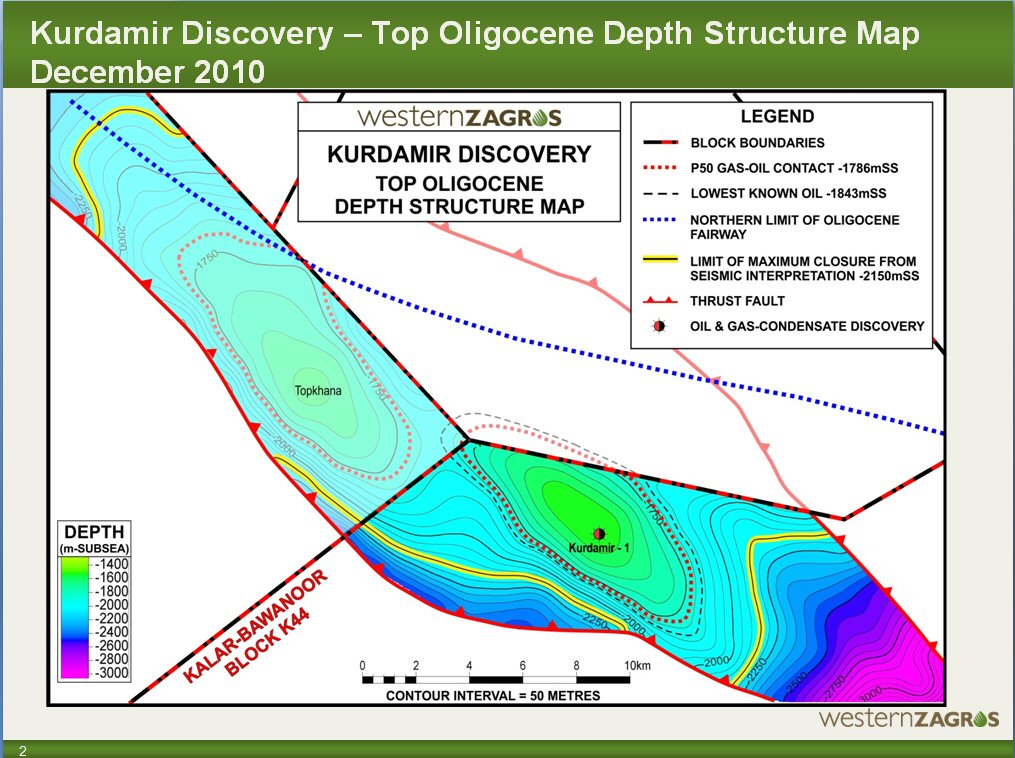
(9) The gross contingent and prospective resource estimates are based on 115 kilometres of 2D seismic lines (10 lines), wireline logs, two drill stem tests and two cased hole production tests. Logging results indicated a gross hydrocarbon pay of 327 metres, penetrated from the top of the Tertiary Oligocene carbonate reservoir at 2,142 metres to the lowest known oil at 2,469 metres and composed of 270 metres of gas and gas condensate column overlying 57 metres of oil column on a best estimate (P50) basis. The two drill stem tests conducted were between 2,195 metres and 2,235 metres and between 2,280 metres and 2,352 metres. Combined test rates indicate approximately 27.5 million cubic feet per day of gas and 1,172 barrels per day of 61 degree API natural gas liquids (condensate). Test rates were limited due to testing equipment restrictions; however, initial well test analysis conducted by an independent third party indicates that reservoir production potential of approximately 52 million cubic feet per day of gas and 2,240 barrels per day of condensate could be expected from these intervals. No formation water was recovered during the drill stem testing. The two cased hole production tests were conducted between 2,365 metres and 2,415 metres and between 2,455 metres and 2,469 metres in the tight zone of the Tertiary Lower Oligocene interval. Before acidizing the upper zone, approximately 5 bbls of oil was recovered at surface. After acidization, the upper zone tested gas and condensate at a maximum rate of 18.3 million cubic feet per day of gas with a maximum yield of 86 barrels of 61 degree API condensate per million cubic feet. The lower zone tested gas and liquids (completion brine and oil) at maximum rates of approximately 1.5 million cubic feet per day of gas and 300 barrels of fluid per day (10% oil cut, 45 degree API gravity and 90% water cut). Analysis of the water produced in the lower zone test indicates it was completion brine. No formation water was recovered during these tests. Test rates were limited due to the formation of an oil emulsion in the formation and due to the breakthrough of gas and completion brine from the upper zone, which remained open during the test of the lower zone. No formation water was recovered during any of the testing. The significance of the oil produced from the lower zone is that it was from a depth which is deeper than the previous depth of maximum closure of the structure at the Oligocene level as mapped from seismic data. As such, the Company has revised the depth of maximum closure to 2,776 metres (-2,150 metres sub sea depth) at the Oligocene level. This change increases the area under closure on Block 44 significantly and results in a consequential and corresponding increase in prospective oil resources. To view an updated schematic structural cross-section and depth structure map of the Oligocene reservoir at Kurdamir, plese visit the following links: http://media3.marketwire.com/docs/1216wzr2.jpg, http://media3.marketwire.com/docs/1216wzr3.jpg

(10) The gross unrisked contingent resources for gas reflect reductions for condensate recovery, surface losses, and fuel gas.
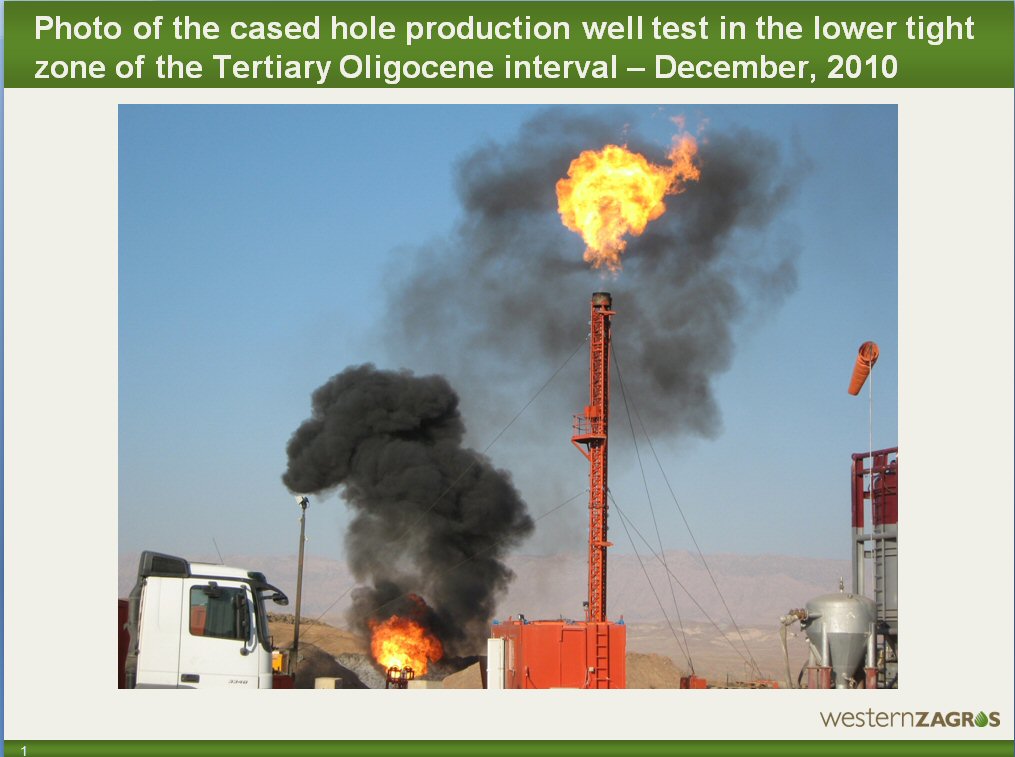
To view a photo and video (with audio) of the cased hole production well test in the lower tight zone of the Tertiary Oligocene interval, please visit the following links: http://www.youtube.com/watch?v=_JXqU3Jb3F8. http://media3.marketwire.com/docs/1216wzr1.jpg
There are several contingencies that prevent the classification of the contingent resources as reserves. WesternZagros has no current plans to develop the gas and/or condensate and/or oil resources at this time. There is limited local infrastructure and markets for natural gas and condensate in the area at this time, and export infrastructure for natural gas to gain access to international markets has not yet been developed. Additional information, likely to be obtained through the drilling of a well on the flank of the structure, will be required to determine the economic viability of development. WesternZagros will work with its co-venturers, the Kurdistan Regional Government and Talisman Energy Inc., on the evaluation of the commercial potential and technical feasibility of developing the gas, condensate and oil discovered at Kurdamir-1. Beyond this contingency, no federal Iraq legislation has been agreed to or enacted to address the future organization of Iraq's petroleum industry or the sharing of petroleum and other revenues within Iraq. Failure to enact legislation (or the enactment of federal legislation contradictory to Kurdistan Region legislation) could materially adversely impact WesternZagros' interest in the Kurdistan Region and the PSC.
This resource disclosure coincides with the filing on SEDAR at www.sedar.com of a material change report, which includes the following additional information: the risks and level of uncertainty associated with the discovery and recovery of the resources, the risks and uncertainties relating to the development of any discovered resources, and the significant positive and negative factors relevant to the estimates.
Comments are closed.