


Any such move would be of momentous significance for Iraqi politics. Unlike Sistani and the Najaf scholars, Shahrudi belongs to the school of the Iranian revolution and advocates a leading role for the clergy in government. If Shahrudi should succeed in emerging to prominence in Najaf with the help of the Daawa it would transform the outlook of the city entirely. Indeed, it would change Iraqi politics more broadly: Those arguing that Maliki is moving towards ever greater coordination with the Iranian clergy would feel vindicated, and rightly so.
For the time being, numerous factors militate against such a scenario. In the first place, historically, the Daawa has been more reluctant than other Shiite parties in Iraq to embrace the Iranian doctrine of clerical government (wilayat al-faqih). After all, this was what prompted its split from SCIRI as an umbrella organization in the 1980s and the relocation of several Daawa leaders from Iran. Even very recently, it is being reported that Maliki’s parliamentary bloc alongside the Kurds and Iraqiyya are resisting attempts by ISCI and Fadila to impose a federal supreme law clause that would provide clerical veto on Iraqi laws on the Iranian model. And of course, historically, Najaf has a record of posing resistance to Qum in Iran as a centre of Shiism.
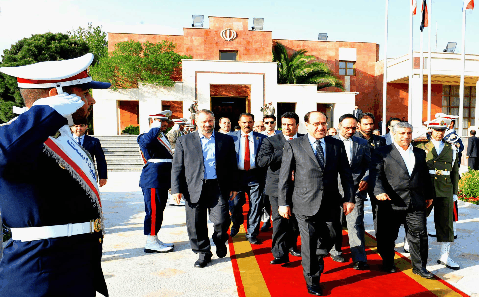
These tendencies may well prevail in Iraq. But by visiting Shahrudi yesterday Maliki did nothing to kill the rumours about some kind of Iranian design on the holiest centre of Iraqi Shiism.
Comments are closed.