


NORTH
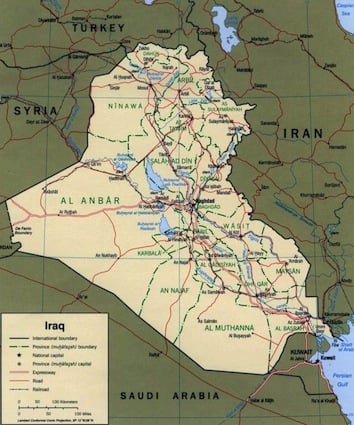
There has been little change in the Northern regions this week. Dohuk continues to be calm given the recent ceasefire between Turkey and the PKK however it remains to be seen how long the area remain so given the lack of momentum now being seen in the peace process. Key to this is the desire by the Turkish government that the PKK disarm before leaving Turkish territory, a move which the PKK refuse given past betrayals, however the PKK leadership see the key issue as the PKK leaving without contact or interference from the Turkish military.
In Nineveh the week saw a familiar blend of SAF and IED incidents against ISF and civilian targets alike. Of particular note was the closure of the Rai’ah Border Crossing point with Syria to all civilian traffic. This area has been the subject of intense skirmishing in past months and the violence has recently flared once again. Other commentators have suggested that by closing the BXP the ISF can control who enters the fight in Syria, a move which has angered local residents who rely on these locations for much vital cross border trade.
Further across the province Al Sharqat, Salah al-Din and Diyala have been the most affected areas. The continuous spate of low impact IED attacks goes on despite an intensified ISF interdiction campaign. Of note however has been the increase in the use indirect artillery and mortar fire against GoI and ISF targets in Tikrit, Baqubah and along the main arterial routes running between Mosul and Baghdad.
CENTRAL
Al – Anbar was typically quiet this week, especially in the western desert, however the border areas continue to foment as insurgents, smugglers and the ISF jockey for position in a tense environment. Typically the major urban areas of Fallujah and Ramadi saw the highest concentrations on violence in the province with up to 7 low impact IED devices detonating, thankfully with few casualties.
Baghdad remained the central focus of regional violence this week in central Iraq, with the aforementioned attacks taking central stage in the latter part of the reporting period. Up until this point the city was under the grip of a strengthened security presence mounted in response to the upcoming provincial elections. Despite this presence the city bore the brunt of a continued cycle of SAF attacks (24 in total) predominantly against ISF and GoI targets, however there were two somewhat unusual indirect fire attacks against party political headquarters. Whilst it is not unusual that this type of target is chosen the mode suggests a possible resource shortage and a move toward whatever means was available.
Of note was the capability and length to which Sunni insurgents seem to be prepared to go in order to have an affect; the attacks inside the Green Zone and at the Baghdad airport go further to suggest an emboldened and strengthened stance in the face of serious ISF scrutiny and presence.
SOUTH
Hundreds of local protesters blocked a main entrance of Iraq's giant southern West Qurna-2 oilfield on 16 April, operated by Russia's LUKOIL, demanding jobs in a sign of the growing challenges facing foreign firms operating in the south. Around 500 angry protesters gathered at the main entrance, demanding Lukoil supply jobs and compensation for land where it operates. Police said the situation was under control and demonstrators did not try to break into the field. Hundreds of protesters broke into West Qurna-2 oilfield early last month, smashing offices of an Iraqi company hired by Samsung, before trying to break into the Samsung headquarters.
Other areas of the South remained predominantly quiet in keeping with normal low levels of activity, however low level posturing and inter militia skirmishing and criminality pervades, especially in Basra. Babel and Ramadi districts saw an increase in ISF activity during the week as the security forces conducted strike operations against ISI and AQIZAM targets. These raids reportedly resulted in the arrest of a number of people accused of aiding and supporting the training of ISI and AQAIZAM insurgents, with two Egyptian nationals amongst the group arrested.
To conclude, the results of the provincial elections will have a significant bearing on the months ahead. Given the obvious transnational influences in the north, west and east the central theme of how much control Baghdad can leverage on the back of the elections will be a key feature through May and June, as will how much more emboldened will the Sunni insurgency become.
Comments are closed.