


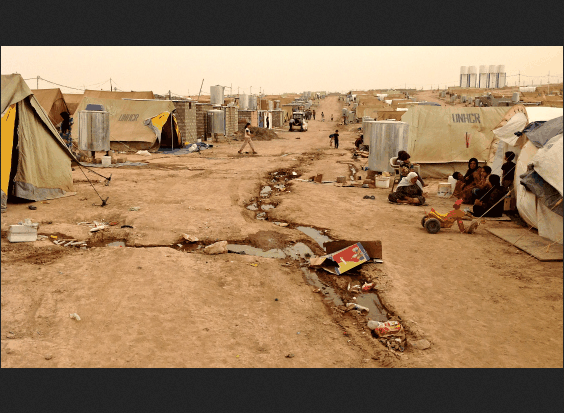
Zebari confirmed, “There is a need for international support, and we, in the KRG, call on the UN and the UNHCR to include the Kurdistan region [among those countries that are recipients of] international donations to be delivered to Syrian refugees.”
He added, “The Iraqi authorities in the federal government have not yet agreed to disburse specific funds to Syrian refugees in the Kurdistan region.”
On international support, Zebari said, “There are conditional international donations for some countries neighboring Syria. Yet, so far there are no international donations to the Kurdistan region and to assist Syrian Kurds who are present in the Kurdistan region. What is available is support by local authorities, while the burden and responsibility fall upon the international community, the UN, and the federal government.”
The Iraqi Kurdistan Region’s citizens complain about the rising number of Syrian refugees in the region, amid an increase in beggars, particularly in major cities.
Zebari added, “I think it is difficult for the Kurdistan region and its three provinces to host an additional number of refugees, yet the border is still open, and displacement continues.”
The Iraqi Kurdistan Region had decided to resettle Syrian refugees there and give them the right to work, and the freedom of movement and education, with the support of the KRG.
Speaking about the shortages in the provision of assistance to Syrian refugees, Zebari explained, “There is a shortage regarding camp management and basic needs. According to expectations, the number of refugees in Iraq will probably reach nearly 300,000 people by the end of the year. I think that the largest percentage [of these refugees], i.e., 95%, are present in the Kurdistan region, and they are a burden on the Kurdistan region and its residents.”
Comments are closed.