


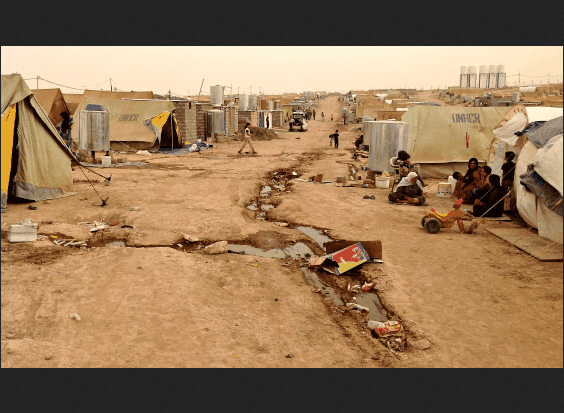
On June 2, an Iraqi official said that more than 7,000 Syrian refugees have returned to the Syrian border town of Abu Kamal in the past few weeks, after the security situation improved there.
Zebari explained that only those refugees in the Qaim district of Anbar were returning, not those in the Kurdistan region. This is because there are complicated procedures and conditions to enter into Iraqi territory, and the Iraqi government requires refugees to obtain a temporary residence permit, which forces those who cannot obtain one to return. This does not happen to refugees in the Kurdistan region.
He stressed, “For the Kurdistan region, there is more openness and a sense of humanitarian responsibility to protect and support the Syrian people. Our border is open, and refugees and displaced persons enter on a daily basis.”
The vast majority of Syrian refugees and displaced people in the Kurdistan region reside in the cities, and among the Kurdistan region’s citizens. On the support provided to these refugees, Zebari said, “Arabic schools in certain areas were open to Syrian families, and support was offered to certain hospitals in areas where [refugees] are present. The ministries of education, higher education, and public health were given instructions to meet the requirements of Syrian refugees in the cities.”
Abdel Hamid Zebari is a contributing writer for Al-Monitor’s Iraq Pulse. A reporter from Erbil who works in print journalism and radio, he has published several reports in local and world media, including Agence France-Press and Radio Free Iraq (Radio Free Europe).
Comments are closed.