


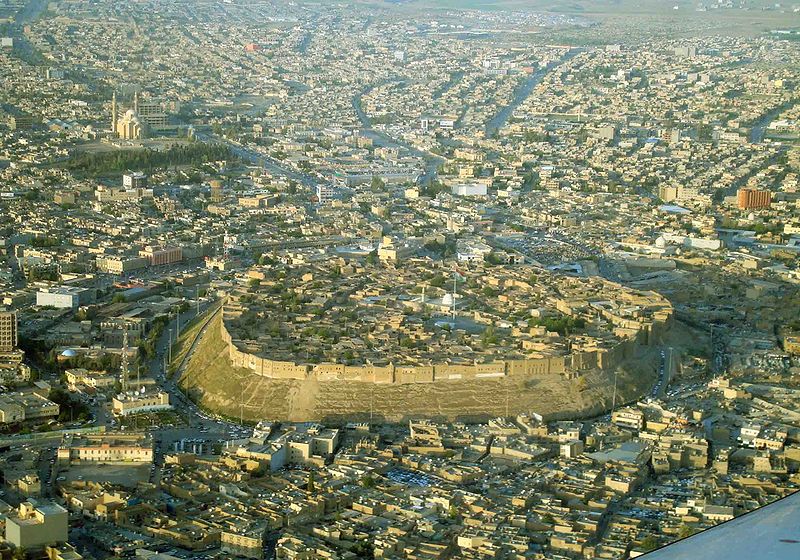
Asayish is still investigating the incident and has not yet announced who it thinks, apart for "terrorists groups," is responsible for the incident. Kurdistan Regional Government (KRG) President Massoud Barzani visited the victims of the attack in the hospital.
There are several organizations that could be behind the attack. A large number of Islamist organizations have emerged in the Iraqi Kurdistan Region since the 1980s. Some of them carried out attacks, but the majority decided to participate in the electoral system after Kurdistan became de-facto autonomous in 1991.
Ansar al-Islam, formed by the merger of several insurgent groups in December 2001, has in the past carried out attacks and assassinations in the area, but in 2003, US Special Forces and fighters from the Patriotic Union of Kurdistan (PUK) destroyed the group's bases in Halabja. Taka Kamran, a former leading member of Ansar al-Islam, told Al Arabiya on July 22, 2011, “After the US forces entered the country in 2003 and bombed us for 13 days running, we went to Iran and then returned to Baghdad.”
After 2003, Ansar al-Islam, changed its name to Ansar al-Sunna and became one of the main Iraqi insurgent groups in the country, competing with but also cooperating with al-Qaeda. In 2007, the group reverted back to Ansar al-Islam. In February 2004, it killed 105 people in simultaneous suicide attacks in Erbil.
Another group, the al-Qaeda Kurdish Battalions, which swore allegiance to al-Qaeda and al-Qaeda in Iraq, carried out several attacks after its inception in 2007. A Stanford University profile says of the organization, “Considered weak in number and capability, the group has not carried out an attack since late September 2010, when a bomb went off while being defused in Sulaimaniyah, Iraq, wounding two police officers.”
Comments are closed.