



By John Lee.
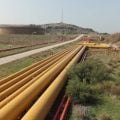
The Basra-Haditha pipeline project will reportedly have an export capacity of 2.5 million barrels per day (bpd) and is expected to create around 15,000 jobs for Iraqi workers.
The Ministry of Oil spokesman, Sahib Bazoun, told the state-run Iraqi News Agency (INA) that the pipeline will serve as a supplementary overland export route to maritime transport, described as safer, faster, and lower in cost. The project will enable Iraq to take advantage of any production increases granted by OPEC.
The pipeline will connect to refineries in central, southern, and northern Iraq to support the production of petroleum derivatives. It will also facilitate oil exports via three international routes:
- Baniyas, Syria
- Ceyhan, Turkey
- Aqaba, Jordan
The project, which includes 56 major nodes, was approved by the Council of Ministers and the Ministry of Oil in 2024. Implementation was delayed due to a lack of liquidity. A total of $5 billion has been allocated, of which $1.5 billion has been assigned, with the remainder to be disbursed in instalments.
Bazoun noted that the pipeline will also support the reactivation of the Kirkuk-Ceyhan pipeline, which the ministry is working to operate at a capacity of 1.6 million bpd. He emphasised that the project is not a replacement for maritime transport but a complementary route to diversify export options, particularly during crises. Iraq relies on oil for more than 90 percent of state revenues.
(Source: Iraqi News Agency)


WHAT IS THE STATUS OF STUDIES FOR THESE PIPELINES ANS WHAT ABOUT INTERNATIONAL COMPETITION FOR EPC ?
AND ABOUT FINANCING ?