


Oil Output to Surge in Iraq
Posted on 24 May 2010 .
Basra, 23 May 2010 - Gulf Daily News
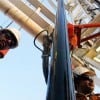
Iraq expects crude output from its southern oilfields, Rumaila, Majnoon and West Qurna Phase One, to reach about 2.1 million barrels per day (bpd) by the end of this year, the head of South Oil Company (SOC) said yesterday.
State-run SOC gave the estimates after international firms presented development plans and started issuing tenders for work in the supergiant fields, company head Dhiya Jaafar said.
Iraq, in desperate need of cash to rebuild after years of economic sanctions and underinvestment, has opened its vast oil reserves and some untapped fields to global oil companies.
It struck major deals in two auctions last year in a bid to raise its production capacity to Saudi Arabian levels of 12m bpd in seven years from 2.5m bpd now.
The potential workload in Iraq is unprecedented in the history of the oil industry.
Jaafar said the output target from Rumaila - the backbone of Iraq's oil production - is expected to hit 1.085m bpd after July this year from 1.065m bpd now, and a more than 10 per cent increase in production by the end of the year.
That would take the total production level from the field to about 1.2m bpd.
BP and China's CNPC signed a 20-year development contract last year to lift output at Rumaila, which has 17 billion barrels of estimated crude reserves.
"In Rumaila ... starting from the month of July, there will be obvious increases," he said.
Posted in Iraq Oil & Gas News Comments Off on Oil Output to Surge in Iraq

Iraq to Maintain Growth of 7% This Year
Posted on 24 May 2010 .
23 May 2010 - Business Week
Iraq may maintain an economic growth rate of about 7 percent this year, led by oil, Central Bank Governor Sinan Al-Shabibi said.
Growth was about 7 percent as well in 2009, al-Shabibi said in an interview yesterday at an economic conference in Beirut. “Of course oil output is still the main driver,” he said.
Iraq holds the world’s third-largest oil reserves, with 115 billion barrels, behind Saudi Arabia and Iran. The International Monetary Fund said it expects the economy of Iraq to expand 7.3 percent this year and 7.9 percent in 2011.
IMF and Iraqi authorities are projecting average production of 2.6 million barrels of oil per day with exports of 2.1 million barrels a day this year. Next year, the projections are for output of 2.9 million barrels a day and exports of 2.3 million a day.
The central bank cut its key interest rate by 1 percentage point to 6 percent in April to fuel growth.
Al-Shabibi said the bank has received requests from “six or seven” lenders seeking to set up units in Iraq or a partnership with existing banks in the country.
Posted in Iraq Banking & Finance News Comments Off on Iraq to Maintain Growth of 7% This Year

Iraq Eyes Huge Crude Oil Increase
Posted on 19 May 2010 .
Minister says $1b project to raise export capacity to 4.5m bpd by 2012 is on track
Iraq expects crude output to increase by about 600,000 barrels per day (bpd) through 2011, based on initial plans from global firms for oilfields that were auctioned off last year, a senior oil official said yesterday.
Deputy Oil Minister Abdul Kareem Luaibi also said Iraq is moving ahead with a more than $1 billion (Dh3.67 billion) project to raise its export capacity to 4.5 million bpd by the end of 2011 through the construction of new offshore terminals and pipelines.
"The increase we expect, which is 10 per cent for the oilfields from the first auction and the initial production for the oilfields from the second auction, is a total of about 600,000 barrels per day," Luaibi told Reuters in an interview.
"That will be achieved over this year and the next year."
The Opec member has signed a clutch of deals with global oil firms that could boost its output capacity to 12 million bpd in six to seven years' time from 2.5 million bpd now. That would rival top producer Saudi Arabia's capacity, and is viewed by most industry experts as a highly ambitious target.
Nevertheless, Iraq hopes the deals will generate the billions of dollars desperately needed to rebuild the economy. Luaibi said Iraq needs more than $10 billion to rebuild and expand its export and storage facilities beyond the initial $1 billion investment, after years of war, insurgency and sanctions left its oil infrastructure in a dilapidated state.
The Oil Ministry aims to invite foreign firms to help with the expansion as it will be short of the needed funds.
"We had 58 storage tanks in the Fao [peninsula] that were totally destroyed during the Iraq-Iran war and we had dozens of tanks and pumps that were totally destroyed," he said.
"The rebuilding and rehabilitation process needs time and more importantly cash and we have a limited budget," he added. "That's why... we would seek foreign investment."
To meet the anticipated jump in crude production, Iraq has invited interest from contractors for services to enhance its export facilities and pipelines in the southern oil hub city of Basra.
The $1-billion project — partially funded by a Japanese government loan — includes installing three offshore pipelines plus four single-point moorings. This would raise Iraq's export capacity from Basra to 4.5 million bpd by the end of next year from 1.9 million bpd now, Luaibi said.
( Reuters )
Posted in Iraq Oil & Gas News 1 Comment
Egypts GB Auto Sees Q2 Net Sales Doubling, Boosted by Iraq Sales
Posted on 16 May 2010 .
Cairo, 14 May 2010 - Reuters
- Sees Q2 net profit rising to $16-17.8 mln
- Sales in Iraq to reach 26,000 vehicles by year-end
- To start selling buses to Middle East, Europe by year-end
Egypt's GB Auto (Ghabbour Group) expects to double its profit in the second quarter, boosted by an increase in its vehicle sales to Iraq, company executives said on Thursday.
The automotive sector in Egypt, the Arab world's most populous country, was hit last year by the downturn but demand has started to pick up, helped in part by a government plan to offer affordable vehicles for taxi drivers to buy.
The firm expects to double its second quarter profit to 90 million to 100 million Egyptian pounds ($16-17.9 million) on revenue of between 1.4 billion and 1.5 billion pounds, Chief Finance Officer Colin said.
"In the coming quarter, we expect profit to increase quite a bit on Iraq," Sykes said in a conference call.
Sales in Iraq, which began in mid-February, are to reach some 26,000 vehicles by the end of this year, up from 1,341 vehicles sold by the end of March, Sykes said.
The firm, Egypt's biggest listed automobile assembler, said on Tuesday its first quarter net income had jumped to 68.7 million pounds from 7.2 million in the same period last year, as sales extended a rebound from a slump in late 2008 and it expanded into Iraq.
Chief Executive Officer Raouf Ghabbour also said the firm planned to export buses to markets in the Middle East and Europe by the end of 2010.
"By the end of this year, we should start aggressive exports ... initially starting with the MENA (Middle East North Africa) region, focusing on big markets like Saudi Arabia and Algeria," Ghabbour said.
He added next year the company would target markets in other parts of Africa, and central and eastern Europe.
The firm manufactures, assembles, imports and distributes vehicles for Hyundai, Bajaj, Mitsubishi, Volvo and Mazda Motor Corp.
Posted in Iraq Industry & Trade News 1 Comment
Iraq Cuts June Crude Supplies
Posted on 13 May 2010 .
Iraq will supply crude to at least two Asian buyers at around 10 percent below contract volumes for June, possibly the first major cut in allocations by the OPEC producer this year, industry sources said on Wednesday.
The cut was on medium-heavy Basrah Light crude, they said.
It was not immediately known why Iraq cut the supply, but it might be related to production problems at its oilfield, the sources said.
Oil output and exports from Iraq fell last month due to repeated attacks against the Kirkuk-Ceyhan export oil pipeline and possible pumping problems in Basra fields.
A Reuters survey showed oil output in Iraq -- the only member of the 12-member OPEC producer group that does not have an agreed production limit -- fell to 2.28 million barrels per day (bpd) in April from 2.32 million bpd in March.
Iraq's oil exports fell slightly in April to 1.767 million bpd from 1.79 million bpd the month before, an Iraqi Oil Ministry official has said.
Iraq exported an average of 1.42 million bpd from the southern oil hub of Basra and 341,965 bpd from the northern oilfields around Kirkuk, including about 9,983 bpd by trucks to Jordan.
The fall in exports was due to bad weather in Basra and a brief halt of exports via the Kirkuk-Ceyhan pipeline after a bomb attack last month.
Term buyers of Iraqi crude have not been eager to take Basrah Light in the first quarter of this year due to increased supplies of other medium-heavy grades, such as from Saudi Arabia, Qatari al Shaheen crude and the new Russian ESPO Blend, traders have said.
Reflecting the weak demend, Iraq's State Oil Marketing Organisation (SOMO) made a rare offer of 3 million barrels of Basrah Light on the spot market for loading in March.
Demand for Basrah Light improved slightly last month, with some cargoes heard to have traded at premiums to the official selling price (OSP), trader said.
Iraq raised the OSP of its Basrah Light crude loading in June to customers in Asia by 10 cents to a discount of $1.05 to the average of Oman/Dubai quotes.
Top oil exporter Saudi Arabia earlier this week said it would supply full volumes to at least seven Asian clients in June, steady from May, as oil held within the kingdom's preferred range and Asia was expected to lead demand growth. (Additional reporting by Florence Tan, James Topham in TOKYO, Ahmed Rasheed in BAGHDAD and Alex Lawler in LONDON; Editing by Ramthan Hussain)
Posted in Iraq Oil & Gas News Comments Off on Iraq Cuts June Crude Supplies

Investment Funds Start to Target Iraq
Posted on 12 May 2010 .
The business community in Iraq, and internationally, is focused on the task of rehabilitating the oilfields and re-building the country. This is hardly a surprise; quite apart from the investments to be undertaken directly by the oil companies, Iraq's National Development Plan foresees over $200 billion in investment in services, economic stimulus and environmental protection from 2010 to 2014.
For investors not directly involved in energy and construction, however, it has not been so easy to get exposure to the Iraqi economy. Yes, there is a stock market, but it is relatively small and companies tend to be thinly traded.
But as Mark DeWeaver, of Quantrarian Asia Hedge, points out, there are many parallels between Iraq and the frontier markets we have seen develop in recent years:
- Like Sir Lanka after 2001, a civil war is coming to an end;
- like Russia in the mid-‘90s, inflation has come down dramatically; and
- like Taiwan in the late-‘80s or, even better, Saudi Arabia ten years ago, exports are set to soar.
If that's really the case, and if the political factions can successfully conclude the ongoing election process in a peaceful and democratic manner, then it will be reasonable to expect the investment community to start taking more notice.
Both Northern Gulf Partners and Godvig Capital already operate Iraq-focused funds, while FMG's Special Opportunity Fund will soon give exposure to shares on the Iraqi stock market, in addition to shares in companies that derive a significant part of their business from Iraq. The fund can also hold Iraqi dinars, dollars, euros, and bonds.
Clearly this is at the high-risk end of the spectrum, and although the minimum investment is just $10,000, the fund is restricted to high-net-worth individuals. But if Iraq can stay on track this may be the first of many investment products to benefit from Iraq's future success.
Posted in Blog 2 Comments
No Move to Auction More Oilfields, Says Iraq
Posted on 12 May 2010 .
Baghdad, 12 May 2010 - Reuters
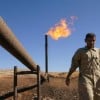
Iraq’s two remaining supergiant oilfields, Kirkuk and East Baghdad, are not on the table for joint development with international oil firms following two oil contract bidding rounds last year, a senior Iraqi oil official said yesterday.
Emerging from violence, Iraq is in desperate need of billions of dollars to rebuild. It signed 10 deals with global oil companies to develop some of its largest oilfields, in a bid to boost its crude output capacity to near Saudi Arabian levels of 12mn bpd from 2.5mn bpd now.
Not all the oilfields that were auctioned in the two bidding rounds were awarded.
No deals were struck for the supergiant 8.1bn-barrel East Baghdad oilfield or the Kirkuk fields with an estimated 8.5bn barrels in reserves. Nor were bids made for the smaller Eastern Fields and Middle Furat.
Iraq and Royal Dutch Shell briefly explored the possibility of reviving talks over Kirkuk after the first bidding round last year, according to Iraqi officials, and there have also been some discussions over East Baghdad.
But Abdul-Mahdy al-Ameedi, director of the Oil Ministry’s licensing and contracting office, said that there were no talks now with any foreign oil companies to develop the fields.
“We have offers from many companies, they want to develop them but really we don’t,” al-Ameedi told Reuters in an interview.
Posted in Iraq Oil & Gas News Comments Off on No Move to Auction More Oilfields, Says Iraq
A Perfect Storm for Iraqi Stocks
Posted on 11 May 2010 .
By Mark A. DeWeaver, of Quantrarian Asia Hedge
Two good rules for emerging stock market investors have always been: (1) buy crises and (2) buy export booms. The first would have worked well in Sri Lanka in the weeks following the Tamil Tiger suicide attack on the country’s main airport in July, 2001. Had you bought Sri Lankan stocks then and held them until February, 2007 you would have made about six times your money. Another case was Russia in April, 1995 when inflation was running at 229% and the communists seemed to have a good chance of winning the 1996 elections. By September, 1997, the market had gone up eight times as inflation fell to 13% and Yeltsin won another term as president.
As for rule two, consider the Taiwan market during the period from December, 1985 until February, 1990. The index rose about twelve times in local currency terms as exports doubled and the exchange rate strengthened from 40 to 26 New Taiwan dollars to the US dollar. Or more recently, think of the Saudi market, which went up ten times from December, 2000 to February, 2006 while exports tripled on increased oil production and a rise in the price from $30 to $70 a barrel.
Anyone trying to follow these two rules would find little to like about most of the emerging markets that make the headlines today. The crises (e.g. in the Chinese property sector) generally seem to be just beginning rather than nearing resolution while the export booms (e.g. in Brazilian resources) are for the most part old news. Surprisingly, however, one of the world’s least noticed markets not only combines features of all four of the above examples but is also open to foreign investors. Like Sir Lanka after 2001, a civil war is coming to an end; like Russia in the mid-‘90’s, inflation has come down dramatically; and like Taiwan in the late ‘80’s or, even better, Saudi Arabia ten years ago, exports are set to soar.
Yes, I’m talking about the Iraq Stock Exchange.
Blood in the streets
It’s easy to understand why Iraqi stocks aren’t on the radar screen of most foreign fund managers at the moment. While the third Baron Rothschild advised buying “when there’s blood in the streets,” no one wants that blood to be their own. And Baghdad, which is home to the stock exchange and the majority of the brokers and listed companies, remains a scary place to visit.
But conditions of travel for the investor aren’t really the best indicator of when it’s safe to invest. A more relevant signal is the fall in Iraqi civilian deaths from violence. At the height of the insurgency from mid-2006 to mid-2007, Iraq Body Count put the death toll at 2,500 – 3,000 a month. So far this year it’s been in the range of 200 – 300. While no one would argue that this is an acceptable state of affairs, it tends to be during just such transitions from the absolutely appalling to the merely awful that the big money in emerging markets gets made.
Naturally, things could get worse again. But this seems unlikely for the simple reason that restarting the sectarian civil war isn’t really in anyone’s interest. The Sunni insurgents effectively lost in 2007 and have no reason to expect a different outcome today. The Shia have found that political power is more likely to stem from the ballot box than the barrel of a gun (contrary to Chairman Mao’s famous dictum). And the Kurds are clearly better off as part of a unified Iraq than as citizens of an independent state that neither their neighbors nor, presumably, the US would recognize.
The threat from Al Qaeda-linked extremists seems to be receding as well. They no longer appear to have the capability to stage monthly mass casualty bombings—recently their attacks have only occurred every other month—and the deaths of the leaders of Al Qaeda in Iraq and the Islamic State of Iraq at the hands of Iraqi and American forces on April 18 may well turn out to be a turning point in the government’s “war on terror.”
From zero to hero
Equally important for stock market investors has been the drop in Iraqi inflation, which fell from 65% in 2007 to 6.8% in 2009. Year-on-year core inflation for February was just 3.35%. The currency has strengthened significantly as well—from 2,354 Iraqi dinars to the US dollar in April 2003, in the middle of the invasion, to 1,170 today.
This made it possible for the Central Bank of Iraq to lower its benchmark overnight rate from 20% in 2007 to 7% by the end of 2009. Effective April 1, this rate was cut again, to 6%, while at the same time the required reserve ratio was reduced from 25% to 20%. (The required reserve ratio is a percentage of deposits that commercial banks are required to hold as reserves at the central bank.)
Cuts in the central bank’s benchmark interest rate are particularly significant because cash, rather than loans, continues to be the biggest asset of the Iraqi banks. (Their main operating businesses consist of charging fees for services such as wire transfers.) Since there is little lending, either inter-bank or to nonfinancial companies and individuals, central bank reserves are the banks’ main source of interest income. Lowering the benchmark rate reduces this income stream, thereby forcing them to lend more.
While much of the rest of the world continues to deleverage, in Iraq the trend is thus in the opposite direction—from a state of practically zero leverage to one where the banks play their normal role as financial intermediaries. This is clearly positive for the stock market because a general increase in the supply of credit naturally means that more funds will be available for local investors to buy shares—either because they buy with borrowed money or because taking out loans frees up their existing cash holdings.
The coming oil bonanza
As if all this weren’t enough, Iraq is sitting on vast reserves of low-cost oil, which after three decades of war and sanctions remain largely unexploited. Since June of last year, international oil companies have won bids to develop over 10 million barrels a day in additional capacity. Added to current production of 2.6 million barrels a day in 2009, this new supply would allow Iraq to surpass Saudi Arabia as the world’s biggest producer.
While the Oil Ministry is hoping to get to this point in six years, many believe such a timeframe is unrealistic—for example, because it doesn’t allow enough time to build the pipelines and other facilities needed to transport such an enormous amount of oil. But even a doubling of Iraq’s oil output would still lead to a boom not unlike those experienced by the OPEC countries (including Iraq itself) during the 1970’s. The resulting fiscal surplus would quickly make its way into the economy via tax cuts, subsidies, and an increase in investment and salaries at the state-owned enterprises, which account for the lion’s share of Iraqi employment.
The effect on the stock market would be explosive. Rising oil exports would have a direct impact on the supply of funds available to speculators as repatriated US dollar revenues were converted into local currency. At the same time, listed company profits and dividends would rise rapidly as Iraq began a dramatic ascent from poverty to affluence.
A great story
The combination of reduced violence, increased leverage, and an impending oil windfall would seem to be a ‘perfect storm’ for Iraqi stocks. So far the market remains becalmed: the index is still at 2007 levels, recent daily trading values have been only about a million US dollars. But things could easily pick up long before the banks start lending or the new oil begins to flow.
Already a number of fund management companies are said to have started marketing the Iraq story to potential clients. It will be an easy story to tell—a crisis is ending and an export boom is beginning. And while there’s no way of knowing how much they will raise, in a pool of liquidity as small as the Iraq Stock Exchange even a relatively small inflow will seem like a storm surge.
Mark A DeWeaver, PhD, manages the hedge fund Quantrarian Asia Hedge (www.quantrarian.com), and can be reached at [email protected].
The opinions expressed here are those of the author, and do not necessarily reflect the views of Iraq Business News.
Posted in Blog 6 Comments
Iraq Ends Oil Row with Kurds
Posted on 09 May 2010 .
Baghdad, 07 May 2010 - AFP
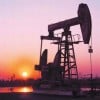
An oil dispute between Iraq and the autonomous northern region of Kurdistan has been resolved, the central government's oil minister said in Baghdad on Thursday.
"We reached an agreement with the Kurds that all revenues will be handed over to SOMO and the Iraqi government will be responsible for paying the extraction expenses in Kurdistan," Hussein al-Shahristani told reporters.
SOMO is Iraq's State Oil Marketing Organisation which deals with sales of crude and other petroleum-based products.
Iraqi Kurdistan halted oil exports in October last year due to a payment dispute with Baghdad.
The two sides previously clashed over how oil revenues should be distributed and Kurdish authorities had said they would not resume crude exports until Baghdad paid the foreign energy companies which are pumping the oil.
The central government had repeatedly said it was opposed to the Kurds signing their own contracts, a position which Kurdish officials disregarded by making dozens of agreements with foreign firms.
With an estimated 115 billion barrels, Iraq has the world's third largest proven oil reserves behind only Saudi Arabia and Iran. Its oil revenues account for around 85 percent of government income.
Since November, Baghdad has signed contracts with foreign firms to develop 10 oil fields around the country, with the aim of raising its output, currently at 2.4 million bpd, to between 10 and 12 million bpd.
Posted in Iraq Oil & Gas News Comments Off on Iraq Ends Oil Row with Kurds

Iraq Rules out Opec Quota Talks Now
Posted on 09 May 2010 .
Baghdad, 07 May 2010 - Reuters
Iraq sees no need to even discuss an Opec quota until its output reaches 4 million barrels per day (bpd) so any talk of a specific limit before then is premature, the country's oil minister said.
Iraq has agreed deals that would boost output to over 12 million bpd in seven years from around 2.5 million bpd now. Unless global demand grows rapidly, Opec is unlikely to sit back and let Iraq increase output at will. Tough negotiations are expected with Baghdad on a level for eventual output curbs.
"Before Iraq reaches 4 million bpd it is not even necessary to discuss mechanisms to specify a quota," Oil Minister Hussain Al-Shahristani told Reuters. "After Iraq reaches 4 million bpd, we will start to discuss the mechanism to assigning quotas. We aren't talking about any number in the meantime."
Iraq could reach 4 million bpd in two to three years, Al-Shahristani said. Output in April stood at around 2.28 million bpd, according to a Reuters survey.
The service contracts Iraq has signed with some of the world's largest oil firms encourage quick gains in output.
Payment for investments made is not triggered until those gains are made.
Iraq is the only one of Opec's 12 members without an output target as it rebuilds its shattered economy after years of war and sanctions.
Opec output targets have previously been set based on oil reserves. Iraq's reserves are just below Iran's, and Tehran has an output target of 3.34 million bpd.
Iraq strengthened its hands for any future negotiations when it agreed the deals that would increase its capacity to around three times that of Iran.
If Iraq were to build facilities to produce 12 million bpd, it would be second only to Saudi Arabia's capacity now of 12.5 million bpd.
Posted in Iraq Oil & Gas News Comments Off on Iraq Rules out Opec Quota Talks Now