


Iraq Oil Bases Sprout as Halliburton Chases Growth
Posted on 30 April 2010 .
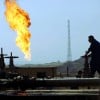
The world’s biggest oilfield contractors are building bases in the deserts of Iraq in a bet they’ll profit as the country strives to boost crude oil output to rival Saudi Arabia.
Schlumberger Ltd., Halliburton Co. and Baker Hughes Inc. are among companies this past week that said they’re expanding operations in Iraq. Weatherford International Ltd., the fourth- largest oilfield-services provider by market value, will expand staff in Iraq to more than 1,000 by July, Chief Executive Officer Bernard Duroc-Danner told investors yesterday on a conference call.
The prize is a share of the billions of dollars to be spent as the war-torn country seeks within seven years to increase crude-oil production capacity to 12 million barrels a day, on a par with the world’s largest oil exporter, Saudi Arabia. Iraq’s current production is about 2.4 million.
“It’s all becoming more real, in that contract awards are getting closer,” said Jeff Tillery, an analyst at investment bank Tudor, Pickering, Holt & Co. in Houston. “It’s a big opportunity for these guys.” Revenue potential is high, he said. “The profit side is a little bit of a leap of faith.”
The risks are financial, legal and political. Contractors don’t yet have a firm grip on what costs might be, Duroc-Danner said. Last month’s parliamentary elections left no political party with enough seats to govern alone, and Iraq doesn’t have a law yet for how oil revenue will be distributed.
Second-Biggest Field
Iraq’s government has signed 10 contracts for oilfield development with London-based BP Plc, Exxon Mobil Corp. and other producers.
BP, which is leading development of Iraq’s biggest oil field, known as Rumaila, awarded $500 million in service contracts last month. Included were projects won by Geneva-based Weatherford and a partnership between Schlumberger, based in Houston and Paris, and state-owned Iraqi Drilling Co.
Rumaila may become the second-biggest oil field by production in the world, BP said earlier this year. Saudi Arabia’s Ghawar field is the largest.
Halliburton, which plans to invest $100 million in Iraq this year, said it’s in the process of securing its first major base in Iraq.
‘Plenty of Work’
“There’s going to be plenty of work in Iraq, and believe me, all the service companies will have opportunities there,” David Lesar, chief executive officer at Houston-based Halliburton, said on an April 19 conference call with investors. “So we’re going along at the pace we want, and we’re confident we’re going to be successful.”
Schlumberger’s base will have 300 people this year, and that number will double by early 2011, CEO Andrew Gould said last month.
“Competition will be fierce, start-up costs high, and we do not expect significant revenue before 2011,” Gould said at the Howard Weil Energy Conference in New Orleans. “The significance of Iraq will only really emerge once the post- election political landscape is understood and some form of oil law has been passed.”
Development of Iraq’s oil industry is moving ahead as security improves after decades of wars and sanctions.
Al-Qaeda
U.S. and Iraqi forces said yesterday that they killed two of al-Qaeda’s regional chiefs in raids. A day earlier, Prime Minister Nouri al-Maliki said Iraqi and U.S. forces killed the terror network’s two principal leaders in the country. “Iraq is probably the biggest opportunity, along with possibly Brazil, confronting the oil-services industry,” said James D. Crandell, an analyst at Barclays Capital in New York. “It’s a country that has a significantly higher capability of exporting crude oil, but it needs a lot of work done on its fields.”
Within five years, service providers may be competing for more than $5 billion annually in contracts, he said.
The four biggest oilfield contractors all rose 4 percent or more yesterday on the New York Stock Exchange. Schlumberger gained 17 cents to $68.02 today, and Halliburton fell 2 cents to $33.29. Baker Hughes climbed 60 cents to $50.89, and Weatherford dropped 59 cents to $16.62.
‘Surge’ coming
if anything, service companies are late in positioning themselves for the “upcoming surge” in oil contracts, said Nansen Saleri, CEO at Quantum Reservoir Impact in Houston and former reservoir-management chief at Saudi Arabia’s state oil company. “Iraq is pregnant for huge growth,” Saleri said yesterday.
The country has potential reserves of 200 billion to 300 billion barrels of oil, Saleri said, and “the early movers will be the big winners.”
“It presents a tremendous opportunity for the service companies,” Gene Shiels, a spokesman for Houston-based Baker Hughes, said yesterday.
All of the companies said investors shouldn’t be quick to judge results from their Iraq forays.
“It’s going to be a very expensive place to operate, at least initially, because you’ve got all your mobilization costs, you’ve got people you’ve hired, bases that you’ve built,” Shiels said. “It’s going to take some time.”
Posted in Iraq Oil & Gas News 1 Comment
Iraq Oil Plan to Drill 15 Oil Wells
Posted on 25 April 2010 .
Baghdad, 23 April 2010 - Reuters
The initial development plan agreed by Royal Dutch Shell, Malaysian partner Petronas and Iraqi oil officials includes inviting oil service firms to drill 15 new wells, an Iraqi oil official said.
The plan also includes building two new crude processing plants with a capacity of 50,000 barrels per day each and boosting capacity at an existing processor to 120,000 bpd from 100,000 bpd, the official said, asking not to be identified.
The plan was put together at a meeting last Thursday in the southern oil hub of Basra of officials from Iraq's South Oil Co (SOC) and executives of Shell and state-run Petronas.
The two companies won the right to develop the 12.6 billion barrel Majnoon oilfield, one of the world's biggest, in the second auction held by Iraq last year of oilfield development contracts, and the contract was signed early this year.
It is one of 10 oilfield development deals that could take Iraq to third place among oil producing nations from 11th now and boost its capacity to Saudi levels of 12 million barrels per day from around 2.5 million bpd currently.
""We discussed preliminary plans to raise the output in the Majnoon oilfield and if everything goes according to the plan an output of 175,000 barrels of oil equivalent per day could be achieved in 24 months,"" said the SOC oil official, who was not authorized to speak to the media.
The SOC nominated Abdul Sahib Qutub, a former deputy oil minister and current adviser to Oil Minister Hussain al-Shahristani, to head the Majnoon joint management committee, the official said.
For Majnoon, the Shell-led group proposed a per-barrel remuneration fee of $1.39 and pledged to increase output to 1.8 million bpd from a current production level of around 45,000 bpd.
Posted in Iraq Oil & Gas News 1 Comment
Total Wants Bigger Stake in Iraq's Halfaya Field
Posted on 25 April 2010 .
23 April 2010 - Reuters
Total is consdering a bigger stake in the Halfaya oilfield, in a bid to increase its presence in Iraq, its chief executive said on Thursday.
China National Petroleum Company (CNPC) is the majority partner in the oilfield and Total owns an 18.75 percent stake in the field. "Iraq is a strong part of our strategy in the world and we certainly don't intend to remain a minority partner in the Halfaya field," Christophe de Margerie told an international oil conference in Paris. Iraq, which has the world's third largest oil proven reserves, signed a final contract earlier this year to develop Halfaya with CNPC, Total and Malaysian state firm Petronas.
Halfaya, in southern Iraq, has estimated reserves of 4.1 billion barrels of oil.
The field could help turn Iraq into one of the world's three biggest oil producers and earn Iraq billions of dollars it needs to rebuild after decades of war, sanctions and economic decline.
The deals emerging from two oil contract auctions could raise Iraqi output capacity in seven years to 12 million barrels per day, rivalling top producer Saudi Arabia, from around 2.5 million barrels oer day now.
But Iraq's oil minister has raised questions over the planned expansion as Baghdad considers OPEC output curbs that may keep supply well short of ambitious capacity targets.
Posted in Iraq Oil & Gas News 3 Comments
Iraq Agrees to reduce signature bonuses on oilfields ..... but
Posted on 15 April 2010 .
Iraq's Oil Ministry has agreed to slash signature bonuses on two oilfield development deals secured by oil companies but is turning them into unrecoverable payments rather than soft loans, an official said on Wednesday.
The signature bonus for the 8.7-billion-barrel West Qurna Phase One oilfield to be paid by Exxon Mobil and Royal Dutch Shell will be cut to $100 million from $400 million, said Sabah Abdul Kadhim, head of the legal section of the ministry's petroleum contracts and licensing directorate.
The bonus for the 4-billion-barrel Zubair oilfield won by Italy's Eni (ENI.MI) and its partners Occidental Petroleum Corp and South Korea's KOGAS will be $100 million also, compared to $300 million previously, he said.
The deals are among a series signed this year and last year that have the potential to catapult Iraq into third place from 11th among global oil producers, with its capacity possibly rivalling top producer Saudi Arabia's.
Potential capacity of 12 million barrels per day compared with 2.5 million bpd now would give Iraq the billions of dollars it needs to rebuild after years of war and economic decline.
Posted in Iraq Oil & Gas News Comments Off on Iraq Agrees to reduce signature bonuses on oilfields ..... but
Iraq Still Owes Kuwait 24 Bn
Posted on 14 April 2010 .
Iraq still owes about 24 billion dollars in war reparations for the 1990 occupation of oil-rich Kuwait, a Kuwaiti lawmaker was quoted as saying on Tuesday.
Adnan Abdulsamad, head of parliament's budgets committee, said the emirate had so far received 17.5 billion dollars out of the 41.8 billion dollars approved by a United Nations special compensation fund.
Kuwaiti newspapers quoted him as saying that the emirate had filed compensation claims worth 177 billion dollars for damages from the invasion and seven-month occupation by Saddam Hussein's forces.
Iraq is required to put five percent of its oil revenues into a UN reparations fund, which has so far paid out 28.9 billion dollars to claimants.
Since Saddam's overthrow following a US-led invasion in 2003, Iraq has repeatedly appealed to Kuwait and other countries to waive tens of billions of dollars in compensation and debt.
The bulk of the money is owed to Kuwait and Saudi Arabia.
Iraq also owes Kuwait around 16 billion dollars for loans to Saddam for Iraq's 1980-88 war with Iran, which was largely bankrolled by the oil-rich Gulf states.
Iraq, struggling with insecurity and a raft of economic problems since the US invasion and occupation, has appealed for the percentage taken out of its oil revenues to be reduced.
UN chief Ban Ki-moon in July urged Iraq to consider investments and other alternatives to resolve reparations disputes with Kuwait, and pressed the Security Council to help Baghdad meet outstanding obligations.
Last September, Kuwait's Foreign Minister Sheikh Mohammad al-Sabah said his country is considering a proposal by Ban to recover the unpaid compensation by investing in joint ventures in Iraq.
( AFP )
Posted in Iraq Banking & Finance News 2 Comments
The Political Hydraulics of OPEC
Posted on 14 April 2010 .
OPEC is a maddeningly opaque outfit; its public pronouncements frequently seem carefully crafted to conceal its private calculations.
The 12-member cartel controls about one-third of the world’s daily oil supply — not quite enough to give it absolute control over the price per barrel, but enough to allow it to consistently manipulate the price to its advantage.
Its imposing headquarters in Vienna and the refined (if somewhat oily) manners of its delegates are at odds with the corrupt, violent, repressive and often plain crazy political environment that is the norm for most of its member states.
And now the world watches as this highly effective but oddly dysfunctional gang deals with the elephant in the room.
The elephant, of course, is Iraq and the fistful of deals it has finalized over the last few months with some of the world’s largest oil companies.
Iraq anticipates that these deals will boost output over the next seven years from the current level of 2.4 million barrels per day (bpd) to something between 10 million or 12 million bpd. Along the way, Iraq would zoom past its meddlesome neighbor and rival Iran as the No. 2 producer in OPEC (4.1 million bpd) and eventually challenge the Saudis, currently producing about 10 million bpd, for the No. 1 spot.
If all of that happens — a very big “if” given the uncertain state of affairs in Iraq — it would not only upend the pecking order in OPEC, it also would cast the region’s geopolitical balance in an entirely new light.
“Iraq is a problem for everybody,” said Giacomo Luciani, an oil industry scholar with the Dubai-based Gulf Research Center. “But at the moment, this is all very speculative. We don’t know what demand will be in five years, 10 years, and we don’t know to what extent Iraqi production will increase.”
For its part, Iraq has been sending very mixed signals. On the one hand, there is all the talk of quadrupling production in seven years; but in March, ahead of OPEC’s most recent gathering in Vienna, Iraq’s Oil Minister Hussain Shahristani said Baghdad would be willing to discuss production quotas with its OPEC brethren once its own production hit the 4 million bpd level.
One of OPEC’s founding members, Iraq has been excused from the organization’s quota regime for many years. That’s because it has yet to recover from the sharp drop in production that followed the Iraq-Iran War and continued through two more wars and a decade of sanctions.
Historically, OPEC has set quotas for Iraq and Iran at approximately the same level — this based on their proven reserves. But Iraq now believes it should be treated as an equal to Saudi Arabia.
If Iraq can actually deliver that much oil, it would challenge Saudi dominance as OPEC’s “swing producer”— the one mega-producer that can tweak the global price of oil by adjusting the spigot of its own production.
The Saudis do not seem overly troubled by this prospect. They apparently share the view of many analysts that quadrupling production in the space of seven years is easier said than done.
“I think that some of these oil companies have overstated how high they can take Iraq’s oil production,” said Kristian Patrick Alexander, a political scientist at Abu Dhabi’s Zayed University.
Among the factors that could slow the Iraqi project, Alexander mentioned the likely eruption of violence, especially with U.S. troops scheduled to complete their withdrawal by the end of 2011; the absence of a comprehensive oil law guaranteeing the legality of the deals with foreign companies; rampant corruption; a lingering dispute over control of oil fields in Kurdistan and, finally, the decrepit state of Iraq’s overall infrastructure.
“The projections [of 10 million to 12 million bpd] are somewhat optimistic,” he said.
If the Saudis can afford to take the long view of Iraq’s reintegration into OPEC, Iran can’t.
“Iran is much more vulnerable to declining prices and declining revenues. Saudi Arabia just doesn’t need the money to the same extent,” said Luciani, the industry analyst.
Even if its oil output is surpassed by Iraq, Iran would remain the dominant political and military power in the Gulf. But being out-pumped by Iraq is likely to make Tehran feel an even greater urgency to develop its nuclear capability in order to maintain its status.
The key player may turn out to be China, the world’s No. 2 energy importer. The Chinese are heavily dependent on Iranian oil and, as a result, Beijing for years has tried to shield Tehran as much as possible from the economic sanctions the U.S. and its allies would impose.
But that is changing. Now that the China National Petroleum Corporation has signed a major deal with Iraq, Beijing is signaling a new willingness to consider sanctions. And with the encouragement of the Obama administration, Saudi Arabia and other Arab oil producers are giving the Chinese quiet assurances that they will cover any decline in Iranian production resulting from sanctions.
All of this is bad news for the government in Iran, where any drop in oil revenue will make it increasingly difficult for an unpopular regime to hold on to power.
( GlobalPost )
Posted in Iraq Oil & Gas News Comments Off on The Political Hydraulics of OPEC

China writes off 80% of debts
Posted on 13 April 2010 .
The Iraqi government signed an agreement with the Chinese government to write off 80% of Iraq’s debts due to China, according to a foreign ministry press release.
“Iraqi Finance Undersecretary Fadel Nabi Othman signed for Iraq while the secretary of the committee of companies’ indebting Iraq signed for China,” read the statement as received by Aswat al-Iraq news agency.
“The agreement was signed in light of memorandums of understanding signed by Iraqi President Jalal Talabani during his visit to China in June 2007,” it added.
Iraq has been seeking to have its debts $120 billion debts accumulated during the former regime’s time, some of them in compensations over was, be dropped. The war-torn nation has managed to have most of that sum - $55 billion due for the Paris Club members – dropped.
Iraq still owes debts to some Arab countries, including Gulf States, at $21 billion: $15 billion to Saudi Arabia and $6 billion to Kuwait.
Posted in Iraq Banking & Finance News Comments Off on China writes off 80% of debts
OPEC Compliance Falls to 50%
Posted on 12 April 2010 .
London, 12 April 2010 - OilAndGasNewsOnline.com
Total Opec crude oil supply rose in March as an increase in Nigerian output overshadowed a dip in Iraq, a Reuters survey showed, as members with agreed production targets reduced compliance to just 50 per cent. Supply from the 11 members of the Organization of the Petroleum Exporting Countries with output targets, all except Iraq, is averaging 26.93 million barrels per day (mbpd), up from a revised 26.73 mbpd in January, according to the survey of oil firms, Opec officials and analysts.
The survey implies Opec is now making just half of promised supply cutbacks agreed in December 2008 versus 55 per cent in February. Oil prices have doubled in the past year to more than $80 a barrel, encouraging members to pump more crude.
Total Opec supply rose 40,000 bpd to 29.25 mbpd, the survey found, with Nigerian output jumping by more than 100,000 bpd as domestic refineries resumed production.
Opec’s two largest producers, Saudi Arabia and Iran, both increased production by 50,000 bpd to 8.2 mbpd and 3.75 mbpd respectively. An Opec Gulf delegate told Reuters the group was concerned about rising prices.
“Prices above $85 for a sustained period of time could well be harmful. We have to be aware that the economic recovery is still fragile,” the delegate said on the sidelines of the International Energy Forum in Cancun, Mexico.
Separately, another Gulf delegate said Opec would raise oil production if oil prices stayed “too high” for a long time.
Opec compliance with agreed output quotas peaked at 81 per cent in April and March 2009, according to Reuters estimates. The worldwide recession had seen prices crash from a peak of almost $150 a barrel in July 2008 to near $40 a barrel at the start of 2009.
Opec output is now at its highest level since December 2008.
Oil prices eased after the survey but were supported by expectations of a recovery in the global economy. Prices are within $2 of the 2010 high of $83.95 a barrel hit early January.
“The bullish case for oil in both the short and medium term is being predicated largely on the view that oil demand growth in China (and the non-OECD nations generally) will be sufficient to rebalance supply and demand,” Deutsche Bank analyst Adam Sieminski said, adding demand in developing nations could grow by 1.4 mbpd this year.
Posted in Iraq Oil & Gas News Comments Off on OPEC Compliance Falls to 50%
Future of Iraq's Oil Deals Uncertain
Posted on 06 April 2010 .
Now that the votes have been counted, the first big test facing Iraq’s fragile democracy is whether it can make the transition from one administration to the next without too much bloodshed or violence.
If this weekend's horrific sectarian slaughter and suicide bombings are any harbinger, things aren't looking good. But there will also come another test: whether the lucrative oil deals negotiated by the previous administration can survive the transition.
After a spectacularly successful auction of drilling rights last December, Prime Minister Nouri al-Maliki’s government spent the first few months of this year putting the finishing touches on 10 separate deals that, if implemented successfully, could see Iraq challenging Saudi Arabia as the world’s leading producer within the decade.
By any measure, these deals were the singular accomplishment of Maliki’s tenure. Oil Minister Hussain al-Shahristani earned the respect of the international oil community for driving a very hard bargain and delivering a deal that should quickly put his nation on the path to prosperity.
But in Iraq’s fevered political climate, no deal makes everyone happy, and the oil contracts could easily become a casualty as Iyad Allawi, the declared winner in last month’s election, begins the messy process of stitching together a governing coalition.
“The Maliki government did everything in their power to make sure those contracts would survive. They fast-forwarded the effective date of many of the contracts ... [and] they also had the contracts ratified by the Council of Ministers very quickly. Whether these actions are enough will be the main question,” said Thomas Donovan, an attorney with the Iraq Law Alliance, who has followed the process closely.
“My sense is that they will survive the challenge, and that they will last throughout the next transitional government and any government thereafter,” he said.
That is what some of the world’s largest oil companies — Exxon Mobil, BP, Royal Dutch Shell, Russia’s Lukoil and others — are banking on as they bet billions on Iraq’s ability to provide a politically stable and physically secure environment for them to go about their business.
And it is a gamble, says Giacomo Luciani, an oil industry scholar at the Gulf Research Center in Geneva.
“At the moment, we don’t know what’s going to happen. But we do know that the oil contracts are the main source of power, the main source of money, the main source of everything in Iraq,” Luciani said.
“We have to see what kind of coalition emerges and whether it finds it tactically convenient to raise objections to the oil deals,” he said.
Iraq nationalized oil production in 1961, and thereafter the notion of keeping Iraq’s oil under Iraqi control has played well for nationalist politicians from Saddam Hussein to today’s crop of Sunni and Shiite rivals. The reality, however, is that the dilapidation of Iraq’s oil fields that resulted from years of war and sanctions can only be repaired by a massive influx of capital and technology from international oil companies.
And Shahristani, the oil minister, can hardly be accused of giving away the store when he auctioned off the rights to develop some of Iraq’s prize oil patches. The successful bidders signed 20-year service contracts that will pay them a relatively modest per-barrel fee for each barrel they produce above an agreed minimum.
“He [Shahristani] obtained a very good deal for Iraq, but that doesn’t mean the deal will be confirmed. You are assuming that everyone is pursuing Iraq’s national interest, and that might not be the case,” said Luciani.
“In principle, I don’t think there’s a prejudice against foreign companies’ involvement. But one can see how it becomes part of someone’s political agenda,” he said.
Another major worry is security. With the U.S. planning to reduce the number of troops in Iraq to 50,000 by the end of August, and to effect a complete withdrawal by the end of 2011, providing security for the oil companies will fall to the Iraqis.
The worry was highlighted two weeks ago when authorities in oil-rich Basra province found a small weapons cache and a note threatening foreign oil companies. The incident appeared to be more theater than threat, but security experts admit it is hard to gauge the level of grassroots mistrust of foreign oil companies and how this might be exploited by those wishing to destabilize the government.
Much will depend on the new government and its choice of oil minister, said Ben Lando, editor of the influential Iraq Oil Report.
Although Allawi, a former interim prime minister, has been declared the winner in the March 7 election, it is not clear if he will be able to pull together enough allies to form a governing coalition. Even less certain is who will get the job as oil minister.
Shahristani, a former nuclear scientist who spent time in Saddam’s prisons, is widely respected in oil circles and could be asked to stay on, no matter who leads the next government.
“Shahristani is definitely not out of contention, though any coalition with the Kurds involved drastically reduces his chances to the point of elimination.” said Lando.
That’s because of the ongoing dispute over control of reserves in the semi-autonomous Kurdish region. Shahristani has antagonized the Kurds by refusing to recognize the contracts signed by nearly two dozen foreign oil companies with the Kurdistan Regional Government.
Others who might be considered for the oil post include Thamir Ghadhban and Ibrahim Bahr al-Uloom. Both held the job previously and are known in the oil community.
Even the wily Ahmad Chalabi’s name has been mentioned. Chalalbi, famous for providing the Bush administration with dubious intelligence about Saddam’s weapons of mass destruction, served as interim oil minister for a few weeks in 2005. He is also Allawi’s cousin, although in their case blood does not appear to be thicker than oil.
Posted in Iraq Oil & Gas News Comments Off on Future of Iraq's Oil Deals Uncertain
Iraq to increase oil export
Posted on 05 April 2010 .
"The ministry plans to increase the oil production of all oil fields, especially these that are located in the southern provinces," an official source in the Iraqi Oil Ministry said.
"The Oil ministry plans to increase the oil production in April to about 59 million barrels in order to increase the revenues to 267 million dollars." The representative of the oil ministry Abdul Karim Al Luaibi told The Independent National News Agency of Kurdistan (AK news).
"More than 27 foreign companies from different nationalities bought quantities of exported oil through Basra and Khor al-Amayah ports south of Iraq, and Ceyhan in Turkey, and this will revive the economic situation in the country."
"The ministry will increase its works to export more oil in the coming period," Luaibi added.
The Oil Ministry exported last month 57 million and 900 thousand barrels and the revenues reached to 229 million dollars where the average of each barrel is 73.4 dollars.
Iraq produces about 2, 4 million barrels of oil per day and constitutes 85 percent of the state revenue.
It is noteworthy that Iraq has the third oil reserve in the world estimated with 115 billion barrels after Saudi Arabia and Iran.
Posted in Iraq Oil & Gas News Comments Off on Iraq to increase oil export