



CPJ: Journalists Injured and Detained, Broadcasters Banned
Posted on 31 October 2019 .
Journalists injured and detained, broadcasters banned as protests resume in Iraq
On Tuesday, the Committee to Protect Journalists (CPJ) condemned recent attacks on journalists and media outlets in Iraq, and urged authorities to ensure that journalists can cover the ongoing protests in the country safely and without obstruction.
After a brief lull, anti-corruption and unemployment protests reignited in Iraq on October 24, and led to at least 74 deaths by October 27, according to news reports and a statement by the Iraqi High Commission for Human Rights.
At least two journalists for local broadcaster Al-Sumaria TV have been injured in the latest wave of protests, one journalist was briefly detained, and two broadcasters have been banned, according to statements from the National Union of Journalists in Iraq and local press freedom organization Press Freedom Advocacy Association in Iraq, as well as news reports.
“Iraqi authorities seem more focused on preventing journalists from doing their jobs than on protecting them from harm while they cover protests,” said CPJ’s Middle East and North Africa Representative Ignacio Miguel Delgado. “We call on Iraqi authorities to do all they can to ensure that journalists and news outlets can do their jobs freely and safely.”
On October 25, police fired a tear gas canister that hit Hisham Wassim, a reporter for Al-Sumaria TV, in the face while he was covering protests at Baghdad’s Jumhuriyya Bridge, according to the journalists’ union statement and reports by his employer.
Wassim was seriously injured by the grenade and was taken to Al-Kindi Hospital in Baghdad, according to those reports. On October 27, he was flown to Beirut for surgery, according to his employer. Zian, an Al-Sumaria employee who declined to provide their full name to CPJ, said via phone that Wassim is set to receive minor surgery on his face, but had not sustained any bone fractures.
On October 26, police fired a tear gas bomb that hit Ali Jassem, a camera operator for Al-Sumaria TV, in his right hand and abdomen with shrapnel while he was covering protests in Baghdad’s Tahrir Square, according to his employer, the journalists’ union, and the Press Freedom Advocacy Association in Iraq.
Zian told CPJ that Jassem sustained light injuries and had gone back to work.
At 2:30 a.m. on October 27, a group of counter-terrorism agents stormed into the house of Hussein al-Amal, a reporter for the newspaper Al-Mada, in the southern Iraqi city of al-Nasiriyah and detained al-Amal, his son, and his nephew, according to the Press Freedom Advocacy Association in Iraq and Amir Hamid, a researcher for Al-Mada, who spoke to CPJ via email.
Agents took al-Amal and his family members to the Counter-Terrorism Directorate in al-Nasiriyah on allegations of participating in demonstrations, and released him and his nephew on bail a few hours later, according to a Facebook post by al-Amal. His son was released the following night, according to another post by al-Amal.
In a video posted to Facebook, al-Amal said he had gone to the protests as part of his work as a journalist. The day before his arrest, he had reported in Al-Mada on clashes between protesters and militias in al-Nasiriyah.
Iraqi authorities have also cracked down on news coverage of the protests. On October 24, the Iraqi Interior Ministry banned live coverage of the protests in Baghdad’s Tahrir Square, according to news reports.
Interior Ministry Spokesman Brigadier General Khaled al-Muhanna was cited by the news website Nas News as saying that authorized journalists were allowed to interview protesters and record the protests, but not to broadcast them live.
On October 25, Iraq’s media regulator, the Communications and Media Committee, ordered the Amman-based Iraqi satellite broadcaster Al-Dijlah TV’s transmissions into Iraq to be blocked and its offices shut down for allegedly failing to abide by professional standards, according to news reports and the journalists’ union statement.
Al-Dijlah TV’s offices in Baghdad were ransacked and burned by unidentified armed assailants on October 5, as CPJ reported at the time.
Jamal Karbouli, leader of the Al-Hal Party and owner of Dijlah TV, said on Twitter that Dijlah TV had never violated professional standards, and said it covered Iraq truthfully.
“I prefer the closure of Dijlah TV and the stopping of its broadcast a thousand times over hiding the truth from Iraqis,” Karbouli said in his tweet.
On October 27, Iraqi police told Saudi broadcaster Al-Arabiya and its sister company Al-Hadath that the outlets were banned from operating in the country and urged theirs staffs to cease all journalistic work, citing a licensing issue, according to news reports and a report by Al-Arabiya.
CPJ emailed the Communications and Media Committee and the Iraqi Interior Ministry for comment, but did not immediately receive any replies.
(Source: CPJ)
Posted in Construction & Engineering In Iraq Comments Off on CPJ: Journalists Injured and Detained, Broadcasters Banned
Video: More than 20 Killed as Protests grip Iraq
Posted on 26 October 2019 .
From Al Jazeera. Any opinions expressed are those of the authors, and do not necessarily reflect the views of Iraq Business News.
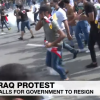
At least 21 people have been killed in Iraq, with protesters back on the streets sceptical about a government promise to introduce sweeping economic reforms.
Demonstrators are calling for Prime Minister Adel Abdul Mahdi to resign.
They say he is not doing enough to tackle high levels of unemployment and corruption.
Al Jazeera's Natasha reports from Baghdad.
Posted in Security Comments Off on Video: More than 20 Killed as Protests grip Iraq

61 Iraqi Officials Sacked over Protests
Posted on 17 October 2019 .
The Iraqi cabinet has sacked 61 officials over recent protests that killed more than 100 people and injured thousands earlier this month, Anadolu reports.
Leaked documents obtained by Anadolu Agency showed that the decision was taken during a cabinet meeting on Oct. 14.
Protests rocked the capital Baghdad and southern provinces earlier this month against high unemployment and government corruption.
An Iraqi court on Wednesday issued arrest warrants for two police officers in connection with the death of protesters during the demonstrations.
Iraq ranks 18 on Transparency International’s corruption scale, which goes from zero (highly corrupt) to 100 (very clean).
Discontent has been growing in Iraq in recent years due to rising unemployment and rampant corruption. Many in the country have limited access to basic services such as electricity and clean water, and unemployment is around 10%.
(Source: Middle East Monitor)
Posted in Politics, Security Comments Off on 61 Iraqi Officials Sacked over Protests

Video: Will Protesters in Iraq get what they want?
Posted on 15 October 2019 .
From Al Jazeera. Any opinions expressed are those of the authors, and do not necessarily reflect the views of Iraq Business News.
Fed up with years of corruption, unemployment and a lack of basic services, tens of thousands of Iraqis are taking to the streets to protest for a better future.
Security forces have responded to the crowds of mostly young men with astonishing brutality, firing live ammunition, water cannons and tear gas.
More than 100 people have been killed and thousands injured in this latest round of protests, some of the biggest Iraq has seen in years.
Many demonstrators want a complete overhaul of the government. Others believe the best way forward is for the current government to make good on a new reform plan to tackle poverty and corruption.
But with the PM warning that there are "no magic solutions," many are skeptical that things will actually change.
During Monday's episode we ask, will protesters in Iraq get what they want?
Posted in Politics Comments Off on Video: Will Protesters in Iraq get what they want?

Iraq turns 9 Senior Former Officials over to Judiciary
Posted on 12 October 2019 .
The Iraqi government has announced that it had turned nine senior former officials over to the judiciary regarding corruption charges, and pledged to turn others over soon, news agencies reported.
In a statement, the Iraqi Supreme Anti-Corruption Council referred corruption cases of “nine high-ranking officials to the judiciary after the completion of the legal procedures supported by evidence.”
The council stressed that more cases of corruption “will be referred successively to the judiciary.”
However, monitors believe that this measure was announced in order to deescalate the mass protests which have been sweeping the country, protesting corruption, unemployment and lack of public services.
They claim that the government is not dedicated to fighting corruption, as all of the named officials are currently out of the country.
Addressing the Iraqis on Wednesday, Prime Minister Adel Abdul Mahdi declared that he would refer a number of senior officials to the courts over corruption charges.
Early this month, the Anti-Corruption Council announced turning 1,000 public servants over to the judiciary, due to corruption charges.
Iraqi officials stated that the judicial authority had formed a special committee in cooperation with the Anti-Corruption Council, to take decisions regarding these people as soon as possible.
(Source: Middle East Monitor)
Posted in Politics, Security Comments Off on Iraq turns 9 Senior Former Officials over to Judiciary
Baghdad Governor Sacked Amid Protests
Posted on 08 October 2019 .
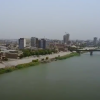
The Baghdad Provincial Council on Sunday voted to dismiss governor Falah al-Jazairi amid protests in the Iraqi capital, according to local media and Anadolu Agency.
The 58-member council voted unanimously to remove al-Jazairi from his post, Al-Iraqiya television said.
According to the report, the provincial council will accept applications within days from candidates for the position.
The move came amid demonstrations in Baghdad and southern provinces against high unemployment and rampant corruption since October 1.
At least 100 people have been killed and more than 2,500 others injured in the protests, according to an anonymous official from Iraq’s Health Ministry.
Protesters are demanding the resignation of Prime Minister Adel Abdul-Mahdi as well as improvements in living conditions and an end to corruption.
Discontent has been growing in Iraq in recent years due to rising unemployment and rampant corruption. Many in the country have limited access to basic services such as electricity and clean water, and unemployment is around 10%.
(Source: Middle East Monitor)
Posted in Politics, Security Comments Off on Baghdad Governor Sacked Amid Protests
Iraq’s Young Protestors ‘Have Nothing Left To Lose’
Posted on 08 October 2019 .
This article was originally published by Niqash. Any opinions expressed are those of the author, and do not necessarily reflect the views of Iraq Business News.
By Mustafa Habib.
Anti-government protests in Baghdad were led by the younger generation, one that has grown up under military rule, lived a more liberal life online and is now questioning the very basis of local, political culture.
More than a hundred deaths and over 4,000 wounded as a result of five days of anti-government protests, quite possibly the largest such demonstrations in Iraq since 2003. But this time the protests have been led by a different generation of Iraqis, those born in the 21st century, who have grown up with Justin Bieber and Facebook and in a country that was controlled by the US military for a large part of their youth. This is the generation of Iraqis who have tuned religious songs into rap tunes.
On October 1, thousands of young Iraqis - the vast majority of them male, only a handful of women have taken part - marched to Baghdad’s central Tahrir Square, the scene of many such actions. There were also demonstrations in provinces further away, including in Dhi Qar, Basra, Diwaniyah and Wasit.
The demonstrators were motivated by a wide variety of things – anger over corruption, a lack of jobs, deficient state services - and there were even some conspiracy theories springing up about why the demonstrations were happening.
But one thing seemed certain to most onlookers: The youth of Iraq were on the streets for a just cause. As a nation, Iraq is mired in corruption, represented by politicians that seem mostly concerned about protecting their own interests, and dealing with a lack of state services, such as the provision of water and power, and damagingly high youth unemployment. Iraq is also caught in the middle of international tensions between two major allies, Iran and the US.
“I feel ashamed when I’m online, on social media, and I see the streets, schools and development in other countries all around us,” says Raed Latif, 19, emotional as he explains why he’s taking part in the protests. “Meanwhile in Iraq, I have nothing to be proud of. I love my country and I want to change the current state of things.”
Latif had been sneaking out of the house without telling his mother that he was joining the protests. One day last week, his mother found out and locked him inside, making the teenager promise not to go out. He snuck out again anyway.
The authorities have tried to stop the protestors from contacting one another and to quell reports of the demonstrations and counter actions by throttling the internet nationwide. But the young demonstrators have still managed to post and publish pictures and videos, and to communicate.
Besides using it as an organisational tool, one might also argue that this younger generation of Iraqis is also impacted the online world more than their elders – they’ve grown up with social media and electronic gaming, using sites like PUBG, or Player's Unknown Battle Ground, a multi-player online game, to communicate with young people all over the world. Ideology and religion still matter to them – they live in Iraq, after all - but they’ve also been in touch with other social groups in other countries online, and it’s potentially given them a more liberal outlook than their parents.
There’s an interesting disconnect between older generations in Iraq and this younger one taking to the streets with clear demands for more jobs and better conditions as well as an end to corruption.
During a seminar held in Baghdad last month by a local civil society organisation, a doctor in his 50s started his speech criticising the “youth of today”. He said that younger Iraqis are fickle, they spend their mornings praising some individual on Facebook only to turn upon them by the evening. “This is a generation with no opinions and no steady moral compass,” he complained.
A younger member of the audience stood up to rebuke the doctor. “What you say is true,” the participant conceded. “But when we praise somebody in the morning and criticise them in the evening, that is because we are basing our reactions upon that person’s behaviour. At one stage, we feel his behaviour is good. At another, we feel it is bad.”
Younger Iraqis are different precisely because of such subjective attitudes, he argued. “We don’t have any affiliations,” the young man continued. “Our reactions are based on how an individual behaves, not who they are, or which tribe they belong to. We are not like those [the older generation] with partisan connections and old-fashioned ideologies, who don’t care whether a person is right or wrong, just who their connections are.”
After a young protestor was killed by security forces last Sunday, his friends searched his pockets for a mobile phone with which they could call the dead man’s parents. They found IQD1,000 note, equivalent to about one US dollar, and they also found a phone. It was very old mobile phone, filled with dozens of videos of the Baghdad demonstrations. When the other young men tried to call the dead man’s parents using the phone, they found they were unable to get through: There wasn’t even enough credit on the phone even to do this.
“What did we do to deserve this?,” mourned Abdul-Karim Khaqani, a 22-year-old demonstrator. “We are peaceful and unarmed. Why did they attack us with live ammunition? We will not forgive the politicians for this and if we fail this time, we will be back. We will protest again. We have nothing to lose,” he said, “other than our lives.”
Posted in Politics, Security Comments Off on Iraq’s Young Protestors ‘Have Nothing Left To Lose’
Why are Iraqis Protesting against the Govt?
Posted on 03 October 2019 .
From Al Jazeera. Any opinions expressed are those of the authors, and do not necessarily reflect the views of Iraq Business News.
Iraq's barely year old government is being forced to deal with the largest nationwide protests since taking over.
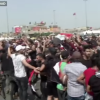
Riot police contained demonstrators in Baghdad on Wednesday, 24 hours after bullets and tear gas were fired.
At least three people died and hundreds of others were injured in Baghdad as well as other cities.
The mostly young protesters are angry at high levels of corruption, unemployment, and poor public services.
Are Iraq’s leaders listening? And why isn't the government able to deliver?
Presenter:
- Folly Bah Thibault
Guests:
- Ali Al-Nashmi - Political analyst and specialist on the modern history of Iraq
- Judit Neurink - Political Analyst and founder of the Independent Media Centre in Kurdistan
- Yusuf Alabarda - Middle East analyst
Posted in Politics, Security 2 Comments
Video: Iraq Protests - Graduates Demand Jobs
Posted on 08 September 2019 .
From Al Jazeera. Any opinions expressed are those of the authors, and do not necessarily reflect the views of Iraq Business News.
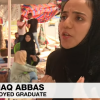
Thousands of university graduates in oil-rich Iraq are protesting outside government ministries in Baghdad, demanding jobs.
Unemployment for young adults stands at 22 percent and the government admits it has not planned for the large numbers of students coming into the job market every year.
Years of conflict have hollowed out the country's economy.
Al Jazeera's Charles Stratford reports from Baghdad:
Posted in Construction & Engineering In Iraq Comments Off on Video: Iraq Protests - Graduates Demand Jobs

Iraq Stock Market Report
Posted on 31 May 2019 .
Advertising Feature
Rabee Securities Iraq Stock Exchange (ISX) market report (week ending: 30th May 2019).
Please click here to download a table of listed companies and their associated ticker codes.
The RSISX index ended the week at IQD666 (+4.0%) / $718 (+4.2%) (weekly change) (+1.1% and +1.2% YTD change, respectively). The number of week traded shares was 8.2 bn and the weekly trading volume was IQD4.8 bn ($4.0 mn).

ISX Company Announcements
- The Board of Directors of the initiative of Tamkeen, sponsored by the Central Bank of Iraq and financed by banks and exchange companies and under the supervision of the Association of Iraqi private banks, agreed to finance a number of industrial projects and initiatives in Muthanna province in the field of plastic and food industries and others. This comes in support of the economic reality and the alleviation of the unemployment rate in the province. It is worth mentioning that this initiative works to finance various industrial, service, environmental and social projects, and is distributed among all Iraqi governorates. (CBI.iq)
- ISX will suspend trading of Al-Ameen Estate Investment (SAEI) starting Jun. 19, 2019 due to the AGM* that will be held on Jun. 24, 2019 to discuss and approve 2017 annual financial results.
- ISX will suspend trading of Iraqi for Tufted Carpets (IITC) starting Jun. 13, 2019 due to the AGM* that will be held on Jun. 18, 2019 to discuss and approve 2018 annual financial results.
- ISX will suspend trading of Baghdad Soft Drinks (IBSD) starting Jun. 10, 2019 due to the AGM* that will be held on Jun. 24, 2019 to discuss and approve 2018 annual financial results and increasing the company’s capital through bonus issue.
Posted in Investment Comments Off on Iraq Stock Market Report