


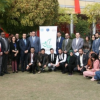
Kirkuk: Youth Discuss Reconciliation and Stability
Posted on 26 December 2019 .
Kirkuk: Youth come together to discuss issues of reconciliation and stability
Twenty-four young women and men, representing the youth of Kirkuk Governorate, recently met in Kirkuk city to discuss what the youth see as key issues in the context of their Governorate.
In the presence of the Head of the United Nations Assistance Mission for Iraq (UNAMI) Kirkuk Office, Ms. Laura Romanazzi, the Acting Governor of Kirkuk, Mr. Rakan Al-Jubouri, several local officials, politicians and UNAMI representatives from the Office of Political Affairs, the energetic and inspiring youth delegates discussed issues pertaining to unemployment, youth participation in decision making and supporting youth projects, the current security situation in the country, provision of basic services including the right to education, combatting corruption and the role of oversight institutions.
In her address to the workshop, Ms. Laura Romanazzi said that Kirkuk was “a Governorate which showcases all of the complexity, diversity, potential, conflict and promise of Iraq”. Therefore, “inclusive and honest discussions must take place between communities to address past legacies”. This, she added, “cannot be done without the political, social and economic participation of young people - and your involvement in reconciliation efforts to bridge differences and address grievances”.
The youth workshop held from 13-15 December 2019 was organised by UNAMI, in cooperation with the Coexistence and Social Peace Committee under the auspices of the Office of the Prime Minister, and the Iraqi Al-Amal Association. The activity is in line with UNAMI’s mandate to support youth and their valuable contributions to the country.
(Source: UN)
Posted in Politics Comments Off on Kirkuk: Youth Discuss Reconciliation and Stability

An Iraq for All Iraqis
Posted on 17 December 2019 .
By Yassir Khudayri, for Open Society Foundations (OSF).
In early October 2019, in Baghdad’s Tahrir Square and in many of Iraq’s other major cities, young Iraqis took the streets, chanting slogans such as “with life and blood we defend you, Iraq.” To those unfamiliar with the specifics of political and social life in the Middle East, where sectarian divisions often trump national identities, this may not have seemed like a big deal.
It may have seemed, in fact, like just one more of the countless mass protests that have engulfed the region over the past decade.
In both respects, however, these observers would be wrong. The chants were a big deal. And the protests, while not entirely unprecedented, were nevertheless a sharp break from the norm. Because, for the first time in recent memory, Iraqis weren’t demanding their rights under the banner of any specific religious or ethnic group, but their rights as Iraqi citizens.
And they weren’t demanding privileges—they were demanding the fall of a system that has worked to keep them apart, and that has been feeding into the pockets of corrupt elites to the detriment of ordinary citizens.
To understand why this embrace of nationality is so important, however, a look into the recent past is necessary. Under Iraq’s current model of ethno-sectarian balancing [paywall], established after the United States-led invasion of 2003, coalition governments hand out ministerial positions and budgets according to the proportion of the country’s sectarian populations—Shiite or Sunni Muslim Arabs, and Kurds.
This has led to staggering corruption in which the elite’s control over government ministries, major enterprises, and media has actively worked to maintain the status quo. Spawned in the aftermath foreign occupation, this form of governance has benefitted few and served as little more than a failed attempt for perpetual ceasefire, rather than a sustainable system of government meeting the needs of the Iraqi people.
Corruption and sectarian favoritism in the public sector have played a major role in entrenching sectarian division among Iraqis and have led to rampant unemployment and lack of access to basic services. Transparency International ranks Iraq as the 18th most corrupt country in the world; according to official figures cited in a report from the Telegraph, since 2004, a remarkable $450 billion in public funds have been unaccounted for. Meanwhile, about a quarter of the country’s young population is unemployed, while access to clean water and electricity is unreliable at best.
This wave of protests—which encompasses multiple sectors of the population—illustrates the rise of a pan-Iraqi movement. Just as importantly, this remains an essentially grassroots-run and leaderless movement. In the same streets that recently staged over a decade of inter-sectarian fighting, Iraqis are now refusing to be torn apart, demanding a universal government for all its citizens, and are willing to face the rain of bullets and tear gas to see it happen. This is unique and its importance should not be understated. It is a rare moment that could build a new bedrock for a country that has been through so much, by the hands of its people.
The international community must acknowledge the magnitude of this movement and rise to its responsibility in ensuring protesters’ rights to call for a better life, and support them in their legitimate demands—but it must tread carefully. States and international groups should learn from past mistakes and refrain from throwing money at the problem or call for new elections in hopes that the country will miraculously jump to its feet and prosper. This has proven to be counterproductive or even disastrous in the past, especially in the Middle East.
What can the international community do, then? As a start, it should use its leverage with the Iraqi government to ensure an immediate halt to the slaughter of peaceful protesters. Since the movement began in October, about 400 protesters have been killed and thousands injured by government forces, and all efforts should prioritize an immediate halt to the onslaught. Further, it should pressure the government to address protesters demands and provide any support in doing so in a way that is consistent with their human rights.
This applies regardless of the resignation of Prime Minister Abdul Mahdi, since this systemic problem transcends who heads the government. The UN Secretary General has uttered harsh words at the Iraqi government’s brutality against its people, while the Arab League’s chief called for “restraint.”
Any systemic change should not be held hostage to constitutional rupture or the loss of any more lives. Change must start now in support of a transition to a new form of governance, which can then build on its own progress. The demands of protesters should be met now, and the international community has a duty to acknowledge them and support the sitting Iraqi government in adopting structural changes for a new system, regardless of who sits in in Baghdad now or in the future.
What is outlined above is necessary, but it will not sufficiently address the matter. There are too many dimensions to resolving this issue than I could possibly explain or understand. But one thing is for certain: The rage that initially drew people to Tahrir Square rapidly turned into a passionate display of popular unity that was once thought impossible, and it does not appear to be slowing down. A generation born into war and ripped apart by tragedy is now rising—and demanding recognition of their common identity.
(Source: The Intercept, under a Creative Commons licence)
Posted in Politics Comments Off on An Iraq for All Iraqis

Private Sector Investment - What Strategy for the next PM?
Posted on 13 December 2019 .
By Dr Amer K. Hirmis.
Any opinions expressed are those of the author, and do not necessarily reflect the views of Iraq Business News.
Private sector investment in Iraq -
What strategy for the next Prime Minister?
Iraq is in turmoil. The protests of the Iraqi youth, which started on October 1st 2019, are calling for the end of corruption, inequality in income distribution, high unemployment and the current (ethno-sectarian) political system and outside interference. They are also calling for a better life and, metaphorically, for their ‘own country’ (watan).
The protests have so far claimed the resignation of Adel Abdul-Mahdi, the outgoing prime minister. The appointment of a new prime minister is imminent. However, it is not certain whether president, Barham Salih, or, indeed, the current parliament itself will remain in place for a long time. The system they are part of has failed.
Politics aside, this situation compounds an already unfavourable environment for doing business in Iraq, as strongly indicated in a recent World Bank report (Oct. 2019). Political instability, uncertainty and indecision provide no comfort for the private investor.
There are, however, a number of reasons why the next prime minister should be bold and determined to make fundamental changes to encourage private sector investment. There is a need to ameliorate the severe structural problems in Iraqi economy to lessen its dependence on oil exports. The enormous challenges they face include high youth unemployment (at ca. 25 percent), young population (60 percent under 30 years of age) and growing at around 3 percent pa., over 700,000 people entering the labour market each year, hundreds of thousands of senior schools and university graduates, to mention a few. They must act fast, deep and wide. None of these challenges is easy! The new prime minister must be willing to make economic development in the face of adversities. New strategies are a must, reversing old ways of doing things.
This brief note provides a few suggestions relating to what the next prime should do to induce (domestic and foreign) private investment in the economy.
First though history. The graph below shows the dominance of public sector investment (gross fixed capital formation) over the last 50 years. The decline in private investment intensified following the 1964 nationalisation of major private sector concerns, in industry, banking and commerce.

Private sector's share of non-oil GDP declined from 87.3 percent in 1950 to 62.5 percent in 2010 (Hirmis, A.K. 2018a: 57). It was 61.8 percent in 2017 (cosit.gov.iq/n. accounts/2018, p.10).
Structure and ownership
The private sector’s role in the economy has been relegated for nearly 60 years now. Its previously wide-ranging economic activities have now been confined to mainly in retail and trade, construction, transport and ICT (http://cosit.gov.iq/AAS2017...). Crafts and light industry are the province of the private sector.
The majority of businesses are owned by sole proprietors, with the rest being largely family partnerships: the country has few large, multi-industry conglomerates. However, large private businesses are emerging in ICT, particularly mobile communications, in technical services for the oil and gas sector, and in manufacturing. Productivity in the private sector varies: Iraqi private firms perform better in this regard than others in the MENA region in textiles and garments, chemicals, pharmaceuticals, non-metals and equipment; by contrast, food processing and electronics have a relatively low level of productivity (WB 2017; WB 2019; and RoI, 2014: 41, apud Idris, I. 2018).
Skills and education
As Christine van den Toornhas (2019) has remarked a key first step “will be education reform to prepare young Iraqis for private sector employment…It is clear that the issue is not a lack of demand...a lack of training in basic business skills such as finance and accounting, and a lack of core professional abilities, from critical thinking, research and report writing to being able to work with common software programs...This points to the urgent need to completely overhaul the public education system, including modernizing the curriculum…(short-term solutions include)… a nationwide series of accredited, specialized, one- or two-year programs that focus on developing language, business and professional competencies” Back in 2003, Nancy Birdsall (2003: 61) had observed that “Development and democracy require a fast uptake of Iraqis, including girls and women, into secondary school. They require replacing a school system focused on doctrinal propaganda with a system responsive to new demands for marketable skills.”
The wider issues
Second, the wider issues facing any future Iraqi prime minister in relation to inducing private sector investment go beyond industry structure, ownership, skills and education, noted above. The next prime minister should have a robust and realistic vision for Iraq’s economy, and its characterisation. They should decide for example whether they wish to build a capitalist, market, economy, where the private sector plays a key role whilst government plays an enabling role for wealth and jobs creation, especially in the productive sectors, like manufacturing and agriculture? On this point government has dithered since 2003. Now there is an opportunity to decide on the character of the Iraqi economy going forward.
The prime minister and his advisors should, critically, have clear views of the dynamics of private sector performance; the business environment needed for investment to take place, and for firms to operate successfully. Private investment takes place on a very simple and familiar premise: the anticipated reward is worth taking the risk – i.e. reward vs. risk.
On the investment side, the World Bank’s October 2019 report on ‘Doing Business 2020 – Iraq’ clearly shows why both the domestic and foreign private investors are weary and reticent. Iraq fails on all the measured indicators used to assess the business environment – the ease of doing business. Iraq currently does not provide a favourable business environment. These indicators include ‘getting electricity’, registering property, obtaining credit, enforcing contracts and, inter alia, resolving insolvency. Iraq came 172nd out of 190 countries, very close to the bottom. In short, the next prime minister, and his advisors, must rise to an enormous challenge. And, this is one of the yardsticks for judging the success or failure of the next prime minister’s administration.
On the side of operation and performance, the latter, typically, depends essentially on eight factors both internal and external to the firm, as shown in the Figure below.

Economic history of market economies shows that growth is generated mainly by the private sector; the government plays an enabling role, through its economic policies, regulation, support for innovation and trade, and ensuring political stability within a democratic framework. Government also subsidies and regulates education, health services and physical infrastructure. However, regardless of the stage of economic development, a number of factors come together to influence both private investment level/structure and the performance of the firms, as indicated above.
Firms also need to consider in detail their profit and loss accounts – in the process of making profits (if they do), firms typically make allowances for wages, interest-bearing loans, or equity raised privately or from commercial/state banks. In addition, taxation, dividends, retained earnings, are also considered. Decisions on these matters constitute part of the firm’s behaviour, and could affect its future direction – e.g. expansion, diversification, or even closure. In the case of Iraq, there is also a consensus amongst observers that tackling corruption, bureaucracy and doing without an ethno-sectarian system of government is critical for economic development. Corruption, bureaucracy and cronyism deny many qualified potential employees access to jobs they deserve to have. Security and political stability are also a must for sustained private investment.
In other words, a large number of factors need to be taken into account in balancing the rewards versus the risks at the firm level. The new Iraqi government must account for this.
Finally, at the strategic (macro) level, the new prime minister has at least three options to stimulate private sector investment, accounting for the eight factors noted in the Figure above.
Option one is to introduce a radical and swift reform concerning doing business in Iraq, creating a conducive environment to induce private investment, by removing constraints facing it. The new prime minister would be well-advised to take a leaf from the World Bank’s recommendations for doing business in Iraq. They should also take a leaf from the government’s own ‘Private Sector Development Strategy 2014-2030’ which recommends amending current laws and regulations governing the private sector which impede the sector’s growth. These include Investment Law 13 of 2006; Company Law 21of 1997; Industrial Development Law 164 of 1964; Implementation of large projects Law 157 of 1973 and the Economic Establishment Law 98 of 1964). On the other hand, the private sector investors should observe the rule of law, especially the Labour Law (37) 2015.
The new prime minister should also seriously consult with Iraqi ‘Chambers of Commerce’ and ‘Confederations of Industry’ to develop an awareness of their concerns, aspirations and the dynamics of their performance.
Option two is to start with restructuring and rejuvenating the ‘State-owned enterprises’ (SOEs), to improve their productivity, keeping in mind the socio-political impacts this option might have. The SOEs, most of which are dysfunctional and inefficient assume a drain on government’s budget due to underemployment, redundancy and maladministration. The SOEs have also assumed control over the sectors concerned and in effect crowded-out most non-oil private firms (WB, 2017). The new prime minister could introduce a form of partnership with the (domestic or foreign) private sector to rejuvenate the SOEs, based on, say, 30-40 years lease, profit-sharing, joint operation, ensuring continuous professional development for Iraqi workers and continuous research and development(R&D). When in operation, major ventures should be linked with Iraqi/foreign universities, to encourage innovation. Such partnership arrangements do not have to take the form of BOT (Build-Operate-Transfer) or BOOT (Build-Own-Operate-Transfer) business models. A new model could be struck, having the advantages of minimizing public cost for investment, reducing public debt, allowing for innovation, improving productivity (especially via FDI – Foreign Direct Investment), and, improve good governance, transparency etc. These arrangements could be applied to the manufacturing, agriculture and physical infrastructure of the economy, to start with.
Option three is to widen the remit of the proposed ‘Construction Council’ which the current/new parliament will consider in the form of a ‘Construction Council Bill.’ This was forwarded by cabinet to parliament on September 17, 2019 (https://gds.gov.iq/ar/cabinet-approves-the-draft-construction-council-bill/). For the Bill to induce private investment its current objectives and mechanisms need fundamental review and amendments to widen its remit so that SMEs could, for example, gain access to finance. Also, the Bill must not become another mechanism to further corruption and money laundering. It must ensure that Council works on strictly professional basis, avoiding the politicisation of its remit/work. Critically, the new ‘Construction Council’ must be regulated by, say, a new independent ‘Office for Economic Development Responsibility’ (OEDR) ensuring that Council performs and delivers major/SME projects efficiently and effectively. This means that the operator must not be the regulator, which is the case in many Iraqi institutions at present. Otherwise, the seeds of corruption will be easily sown (http://iraqieconomists.net/en/2019/10/10/the-construction-council-bill-2019-a-critique-by-dr-amer-k-hirmis/). On this basis, the new prime minister could make a real difference and amend the current broken system of doing business in Iraq.
Of course the above three options are inextricably linked, indeed they could be implemented in parallel.
In all these options, education and economic development must be strongly linked, as noted above. University and vocational training graduates need to end up in jobs created by expanding productive and service sectors, taking advantage of the ‘digital revolution.’ In short, there must be close link between education (curricula) and the skills needs in the labour market. All girls and boys should have access to education to advanced level (up 16-18 of age), so that they would make informed decisions for themselves, in life and in participating in the labour market (Hirmis, A.K. 2018b). This is especially important at the micro-firm-level, ensuring the skills required are provided.
In summary
The new prime minister will be faced with many challenges, noted above, and none is easy!
Stimulating private sector investment is one area where they can turn these challenges into opportunities. The new prime minister will need to muster great wisdom and determination to rise to these challenges, and assist in wealth and jobs creation. Learning from Iraq’s own history and also from foreign experience in economic growth, is always rewarding. The new prime minister should seek well-reasoned, workable advice and apply it in the Iraqi context. This is one way of enhancing state craft. Iraqis will be watching the new prime minister very closely, and will demand results!
END
Key References
Birdsall, N. (2003) The Real Challenge for Iraqi Development (in The International Economy, Fall 2003: 58-61)
Christine van den Toornhas (2019) The Answer To Iraq’s Problems Is (Still) Education ((https://www.niqash.org/en/articles/society/6013/The-Answer-To-Iraq’s-Problems-Is-(Still)-Education.htm – October 31, 2019, accessed, Nov.15, 2019)
Hirmis, Amer K. (2018a) The Economics of Iraq – ancient past to distant future (Grosvenor House Publishing)
Hirmis, Amer K. (2018b) Iraqi Women’s Contribution to the Iraqi Economy – An impressionistic view (http://iraqieconomists.net/en/2019/04/08/iraqi-womens-contribution-iraqi-economy-impressionistic-view-amer-k-hirmis-phd/).
Idris, I. (2018) Inclusive and sustained growth in Iraq (K4D Helpdesk Report. Brighton, UK: Institute of Development Studies (posted at: https://assets.publishing.service.gov.uk/media/5b6d747440f0b640b095e76f/Inclusive_and_sustained_growth_in_Iraq.pdf , accessed on Dec. 4, 2019).
RoI (2014) Private Sector Development Strategy 2014-2030 Republic of Iraq (http://iraqieconomists.net/en/wp-content/uploads/sites/7/2014/09/Private-Sector-DevelopmentStrategy-2014-2030.pdf
World Bank (WB) (2012). Private Sector Development in Iraq: An Investment Climate Reform Agenda (MENA Quick Notes Series. Washington, D.C.: World Bank Group. https://openknowledge.worldbank.org/bitstream/handle/10986/20577/NonAsciiFileName0.pdf?sequence=1&isAllowed=y)
WB (2017) Iraq - Systematic Country Diagnostic (English). Washington, D.C.: World Bank Group. http://documents.worldbank.org/curated/en/542811487277729890/Iraq-Systematic-Country-Diagnostic
WB (2019) Doing Business 2020 – Iraq (https://www.iraq-businessnews.com/2019/11/25/doing-business-2020-iraq-report-a-critique/).
Please click here to download Dr Hirmis’ full report in pdf format.
Dr Amer K. Hirmis is Principal at UK-based consultancy CBS Ltd. (2008-present). In October 2009, Amer began a 20-months assignment as Senior Development Planning Advisor to the Ministry of Planning in Iraq (funded under the DANIDA programme for ‘peace and reconstruction’ in Iraq). The posts Amer has assumed include Chief Economist and Head of Policy at the London Chamber of Commerce and Industry (1992-5), Economic Advisor to UK South West Regional Development Agency (1996-8) and Associate Director and then Head of Consulting and Research (Middle East) at the global firm DTZ (1998 to 2007).
Dr Amer K Hirmis is the author of ‘The Economics of Iraq – ancient past to distant future’
[https://www.amazon.com/Economics-Iraq-Ancient-distant-future/dp/1999824105]
Posted in Amer K Hirmis Comments Off on Private Sector Investment - What Strategy for the next PM?
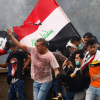
Campaign to Stop Lethal Force Against Protesters
Posted on 27 November 2019 .
Euro-Med Monitor launches advocacy campaign to stop the bloodshed against peaceful protesters in Iraq
The Euro-Mediterranean Human Rights Monitor has sent letters to the European Union and the French and German governments, urging them to exert pressure on the Iraqi government to stop the use of lethal force against ongoing popular protests, and to immediately stop the use of violence against peaceful protestors.
The Geneva-based organization said in a statement that it had sent letters to Federica Mogherini, EU High Representative for Foreign Affairs and Security Policy, Jean-Yves Le Drian, French Minister for Europe and Foreign Affairs, and German Foreign Minister Haikou Massu, briefing them on the bloody security campaigns against protesters calling for the overthrow of the government of Prime Minister Adel Abdul-Mahdi for failing to tackle corruption and solve the issues of power outages and unemployment in Iraq.
The Euro-Med expressed its grave concern over the ongoing violence and repression by Iraqi authorities which was made possible by the agreements signed between the Iraqi government and the European Union against popular protests over the past two months.
In its letter to the Iraqi government, the Euro-Med called for an immediate and serious investigation into the killings by security forces, calling for their withdrawal from areas of contact with protesters, and for ensuring that the perpetrators are brought to justice. The organization called for the release of detainees detained at the protests, compensation for all victims of violations for the illegal use of force by security forces and adopting effective steps to confirm the Iraqi government's commitment to freedom of opinion and peaceful assembly, as guaranteed by international and domestic laws.
Since the protests erupted on October 1, the Euro-Med has documented the deaths of more than 363 protesters by security forces and snipes, as well as the injury of more than 15,000 others for expressing their opinions, as guaranteed by the Iraqi Constitution and international agreements to protect the right to freedom of peaceful opinion and assembly.
The Euro-Med said its teams documented horrific details of killings and abductions of unarmed demonstrators, journalists, human rights activists and observers, and monitored a series of security campaigns organized by Iraqi police, security forces and military formations against demonstrations, especially in the provinces of Southern Iraq. The organization monitored the closure of several media outlets, most recently on November 24, as the Iraqi government issued a decision to close the offices of 8 television channels, and 4 other media outlets for 3 months for allegedly violating "the codes of professional conduct."
In a letter to the European Union, the Euro-Med said the French government continues to assist Iraqi internal security forces by providing them with military support and training, including weapons used to deal with peaceful demonstrations. The Geneva-based group noted that Germany too extended in September the training of the German mission (Bundeswehr) of the Iraqi local troops for a year.
The organization added in its letter to the German Foreign Minister, "We find it disturbing that the member states of the European Union continue to help the Iraqi authorities and have not yet considered to benefit from this assistance at least to ensure respect for human rights."
The Euro-Med pointed out that between 2014 and 2018, Iraq was the main country buying arms from the Czech Republic while during the same period, France provided 8.6% of arms imports to the Middle East, including Iraq.
The Euro-Med stated that although the EU imposed an embargo on arms exports to Iraq in 2003, in 2004 it adopted the Common Position 2004/553/CFSP, which authorized the sale, supply, transfer, or export of weapons and related materials required by the newly established Government of Iraq.
In its letter to the French Foreign Minister, the Euro-Med said that since the outbreak of the Iraqi protests, Paris has not reduced its military assistance nor taken necessary punitive measures against the Iraqi authorities to curb its use of violence against peaceful demonstrators, noting that this unfortunate slowdown could make France complicit in such tragic events taking place in Iraq.
The Euro-Med called on the EU to consider re-imposing the arms embargo, even partially, to ensure that military training and arms exports from EU member states are not used to commit new violations against peaceful protests.
The organization stressed the need for the European Union to consider the use of its assistance to Iraq in order to ensure that the government of Abdul-Mahdi complies with its responsibilities towards non-violent protests and to stop use of force against demonstrators.
The Euro-Med called on the European Union to pressure the Iraqi government to show adequate respect for human rights in Iraq, in addition to pledging not to use EU aid and military supplies to suppress peaceful protests.
The Euro-Med concluded by calling on the French government to suspend the training of personnel and other forms of assistance of the Iraqi government until it abides by its responsibilities towards non-violent protests, stop all forms of use of force against them, and open immediate and serious investigations into the brutal use of violence against them in the last two months and pledge to hold perpetrators accountable in accordance with Iraqi and international laws.
(Source: Euro-Mediterranean Human Rights Monitor)
Posted in Security Comments Off on Campaign to Stop Lethal Force Against Protesters

Iraq orders Closure of 12 News Outlets
Posted on 26 November 2019 .
Iraq's media regulator should reverse its decision to order the closure of 12 broadcasters over a licensing dispute and should allow media outlets to freely cover protests in the country, the Committee to Protect Journalists (CPJ) said on Monday.
On November 12, the Communications and Media Commission (CMC), Iraq’s media regulator, ordered the closure of eight television broadcasters and four radio stations for three months for allegedly violating media licensing rules, and issued a warning against five more broadcasters over their coverage of protests, according to a copy of the closure decision, which CPJ reviewed, and reports by local news organizations and press freedom groups.
According to the decision, the commission also renewed the closure of U.S.-funded broadcaster Al-Hurra for an additional three months. The outlet was shuttered on September 2 after it aired a report on alleged state corruption, as CPJ reported at the time.
The decision includes a recommendation to the prime minister’s office to send security forces to the outlets to force them to close. According to CPJ’s review of the outlets’ broadcasts, and an official with the media regulator who spoke to news website Arab News, none of the outlets have been closed as of November 25.
The outlets have critically covered the protests that have taken place throughout Iraq since October over a lack of basic services, unemployment, and government corruption, according to CPJ’s review of their broadcasts.
“Iraqi authorities are using all the means at their disposal, legal and otherwise, to intimidate outlets in an effort to prevent them from covering the ongoing protests in the country,” said CPJ Middle East and North Africa Representative Ignacio Miguel Delgado. “We call on the Iraqi Communications and Media Commission to reverse this order and to allow TV broadcasters, radio stations, and journalists to do their jobs.”
The outlets listed in the decision are the Amman-based Dijlah TV and Anb TV, the Dubai-based Al-Sharqiya TV, the Saudi-funded Al-Arabiya Al-Hadath, the U.S.-funded Radio Sawa, the Sulaymaniyah-based NRT News and Radio Nawa, and the Baghdad-based Al-Rasheed TV, Al-Fallujah, Hona Baghdad, Radio Al-Nas, and Radio Al-Youm.
The decision also issued a warning to five outlets to “adapt their discourse to the media broadcasting rules” or else face possible suspension: the Abu Dhabi-based Sky News Arabia, the Beirut-based Al-Sumaria, the Erbil-based Rudaw, and the Baghdad-based Asia TV and Ur TV.
The document recommends that the prime minister’s office approach representatives from the home countries of the foreign outlets listed in the decision, as well as the management of Egyptian satellite provider NileSat, to address the alleged violations.
Iraq’s Communications and Media Commission did not immediately reply to CPJ’s emailed request for comment.
Amid the protests, unidentified gunmen raided the Baghdad offices of four broadcasters, and the Communications and Media Commission ordered Al-Dijlah TV’s transmissions into Iraq to be blocked and its offices shut down for allegedly failing to abide by professional standards, according to CPJ reporting.
(Source: CPJ)
Posted in Iraqi Communications News, Politics Comments Off on Iraq orders Closure of 12 News Outlets
Iraq’s New Republic of Fear
Posted on 25 November 2019 .
By Renad Mansour, for Foreign Affairs. Any opinions expressed are those of the author, and do not necessarily reflect the views of Iraq Business News.
How Youthful Protests Provoked an Authoritarian Turn
On October 1, protesters flooded the streets of Baghdad, decrying high rates of unemployment and rampant corruption.
In the ensuing weeks, the protests ballooned. Hundreds of thousands of Iraqis marched in the capital and in other cities in the south of the country.
As tensions mounted, government forces and paramilitary groups responded by killing over 300 people and wounding nearly 15,000 more.
Baghdad has been in a near-constant state of upheaval for the past month.
Government forces recently retook many plazas and bridges that had been occupied by the protesters, but the central Tahrir Square remains a hub for the popular uprising, replete with sound systems, medical tents, and even a free revolutionary newspaper.
Posted in Politics, Security Comments Off on Iraq’s New Republic of Fear
Leaked Iran Spy Docs reveal Grip on Iraq
Posted on 19 November 2019 .
Leaked Iran spy documents reveal extent of grip on Iraq
Ground-breaking documents detailing staggering evidence of Iran’s espionage operations, bribery payments and efforts to expand influence within Iraq have been leaked to the US-based media organisation The Intercept in collaboration with the New York Times.
Together they reveal the huge extent of Iran’s grip on its neighbour.
The report released by the two organisations details the aggressive efforts with which Tehran worked to bring Iraq under its influence following the US invasion and toppling of Saddam Hussein in 2003.
The documents include the years of experience of Iranian spies to ensure the obedience and cooperation of the country’s leaders, pay Iraqi agents to switch sides from working with US intelligence, and gain a firm foothold in every aspect of Iraqi life.
The revelations in the report cover the bribery of Iraqi government officials. A prominent example happened in mid-October while protestors were on the streets in Iraq demonstrating against Iranian influence.
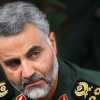
The commander of the Islamic Revolutionary Guard Corps (IRGC), Major General Qasem Soleimani (pictured), visited Iraq to persuade an ally in Parliament to help Prime Minister Adil Abdul-Mahdi maintain his position.
The report reveals how Abdul-Mahdi was groomed by and begun to work closely with Iran in 2014 while he was Iraq’s oil minister, and how his “special relationship” was connected with that of former Prime Minister Haidar Al-Abadi who also worked in support of Iran.
The documents go even further by broadening out the evidence of espionage to the entire region, with the IRGC under Soleimani having appointed and stationed its own ambassadors to Syria and Lebanon to gather information, report it back to their headquarters in Tehran, and produce entire reports on the findings to be presented to Iran’s Supreme Council of National Security.
The leaks also detailed how, following the withdrawal of US troops in 2011 and the power vacuum that resulted, Iran acted swiftly to recruit former Central Intelligence Agency (CIA) informants in the country.
It was even written in one undated document how Iran started the process of planting a spy inside the US State Department with the promise that, “The subject’s incentive in collaborating will be financial.” The result of the endeavour remains unclear and there were no further details reported, but it described the agent as able to provide “intelligence insights into the US government’s plans in Iraq, whether it is for dealing with ISIS or any other covert operations.”
This focus on US actions and plans within Iraq was allegedly vital to Iran, particularly for the purpose of staying on top in the struggle for influence over the country.
One Iraqi man who had spied for the CIA and been abandoned by the US withdrawal was recorded to have told his Iranian handler that, “I will turn over to you all the documents and videos that I have from my training course… And pictures and identifying features of my fellow trainees and my subordinates.”
Another agent, an Iraqi military intelligence officer who met with an Iranian counterpart, stated his firm support for Iran and that “Iran is my second country and I love it.” In what was a more than three-hour meeting, he also expressed his admiration for the Iranian system of governance, which puts the clerical class in direct control of much of the government.
One major factor in the expanded influence of Iranian espionage within Iraq that is detailed in the report is the sectarian divide between Sunnis and Shia.
This was particularly exacerbated following the toppling of Saddam Hussein and the consequent ousting of every member of his Baath Party, which involved major sections of society and the workforce. Moreover, many of the Baath members were Sunnis, making the de-Baathification process the catalyst for the marginalisation and unemployment of Iraq’s Sunni community, the dominance of the Shia, and the resulting feeling of resentment amongst Sunnis leading to the insurgency and sectarian tensions.
It was this divide through which Iran sought to navigate and regulate, often by preventing Sunni militias from forming while arming and funding loyal Shia militias as a famed tool for influence in the country.
The vast number of leaked documents, more than seven hundred altogether, are seen to reveal the extent of Iran’s influence over Iraq and its body politic, confirming what were previously minor reports and suspicions of the close relationship between the two countries.
The revelation is hugely significant given the escalation in tensions between Iran and the US with its allies in the region, and especially relevant in the ongoing popular protests across Iraq.
(Source: Middle East Monitor)
Posted in Politics, Security Comments Off on Leaked Iran Spy Docs reveal Grip on Iraq
An Economic Manifesto for Iraq
Posted on 07 November 2019 .
By Dr Amer K. Hirmis.
Any opinions expressed are those of the author, and do not necessarily reflect the views of Iraq Business News.
An Economic Manifesto for Iraq
[Bayan Iqtisadi lil-‘Iraq]
Prologue
The October 2019 Uprising of the youth of Iraq is a fresh reminder of the Iraqis love for life. Optimism and hope is on the horizon for a better future, to rebuild Iraq after sixty years of continued economic, political, social and environmental destruction, by successive regimes, in particular since 2003.
Light is in Iraq’s horizon shifting the oppressive darkness engendered by plutocratic theocracy. The Uprising is evidently paving the road to freedom with martyrs, blood, suffering and inextinguishable desire for better life for all Iraqis.
Religion has effectively usurped the power of the Iraqi state. No president or prime minister of Iraq could make a strategic decision without first being sanctioned by the religious authority and/or prominent religious figures. In his speech on October 7, 2019, regarding the Uprising, the president of Iraq repeatedly offered his respect and appreciation to religious figures, for “guidance to the state…” The state craft is now not in the hands of the president or the prime minister.
Every progressive thought or idea, for example, gender equality, positive law, mixed education, modernity (al-hadatha), secularism (al-‘almāniya), and functional democracy has been decried as un-religious, Western, and not suited to Iraq. This state of affairs in governing Iraq is reminiscent of early Mesopotamia, except for the likes of Sargon of Akkad who successfully separated state from religion, during his reign.
In their Uprising, the youth of Iraq, are clearly and loudly demanding an end to this state of affairs. Both the religious leaders and the political class are accused of systemic, rampant, corruption and unlawful enrichment at the cost of annihilating the workers, the poor, women, and the masses that live in abject poverty.
Three things must happen now in Iraq:
- Functional (not just electoral) democracy is accepted by the overwhelming majority of Iraqis, and is the way forward to set up a truly democratic system of government, run by the people of Iraq (al-Nass, al-A’lma al-‘Iraqi);
- It is high time that the rising youth of Iraq ought to have a strong political leadership and government with a strong will and determination to make and effect fundamental change: to cast the dark cloud currently looming over Iraq, and bring light by facing up to tribalism and theocracy, create a strong, diversified, economy, preserve the social fabric that is being torn apart by many of the state institutions, bring back civility in social relations, respect and equality for women, re-energise civil society, restore good physical environment and, inter alia, make Iraq a truly sovereign country establishing peace and stability within and without the country; and
- This leadership, based on a new truly democratic political grouping must work to establish peace and development in Iraq. It should establish stability, security and have a clear positive manifesto based on a vision for the sort of a modern and progressive Iraq they wish to see in 2050, starting immediately.
To this end, what must stop is the social refraction that is being deliberately effected for self-interest under the rubric of warped ideologies, false pretences in “exercising democracy” and religious codes. The emerging leadership must support its 2050 vision by reasonable, realistic, rational and evidence-based short, medium- and long-term objectives, and policies, to unify Iraq in economic, social, political and environmental sense.
The Economy
Whilst Iraq has witnessed brief intermittent periods of economic growth in GDP (gross domestic product) over the past 60 years, this growth was never inclusive. Iraq has never experienced economic development, which goes beyond economic growth - it is not difficult to observe that a very high proportion of new wealth is concentrated in the hands of the few political elites, prominent families, and their immediate social base, leaving the vast majority of Iraqis in despair for a more equitable distribution of income (including from oil rent), desperate to survive, suffering from poor consumption pattern, spending most of their small disposable income on bare essentials, and consequently deprived from engaging in the political process. All along this has been a deliberate policy of the successive regimes in Iraq, selfishly carving up the oil rent for themselves not the masses. The productive sectors of the economy, like manufacturing and agriculture, have been left to shrink both in absolute and relative terms.
The non-oil economy of Iraq is now so small it can’t and does not absorb graduates from universities or vocational training institutions. Except in the trade sector, the private sector finds it virtually impossible to invest in the face of bureaucratic procedures and pervasive corruption, imposing unbearable economic cost. It is almost impossible to find an institution in today’s Iraq that observes good governance, abides by the rule of law, and is subject to proper regulation. It is not uncommon in Iraq that the operator is simultaneously the regulator, or the accused to be their own judges. And, last but not least, over the past ten years, the Central Bank of Iraq has been an active proponent of “quietly” bringing religion into all aspects of the economy. This is a political, not an economic, project!
Today, the Iraqi economy is in dire straits. Here is why:
- The crude oil sector comprised 65 percent of GDP in the first quarter of 2019, up from 52 percent in 2014 (at constant 2007 prices, see: cosit.gov.iq various national income reports);
- Agriculture sector contributed 1.3 percent to GDP in Q1, 2019 (down from 4.12 percent in 2014);
- Manufacturing contributed 0.8 percent to GDP in Q1, 2019 (down from 1.2 percent in 2014);
- Oil exports comprised 99 percent of total exports in 2018;
- Excluding oil exports, Iraq suffers from chronic trade deficit. Importing goods and services has become an easy way to laundering money, only to be invested abroad. The wholesale and retail sector is nearly seven times larger than the manufacturing sector;
- The parallel (black) economy in Iraq is rife, avoiding taxation and not included in GDP;
- Women’s participation in the labour market is a mere 13 percent, at a time when women comprise 50 percent of population in working age;
- The rate of unemployment is around 16 percent (and 25 percent amongst the youth);
- The obese ‘General Government’ “sector” is five times larger than the agriculture sector and seven times larger than manufacturing; and
- 30 percent of Iraqis live in poverty.
All the above are characteristics of a backward, rentier, Iraqi economy.
A four-pronged economic development strategy
A 3-year economic development programme, drawn within the context of an overarching strategy, integrated with a 3-year national federal budget should be considered by the new leadership of the Uprising in Iraq – and the new prime minister. The programme and the budget should be approved by a new cabinet and a new parliament. An annual review of both should be presented to, and discussed by, parliament.
A four-pronged economic development strategy should replace the 2018-22 ‘National Development Plan.’ The strategy should be implemented by the new cabinet. In the short- to medium-term, the following should be key elements for implementation:
- The development of the manufacturing sector. This is an absolute necessity for diversifying the economy away from its dependence on oil, with increased emphasis on satisfying the domestic demand, as well as developing export-oriented industries, where Iraq could develop comparative advantage in contested markets over a short period of time. For example, the petrochemical industries, plastics, pharmaceuticals, cement, agri-processing, and so on;
- The development of the agricultural sector, which requires a rigorous management of the water resources, labour force skills development and stronger links with manufacturing. Securing affordable, high quality food, to the Iraqi masses, produced efficiently is of paramount importance. Instead of having the majority of agricultural land divided into small holdings, as at present, the strategy would benefit from introducing ‘agricultural corporations’ on a wide scale, reaping the benefits of economies of scale, and long term investment;
- Physical and social infrastructure development. Building roads, bridges, airports, housing, schools, hospitals, etc. is a key area for creating well-paid jobs, reducing unemployment, alleviating poverty, and, as in other sectors, instilling professional work ethics, eradicating corruption and nepotism; and
- Development corridors should be initiated beyond urban centres, to link up various provinces (muhafathas) with their rural hinterland. A parallel housing strategy should be in place, thus creating flexibility in the movement of labour and capital across the country, so alleviating the pressure on major urban centres, like Baghdad, Basra, Mosul and Erbil.
A detailed programme for the above four key elements should be produced in consultation with the private sector representative organisations, to involve the private sector from the outset in the development process. Government must play an enabling role to induce investment within a tightly regulated system, based on the rule of law, good governance and robust socio-economic feasibility study for every single major investment project.
A proportion of oil revenue should be allocated for the development process. This proportion should increase gradually, as the expansion of the productive sectors begins to absorb increasing numbers of employees, including those currently employed in government.
Strong links between education and economic development strategies must be established, in order to establish a balance between supply from the education sector and demand from economic sector for employment needs.
In the short- to medium-term, over the first seven years, the new government must work to achieve:
- High employment levels;
- Alleviating poverty through job creation;
- Upgrading skills, and instil professional work ethics;
- Decreasing public debt;
- Tackling tax avoidance, and imposing heavy progressive / gradual income tax;
- Confiscation of the property gained unlawfully (min ayna lak hatha policy);
- Record number of women at work;
- Investing in manufacturing and agriculture, incentivising the private sector to do so;
- Investing in physical and social infrastructure;
- Start a robust programme of investing in productivity, R&D and business entrepreneurship;
- Reducing youth unemployment; and
- Drawing together a modern ‘Industrial Strategy’ for the long-term.
It is crucial that Iraq has, first and foremost, a modern Industrial Strategy underpinning growth and development in the rest of the economy. It is also crucial that a fundamental change is made to the institutions of state/government so that they work in a coordinated and integrated way, especially in areas of fiscal, monetary and supply-side policies, to support the growth of the private sector in a tightly regulated way, based on the rule of law.
The above objectives for the economy of Iraq can’t be realised without stintless efforts of tackling the inextricably linked aspects of life of the Iraqi people, to support the economic strategy - these include social fabric/culture, political system and the environment.
Social fabric
The leadership of the Uprising (as it stands now) must be supported to establish peace and development in Iraq through social reforms, appointment of civil servants, ministers etc. on merit, adopting professionalism in politics and in economics, and abandoning ethno-sectarian practices once and for all. They must reverse the cultural decline Iraq has been witnessing in various aspects of life, opening the doors for modern culture to thrive.
For over sixty years now, Iraq has been witnessing the murder of academics, journalists, artists, writers, and civil activists who stand up for the ‘Truth’ exposing the wrongs and odious thoughts and acts of successive totalitarian, despotic and theocratic regimes, of which the latest has been in power effectively since 2004. In spite of the fact that the 2005 Iraqi constitution guarantees, on paper, freedom of thought, assembly, writing and publishing, acts of brutal elimination of the ‘other’ form too long a list to cite. Violence has become a technique to stamp “authority” and demonstrate “legitimacy.”
Culture in Iraq has suffered a great deal, especially since 2003; examples of cultural sufferance include constant attacks on civility which have become much worse and pronounced than in the 40 years or so previous to 2003. Prior to 2003, Iraq witnessed the shrinkage of the educated middle class, the main generator of effective demand in the economy. Post 2003, Iraq has seen a gradual decline in the size of working class, the cowing the of peasants (fellaheen) at the hands of the tribal leaders, and the rise of a “social strata” comprising people with strong ethno-sectarian allegiances, living on plutocrats’ handouts through money laundering, currency auctions or simply by serving religious parties, and their affiliates.
For this “social strata” corruption has become a substitute for education, professional work and for patriotism. A culture, and way of life, they would sadly defend at any cost, even brutally murdering the ‘other.’ For many (not all) within this uncultured and uneducated “social strata” human life has no value.
The educational establishments – e.g. the universities –are being trampled with by establishing religious centres of ‘thought imposition’ at all levels of education, exercising peer pressure, especially on women to wear hijab, an ever expanding phenomenon in Iraq; school girls as young as seven are being hijabed – a clear symbol of indoctrinating and subjugating girls (and boys) from an early age. Thousands of Iraqi intellectuals have left the country for fear of their life; this brain drain comprises a massive loss of human capital. The oppression of ethnic/religious minorities in Iraq is tantamount to ‘cleansing’? Masses of Kurds, Christians and Yezidis, for example, have left Iraq, over the past 60 years. And, despite their enormous contribution to the economy and culture, Iraqi Jews have, regrettably, become part of Iraq’s history, not the present. And, what was left of the professional work ethics in certain institutions is rapidly diminishing; jobs are offered on sectarian, ethnic or political affiliation, leaving the institutions to wither.
Education by rote is replacing scientific education methods. Al-hafith yuhazim al-fahim (the recitist defeats the learned) is regrettably an accepted currency in religious circles. For the sake of future generations to be able to live in an increasingly competitive, digital, world, this must stop.
The distortion of culture in Iraq has taken many forms. For example, music, singing, and, inter alia, alcohol drinking have been banned. Public spaces, restaurants and what remains of social clubs have to take note of the so-called religious prohibitions imposed by the clergy in the name of religion. Disguised or not, thought police is out in the streets and in universities. Human decency and the love of life in Iraq have been forced to take a back seat, only to give way to some imaginary seventh century social code of practice. Truth and reason are being replaced by blind faith and metaphysics.
Disturbing reports have recently emerged from international news agencies pointing to nefarious practices of commoditising women and minors as young as 12 years old, in the name of pleasure, usufruct, marriage (zawaj/nikah al-mut’a/mizyar). Iraqis look askance at such bent “culture” that has become accepted in some quarters. Alien to Iraqi culture, and to humanity, such practices must stop.
Political system
A strong, diversified, economy that supports all Iraqis needs a strong, stable and favourable polity that would engender economic development and lead to functional democracy. The Uprising’s leadership must reform the broken ethno-sectarian political system, so as to form a solid basis for achieving the outline economic strategy set out above.
The Uprising must put an end to the ‘political vandalism’ of the last 60 years, which has replaced professional politics and politicians. The Iraqi state was dismantled post-2003, and effectively handed to religious parties, in the main. Thus, state building remains a major challenge in Iraq. Corruption, bad governance, circumventing the rule of law, and disrespect of the constitution, is almost complete. The separation of powers too - the judiciary, executive and the legislature - is nearly absent. There is every indication at present that the power of religion has surpassed that of the state, creating a deep, subversive, state, serving self-interest, indeed regional powers, not the Iraqi people. Religion at present has a strong grip on power and the state in Iraq. There over 250 registered political parties, the largest have religious orientation, fracturing the state and government. This is an extreme version of the state of affairs since the establishment of modern Iraq in 1921.
This state of affairs provides good reasons for the youth Uprising.
The Uprising demands that ‘political vandalism’ must end. A secular state must be established in Iraq (by al-‘alma -the Iraqis) for future generations to have a chance to build a modern, stable, secure, and peaceful Iraq for themselves and their offspring(s).
As at the beginning of November 2019, the Uprising is rejecting the existing political system engendered by religion (and Gudea-type turban wearers). This system appears to have run its course. One brave protestor lamented loudly “We don’t want (political) parties, we want a country to live in” as if Iraq has been destroyed. This lamentation is reminiscent of the lamentation over the city of Ur (ca. 2000 BC), which describes the weeping for the city and pleading that it should not be destroyed by the gods.
Iraq’s “electoral-democracy” is not a functional democracy, based on intelligent tightly scrutinised electoral system, of political parties competing on the basis of credible programme of political, socio-economic and environmental reforms. It is not beyond the realm of possibilities that the isolated political elites are rigging the electoral system to stay in power. Voter turnout has decreased from 80 percent in 2005 to 44 percent in 2018. Protests have become frequent. Men of the cloth, and their affiliates in government have established their own militias within the network of the so-called Popular Mobilization Forces (al-hashd al-sha’bi), which is reported to have fired live rounds at the protestors, and is openly threatening the state.
The Uprising is rightly demanding a new/amended constitution, a new electoral law/system and the amendment of key laws ensuring, for example, the impartiality of the judiciary, the army, the police force, etc. These demands should be strongly supported by all the democratic forces/parties in Iraq.
Support for the Uprising must be made within legitimate and peaceful means, in compliance with international treaties and laws. The current toxic objective conditions created by the occupation of Iraq in 2003 and the establishment of a religious state (but in name) must be changed so that conducive conditions for peace and development are created. Economic development and social change that follows must pave the way for the establishment of functional democracy in Iraq, in the long-run.
The task at hand is enormous; the Uprising could, however, usher the beginning of the end of the failed plutocratic ethno-sectarian state/government system in Iraq.
Physical environment
There is every indication at present that the physical environment of Iraq up and down the country is severely degraded. The causes of the degradation include climate change, wars, and economic sanctions, mismanagement of infrastructure and industry, corruption and, inter alia, flaunting the rule of law. The influence of tribal relations and religious codes on decision-making has been detrimental to physical and social infrastructure (education and health services in particular).
Poor water quality, dumping of industrial waste and sewage into rivers, soil salinity, air pollution, and conflict pollution (caused by wars and ISIS) has led to the deterioration of key ecosystems, climate change impacts and threat of water shortages. Prolonged drought has taken a toll on rain-fed crops in the north of Iraq. This situation is compounded by adverse policies of basin countries (Iran, Iraq, Syria and Turkey). This needs to change. The marshes in the south could be turned into major tourists' attractions, benefiting local population, and the country at large.
In the South, the felling of hundreds of thousands of palm trees, and destruction of orchards for personal gains, is lessening the absorption of CO2. The fires from oil wells burn, releasing huge amounts of toxic residue into the air that people inhale. Gas flares in millions of cubic meters, a massive waste to the Iraqi people.
Hundreds of shanty towns have spread across Iraq, where at least two million people live. The inter-generational health consequences of this and other forms of environmental degradation are plaguing Iraq; their effects will last for a long time.
Environmental disasters like (the few of) those listed above are normally at the top of political and economic priorities of governments, but not apparently in Iraq. The plutocratic/theocratic political class in Iraq is, allegedly, too busy distributing oil wealth amongst themselves.
The emerging leadership of the Uprising in Iraq ought to change this dire situation.
Epilogue
The October Uprising deserves every support from all those who want to see functional democracy prevail in Iraq. All the democratic and progressive forces in Iraq should come together to make this happen.
As expected, the plutocratic theocracy in Iraq has failed to meet the demands of the Iraqis – they have failed to reconstruct the economy, the physical and social infrastructure. They failed to provide basic services in a country that is so rich in natural and human resources.
The deliberate mismanagement of politics and the economy and attempts to destroy the social fabric of the country under an ethno-sectarian system of government has brought despair in Iraq. People have not, however, lost hope in their inextinguishable desire for better life.
The plutocratic ethno-sectarian system in Iraq has reached the end of the road.
The future is for the Uprising.
Iraq needs a strong government to steer the country away from rampant corruption that has drained the country of needed resources. Economic development requires political stability and there would be no stability in Iraq as long as tribalism and religion is dictating what could and could not be done, and as long as the rule of law continues to be flouted.
Iraq needs to begin to build a prosperous future, based on initiating economic development and establishing a polity based on functional democracy.
Dr Amer K. Hirmis
November 7, 2019
Please click here to download Dr Hirmis' full report in pdf format.
Dr Amer K. Hirmis is Principal at UK-based consultancy CBS Ltd. (2008-present). In October 2009, Amer began a 20-months assignment as Senior Development Planning Advisor to the Ministry of Planning in Iraq (funded under the DANIDA programme for ‘peace and reconstruction’ in Iraq). The posts Amer has assumed include Chief Economist and Head of Policy at the London Chamber of Commerce and Industry (1992-5), Economic Advisor to UK South West Regional Development Agency (1996-8) and Associate Director and then Head of Consulting and Research (Middle East) at the global firm DTZ (1998 to 2007).
Dr Amer K Hirmis is the author of ‘The Economics of Iraq – ancient past to distant future’
[https://www.amazon.com/Economics-Iraq-Ancient-distant-future/dp/1999824105]
Posted in Amer K Hirmis, Iraq Banking & Finance News, Iraq Industry & Trade News, Politics Comments Off on An Economic Manifesto for Iraq
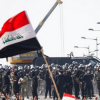
Euro-Med calls to Suspend EU-Iraq Partnership
Posted on 01 November 2019 .
The Euro-Mediterranean Human Rights Monitor said that the continuation of the European Union's implementation of the Partnership and Cooperation Agreement with Iraq in the light of the security services' continued use of lethal force against the escalating protests does not serve the goals and values of promoting human rights principles and spreading democracy in the war-torn country.
The Euro-Med had made a series of contacts and sent urgent letters to members of the European Parliament, including the European Parliamentary Relations Committee, and the Subcommittee on Human Rights in the Parliament to inform them of the suppression of demonstrations in the country, calling on the EU to suspend its partnership agreement with Iraq.
The Euro-Med questioned the feasibility of continuing the implementation of the agreement with the government of Prime Minister Adel Abdul Mahdi, which continues to launch systematic and bloody campaigns against popular protests calling for overthrowing the government for failing to address corruption and addressing electricity cuts and unemployment.
The European Commission announced earlier that the agreement focuses on common interests of the EU and Iraq such as democracy and human rights, economic, migration, security, energy, environmental affairs.
Since the start of the second wave of anti-government protests last Friday, at least 74 Iraqis have been killed and hundreds of others have been injured, raising the total death toll in October to 231.
The Euro-Med warned of the danger of targeting thousands of Iraqi protesters in Tahrir Square in central Baghdad for the fourth day in a row by the security services pointing out that the security solution will not contribute to putting down the protests, but it would only increase tension.
Despite the Iraqi Interior Ministry's announcement that its forces had faced protests with gas and rubber bullets, the protesters affirmed snipers fired live bullets to disperse the protests.
The Euro-Med documented that on the fifth of October snipers targeted protesters and caused deaths, while others were seriously injured in three locations in Baghdad and in the southern Iraqi governorates during the first wave of protests, which lasted for eight days.
The use of lethal force against protesters and the arrest of hundreds of them violates the international and Iraqi laws. The UN Code of Conduct stipulates that law enforcement officials exercising powers should protect all people from harm.
The Code of Conduct stipulates that the officials should respect and protect human dignity and preserve the human rights of all persons during the performance of their duties.
The Euro-Med stressed the need for the Iraqi government to enable citizens, media and political activists to bear their responsibilities so that people could express their opinions freely by giving them enough space to publish and share news and updates, without restriction or prosecution.
The Euro-Med called on the Iraqi government to immediately release all citizens and activists who were arrested over participating in the protests, stressing that their continued detention constitutes a serious and a clear violation of international laws and conventions, which guarantee the right to freedom of opinion, expression, and peaceful assembly.
“The failure of the Ministry of Health, hospitals and health departments in Baghdad and a number of Iraqi provinces to issue official statistics of the number of deaths and injuries is a violation of the Iraqi Human Rights Commission Law No. 53 of 2008," Omar Abdullah, a researcher at Euro-Med said.
Abdullah added that the Iraqi authorities should adhere to the UN Basic Principles on the Use of Force and Firearms by Law Enforcement Officials, which provide for the use of non-violent means by security forces as far as possible before resorting to force.
The Euro-Mediterranean Human Rights Monitor called on the Iraqi authorities to initiate an immediate and impartial investigation into the use of lethal force in dispersing the protesters, and to investigate allegations that security forces did not allow medical staff to provide services to the injured, and to ensure that all the wounded receive immediate care without obstacles.
The Euro-Med urged the EU to suspend the Partnership and Cooperation Agreement until Adel Abdul Mahdi's government brings members of the Iraqi security forces, including commanders responsible for the use of excessive lethal force to court, and to stop using any form of violence against demonstrators. The Euro-Med called on the Iraqi authorities to take concrete actions to affirm its commitment to freedom of opinion and peaceful assembly in the country.
(Source: Euro-Mediterranean Human Rights Monitor)
Posted in Security Comments Off on Euro-Med calls to Suspend EU-Iraq Partnership
CPJ: Journalists Injured and Detained, Broadcasters Banned
Posted on 31 October 2019 .
Journalists injured and detained, broadcasters banned as protests resume in Iraq
On Tuesday, the Committee to Protect Journalists (CPJ) condemned recent attacks on journalists and media outlets in Iraq, and urged authorities to ensure that journalists can cover the ongoing protests in the country safely and without obstruction.
After a brief lull, anti-corruption and unemployment protests reignited in Iraq on October 24, and led to at least 74 deaths by October 27, according to news reports and a statement by the Iraqi High Commission for Human Rights.
At least two journalists for local broadcaster Al-Sumaria TV have been injured in the latest wave of protests, one journalist was briefly detained, and two broadcasters have been banned, according to statements from the National Union of Journalists in Iraq and local press freedom organization Press Freedom Advocacy Association in Iraq, as well as news reports.
“Iraqi authorities seem more focused on preventing journalists from doing their jobs than on protecting them from harm while they cover protests,” said CPJ’s Middle East and North Africa Representative Ignacio Miguel Delgado. “We call on Iraqi authorities to do all they can to ensure that journalists and news outlets can do their jobs freely and safely.”
On October 25, police fired a tear gas canister that hit Hisham Wassim, a reporter for Al-Sumaria TV, in the face while he was covering protests at Baghdad’s Jumhuriyya Bridge, according to the journalists’ union statement and reports by his employer.
Wassim was seriously injured by the grenade and was taken to Al-Kindi Hospital in Baghdad, according to those reports. On October 27, he was flown to Beirut for surgery, according to his employer. Zian, an Al-Sumaria employee who declined to provide their full name to CPJ, said via phone that Wassim is set to receive minor surgery on his face, but had not sustained any bone fractures.
On October 26, police fired a tear gas bomb that hit Ali Jassem, a camera operator for Al-Sumaria TV, in his right hand and abdomen with shrapnel while he was covering protests in Baghdad’s Tahrir Square, according to his employer, the journalists’ union, and the Press Freedom Advocacy Association in Iraq.
Zian told CPJ that Jassem sustained light injuries and had gone back to work.
At 2:30 a.m. on October 27, a group of counter-terrorism agents stormed into the house of Hussein al-Amal, a reporter for the newspaper Al-Mada, in the southern Iraqi city of al-Nasiriyah and detained al-Amal, his son, and his nephew, according to the Press Freedom Advocacy Association in Iraq and Amir Hamid, a researcher for Al-Mada, who spoke to CPJ via email.
Agents took al-Amal and his family members to the Counter-Terrorism Directorate in al-Nasiriyah on allegations of participating in demonstrations, and released him and his nephew on bail a few hours later, according to a Facebook post by al-Amal. His son was released the following night, according to another post by al-Amal.
In a video posted to Facebook, al-Amal said he had gone to the protests as part of his work as a journalist. The day before his arrest, he had reported in Al-Mada on clashes between protesters and militias in al-Nasiriyah.
Iraqi authorities have also cracked down on news coverage of the protests. On October 24, the Iraqi Interior Ministry banned live coverage of the protests in Baghdad’s Tahrir Square, according to news reports.
Interior Ministry Spokesman Brigadier General Khaled al-Muhanna was cited by the news website Nas News as saying that authorized journalists were allowed to interview protesters and record the protests, but not to broadcast them live.
On October 25, Iraq’s media regulator, the Communications and Media Committee, ordered the Amman-based Iraqi satellite broadcaster Al-Dijlah TV’s transmissions into Iraq to be blocked and its offices shut down for allegedly failing to abide by professional standards, according to news reports and the journalists’ union statement.
Al-Dijlah TV’s offices in Baghdad were ransacked and burned by unidentified armed assailants on October 5, as CPJ reported at the time.
Jamal Karbouli, leader of the Al-Hal Party and owner of Dijlah TV, said on Twitter that Dijlah TV had never violated professional standards, and said it covered Iraq truthfully.
“I prefer the closure of Dijlah TV and the stopping of its broadcast a thousand times over hiding the truth from Iraqis,” Karbouli said in his tweet.
On October 27, Iraqi police told Saudi broadcaster Al-Arabiya and its sister company Al-Hadath that the outlets were banned from operating in the country and urged theirs staffs to cease all journalistic work, citing a licensing issue, according to news reports and a report by Al-Arabiya.
CPJ emailed the Communications and Media Committee and the Iraqi Interior Ministry for comment, but did not immediately receive any replies.
(Source: CPJ)
Posted in Construction & Engineering In Iraq Comments Off on CPJ: Journalists Injured and Detained, Broadcasters Banned