


New Cement Plant Opened near Erbil
Posted on 21 May 2025 .
By John Lee.
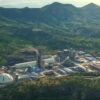
The Prime Minister of the Kurdistan Regional Government, Masrour Barzani, opened the new Dabin [Dabeen] Cement Factory and Power Station on Monday.
The plant, near Safeen Mountain in Erbil Governorate, has a capacity of 2.1 million tons of cement annually, and can output 52 MW of electricity.
It has created more than 1,200 jobs.
Construction of the plant started in June 2023.

(Source: @masrourbarzani)
Posted in Construction & Engineering In Iraq, Iraq Industry & Trade News Comments Off on New Cement Plant Opened near Erbil
WesternZagros acquires Topkhana Block in Iraqi Kurdistan
Posted on 20 May 2025 .
By John Lee.
WesternZagros, a privately owned US exploration and production company, has announced its acquisition of the Topkhana block in the Kurdistan Region of Iraq.
The acquisition is seen as a strategic milestone in enhancing the Kurdistan Regional Government's (KRG) energy security and electricity provision plans.
The company says that when developed alongside its existing Kurdamir block, the combined area holds up to 5 trillion standard cubic feet of natural gas and 900 million barrels of recoverable crude oil.
According to Chairman Toufic Chahine, the phased development of these assets is expected to generate $70 billion in revenue over the project's lifespan and help deliver 24/7 electricity to millions across the Kurdistan Region and beyond.
Full statement from WesternZagros:
WesternZagros, a US privately owned exploration and production company operating in the Kurdistan Region of Iraq, is proud to announce its successful acquisition of the resource-rich Topkhana block.
The agreement is a milestone for the Kurdistan Region's energy security and expansion, and will contribute to the KRG's transformative plans to provide electricity to millions of its citizens.
The combined Topkhana-Kurdamir block holds a resource potential of up to 5 trillion standard cubic feet and 900 million barrels of recoverable natural gas and crude oil respectively. This acquisition, through a phased development approach, is expected to generate an estimated $70 billion of revenue over the life of the project.
"The development of the Topkhana block combined with the adjacent WesternZagros owned and operated Kurdamir block will play a pivotal role in securing 24/7 electricity access for millions in the Kurdistan Region and, over time, the broader Iraqi and regional market," said Toufic Chahine, Chairman of WesternZagros.
This initiative reinforces the Kurdistan Region's energy security goals and complements the KRG's ongoing national strategies aimed at stability and self-reliance.
The agreement also serves as a model for commercial collaboration between American energy companies and the KRG, with the support of the US Government.
"We look forward to our partnership with the Kurdistan Regional Government, under the leadership of Prime Minister Barzani, and to contributing to the bright energy future of the Region," Chahine said.
(Source: WesternZagros)
Posted in Iraq Oil & Gas News Comments Off on WesternZagros acquires Topkhana Block in Iraqi Kurdistan
IMF publishes Iraq Recommendations
Posted on 20 May 2025 .
By John Lee.
A team from the International Monetary Fund (IMF) has concluded a visit with Iraqi officials, concluding:
- Economic Challenges: Iraq faces a highly uncertain global environment, declining oil prices, and acute financing pressures, which are harming economic activity and deepening existing vulnerabilities.
- Urgent Measures Needed:
- Contain the fiscal deficit by increasing non-oil tax revenues and controlling the public wage bill.
- Complete the restructuring of state-owned banks.
- Promote private sector growth through labour market reform, improved business environment, better governance, and anti-corruption efforts.
- Central Bank Role: The Central Bank of Iraq (CBI) should continue:
- Modernizing the banking system.
- Supporting private banks in expanding correspondent banking relationships.
- Recent Progress: There has been recent progress noted in financial sector reforms, though further steps are encouraged.
Full statement from the International Monetary Fund:
An International Monetary Fund (IMF) mission, led by Mr. Jean-Guillaume Poulain, met with the Iraqi authorities in Amman and Baghdad during May 4-13 to conduct the 2025 Article IV consultation. The following statement was issued at the end of the mission:
A highly uncertain global environment, falling oil prices, and acute financing pressures, are taking a toll on economic activity and exacerbating Iraq's existing vulnerabilities, calling for urgent measures to preserve fiscal and external stability. These include containing the fiscal deficit by mobilizing non-oil tax revenues and reining in the public wage bill, completing the restructuring of state-owned banks, and promoting private sector growth, by reforming the labor market, improving the business environment, enhancing governance and fighting corruption. Building on recent progress, the Central Bank of Iraq (CBI) should continue modernizing the banking system and supporting private banks in expanding their corresponding banking relationships.
Recent Economic Developments, Outlook and Risks
The non-oil sector grew at a slower pace last year and inflation remained subdued. Following a very strong growth of 13.8 percent in 2023, Iraq's non-oil GDP is expected to have considerably moderated to 2.5 percent in 2024, driven by a slowdown in public investment and in the services sector, as well as a weaker trade balance. The agriculture, manufacturing, and construction sectors remained resilient, benefiting from post-drought recovery, expanded refining capacity, and strong growth in credit to households. The decline in oil production weighed on overall growth, which contracted by 2.3 percent for the year. Inflation dropped to 2.7 percent by end-2024, amid lower food price inflation and liquidity absorption from the CBI.
The fiscal position has deteriorated, along with external balances. The 2024 fiscal deficit is estimated at 4.2 percent of GDP, compared to 1.1 percent in 2023, reflecting rising spending on wages and salaries and energy purchases. Financing constraints have led to reemergence of arrears notably in energy and capital expenditure. On the external front, the current account surplus narrowed sharply from 7.5 percent to 2 percent of GDP, due to a surge in goods imports. Nonetheless, external buffers remain strong, with reserves at US$100.3 billion at end-2024-covering over 12 months of imports.
Non-oil growth is projected to remain subdued in 2025 amid a challenging global environment and financing constraints. Non-oil GDP is projected to slow down to 1 percent this year as the impact of falling oil prices and financing constraints weigh on government spending and consumer sentiment. The current account is expected to weaken considerably in 2025 primarily due to declining oil export revenues. The deterioration in the external position is projected to weigh on foreign reserves.
Policy Priorities
Iraq's vulnerabilities have increased in recent years due to a large fiscal expansion. Beside weighing on prospects of private sector-led growth, current public employment policies and resulting wage costs are unsustainable given Iraq's low non-oil tax base. Accordingly, dependence on oil revenues has worsened, and the oil price required to balance the budget increased to around $84 in 2024, up from $54 in 2020.
These challenges have been exacerbated by the sharp decline in oil prices in 2025, requiring an urgent policy response. In the very short-term, the authorities should review current and capital spending plans for 2025 and limit or postpone all non-essential expenditure. At the same time, there may be scope to increase non-oil revenues by revising customs duties as well as introducing or raising excise taxes. The authorities should also explore options to diversify the creditors base for increasing financing availability. Monetary financing of the deficit should be avoided as it could fuel inflation, drain FX reserves, and weaken the CBI's balance sheet.
More broadly, a sizable fiscal consolidation is needed to mitigate macro-fiscal risks, ensure debt sustainability, and rebuild fiscal buffers. On the revenue side, besides customs duties and excise taxes, there is scope to gradually reform personal income tax by limiting exemptions and increasing rates. Strengthening tax administration-through digitalization, improved enforcement, and better collection-is essential. A more effective tax administration should allow for eventually introducing a general sales tax. On the spending side, curbing current expenditures, particularly via comprehensive wage bill reforms, limiting mandatory hiring, and adopting attrition rule, would yield significant savings. Recent efforts to better target the public distribution system are welcome, but there is scope to further improve targeting and eventually shift to cash-based social safety nets. Finally, it is urgent to reform the public pension system through raising the retirement age and reducing both the accrual and replacement rates is needed to enhance its sustainability.
Implementing these reforms would also create fiscal space to increase capital spending. Expanding non-oil investment, especially in trade and transportation infrastructure should help economic diversification. Substantial investments are also required to modernize the electricity sector and develop natural gas resources, both of which are essential for improving energy security and reducing dependence on gas imports. Improved procurement, public financial management, and corruption control would enhance the effectiveness of any additional public investment.
Further efforts are needed to mop up excess liquidity in order to improve monetary policy transmission. While the CBI has made progress in absorbing excess liquidity, additional adjustments could enhance the effectiveness of the framework. Key measures include increasing the issuance of CB-bills, focusing on the short maturity (14-day) at the policy rate, revising size limits on individual banks' bids, and improving liquidity forecasting tools and practices. To safeguard its balance sheet and preserve credibility, the CBI should continue to avoid financing the government deficit.
The mission commended the CBI for the successful transition to the new trade finance system. Trade finance is now fully processed by commercial banks through their correspondent banking relationships. This has also supported the recent decline in the spread between the official and parallel market exchange rates. Nonetheless, further efforts are needed to further reduce the spread, including by imposing Iraqi dinar usage for car and real estate transactions, improving customs controls to curb smuggling, and simplifying FX access.
While initial steps to reform state-owned banks are encouraging, broader efforts are needed to strengthen the financial sector. The restructuring plan for state-owned banks should be finalized without delay, encompassing treatment of non-performing loans, and recapitalization needs. In parallel, the mission welcomed progress in digitalization and the authorities' intention to undertake a comprehensive banking sector overhaul. Reforms should include enhancing corporate governance, digital infrastructure, and cybersecurity, while promoting a stronger role for private banks. Efforts to enhance AML/CFT measures by tackling the deficiencies identified in the MENAFATF Mutual Evaluation report should continue.
Chronic power shortages, electricity losses and excessive tariff subsidization continue to weigh on the economy. Addressing inefficiencies in the electricity sector is important for fiscal sustainability and improving productivity. In 2024, distribution losses reached 55 percent, driven by theft and illegal connections, leading to significant financial losses. The authorities are deploying smart meters and have introduced other measures to enhance billing and collection. However, progress should be accelerated. Once collection substantially improves, achieving cost recovery will also require electricity tariff increases, with carefully calibrated subsidies targeted to low-income users. Recent disruptions in electricity imports from Iran further underscore the need for diversified supply and the development of gas projects.
Combating corruption and governance weaknesses is imperative to support economic development. Steps taken in the implementation and upgrade of the national anticorruption strategy and the improvements in corruption perception indices are positive developments. However, corruption remains a significant hurdle for growth. Strengthening accountability frameworks for the operation of state-owned and private enterprises in the oil, electricity and construction sectors is critical, and thorough compliance with Extractives Industries Transparency Initiative standards and the enactment of the law on Transparency and Access to Information should be prioritized. Additionally, aligning anticorruption legal frameworks with international covenants and best practice, and strengthening the independence of the judiciary are essential for effective enforcement and for the protection of economic rights.
A comprehensive structural reform agenda is essential to unlock growth potential. The mission estimates that a comprehensive set of reforms covering the labor market, business regulation, the financial sector and governance could double non-oil potential GDP growth over the medium term. On labor market, priorities include increasing labor force participation, particularly among women, by improving female education and further reducing barriers to their work and mobility, and reforming public sector hiring, which distort labor markets and reduce productivity. Efforts to better align skills with labor market needs should intensify. More generally, simplifying regulations and reducing bureaucratic impediments in e.g. business registration or tax administration should increase participation in the formal economy and help private sector development.
The mission would like to thank the Iraqi authorities and various stakeholders for their excellent hospitality and cooperation and candid discussions during the mission.
(Source: IMF)
Posted in Iraq Industry & Trade News, Politics Comments Off on IMF publishes Iraq Recommendations
PM orders meeting on Al-Khairat Power Plant Investment
Posted on 14 May 2025 .
By John Lee.
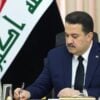
The Iraqi Prime Minister has ordered a consultative meeting to be held between the Ministry of Electricity and the General Secretariat of the Council of Ministers regarding the Al-Khairat Thermal Power Plant.
According to a statement from the Prime Minister's Office, the focus of the meeting is on resolving financing issues related to the investment project, located near Karbala refinery.
The order follows a meeting last week, attended by the Chinese Ambassador to Iraq and representatives from the executing companies, Harlow International and CITIC, at which the Al-Sudani gave the companies a three-month deadline to resolve the delays or face cancellation of the investment licence.
(Source: PMO)
Posted in Construction & Engineering In Iraq, Investment, Iraq Industry & Trade News Comments Off on PM orders meeting on Al-Khairat Power Plant Investment
Iraq and Masdar discuss Acceleration of Solar Energy Projects
Posted on 09 May 2025 .
By John Lee.
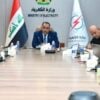
Iraq's Ministry of Electricity held a virtual meeting with the UAE's Masdar to expedite the signing of a power purchase agreement and resolve challenges related to the construction of solar power plants in Maysan, Dhi Qar, and Anbar.
The planned projects, with a total capacity of 1,000 megawatts, represent a significant step towards diversifying Iraq's energy sources.
Both parties agreed to meet again next week to continue discussions.
(Source: Ministry of Electricity)
Posted in Iraq Industry & Trade News Comments Off on Iraq and Masdar discuss Acceleration of Solar Energy Projects
PM gives Ultimatum for Completion of Al-Khairat Power Plant
Posted on 08 May 2025 .
By John Lee.
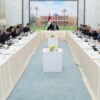
Iraqi Prime Minister Mohammed S. Al-Sudani chaired a meeting on the delayed Al-Khairat Thermal Power Plant project in Karbala, attended by the Chinese Ambassador to Iraq and representatives from the executing companies, Harlow International and CITIC, as well as officials from the Ministries of Electricity and Oil.
The Prime Minister granted the companies a three-month deadline to resolve the delays or face cancellation of the investment licence, emphasizing the importance of completing the project, which was contracted in 2021 under the previous government.
(Source: PMO)
Posted in Construction & Engineering In Iraq, Iraq Industry & Trade News Comments Off on PM gives Ultimatum for Completion of Al-Khairat Power Plant
Iraq to Establish $190m Energy Investment Company
Posted on 07 May 2025 .
By John Lee.
Iraq's Council of Ministers has approved the formation of a new private limited company focused on energy sector investments, with an initial capital of 250 billion Iraqi dinars (approximately $190 million), subject to increase.
The founding stakeholders include the State Employee Pension Fund and the Trade Bank of Iraq (TBI), while the Ministry of Oil - through the State Oil Marketing Organization (SOMO) and the State Company for Oil Products Distribution - and the Ministry of Electricity - via the State Company for Electricity Production (Central Region) - are also expected to participate. Additional public or private entities may join the initiative.
The move is part of the government's efforts to attract capital, mobilise domestic resources, and support long-term investment in Iraq's critical energy infrastructure.
(Source: PMO)
Posted in Investment Comments Off on Iraq to Establish $190m Energy Investment Company

Iraq and Iran's Electricity and Gas Dependencies
Posted on 04 May 2025 .
By Ahmed Tabaqchali for The Clingendael Institute. Any opinions expressed are those of the author(s), and do not necessarily reflect the views of Iraq Business News.
Misery loves company: Iraq and Iran's electricity and gas dependencies
In September 2022, the death of Mahsa Jina Amini marked a major turning point for Iran. The event sparked lengthy nationwide protests across socio-economic classes and population groups whose demands rapidly evolved from discarding controversial hijab regulations to calls for the overthrow the Islamic Republic. The Iranian government responded with repression, killing over 400 protesters in late 2022 and early 2023, according to human rights groups.
The Clingendael blog series 'Iran in transition' explores power dynamics in four critical dimensions that have shaped the country's transformation since: state-society relations, intra-elite dynamics, the economy, and foreign relations. This blog post critically assesses the assumptions underpinning US sanction waivers to Iraq regarding the import of Iranian gas and electricity.
Specifically, it argues that underlying economic realities render these waivers ineffective as instrument of US pressure on Iran and that their revocation is more likely to cause energy supply problems in Iraq.
Click here to download the full report.
To browse our comprehensive library of reports on Iraq, click here.
Posted in Iraq Industry & Trade News, Iraq Oil & Gas News, Politics, Security Comments Off on Iraq and Iran's Electricity and Gas Dependencies

Clean Energy Transition, 3,000 MW Investment Opportunities in Wasit
Posted on 04 May 2025 .
By John Lee.
Wasit Governorate held its inaugural conference on the transition to clean energy this week, led by Governor Dr. Mohammed Jameel Al-Mayahi and attended by the head of the National Renewable Energy Team, members of parliament, local officials, and international companies specialising in solar and wind energy.
The event showcased investment opportunities for establishing solar power plants across the governorate's districts and sub-districts, aimed at addressing Iraq's ongoing electricity crisis with sustainable solutions.
Governor Al-Mayahi highlighted growing interest from international firms to invest in Wasit, noting the availability of more than 25 clean energy investment opportunities totalling 3,000 megawatts. He invited global companies to submit offers beginning Sunday, 4 May 2025, with a 30-day submission window, but details of those projects were not provided in the press release or on the Wasit Governorate website.
(Source: Wasit Governorate)
Posted in Investment, Iraq Industry & Trade News Comments Off on Clean Energy Transition, 3,000 MW Investment Opportunities in Wasit

Siemens Energy signs Key Agreements to Boost National Grid
Posted on 03 May 2025 .
By John Lee.
Siemens Energy and Iraq's Ministry of Electricity have signed a new Principles of Cooperation Agreement and two long-term service contracts under the supervision of Prime Minister Mohammed S. Al-Sudani. The signing ceremony, held on Thursday, was also attended by the German Ambassador to Iraq.
The third phase of this strategic partnership aims to add 14,000 megawatts to Iraq's national power grid, significantly enhancing energy services throughout the country.
The agreements include a long-term service contract for the Dibis [Debes, Dibs] Gas Power Plant, covering two generating units with a combined capacity of 340 megawatts, and a five-year maintenance contract for the Al-Mussaib [Al-Musayyib] Thermal Power Plant. The latter includes the rehabilitation of units with a capacity of 750 megawatts and an additional 150 megawatts, along with support for safe operations and performance optimisation.
In a meeting with Siemens Energy CEO Christian Bruch, Prime Minister Al-Sudani reaffirmed the government's priority on the energy sector and its commitment to supporting international partners. He noted Siemens Energy's crucial role in Iraq's energy infrastructure and called for deeper cooperation in all areas of the electricity value chain.
Mr. Bruch praised Iraq's progress and reaffirmed Siemens Energy's commitment to advancing strategic projects in the country, citing the early completion of power unit maintenance this year as a milestone.
(Source: PMO)
Posted in Iraq Industry & Trade News Comments Off on Siemens Energy signs Key Agreements to Boost National Grid