



Is the Dinar Your Retirement Plan?
Posted on 19 March 2026 .
By Guest Blogger. Any opinions expressed are those of the author(s), and do not necessarily reflect the views of Iraq Business News.
Iraq's Payroll Cliff: Why the Dinar Can't Be Your Retirement Plan
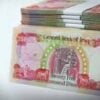
For two decades, promoters of the Iraqi dinar as an investment have pointed to the country's oil wealth and whispered of an imminent revaluation -- an "RV" -- that would transform modest stacks of Iraqi banknotes into life-changing fortunes. The pitch has always depended on a single assumption: that Iraq's oil revenues would eventually give Baghdad the financial muscle to dramatically revalue its currency upward.
Today, that assumption is under more stress than ever, and the cracks are showing in the most concrete way possible: the Iraqi government may soon be unable to meet its own payroll.
A Quarter of the Country on the State's Books
Understanding the scale of the problem requires stepping back from currency speculation for a moment and looking at Iraq's fiscal architecture. More than 10.5 million Iraqi citizens, roughly a quarter of the nation's total population, receive a monthly salary from the state, according to a report from Iraq's Parliamentary Finance Committee. The Ministry of Finance must secure 8 trillion Iraqi dinars every single month to cover the salaries of government employees, retirees, and social protection beneficiaries.
This is not a new problem, but it is an accelerating one. More than 40 percent of Iraq's workforce is employed in the public sector or state-owned enterprises, which consumed 59 percent of all federal government expenditures in the first half of 2025. In 2023 alone, the federal government added more than 800,000 people to the public payroll, either hiring them into an already swollen public sector or enrolling them in social benefits programs.
The political logic behind this expansion is not hard to follow. Iraq's power-sharing arrangement divides key governmental positions among political parties representing Arab Shia, Arab Sunnis, and Kurds, and partitions rents from public funds and contracts among those same parties. Ministries are often treated as party fiefdoms, primarily serving the interests of their respective parties rather than the public good. Hiring is patronage. Payroll is political glue. And cutting it, as one prime minister discovered, triggers mass protests.
When Oil Money Runs Short
All of this might be sustainable if oil revenues stayed high. They haven't. The oil price required to balance Iraq's budget has risen to $84 per barrel, according to an IMF estimate, while oil prices had been hovering around $67. Iraq's petroleum revenues, which account for more than 93 percent of total government income, are no longer sufficient to cover planned expenditures.
Now add a war Iraq didn't start. The US and Israeli strikes on Iran have effectively halted Gulf oil shipping, including Iraqi exports, and the immediate fiscal consequences for Baghdad are severe. Informed sources have told local outlets that Iraq's financial resources are no longer sufficient to secure public sector salaries and pensions, that state-owned banks have significantly depleted their liquidity, and that payment delays are increasingly likely unless urgent solutions are found. Iraqi Kurdish officials have warned that Baghdad could fail to meet its public-sector payroll within weeks.
The real-world consequences of payroll failures are already visible: teachers and school administrators have gone on strike in protest of non-payment, leaving students out of class. Health workers have walked out, limiting services to emergency care. Doctors, facing financial pressure, have turned to private practice, hollowing out the public hospital system for patients who can't afford private care.
What This Means for the Dinar, and for "RV" Believers
This is where the currency speculation community deserves a direct and honest word.
The fundamental argument for a massive dinar revaluation has always been that Iraq's oil wealth would eventually force the Central Bank to jack up the dinar's value, rewarding patient holders with stratospheric returns. The Central Bank of Iraq (CBI) has repeatedly stated it has no plans for a major revaluation. Such statements are routinely dismissed by true believers as disinformation designed to conceal the secret until the big announcement. This is faith-based investing, not analysis.
The economics work against it at every level. For the dinar to experience a dramatic increase in value, Iraq would need to undergo an extraordinary economic transformation. The large money supply means that any attempt to revalue the currency would require a substantial reduction in the number of dinars in circulation, a move that is logistically and economically unfeasible.
Promoters frequently argue that Iraq's oil reserves guarantee dramatic revaluation. The reality is that while Iraq has significant oil reserves, they rank fifth globally, not first, and oil reserves alone don't determine currency strength. Kuwait has oil. Venezuela has oil. Currency strength is built on institutions, diversification, rule of law, and fiscal discipline, none of which Iraq has yet consolidated.
Meanwhile, the practical obstacles for investors are punishing even before geopolitics enter the picture. The Iraqi dinar has extremely poor liquidity. Dealers who sell IQD will only buy it back at drastically lower rates, meaning the dinar's value would need to increase dramatically just for investors to break even, let alone profit. Since no formal exchange exists for the Iraqi dinar, dealers can charge whatever they want to buy and sell it. The spread alone will eat your returns.
Confused about the difference between "revaluation" and "redenomination"? You're in good company, and that confusion is deliberate. Scammers regularly misinterpret Iraq's discussions about removing zeros from the currency as evidence of impending revaluation. Removing zeros is an administrative process that changes the face value of currency without changing its actual worth; if Iraq removed three zeros, 1,000 old dinars would become 1 new dinar, but purchasing power remains identical. You'd still be holding the same value. The casino didn't change the denomination on your chips.
Iraq Isn't Going Away, But Your Investment Logic Might Be
None of this is to say Iraq is a failed state. It is a resilient country that has survived invasion, occupation, civil war, the rise and fall of ISIS, and grinding political dysfunction while still producing oil, holding elections, and maintaining a functioning, if strained, central bank. Iraq's economy is projected to return to positive growth in 2026, and the government holds significant foreign reserves. These are real assets.
But a country managing a payroll crisis, dependent on oil revenues for over 90 percent of government income, caught in a regional war it didn't choose, and carrying a public-sector workforce that consumes the majority of its budget is not a country primed for a currency moonshot. It is a country focused on keeping the lights on and the salaries flowing, month by month, increasingly on a knife's edge.
For those holding dinars, 2026 will likely unfold like previous years: a mixture of hope, disappointment, and moving goalposts as predicted revaluation dates come and go. The promoters will find new reasons why next year is the year. The forums will buzz. The "gurus" will post. And somewhere, a retiree with savings in a shoebox full of Iraqi banknotes will wait for an announcement that the Central Bank has explicitly said is not coming.
Iraq deserves better analysis than it gets from the dinar speculation community. And investors deserve better than the false hope being sold to them.
This article does not constitute financial or investment advice. If you are considering any currency investment, consult a licensed financial advisor, not an online forum.
For more information on the Iraqi dinar, check out IBN's Dinar Page here: https://www.iraq-businessnews.com/the-dinar-page/?swcfpc=1
See also:
IQD in the Crossfire: What a Trump-Iran Conflict Could Mean for Iraq's Dinar
If Trump Strikes Iran: Mapping the Oil Disruption Scenarios
Dinar Weakness: CBI "Not Responsible"
Iraqi Banks Restricted from US Dollar Transactions: FULL LIST [Amended]
2026: The Year Iraqi Dinar Speculators Finally Strike Gold?
Posted in Investment, Iraq Banking & Finance News Comments Off on Is the Dinar Your Retirement Plan?
Top 10 Dinar Articles from February
Posted on 03 March 2026 .
The following were the ten most read dinar-related articles on Iraq Business News for the month of February:
- Iraqi Dinar Speculation "Misplaced" -- CBI Boss
- Iraqi Dinar Falls Against Dollar
- 2026: The Year Iraqi Dinar Speculators Finally Strike Gold?
- Central Bank Advances Iraqi Banking Reform, Eases Foreign Transactions
- The Iraqi Dinar Revaluation Deception: 10 Persistent False Claims Exposed
- Donald Trump and the "Great Iraqi Dinar Revaluation"
- Iraqi Banks Restricted from US Dollar Transactions: FULL LIST [Amended]
- One Year of Trump: Iraqi Dinar Speculators Still Waiting
- Dinars to Dollars - Tabaqchali Explains Market Gap
- IQD in the Crossfire: What a Trump-Iran Conflict Could Mean for Iraq's Dinar
The previous month's listing can be viewed here.
For more information on the Iraqi dinar, check out IBN's Dinar Page here: https://www.iraq-businessnews.com/the-dinar-page/?swcfpc=1
Posted in Iraq Banking & Finance News Comments Off on Top 10 Dinar Articles from February

IQD in the Crossfire: What a Trump-Iran Conflict Could Mean for Iraq's Dinar
Posted on 27 February 2026 .
By Guest Blogger. Any opinions expressed are those of the author(s), and do not necessarily reflect the views of Iraq Business News.
The Iraqi Dinar Caught in the Crossfire: What a Trump-Iran Military Conflict Would Mean for Iraq's Currency
The Middle East is once again on the edge. The United States has assembled its largest concentration of naval and air power in the region since the 2003 invasion of Iraq, two carrier strike groups, dozens of warships, and hundreds of warplanes now positioned within striking distance of Iran.
Negotiations between Trump's envoy Steve Witkoff and Iranian officials in Geneva have reportedly yielded "significant progress", but the ultimate outcome may hinge on whether Iran is prepared to offer concessions significant enough for Trump to call a victory. With diplomacy fragile and military options on the table, one often-overlooked casualty of any escalation would be Iraq's currency, the dinar.
Iraq: The Battlefield Between Two Worlds
To understand what a US-Iran military conflict would do to the Iraqi dinar, you have to first understand Iraq's precarious geopolitical position. The country is simultaneously a close security partner of the United States and an economy deeply enmeshed with Iran. Iraq spends roughly $900 million monthly on Iranian goods, a major portion of this historically going to electricity and gas. Iranian-backed militias are embedded within Iraq's state institutions. US troops remain on Iraqi soil. Iraq's government walks a tightrope between US alliance and Iranian influence, and its currency walks the same tightrope with it.
The Iraqi dinar's journey has been one of the most dramatic in monetary history. The currency dropped substantially from 3 IQD per USD before 1991 to about 1,310 IQD per USD today. Decades of war, sanctions, and corruption have slowly eroded its value. In recent years, Iraq has made modest progress: the International Monetary Fund (IMF) has provided structural guidance, oil revenues have been strong, and the Central Bank of Iraq (CBI) has maintained a managed peg to the dollar. Iraq's position as OPEC's second-largest oil producer and strong international support drive steady economic improvements. But all of that relative stability would face severe pressure the moment US bombs begin falling on Iranian soil.
Scenario One: A Limited Strike
The most likely immediate military scenario, and the one that has been most openly discussed in Washington, involves a targeted, time-limited campaign against Iranian military and nuclear infrastructure. Trump may order a targeted attack on select military sites inside Iran to pressure the country's leaders into agreeing to an acceptable deal, demonstrating US threats of action are real. The targets could include ballistic missile sites, facilities connected to Iran's nuclear program, or buildings used by the Islamic Revolutionary Guard Corps.
In this scenario, the Iraqi dinar's fate would be shaped by several competing forces. On one hand, oil prices would almost certainly spike, and for Iraq, higher oil prices are a lifeline. Iraq's state budget is overwhelmingly dependent on petroleum revenues, and a sudden surge in global crude prices triggered by conflict fears would, in theory, fill state coffers. A better-funded government can defend its exchange rate more effectively.
On the other hand, a limited strike would almost certainly trigger Iranian retaliation, and Iraq would be squarely in the blast radius. Iran's kinetic retaliation plan relies on a reconstituted arsenal of over 3,000 ballistic missiles capable of striking US bases and allied territory across the region, and many of those bases are in Iraq. US embassies in Iraq and other Arab states began to evacuate personnel in response to Iranian threats on American bases as far back as the lead-up to last year's Operation Midnight Hammer. Iranian-backed Iraqi militias like Kataib Hezbollah have already issued explicit warnings: leader Ahmad al-Hamidawi warned that any strike on Iranian soil would trigger a "total war" involving militias across the Levant.
For the dinar, this translates to a severe confidence crisis. When violence erupts on Iraqi soil, even if Iraq is not the primary combatant, foreign capital flees, domestic savers rush to convert dinars to dollars, and the black market premium widens dramatically. The Central Bank of Iraq, which sells dollars at auction to defend its peg, would come under enormous pressure. Its foreign exchange reserves, while substantial, are not unlimited, and a sustained capital flight could force a de facto devaluation.
Scenario Two: Sustained Military Campaign or Regime Change
Current contingency planning in the Pentagon is configured for sustained, weeks-long operations against Iran if so ordered by Trump. A broader campaign aimed at degrading Iran's military capacity, or worse, one that tips into regime change, would represent a qualitatively different shock to the Iraqi economy.
Iraq's energy dependence on Iran is the most acute vulnerability. If war disrupts those supply lines, through Iranian cut-offs, infrastructure damage, or US sanctions enforcement, Iraqi power grids would come under renewed pressure. Blackouts would damage industry, commerce, and ordinary life. Economic output would contract sharply, and the government's ability to pay civil servant salaries and maintain social order would erode. In such conditions, the dinar would face significant downward pressure regardless of what the oil price is doing.
There is also the migration and refugee dimension. A major war with Iran, a country of over 90 million people, could produce refugee flows that would dwarf anything the region has seen since 2003. Iraq, which shares a long border with Iran and already hosts displaced populations from earlier conflicts, would be on the front lines of that humanitarian wave. The fiscal and social cost could be immense.
For currency markets, the historical parallel is instructive. During the 2003 US invasion of Iraq itself, Iraqi currency markets experienced extreme dislocations. Capital flight, hoarding of hard currency, and the collapse of normal economic activity all preceded any formal devaluation. A war next door, one that also engulfs Iraqi militias and potentially Iraqi territory, could produce similar dynamics even without Iraq being the primary target.
The Oil Price Paradox
One of the most important, and often misunderstood, dynamics in this scenario is the double-edged nature of oil prices. A major US-Iran conflict would almost certainly send crude prices sharply higher, at least initially. Iran is a significant oil producer, and any conflict that threatens the Strait of Hormuz, through which roughly 20% of the world's oil supply passes, would trigger immediate panic buying in global energy markets.
For Iraq, this creates a cruel paradox. Higher oil revenues would, in theory, improve the government's fiscal position and its ability to defend the dinar. But the same conflict that pushes oil prices up would simultaneously disrupt Iraq's own oil export infrastructure, close off Iranian energy imports that keep the lights on, trigger militia violence, scare away foreign investment, and force emergency spending on security. The net effect on the dinar would almost certainly be negative, as the costs outweigh the revenue windfall.
The Sanctions and Banking Dimension
Any escalation would also intensify the already complex sanctions environment that shapes how the Iraqi economy interfaces with the global financial system. The Trump administration focuses on selective sanctions against Iraqi banks while conditioning waivers for Iranian energy purchases. This policy could soon affect Iraq's economic partnerships and currency stability. Banks found to be facilitating Iranian transactions face being cut off from dollar-clearing networks, a potentially devastating punishment in an economy that relies so heavily on the greenback.
This creates a further squeeze on the dinar. If Iraqi banks are penalised for maintaining ties with Iran, ties that are partly economically necessary and partly politically unavoidable, the result is a fragmentation of Iraq's banking sector, reduced access to dollar liquidity, and a wider spread between the official and parallel exchange rates. Ordinary Iraqis, who already prefer to hold savings in US dollars rather than dinars, would accelerate that dollarisation, further undermining confidence in the local currency.
Historical Lessons: What 2003 Tells Us
The 2003 US invasion of Iraq offers a partial precedent, though the situations differ significantly. In the immediate aftermath of the invasion, the Iraqi currency market experienced extreme volatility. The old Saddam-era dinar was eventually replaced with a new currency, and a managed peg to the dollar was established. Over time, with massive oil revenues and international support, the new dinar stabilised.
But the early years of post-invasion Iraq were characterised by exactly the kind of dynamics a new conflict would recreate: capital flight, dollarisation, black market currency trading, and a gap between official and street exchange rates. The key difference now is that Iraq is not the direct target of military action, but it is the unavoidable collateral victim, geographically, economically, and politically sandwiched between the two combatants.
What Investors and Observers Should Watch
For those tracking the dinar, whether as currency speculators, businesses operating in Iraq, or observers of the wider regional economy, the key indicators to monitor are:
The Central Bank of Iraq's foreign exchange auction volumes and reserves. A sharp drop in reserves or a sudden suspension of dollar auctions would signal that the peg is under existential pressure. The spread between the official exchange rate and the parallel market rate. Historically, this spread widens during periods of political and security stress, and a significant widening would be an early warning of impending devaluation. The status of Iranian energy supplies to Iraq. If gas flows are disrupted and the lights go out, the economic fallout would be rapid and severe. And crucially, the behaviour of Iraq's Iranian-backed militias. If they activate in response to US strikes on Iran, Iraq would transition from bystander to active warzone, and the dinar would face its most serious crisis since 2003.
Conclusion: A Currency with No Good Options
The Iraqi dinar is, at its core, a hostage to forces far beyond Baghdad's control. Iraq's government has limited ability to insulate its currency from a major military confrontation between the United States and Iran, a conflict whose epicentre would be on its doorstep and whose shockwaves would run directly through its energy sector, banking system, and political fabric.
Administration officials have been unclear about what their objectives are as they confront Iran, and that uncertainty itself is a risk factor for the dinar. Markets hate ambiguity, and a conflict with no clear endgame is the worst of all possible scenarios for a currency already carrying the weight of decades of instability.
In the best case, a short, sharp military strike followed by a rapid return to negotiations, the dinar would likely suffer a temporary shock: a flight to dollars, a widening of the parallel market premium, and a drawdown of central bank reserves, but ultimately a manageable correction. In the worst case, a sustained campaign, militia activation across Iraq, energy supply disruption, and a regional war, the dinar would face its most severe test since the 2003 invasion. The outcome would depend not just on what the US military does to Iran, but on whether Iraq can remain a bystander in a war that, by its very geography, it cannot escape.
This article reflects the geopolitical and economic situation as of late February 2026. It does not constitute financial or investment advice.
For more information on the Iraqi dinar, check out IBN's Dinar Page here: https://www.iraq-businessnews.com/the-dinar-page/?swcfpc=1
See also:
If Trump Strikes Iran: Mapping the Oil Disruption Scenarios
Dinar Weakness: CBI "Not Responsible"
Iraqi Banks Restricted from US Dollar Transactions: FULL LIST [Amended]
2026: The Year Iraqi Dinar Speculators Finally Strike Gold?
Dinar Explainer 1: Why Iraq has Two Exchange Rates
Donald Trump and the "Great Iraqi Dinar Revaluation"
(Picture: The U.S. Navy aircraft carrier USS Gerald R. Ford (CVN-78), currently on route to the region).
Posted in Iraq Banking & Finance News, Iraq Industry & Trade News, Security Comments Off on IQD in the Crossfire: What a Trump-Iran Conflict Could Mean for Iraq's Dinar
Top 10 Dinar Articles from January
Posted on 01 February 2026 .
The following were the ten most read dinar-related articles on Iraq Business News for the month of January:
- 2026: The Year Iraqi Dinar Speculators Finally Strike Gold?
- Iraqi Dinar "Plummets Against Dollar"
- One Year of Trump: Iraqi Dinar Speculators Still Waiting
- Donald Trump and the "Great Iraqi Dinar Revaluation"
- The Iraqi Dinar Revaluation Deception: 10 Persistent False Claims Exposed
- 10 Things the CBI Said About the Iraqi Dinar in 2025
- Iraqi Dinar Prospects: Reality Check After Six Months of Trump
- 8 Things the IMF Said About Iraq and the Dinar in 2025
- Iraq Reviews Measures to Improve Sovereign Credit Rating
- CBI Instructions for Exchanging Dinars
The previous month's listing can be viewed here.
For more information on the Iraqi dinar, check out IBN's Dinar Page here: https://www.iraq-businessnews.com/the-dinar-page/?swcfpc=1
Posted in Iraq Banking & Finance News Comments Off on Top 10 Dinar Articles from January
One Year of Trump: Iraqi Dinar Speculators Still Waiting
Posted on 15 January 2026 .
By Guest Blogger. Any opinions expressed are those of the author(s), and do not necessarily reflect the views of Iraq Business News.
One Year of Trump: Iraqi Dinar Speculators Still Waiting for a Miracle That Will Never Come
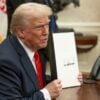
As Donald Trump marks his first anniversary back in the White House on 20th January, one group of investors remains stubbornly committed to a fantasy: Iraqi dinar speculators still convinced that their fortunes will suddenly multiply a thousandfold. Many of these speculators think Trump's presence in the White House will be the catalyst for that revaluation (or 'RV', as they call it).
Twelve months of economic reality have done nothing to shake their faith, even as every metric confirms what experts have been saying all along -- there will be no massive revaluation.
The question is not whether the dinar will skyrocket in value. The question is: how much longer can speculators ignore the overwhelming evidence that their investment strategy is fundamentally flawed?
The Current Reality
As the anniversary of Trump's inauguration approaches, the official USD/IQD exchange rate remains unchanged from a year ago, while anecdotally the unofficial "street" value of the dinar has weakened a little.
While the weakening, if real, may be small, some would argue that any apparent softening of the currency indicates the general direction of travel, and that has been against the speculators.
Oil Prices Slump
Far from creating conditions for currency appreciation, Trump's first year has coincided with a marked deterioration in Iraq's fiscal position. With oil prices around $62 per barrel, Iraq's petroleum revenues, which account for more than 90 percent of total government income as of 2025, are no longer sufficient to cover planned public expenditures.
Despite a rise in recent days, Brent crude is down more than 20% since Trump regained power, and IMF estimates assume no major price increases this year.
Trump's Policies Have Made Things Worse
Rather than helping Iraq as some speculators imagined, Trump's policies have created additional headwinds. His aggressive stance towards Iran has disrupted Iraq's energy security, whilst his broader trade policies have contributed to oil price volatility.
For Iraq, caught between its dependence on Iranian energy imports and pressure from Washington, Trump's approach has created economic uncertainty rather than opportunity.
The Devaluation Risk
Perhaps most tellingly, experts are warning not of revaluation but of potential devaluation. A leading Iraqi economist has warned that Trump's pressure to reduce oil prices could harm the Iraqi economy and potentially lead to devaluation of the Iraqi dinar, according to reporting from earlier in 2025.
Iraq has precedent for currency devaluation when faced with fiscal pressure. In December 2020, amidst a collapse in oil prices, the Central Bank of Iraq devalued the dinar by 22.7 percent, changing the official rate from 1,190 to 1,460 dinars to the U.S. dollar. The current economic pressures are severe enough that another devaluation cannot be ruled out -- the exact opposite of what speculators expect.
The Psychology of Denial
What's remarkable about dinar speculation is not just the gap between expectation and reality, but the psychological mechanisms that keep believers invested despite overwhelming contrary evidence.
The psychology of dinar speculation shares characteristics with other speculative bubbles and get-rich-quick schemes, with confirmation bias leading believers to interpret any news as supporting their thesis whilst dismissing contrary evidence.
This pattern has been evident throughout Trump's first year. When the president makes any comment about the Middle East, speculators interpret it as a sign that revaluation is imminent. When oil prices rise temporarily, it's seen as vindication. When predictions fail to materialise, the goalposts simply move to the next date.
There's no economic mechanism by which a sudden, massive revaluation could occur without devastating consequences, as such a move would instantly make Iraqi goods and services prohibitively expensive, destroy the country's export competitiveness, and potentially trigger economic chaos.
The Human Cost
Beyond the economic analysis lies a more troubling reality. Some individuals have diverted substantial portions of their savings into dinars, sometimes purchasing at markups far above the official exchange rate from dinar dealers. Others have held onto their investments for years, forgoing more conventional investment strategies that might have actually generated returns.
After one year of Trump's presidency -- a period some speculators insisted would bring the long-awaited revaluation -- these investors are no closer to their dreams. The dinar has not appreciated; the promised miracle has not materialised.
What the Next Year Holds
Looking ahead, the outlook for Iraq, and therefore for the dinar, remains challenging. The World Bank projects that the current account is forecast to remain in deficit in 2025-27 and lead to a decline in the reserve to import ratio to 6.6 months in 2027.
The IMF emphasises the need for urgent measures, noting that Iraq's vulnerabilities have increased in recent years due to a large fiscal expansion, with the oil price remaining well below what is needed to balance the budget.
These projections suggest continued fiscal strain, potential further reserve depletion, and mounting pressure on the dinar to weaken, not strengthen.
The Verdict After One Year
One year into Trump's presidency, the verdict is clear: Iraqi dinar speculation remains what it has always been: a fundamentally flawed investment strategy based on economic misunderstanding and wishful thinking.
The dinar has not revalued by 1,000x. It has not revalued by 100x. It has not revalued by 10x. It has, in fact, slightly depreciated on the street. Iraq's economy faces mounting fiscal pressures, declining reserves, and an uncertain future tied to volatile oil markets.
Trump has shown no interest in Iraqi currency policy, nor would he have the power to simply decree a revaluation even if he wanted to. The mechanisms of currency valuation respond to economic fundamentals, not presidential wishes.
For speculators still holding dinars and waiting for their fortunes to change, the question must be asked: what evidence would it take to change your mind? If twelve months of deteriorating fundamentals, weakening reserves, mounting fiscal deficits, and continued absence of any revaluation haven't shaken your faith, what will?
The Iraqi dinar speculation phenomenon remains a cautionary tale about the intersection of hope, economic illiteracy, and the human tendency to cling to beliefs even when confronted with overwhelming contrary evidence. As Trump begins his second year in office, the speculators continue to wait for a miracle that economics tells us will never come.
The true revaluation needed is not of the dinar, but of the investment strategy itself. Until speculators recognise that currencies reflect economic realities rather than political fantasies, they will continue their futile wait for riches that exist only in their imaginations.
For more information on the Iraqi dinar, check out IBN's Dinar Page here: https://www.iraq-businessnews.com/the-dinar-page/?swcfpc=1
See also:
8 Things the IMF Said About Iraq and the Dinar in 2025
10 Things the CBI Said About the Iraqi Dinar in 2025
2026: The Year Iraqi Dinar Speculators Finally Strike Gold?
Posted in Iraq Banking & Finance News 3 Comments
Top 10 Dinar Articles from December
Posted on 03 January 2026 .
The following were the ten most read dinar-related articles on Iraq Business News for the month of December:
- CBI on Banking Reform, "Digital Dinar", Dollar Transactions
- Iraqi Central Bank Reduces Supply of Dinars
- 10 Things the CBI Said About the Iraqi Dinar in 2025
- CBI Training on Detection of Counterfeit Dinars
- CBI Chief on the Future of Financial Markets in Iraq
- 8 Things the IMF Said About Iraq and the Dinar in 2025
- The Iraqi Dinar Revaluation Deception: 10 Persistent False Claims Exposed
- Donald Trump and the "Great Iraqi Dinar Revaluation"
- CBI Instructions for Exchanging Dinars
- CBI Denies Dinar Revaluation Rumours as Inflation Falls
The previous month's listing can be viewed here.
For more information on the Iraqi dinar, check out IBN's Dinar Page here: https://www.iraq-businessnews.com/the-dinar-page/?swcfpc=1
Posted in Iraq Banking & Finance News Comments Off on Top 10 Dinar Articles from December
2026: The Year Iraqi Dinar Speculators Finally Strike Gold?
Posted on 01 January 2026 .
By Guest Blogger. Any opinions expressed are those of the author(s), and do not necessarily reflect the views of Iraq Business News.
Will 2026 Be the Year Iraqi Dinar Speculators Finally Strike Gold?
For nearly two decades, a peculiar investment subculture has persisted in the shadows of global finance: Iraqi Dinar speculation. Thousands of hopeful investors have purchased millions of dinars, convinced that Iraq's currency will soon "revalue" and transform their modest investments into life-changing fortunes. With 2026 on the horizon, the perennial question resurfaces: Is this finally the year?
The Impossible Dream That Won't Die
The Iraqi Dinar investment pitch is seductive in its simplicity. Iraq possesses some of the world's largest proven oil reserves. Surely, speculators reason, once the country stabilizes politically and economically, its currency must appreciate dramatically, perhaps returning to its pre-1991 Gulf War exchange rate when one dinar traded near par with the US dollar. Today's exchange rate hovers around 1,300 dinars per dollar, suggesting astronomical potential gains.
Online forums buzz with excitement over every piece of Iraqi economic news: A new oil contract signed; a political reform announced; a statement from Iraq's Central Bank. Each development is analyzed for signs of the imminent "revaluation" or "RV" that will supposedly occur overnight, catapulting dinar holders into wealth.
The Reality Check
Mainstream economists and currency experts have consistently dismissed dinar speculation as unrealistic at best, and a scam at worst. The fundamental problem lies in basic monetary economics. Iraq has roughly 100 trillion dinars in circulation. A revaluation to anything approaching dollar parity would require Iraq's economy to support a money supply equivalent to $100 trillion -- roughly five times the entire US money supply and far exceeding Iraq's GDP by orders of magnitude.
Currency values aren't arbitrarily set by government decree in modern economies. They reflect underlying economic fundamentals: productivity, trade balances, foreign reserves, inflation rates, and institutional stability. Iraq's economy, while showing some improvement, faces persistent challenges including corruption, political instability, dependence on oil revenues, and inadequate infrastructure.
The Central Bank of Iraq (CBI) has repeatedly stated it has no plans for a major revaluation. Such statements are routinely dismissed by true believers as disinformation designed to keep the secret until the big announcement.
Why 2026 Might Be Different (Or Not)
Dinar enthusiasts point to several factors that could make 2026 a pivotal year. Iraq has made strides in economic development and is working toward greater integration with global financial systems. The country continues to increase oil production capacity and has attracted considerable foreign investment. Banking reforms are gradually modernizing Iraq's financial infrastructure.
Additionally, some speculators note that every year brings predictions of imminent revaluation, and eventually one of those years might prove correct -- the broken clock theory of currency speculation.
However, the counterarguments remain powerful. Iraq's political system remains fractured, with ongoing tensions between Baghdad and the Kurdistan Regional Government (KRG). Corruption remains endemic. The economy's overwhelming dependence on oil makes it vulnerable to global price fluctuations. Infrastructure needs are enormous. Regional instability continues to pose security challenges.
Most tellingly, there's no economic mechanism by which a sudden, massive revaluation could occur without devastating consequences. Such a move would instantly make Iraqi goods and services prohibitively expensive, destroy the country's export competitiveness, and potentially trigger economic chaos.
The Human Cost of False Hope
Beyond the economic analysis lies a more troubling dimension: the personal toll on those who've invested heavily in dinar speculation. Some individuals have diverted substantial portions of their savings into dinars, sometimes at markups far above the official exchange rate when purchased through dinar dealers. Others have held onto their investments for years, forgoing more conventional investment strategies.
The psychology of dinar speculation shares characteristics with other speculative bubbles and get-rich-quick schemes. Confirmation bias leads believers to interpret any news as supporting their thesis while dismissing contrary evidence. Sunk cost fallacy makes it psychologically difficult to admit error after years of waiting. Online communities reinforce beliefs through groupthink.
Financial advisors and regulatory agencies have issued repeated warnings about dinar speculation. The Better Business Bureau has cautioned consumers, and some dinar dealers have faced legal action. Yet the dream persists, fueled by testimonials, YouTube videos, and chat rooms where the faithful gather to share their conviction that vindication is just around the corner.
The Verdict on 2026
Will 2026 be different from 2025, 2024, 2023, or any other year in the past two decades? The honest answer, based on conventional economic analysis, is almost certainly not. The structural barriers to a massive dinar revaluation haven't changed. Iraq's economy, while developing, isn't positioned for the kind of currency appreciation that would justify current speculation.
That said, predicting currency movements with absolute certainty is impossible. Unexpected political transformations, major oil discoveries, or unprecedented economic reforms could theoretically alter the trajectory, though not to the extent dinar speculators envision.
For those holding dinars, 2026 will likely unfold like previous years: a mixture of hope, disappointment, and moving goalposts as predicted revaluation dates come and go. The true believers will continue to believe, finding new reasons why next year will finally be the year.
The Iraqi Dinar speculation phenomenon serves as a cautionary tale about the intersection of hope, economic misunderstanding, and the human tendency to believe in shortcuts to wealth. For most investors, the more prudent course remains diversified portfolios, legitimate investments, and healthy skepticism toward promises of overnight riches.
As 2026 approaches, the Iraqi Dinar dream continues, not because the economics have changed, but because hope, once invested, is the hardest thing to relinquish.
See also:
10 Things the CBI Said About the Iraqi Dinar in 2025
8 Things the IMF Said About Iraq and the Dinar in 2025
Posted in Iraq Banking & Finance News 4 Comments

10 Things the CBI Said About the Iraqi Dinar in 2025
Posted on 28 December 2025 .
10 Things the Central Bank of Iraq (CBI) Said About the Iraqi Dinar (IQD) in 2025
1. February 19: CBI's Dollar Distribution System Among World's Most Monitored
Following meetings with the US Treasury and Federal Reserve in Dubai, the CBI reported recognition of Iraq's US dollar distribution system as one of the most monitored and controlled globally, effectively limiting manipulation and illicit dollar outflows. The bank emphasized significant transformation in international transfers aligning with global banking standards.
The CBI urged reliance on official channels for updates and warned against misinformation.
2. February 27: Cash Transactions will Gradually Decline
Ali Mohsen Al-Allaq, Governor of the Central Bank of Iraq (CBI), highlighted significant progress in digital payments, citing an increase in ATMs and e-wallets, which helped boost financial inclusion to 40% from 20% in just two years, supported by CBI initiatives.
He noted that Iraqi banks are undergoing major transformations, adopting internationally accredited financial systems to enhance cross-currency transactions and banking operations. Looking ahead, he envisioned banks shifting from traditional entities to smart digital platforms, issuing digital financial identities to facilitate seamless transactions.
3. May 8: Dinars to Dollars -- Official List of Approved Banks
The Central Bank of Iraq (CBI) has announced that pilgrims can purchase dollars through designated banks and companies in Baghdad and other provinces.
4. September 4: CBI Launches Inter-Wallet Money Transfers
The Central Bank announced the launch of inter-wallet money transfer services, enabling individuals and businesses to conduct financial transactions with greater speed and flexibility. The CBI said this development marks a qualitative step in enhancing financial inclusion, supporting digital transformation, facilitating the movement of funds, and strengthening the business sector.
5. November 19: CBI Clarifies Role of Investment Department
The Central Bank issued a statement outlining the role of its Investment Department in supporting exchange rate stability. The department's objectives focus on maintaining confidence in the dinar.
6. November 21: CBI Issues Detailed Instructions for Exchanging Dinars
The Central Bank issued comprehensive instructions setting out criteria for trading and replacing banknotes, including standards for fit and unfit currency, procedures for damaged notes, and mechanisms for counting and sorting.
7. November 24: CBI Firmly Denies Any Plans to Change Exchange Rate
The Central Bank rejected rumours of a possible exchange rate modification, calling such speculation aimed at disrupting markets and undermining economic stability. The bank confirmed there is no intention whatsoever to amend the exchange rate of the Iraqi dinar.
8. December 2: Digital Dinar Under Development; Exchange Rate Not a Fiscal Tool
Governor Ali Mohsen Al-Alaq stated that the digital dinar project is under implementation, but requires time and robust infrastructure before launch. He stressed that the exchange rate should not be used as a tool to address structural fiscal gaps, warning that a devaluation of the dinar would harm low-income groups and erode confidence in the currency.
9. December 17: Currency Supply Reduced by 5.5%
The CBI reported a 5.5 percent decline in currency issued during the third quarter of 2025, falling to 99,681 billion Iraqi dinars from 104,127 billion Iraqi dinars in the same period of 2024.
10. December 18: Inflation Drops to Historic Lows
The Central Bank of Iraq (CBI) reported that Iraq's inflation rate fell to -0.8 percent in the third quarter of 2025, down from 3.5 percent in the same period of 2024.
See also:
Posted in Iraq Banking & Finance News Comments Off on 10 Things the CBI Said About the Iraqi Dinar in 2025

CBI on Banking Reform, "Digital Dinar", Dollar Transactions ...
Posted on 02 December 2025 .
By John Lee.
The Central Bank of Iraq (CBI) has presented detailed updates on its banking-sector reform programme, with Governor Ali Mohsen Al-Alaq outlining structural plans aimed at rebuilding a compliant and modern financial system.
Al-Alaq said the engagement of Oliver Wyman followed restrictions on dollar transactions imposed on a number of Iraqi banks, noting that the consultancy is supporting deep reforms to ensure full adherence to international standards. He added that there are reassurances regarding the gradual return of affected banks to normal operations once required reforms are completed.
All Iraqi banks have signed the reform document, the Governor confirmed. Compliant institutions will be allowed to conduct transactions in other foreign currencies through a phased approach, under close monitoring by international counterparts.
On digital transformation, Al-Alaq stated that the digital dinar project is under implementation, but requires time and robust infrastructure before launch.
He reaffirmed the Bank's commitment to price stability by maintaining low inflation through a stable official exchange rate, warning that a devaluation of the dinar would harm low-income groups and erode confidence in the currency. He stressed that the exchange rate should not be used as a tool to address structural fiscal gaps, which instead require reforms to strengthen domestic revenues, control spending, diversify the economy, and support the government's direction.
See also:
Top 10 Dinar Articles from November
IMF Explains Iraq's Exchange Rate Arrangement
CBI Denies Dinar Revaluation Rumours as Inflation Falls
(Source: CBI)
Posted in Iraq Banking & Finance News Comments Off on CBI on Banking Reform, "Digital Dinar", Dollar Transactions ...
Top 10 Dinar Articles from November
Posted on 01 December 2025 .
The following were the ten most read dinar-related articles on Iraq Business News for the month of November:
- CBI Instructions for Exchanging Dinars
- CBI to Support Dinar Stability
- CBI Denies Dinar Revaluation Rumours as Inflation Falls
- The Iraqi Dinar Revaluation Deception: 10 Persistent False Claims Exposed
- Donald Trump and the "Great Iraqi Dinar Revaluation"
- Dinar RV: What does Sudani's Victory mean for Speculators?
- Dinar RV: Will Iraqi Election Speed the Process?
- Iraqi Dinar: Govt Attempts to Preserve Value
- Stability of the Iraqi Dinar Exchange Rate: CBI Paper
- Iraqi Dinar Prospects: Reality Check After Six Months of Trump
The previous month's listing can be viewed here.
For more information on the Iraqi dinar, check out IBN's Dinar Page here: https://www.iraq-businessnews.com/the-dinar-page/?swcfpc=1
Posted in Iraq Banking & Finance News 1 Comment