


OPEC+ Agrees Production Adjustment for July
Posted on 09 June 2026 .
By John Lee.
Seven OPEC+ member states have agreed to implement a combined production adjustment of 188,000 barrels per day (bpd) in July 2026, according to a statement from the group. The countries involved are Saudi Arabia, Russia, Iraq, Kuwait, Kazakhstan, Algeria, and Oman.
The group met virtually on Saturday to review global market conditions. The adjustment forms part of the additional voluntary production cuts first announced in April 2023, which the seven countries said may be returned in part or in full subject to market conditions.
The seven nations reaffirmed the importance of retaining flexibility to increase, pause, or reverse the phase-out of voluntary adjustments, including those announced in November 2023. They also confirmed their intention to fully compensate for any overproduction since January 2024, with the compensation period extended to the end of December 2026.
Conformity and compensation will be monitored by the Joint Ministerial Monitoring Committee (JMMC). The group will hold monthly meetings to review market conditions, with the next scheduled for 5 July 2026.
Full statement from OPEC:
Saudi Arabia, Russia, Iraq, Kuwait, Kazakhstan, Algeria, and Oman adjust production and reaffirm commitment to market stability
The seven OPEC+ countries, which previously announced additional voluntary adjustments in April and November 2023, namely Saudi Arabia, Russia, Iraq, Kuwait, Kazakhstan, Algeria, and Oman met virtually on 7 June 2026, to review global market conditions and outlook.
In their collective commitment to support oil market stability, the seven participating countries decided to implement a production adjustment of 188 thousand barrels per day from the additional voluntary adjustments announced in April 2023. This adjustment will be implemented in July 2026 as detailed in the table below. The additional voluntary adjustments announced in April 2023 may be returned in part or in full subject to evolving market conditions and in a gradual manner. The countries will continue to closely monitor and assess market conditions, and in their continuous efforts to support market stability, they reaffirmed the importance of adopting a cautious approach and retaining full flexibility to increase, pause or reverse the phase out of the voluntary production adjustments, including reversing the previously implemented voluntary adjustments announced in November 2023.
The seven OPEC+ countries also noted that this measure will provide an opportunity for the participating countries to accelerate their compensation. The seven countries reiterated their collective commitment to achieve full conformity with the Declaration of Cooperation, including the additional voluntary production adjustments that will be monitored by the Joint Ministerial Monitoring Committee (JMMC). They also confirmed their intention to fully compensate for any overproduced volume since January 2024. The compensation period will be extended until the end of December 2026.
The seven OPEC+ countries will hold monthly meetings to review market conditions, conformity, and compensation. The seven countries will meet on 5 July 2026.
 (Source: OPEC)
Posted in Iraq Oil & Gas News 0 Comments
Egypt's TMG Holding to Develop $18.8bn Community in Baghdad
Posted on 03 June 2026 .
By John Lee.
Talaat Moustafa Group (TMG) has received an investment licence and secured a land bank of approximately 12.8 million sqm in south-west Baghdad to develop an integrated urban community, in what the Egyptian group describes as a key milestone in its regional expansion strategy.
According to TMG Holding, its subsidiary Talaat Moustafa Company Baghdad received investment licence number 2026/515 from the National Investment Commission (NIC) on 24th May 2026.
The project is expected to generate cumulative sales of approximately USD 18.8 billion, with recurring annual revenues of around USD 108 million upon full completion from leasing and hospitality assets, and an overall gross margin of approximately 20%. The development period is estimated at 16 years, with full sell-out anticipated within 12 years.
The planned community will include:
- Approximately 43,000 residential units, accommodating around 250,000 residents
- Approximately 2.3 million sqm of non-residential built-up area
- A regional mall, office and administrative space, and hospitality facilities
- Educational, healthcare, religious, and civic institutions
- A large-scale sports and social club, entertainment venues, parks, and open green spaces
The site, located within Baghdad Financial and Economic City, has direct connectivity to key financial and administrative districts and is close to Baghdad International Airport.
The Iraq project will grow TMG's total land bank from 115 million sqm to approximately 128 million sqm and is expected to add around USD 3.58 billion in incremental land bank value. The group's land bank in the Gulf region will reach approximately 28 million sqm. The project is being executed through TMG's Saudi Arabia entity.
(Source: Talaat Moustafa Group Holding)
Posted in Construction & Engineering In Iraq, Investment Comments Off on Egypt's TMG Holding to Develop $18.8bn Community in Baghdad
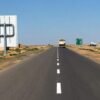
Road Rehabilitation Completed on Nukhaib-Karbala Route
Posted on 02 June 2026 .
By John Lee.
A 120-km road rehabilitation project linking Nukhaib district to Karbala province has been completed by the Ministry of Construction, Housing and Public Municipalities.
According to the ministry's media centre, the road, which is 7.5 metres wide, connects the Arar border crossing with Saudi Arabia to Karbala, passing through Anbar province. It also serves as a principal route for pilgrims and visitors.
The project was carried out under the supervision of the Roads and Bridges Directorate through Ashur General Company for Construction Contracting, both affiliated with the ministry.
(Source: Ministry of Construction, Housing and Public Municipalities)
Posted in Construction & Engineering In Iraq Comments Off on Road Rehabilitation Completed on Nukhaib-Karbala Route
New Oil Discovery at Qurnain Exploration Block
Posted on 07 May 2026 .
By John Lee.
A new hydrocarbon discovery has been made at the Qurnain exploration block in southwest Iraq, marking the first oil find at any block awarded under the fifth supplementary and sixth licensing rounds.
The discovery was confirmed following the drilling of exploratory well Shams-11, which began on 10th January 2026. A potential hydrocarbon accumulation of 8.835 billion cubic feet was identified on 24th February 2026 in the MUS formation at a depth of 1,916-1,965 metres, with a daily production rate of 3,248 barrels of light crude oil.
The Qurnain block covers an area of 8,773 km² in Najaf province, adjacent to the Iraqi-Saudi border. Key milestones in its development include:
- An exploration, development, and production contract signed on 17th October 2024 between Midland Oil Company (MdOC) and North Petroleum International (NPI), a wholly owned subsidiary of Zhenhua Oil (EBS Petroleum)
- Contract activation on 18th November 2024
- Transfer of operatorship from North Petroleum International Limited to Qurnain Petroleum Limited with effect from 17th May 2025
- Commencement of 2D seismic survey on 10th October 2025, covering 2,850 km, completed on 15th March 2026
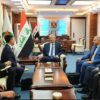
The meeting, attended by Mohammed Yassin, Director General of Midland Oil Company, also covered progress on production increases by EBS Petroleum at the East Baghdad Oil Field. Oil Minister Hayan Abdul-Ghani al-Sawad called for acceleration of work phases to sustain crude oil production and maximise gas utilisation.
(Source: Ministry of Oil)
Posted in Iraq Oil & Gas News Comments Off on New Oil Discovery at Qurnain Exploration Block
OPEC+ Agrees Production Adjustment for June
Posted on 05 May 2026 .
By John Lee.
Seven OPEC+ member countries have agreed to implement a production adjustment of 188,000 barrels per day (bpd) in June 2026, following a virtual meeting held on 3 May 2026.
The seven countries involved are Saudi Arabia, Russia, Iraq, Kuwait, Kazakhstan, Algeria, and Oman, all of which had previously announced additional voluntary adjustments in April and November 2023. [United Arab Emirates (UAE) announced that it will exit the OPEC and OPEC+ from 1st May.]
The group stated that the additional voluntary adjustments announced in April 2023 may be returned in part or in full, subject to market conditions, on a gradual basis. Key points from the meeting include:
- A production adjustment of 188,000 bpd to be implemented in June 2026
- Full flexibility retained to increase, pause, or reverse the phase-out of voluntary adjustments, including those announced in November 2023
- Commitment to full conformity with the Declaration of Cooperation, including monitoring by the Joint Ministerial Monitoring Committee (JMMC)
- Intention to fully compensate for any overproduced volume since January 2024
- Monthly meetings to review market conditions, conformity, and compensation
The seven countries will hold their next meeting on 7 June 2026.
Full statement from OPEC:
Saudi Arabia, Russia, Iraq, Kuwait, Kazakhstan, Algeria, and Oman adjust production and reaffirm commitment to market stability
The seven OPEC+ countries, which previously announced additional voluntary adjustments in April and November 2023, namely Saudi Arabia, Russia, Iraq, Kuwait, Kazakhstan, Algeria, and Oman met virtually on 3 May 2026, to review global market conditions and outlook.
In their collective commitment to support oil market stability, the seven participating countries decided to implement a production adjustment of 188 thousand barrels per day from the additional voluntary adjustments announced in April 2023. This adjustment will be implemented in June 2026 as detailed in the table below. The additional voluntary adjustments announced in April 2023 may be returned in part or in full subject to evolving market conditions and in a gradual manner. The countries will continue to closely monitor and assess market conditions, and in their continuous efforts to support market stability, they reaffirmed the importance of adopting a cautious approach and retaining full flexibility to increase, pause or reverse the phase out of the voluntary production adjustments, including reversing the previously implemented voluntary adjustments announced in November 2023.
The seven OPEC+ countries also noted that this measure will provide an opportunity for the participating countries to accelerate their compensation. The seven countries reiterated their collective commitment to achieve full conformity with the Declaration of Cooperation, including the additional voluntary production adjustments that will be monitored by the Joint Ministerial Monitoring Committee (JMMC). They also confirmed their intention to fully compensate for any overproduced volume since January 2024.
The seven OPEC+ countries will hold monthly meetings to review market conditions, conformity, and compensation. The seven countries will meet on 7 June 2026.

(Source: OPEC)
Posted in Iraq Oil & Gas News Comments Off on OPEC+ Agrees Production Adjustment for June
Iraq Falls in World Press Freedom Index
Posted on 05 May 2026 .
By John Lee.
Iraq has fallen in the World Press Freedom Index for 2026, ranking 162nd out of 180 countries, down seven places on last year.
The result puts Iraq behind countries such as Cuba and the United Arab Emirates (UAE), but ahead of Iran, Saudi Arabia and Turkiye. First place went to Norway, with Eritrea coming last.
Reporters Without Borders (RWB, RSF), which publishes the annual study, said:
"Between political instability and financial pressure, journalists face threats from all sides and are up against the weakness of the state, which is failing in its duty to protect them."
(Source: Reporters Without Borders)
Posted in Iraqi Communications News, Politics, Security Comments Off on Iraq Falls in World Press Freedom Index
Kurdistan Region Investment Projects Top $80bn
Posted on 30 April 2026 .
By John Lee.
The Kurdistan Investment Board has confirmed the formation of joint committees with the National Investment Commission (NIC) to develop cooperation in industrial sectors and support continued investment activity across Iraq.
Mohammed Shukri, head of the Kurdistan Investment Board, told the state-run Iraqi News Agency (INA) that relations with the NIC are strong, with joint committees operating across industry and factory oversight, and mutual facilitation measures in place. He noted that no conflicts or problems have been recorded regarding the follow-up of Iraqi investors' activities.
Shukri stated that the Board operates under Investment Law No. 4 of 2006, issued by the Kurdistan Parliament, which closely mirrors federal legislation. He added that instructions issued by the Board are aligned with federal laws and regulations, contributing to a more supportive environment for the private sector.
The number of investment projects in the region over the past two decades has exceeded 1,700, with a combined value of approximately $80 billion. Key details include:
- Industrial sector accounts for 45% of projects, covering steel, iron, cement, refineries, power stations, and infrastructure
- Residential sector represents around 15% of projects
- Foreign investment stands at 17%, comprising both joint and wholly foreign-owned ventures
- Investing countries include Turkey, Iran, Lebanon, Jordan, Saudi Arabia, Kuwait, the UAE, Egypt, France, the United Kingdom, the United States, and China
- Investment projects have grown by 400% compared to the period before 2022
The regional government is currently focused on three priority sectors: industry, agriculture, and tourism. A plan extending to 2030 includes the development of modern industrial zones, agricultural greenhouse projects, clean energy initiatives, dam construction, mountain tourism resorts, and a tower exceeding 450 metres in height, described as the tallest in Iraq.
Of 12 previously stalled projects, most have been resolved. The remaining case, the Dashti Bahsh project in Erbil, is being addressed through a new investment licence and compensation for affected residents. Shukri attributed past delays primarily to the security situation following the 2014 conflict.
Shukri extended an invitation to both Iraqi and foreign investors, citing a secure environment, full government support, and significant untapped opportunities across all Iraqi governorates.
(Source: Iraqi News Agency)
Posted in Construction & Engineering In Iraq, Investment, Iraq Industry & Trade News Comments Off on Kurdistan Region Investment Projects Top $80bn

New TIR Freight Corridor Linking Turkey, Iraq and Saudi Arabia
Posted on 15 April 2026 .
By John Lee.
Iraq's General Company for Land Transportation (GCLT) has successfully completed a trial freight journey under the TIR system along a new corridor linking Turkey, Iraq, and Saudi Arabia.
The route runs from the Ibrahim Al-Khalil border crossing to the Arar crossing, with the trial completed within the planned schedule and without reported obstacles, according to Director General Murtada Karim Al-Shahmani.
Key features of the new corridor include:
- Direct TIR transport between Turkey, Iraq, and Saudi Arabia
- No requirement to transfer cargo between trucks at border crossings
- Transit visas granted to Turkish drivers accompanying TIR shipments
- Improved coordination between Iraqi and Saudi authorities
The company said the route is expected to reduce transit times and logistics costs, while improving the flow of goods.
Officials added that the corridor strengthens Iraq's position as a key land bridge connecting Asia, Europe, and Gulf markets, supporting regional and international supply chains.
The initiative follows coordination with the International Road Transport Union (IRU) and Iraqi transport authorities to implement international best practices under the TIR framework.
The company noted that the successful trial could pave the way for expanding the route to include additional shipments and countries, in line with government plans to position Iraq as a major transit hub.
(Source: Ministry of Transport)
Posted in Iraq Industry & Trade News, Iraq Transportation News Comments Off on New TIR Freight Corridor Linking Turkey, Iraq and Saudi Arabia
OPEC+ Agrees Production Adjustment for May
Posted on 07 April 2026 .
By John Lee.
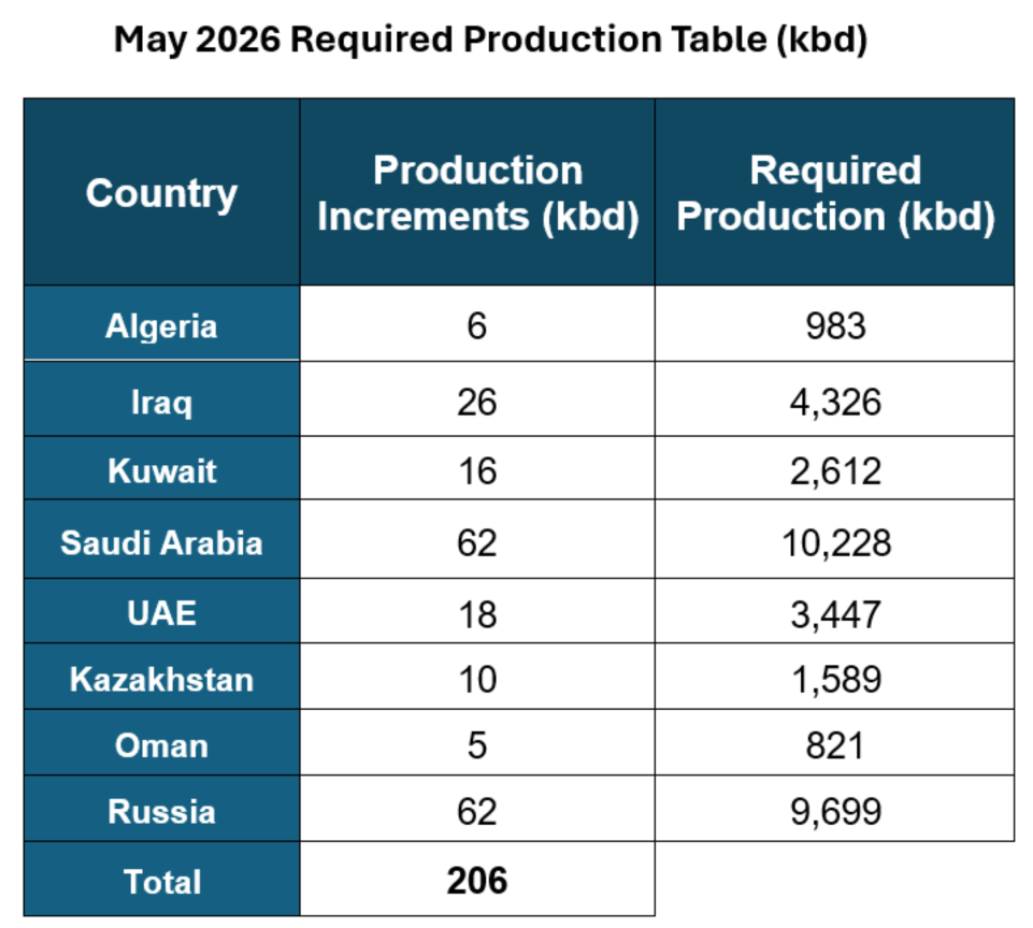
OPEC has announced that eight OPEC+ countries will implement a production adjustment of 206,000 barrels per day in May 2026, as part of ongoing efforts to stabilise global oil markets.
The decision was taken during a virtual meeting on 5 April involving Saudi Arabia, Russia, Iraq, UAE, Kuwait, Kazakhstan, Algeria, and Oman.
The eight countries will continue to meet monthly to review market conditions, compliance, and compensation, with the next meeting scheduled for 3 May 2026.
Full statement from OPEC:
Saudi Arabia, Russia, Iraq, UAE, Kuwait, Kazakhstan, Algeria, and Oman adjust production and reaffirm commitment to market stability
The eight OPEC+ countries, which previously announced additional voluntary adjustments in April and November 2023, namely Saudi Arabia, Russia, Iraq, UAE, Kuwait, Kazakhstan, Algeria, and Oman met virtually on 5 April 2026, to review global market conditions and outlook.
In their collective commitment to support oil market stability, the eight participating countries decided to implement a production adjustment of 206 thousand barrels per day from the 1.65 million barrels per day additional voluntary adjustments announced in April 2023. This adjustment will be implemented in May 2026 as detailed in the table below. The 1.65 million barrels per day may be returned in part or in full subject to evolving market conditions and in a gradual manner. The countries will continue to closely monitor and assess market conditions, and in their continuous efforts to support market stability, they reaffirmed the importance of adopting a cautious approach and retaining full flexibility to increase, pause or reverse the phase out of the voluntary production adjustments, including reversing the previously implemented voluntary adjustments of the 2.2 million barrels per day announced in November 2023.
The eight OPEC+ countries also noted that this measure will provide an opportunity for the participating countries to accelerate their compensation. The eight countries reiterated their collective commitment to achieve full conformity with the Declaration of Cooperation, including the additional voluntary production adjustments that will be monitored by the Joint Ministerial Monitoring Committee (JMMC). They also confirmed their intention to fully compensate for any overproduced volume since January 2024.
In addition, the eight OPEC+ countries reiterated the JMMC's statement for its 65th meeting, highlighting the critical importance of safeguarding international maritime routes to ensure the uninterrupted flow of energy.
The eight countries also expressed concern regarding attacks on energy infrastructure, noting that restoring damaged energy assets to full capacity is both costly and takes a long time, thereby affecting overall supply availability. Accordingly, they stressed that any actions undermining energy supply security, whether through attacks on infrastructure or disruption of international maritime routes, increase market volatility and weaken the collective efforts under the DoC to support market stability for the benefit of producers, consumers, and the global economy. In this regard, the eight countries commended the DoC countries that took the initiative to ensure the continued availability of supplies, particularly through the use of alternative export routes, which have contributed to reducing market volatility.
The eight OPEC+ countries will hold monthly meetings to review market conditions, conformity, and compensation. The eight countries will meet on 3 May 2026.
(Source: OPEC)
Posted in Iraq Oil & Gas News Comments Off on OPEC+ Agrees Production Adjustment for May
Najaf Seismic Programme Completed Ahead of Schedule
Posted on 20 March 2026 .
By John Lee.
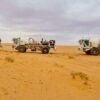
The Iraq Oil Exploration Company has completed a two-dimensional seismic survey programme for the Al-Qurnain exploration project in Najaf province, aimed at expanding Iraq's geological database and supporting future oil and gas discoveries.
The project forms part of efforts by the Ministry of Oil to strengthen hydrocarbon exploration activities and increase the country's resource base. The work was carried out by the Second Seismic Crew of the company's Field Work Authority.
According to Director General Osama Raouf Hussein, the programme was completed by Iraqi technical teams despite logistical and geographical challenges, including operations in remote desert areas with limited communications and long supply distances. The survey was conducted in accordance with approved technical and environmental standards.
The project was implemented for Al-Qarnain Petroleum, a subsidiary of China's ZhenHua Oil.
Key details of the programme include:
- Total seismic survey length of approximately 2,850 kilometres
- 47,500 energy points completed
- 100 percent completion rate
- Project finished around 12 days ahead of schedule
Hussein said the completion of the seismic programme in Najaf will support more advanced exploration stages in future projects and help expand Iraq's hydrocarbon resource map, potentially strengthening investment opportunities in the oil sector.
The project was carried out under the supervision of Deputy Prime Minister for Energy Affairs and Minister of Oil Hayan Abdul Ghani Al-Sawad, with follow-up from Deputy Minister for Extraction Affairs Bassem Mohammed Khudair.
The contract for the project was signed in August last year, when it was described as a promising oil and gas prospect on Iraq's border with Saudi Arabia.
(Source: Ministry of Oil)
Posted in Iraq Oil & Gas News Comments Off on Najaf Seismic Programme Completed Ahead of Schedule