


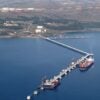
War of Words Continues re KRG Oil Exports
Posted on 26 March 2024 .
By John Lee.
The Iraqi Oil Ministry has responded to criticism from the trade body representing international oil companies (IOCs) operating in Iraqi Kurdistan, as they mark the one-year anniversary of the closure of the Iraq-Turkey Pipeline (ITP) connecting northern Iraq with the Mediterranean port of Ceyhan.
Highlighting the economic cost of the pipeline closure, the Association of the Petroleum Industry of Kurdistan (APIKUR) accused Baghdad of, "economic strangling of the KRI ... through blocking oil exports and non-implementation of budget transfers."
It added that there has been "no real progress" to reopen the line, and that debts of over $1 billion from the KRG to APIKUR member companies remain unpaid.
In response, Baghdad's Ministry of Oil said that it is the federal government that is the most affected by the cessation of exports, and blamed Turkiye for the closure of the pipeline.
The Ministry also pointed to the Supreme Court ruling that says those oil contracts are not valid, and that the Ministry of Oil in Baghdad is responsible for oil exports.
Full statement from APIKUR:
Key Points:
-
-
The Iraq-Türkiye pipeline (ITP) has now been closed for one year
-
The ITP closure impacts International Oil Companies (IOCs) in the Kurdistan Region of Iraq (KRI), blocking 450,000 barrels per day of crude oil exports
-
Continued closure costs the Government of Iraq (GoI), Kurdistan Regional Government (KRG), IOCs, and the people of Iraq billions of dollars
-
As the 1-year mark for the halt of oil exports through ITP approaches, the Association of the Petroleum Industry of Kurdistan (APIKUR) provides an update on the reported status of the discussions around reopening the ITP, its efforts to restore full production and exports from Kurdistan, and the financial impacts on the Iraqi people and International Oil Companies (IOCs).
On March 25, 2023, oil exports through ITP were halted.
To date, neither APIKUR nor its members have seen any proposal from the GoI or KRG that would lead to a resumption of exports.
All eight APIKUR member companies remain committed to their contracts with the KRG and have been repeatedly assured by the KRG that the KRG, for its part, is fully committed to these contracts as well.
APIKUR continues to seek to engage with all relevant stakeholders to reach an agreement to resume exports via ITP.
"APIKUR remains focused on working with all stakeholders to restore full oil production and exports through the Iraq-Türkiye Pipeline," said Myles B. Caggins III, spokesman for APIKUR. "Each day the pipeline is closed, losses continue to mount and the people, economy, and investment reputation of Iraq suffers."
APIKUR's Assessment:
The GoI has not taken the required actions to reopen the ITP and enable oil exports from the Kurdistan Region of Iraq, despite Türkiye's announcement in October 2023 that the pipeline is operational and ready to export oil.
APIKUR notes that meetings were held in Baghdad on January 7-9, 2024, between representatives of the GoI, KRG, and IOCs - including representatives of several APIKUR member companies. Despite those meetings and the subsequent press on positive discussions between GoI and KRG, there has been no real progress to reopen the ITP.
APIKUR's efforts to resolve the impasse:
-
-
Holding multiple meetings with the KRG and GoI officials in Baghdad, Erbil, and Dubai
-
Consistently and openly communicating APIKUR members' conditions for restoring export production:
-
Any addendums must be agreed between the GoI, KRG, and APIKUR member companies
-
There must be payment surety for past and future oil exports
-
Prospective oil sale payments to APIKUR member companies must be remitted directly to those companies
-
The APIKUR member companies' current commercial terms and economic model must be maintained
-
-
Launching a public awareness campaign across Arabic, Kurdish, and Western media outlets
-
Independent of APIKUR, several individual IOCs have proposed solutions to the GoI and KRG
-
In addition, APIKUR has engaged home governments of member companies-with a particular focus on the United States government (USG)-due to its unique bilateral relationships with the GoI and KRG, including the $300 million direct investment by USG in the Kurdistan Region's energy sector.
APIKUR has conveyed to senior members of President Biden's administration and members of the U.S. Congress that the White House should not proceed with the planned visit of Iraqi Prime Minister Mohammad Shia Al-Sudani, on April 15, 2024, to Washington, DC unless:
-
-
ITP is reopened and allows oil produced in the KRI to be exported to international markets
-
IOCs (including APIKUR members) get surety of payment for past and future oil exports
-
The GoI fully implements the Iraqi federal budget for the KRG
-
APIKUR summary of the ongoing impact of the ITP closure:
Financial Impact:
-
-
Estimated revenue loss to Iraq of more than $11 billion, approximately $1 billion each month
-
APIKUR understands that while ITP remains unused, Iraq accrues more than $800,000 in daily penalties for failure to meet contractual throughput quotas in the ITP agreement
-
Debts of over $1 billion from the KRG to APIKUR member companies for oil produced between September 2022 and March 2023 remain unpaid
-
More than $400 million in annual investments paused by APIKUR members
-
IOC annual revenues reduced by nearly 60% as local sales have replaced exports to international markets
-
Economic strangling of the KRI by GoI through blocking oil exports and non-implementation of budget transfers
-
Impact on Global Oil and Energy Markets:
-
-
The halt of ITP exports puts pressure on a precariously balanced global energy market currently affected by Russian sanctions and shipping disruptions through the Red Sea
-
Iraq continues to receive sanctions waivers to import electricity from Iran, instead of funding its own energy infrastructure through additional oil exports
-
Since ITP closed, the U.S. has imported upwards of 250,000 bpd of oil and products from Southern Iraq, while the GoI prevents oil produced by U.S. companies in Kurdistan Region from being exported
-
Impact on Employment in Iraq's Kurdistan Region:
-
-
APIKUR member companies have laid off hundreds of directly-hired personnel, including both expats and locally-hired staff
-
The collapse in IOC investment has caused even greater staff reductions in oilfield-related service and products industries, including lodging and catering, maintenance, security, transportation, and construction companies
-
The lack of oil revenue and budget transfers from the GoI to KRG has led to severe delays in payment of civil servant salaries, including teachers and health service workers
-
Reputational Impact:
-
-
Placing the respect for contract sanctity in question risks a significant downturn in the desire for the global business community to invest in Iraq
-
Budget law and oil export impasse has exposed intra-Iraq political rifts
-
Full statement from the Ministry of Oil (translated):
The Federal Ministry of Oil has reviewed a statement issued by an entity calling itself the "Association of the Petroleum Industry of Kurdistan (APIKUR)" dated March 23, 2024, which contained distortions of facts and several inaccuracies. In this regard, the ministry would like to clarify the following points:
1. The halt of oil exports through the Iraqi-Turkish pipeline in March 2023 was due to a Turkish decision following an international arbitration ruling by the Paris Chamber of Commerce in favor of Iraq. The export did not stop - not even for a day - due to a federal Iraqi decision. After more than six months and significant negotiations led by this ministry with the Turkish side, the parties agreed to reopen the pipeline and address the technical issues resulting from its closure in the shortest possible time. The federal government is the biggest loser from the export halt for reasons related to sovereign oil policy and others.
2. One of the main reasons for the current export halt is the refusal of foreign companies operating in the Kurdistan Region of Iraq to officially hand over their production to the regional government for export in accordance with the effective federal budget law. This includes companies affiliated with the mentioned association. Export can be resumed shortly if these companies deliver the produced oil from the fields located in the region in accordance with the law.
3. The federal government and this ministry have made diligent efforts to overcome all obstacles to resume exports, as evidenced by the content of numerous official letters, meetings, and relevant decisions over the past year. The latest of these efforts was our letter numbered (480) dated March 18, 2024, which emphasized the necessity of delivering the produced oil in the region for export purposes. This ministry continues to insist on resuming exports through the Iraqi-Turkish pipeline as soon as possible, while adhering to the provisions of the constitution and the law.
4. Official correspondences issued by this ministry, including our aforementioned letter, referred to reports from OPEC and internationally recognized secondary sources confirming oil production in the region ranging from 200,000 to 225,000 barrels per day, without the knowledge or approval of this ministry. Non-compliance with the adopted federal oil policy puts Iraq's reputation and international obligations at risk, and the responsible parties for violations will face all legal consequences.
5. Contracts purportedly concluded between oil companies operating in the region and the Ministry of Natural Resources in the region have not been approved by the federal government or the federal Ministry of Oil at all, as they lack a sound constitutional and legal basis. This has been the stance of successive federal governments and the Ministry of Oil for over a decade, consistent with the Supreme Federal Court decision numbered (59/federal/2012 and its unified decision 110/federal/2019) dated February 15, 2022. There is no room for debate after the Supreme Federal Court issued its definitive and binding decision, except to comply with it.
6. This ministry has previously requested the Kurdistan Regional Government and the oil companies operating therein to provide full copies of all the mentioned contracts for the purpose of studying them and reaching new contracts in line with the constitution, the law, and the best practices followed by this ministry with major international companies. However, these contracts have not been submitted so far. Therefore, it is unreasonable for this ministry to demand compliance with contracts it has not seen or recognized, which is fundamentally inconsistent with binding judicial decisions.
7. The Federal General Budget Law No. 13 of 2023, which came into effect on January 1, 2023, included in Article 12/Second/B a provision to calculate production and transportation costs at a rate equal to what this ministry pays in its contracts, with the production cost averaging $6.9 per barrel. However, the companies operating in the region demand three times this amount (excluding transportation fees) as one of the conditions for resuming oil delivery. The parliament's call to adopt the Ministry of Oil's rate was due to the lack of access by the parliament and other federal authorities to the contracts, as mentioned earlier. Moreover, the costs demanded by the companies include what they call payment of previous debts worth billions of dollars, amounts that are unknown to the federal government and do not align with borrowing frameworks under the constitution and the prevailing laws.
8. It has been clarified repeatedly that this ministry cannot violate the General Budget Law and other applicable laws, in addition to highlighting a significant exaggeration in the mentioned costs in the previous paragraph. This ministry has officially reiterated its commitment to immediately resume exports in accordance with the law through the Iraqi-Turkish pipeline, while negotiating in parallel to reach a comprehensive and mutually acceptable settlement that serves the public interest. However, the companies continue to refrain from complying unless their illegal conditions are met, which is unacceptable under any circumstances.
9. The Iraqi government has received representatives of the oil companies operating in the region at the highest levels as a goodwill gesture to find acceptable legal solutions. This ministry has previously invited these companies to negotiation meetings to find fair solutions and has taken continuous legal actions against the mentioned companies to allow room for amicable settlements. However, the companies' stance remains inflexible and unchanged.
10. The mentioned association's statement included blatant interference in Iraq's internal and external sovereign affairs, which have no relation to the companies' operations. This constitutes an additional violation by the mentioned association and the represented companies and does not align with the principles of goodwill and the fundamentals of foreign investment.
11. The federal Ministry of Oil, under the government's directives, is committed to making every possible effort to resolve the disputes and resume exports through the Iraqi-Turkish pipeline in line with the constitution and the law. Foreign companies wishing to operate in Iraq must respect the country's sovereignty, laws
(Sources: APIKUR; Ministry of Oil)
Posted in Iraq Oil & Gas News, Politics Comments Off on War of Words Continues re KRG Oil Exports
Oil Ministry Completes Rehabilitation of Gas Pipeline
Posted on 25 March 2024 .
By John Lee.
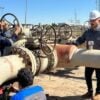
Iraq's Ministry of Oil has announced that the Oil Pipelines Company has completed the first phase of rehabilitating the 12-inch dry gas pipeline from the East Baghdad field to Taji power station.
Mr. Ali Abdul Kareem Al-Moussawi, the Director General of the Oil Pipelines Company, stated that the company's technical and engineering teams successfully completed maintenance and rehabilitation works along a 13-kilometer stretch of the pipeline.
This achievement contributes to the government's and the Ministry of Oil's plans to invest in flared gas from the East Baghdad field using Carbon Credit financing, marking the first such experiment in Iraq, in accordance with international standards, agreements, and frameworks.
Mr. Al-Moussawi also highlighted the upcoming discharge of the dry gas produced from the East Baghdad field, as well as the enhancement of electricity production by delivering gas to the Taji power station.
He noted that the maintenance and rehabilitation works were completed within an exceptional timeframe of no more than one month, involving the rehabilitation of the pipeline and the maintenance of associated parts.
(Source: Ministry of Oil)
Posted in Iraq Oil & Gas News Comments Off on Oil Ministry Completes Rehabilitation of Gas Pipeline
US Extends Waiver allowing Iraq to pay Iran for Electricity
Posted on 18 March 2024 .
By John Lee.
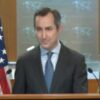
At a press briefing on Thursday, US State Department spokesperson Matthew Miller (pictured) said the United States has issued another 120-day waiver to allow Iraq to continue importing electricity from Iran.
Addressing a question from the floor, Miller said:
"... these are waivers that have been regularly issued to Iraq going back to 2018 under a previous administration. This is now the 21st time that this particular waiver has been issued. And it's important to realize how this money has been used.
"Number one, that no money is permitted to enter Iran under the terms of this waiver. All of these funds are held in restricted accounts and they can only be used for transactions for the purchase of food, medicine, medical devices, agricultural products, and other non-sanctionable transactions. And that it is part of our broader goal to wean Iraq off of dependence on Iran for the provision of electricity, because that's what these waivers - as I know you know - what these waivers relate to, which is that Iraq continues to have to get its electricity from Iran.
"Iraq has been making real progress on its path towards energy sufficiency since 2020. It has cut its imports of Iranian energy by more than half. Over the last decade, it has doubled its own electricity generation. And we will continue to work with them and support them as they try to become energy independent."
He further clarified:
"Iraq has been importing electricity from Iran. It doesn't pay it - Iran - directly for that electricity. It deposits money into these restricted accounts, and then we issue these waivers. It allows the money in that - those accounts to be used for humanitarian and other non-sanctionable purposes, but the money itself doesn't actually move from Iraq to Iran."
(Source: US State Dept)
Posted in Iraq Industry & Trade News, Politics, Security Comments Off on US Extends Waiver allowing Iraq to pay Iran for Electricity
Iraq Receives 17 Proposals for Waste-to-Energy Project
Posted on 07 March 2024 .
By John Lee.
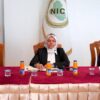
The Iraqi National Investment Commission (NIC) has announced that it has received 17 proposals from foreign, Arab, and local companies for a waste management and electricity generation project (waste-to-energy) in Baghdad.
This announcement followed a meeting of the commission tasked with assessing the proposals.
Dr. Mona Al-Jabri, the commission's renewable energy consultant, emphasized the commission's genuine interest in high-quality investment opportunities, particularly in vital projects like electricity generation initiatives.
(Source: NIC)
Posted in Investment, Iraq Industry & Trade News Comments Off on Iraq Receives 17 Proposals for Waste-to-Energy Project

IMF: Iraq Economic Growth "to Continue amid Fiscal Expansion"
Posted on 05 March 2024 .
By John Lee.
An International Monetary Fund (IMF) mission met with the Iraqi authorities in Amman during February 20-29 to conduct the 2024 Article IV consultation.
Some key data from their report:
- Economic Growth:
- Non-oil GDP growth: 6% in 2023.
- Overall growth projected to rebound in 2024.
- Inflation:
- Declined from 7.5% in January 2023 to 4% by year-end.
- Fiscal Position:
- Deficit: 1.3% of GDP in 2023, down from a surplus of 10.8% in 2022.
- Projected deficit for 2024: 7.6% of GDP.
- Public debt: Expected to nearly double from 44% in 2023 to 86% by 2029.
- Policy Priorities:
- Need for fiscal adjustment to stabilize debt and rebuild buffers.
- Focus on reducing current expenditure, increasing non-oil revenues, and improving revenue administration.
- Monetary Policy:
- CBI raised policy interest rates and reserve requirements.
- Efforts to reduce excess liquidity and improve monetary policy pass-through.
- Structural Reforms:
- Comprehensive employment strategy needed.
- Financial sector reform to improve credit access.
- Urgent pension reform required.
- Combat corruption and improve governance.
- Hurdles to private sector development need to be removed, including in the electricity sector and business registration procedures.
- IMF Support: The IMF staff team stands ready to support reform efforts.
Full statement from IMF:
An International Monetary Fund (IMF) mission, led by Mr. Jean-Guillaume Poulain, met with the Iraqi authorities in Amman during February 20-29 to conduct the 2024 Article IV consultation. The following statement was issued at the end of the mission:
Economic growth is projected to continue amid fiscal expansion. Meanwhile, medium-term vulnerabilities to oil price volatility have increased significantly. Reducing oil dependence and ensuring fiscal sustainability while protecting critical social and investment spending will require a significant fiscal adjustment, focused on controlling the public wage bill and increasing non-oil tax revenues. In parallel, higher economic growth will be needed to absorb the rapidly expanding labor force, boost non-oil exports and broaden the tax base. The authorities should therefore seek to enable private sector development, including through labor market reforms, modernization of the financial sector and restructuring of state-owned banks, pension and electricity sector reforms, and continued efforts to improve governance and reduce corruption.
Economic Outlook and Risks
Growth in the non-oil sector has rebounded strongly in 2023 while inflation receded. Supported by increases in public expenditure and solid agricultural output, real non-oil GDP is estimated to have grown by 6 percent in 2023 after stalling in 2022. Headline inflation declined from a high of 7.5 percent in January 2023 to 4 percent by year-end, reflecting lower international food and energy prices, and the impact of the February 2023 currency revaluation. The current account is expected to have recorded a surplus of 2.6 percent of GDP and international reserves increased to US$ 112 billion.
These positive developments were supported by the normalization of trade finance and the stabilization of FX market. After some initial disruptions following the introduction of new anti-money laundering and combating financing of terrorism (AML/CFT) controls on cross-border payments in November 2022, the improved compliance with the new system and the Central Bank of Iraq (CBI)'s initiatives to cut processing time led to a recovery in trade finance in the second half of 2023. This ensured private sector access to foreign exchange at the official rate for imports and travel purposes.
In the meantime, the fiscal position worsened. Although the expansionary budget was under-executed due to delayed Parliamentary approval, the fiscal balance still declined from a surplus of 10.8 percent of GDP in 2022 to a deficit of 1.3 percent in 2023, due to lower oil revenues and an increase in expenditures by 8 percentage points of GDP, of which salaries and pensions contributed 5 percentage points as the authorities started hiring in line with the budget law.
Overall growth is projected to rebound in 2024 and risks are tilted downwards amid heightened uncertainty. Non-oil growth momentum will continue in 2024. Larger declines in oil prices or extended OPEC+ cuts could weigh on fiscal and external accounts. If regional tensions escalate, a disruption of shipping routes or damage to the oil infrastructure could result in oil production losses that could outweigh the potential positive impact of higher oil prices. In case of a deterioration in domestic security conditions, this could lead to a decline in business sentiment and suspension of investment projects. Over the medium term, non-oil growth is projected to stabilize around 2.5 percent given existing hurdles to private sector development. Furthermore, vulnerability to oil price declines has increased as higher expenditures are projected to push the fiscal break-even oil price above $90 in 2024. Absent new policy measures, the fiscal deficit is expected to reach 7.6 percent in 2024 and widen further thereafter as oil prices are projected to gradually decline over the medium term. As a consequence, public debt would almost double from 44 percent in 2023 to 86 percent by 2029.
Policy Priorities
An ambitious fiscal adjustment would be required to help stabilize debt in the medium term and rebuild fiscal buffers, while protecting critical capital spending. Most of the fiscal adjustment would have to come from reducing current expenditure, especially controlling the wage bill by limiting mandatory hiring and gradually introducing an attrition rule. The authorities should also seek to increase non-oil revenues by broadening the personal income tax base and making it more progressive, reviewing the customs tariff structure, and considering new taxes on luxury items. In parallel, efforts to make revenue and customs administration more efficient should continue. Further savings could be obtained through better targeting social support and increasing cost recovery within the electricity sector. These adjustment measures should provide room for the expansion of the targeted social safety net.
The authorities should also strengthen public financial management and limit fiscal risks. The mission welcomes initial steps towards the establishment of a Treasury Single Account (TSA), which is crucial to improve cash management. Further progress is needed and close cooperation between the CBI and Ministry of Finance will be essential. The next steps are to define TSA design options and complete the bank account census. In future years, overall ceilings on the issuance of guarantees should be specified in the budget law and be enforced. The mission advise against the use of extrabudgetary funds and highlights potential fiscal risks associated with their use. As a second best, it would be important to ensure the Iraq Fund for Development has appropriate governance arrangements, including governing board independence while ensuring transparency of the Fund's activities including by publishing its investment plans in the annual budget documentation and restricting its ability to borrow.
The mission encourages the authorities to build on the CBI welcomed efforts to reduce excess liquidity. The CBI appropriately raised the policy interest rate and reserve requirements, introduced a 14-day CBI bill facility last summer, and scaled back its subsidized lending to the real estate sector. However, monetary policy pass-through has been muted, hampered by large excess liquidity and lack of market incentives in financial intermediaries, especially at state-owned banks. The CBI's ongoing efforts should be supported by consolidating idle government deposits in a TSA, refraining from procyclical fiscal policy, reducing the reliance on monetary finance, and improving public debt management. In parallel, efforts to develop an interbank market with the help of IMF technical assistance should continue. The mission also welcomes the authorities' steps to speed up the digitalization of the economy, reduce the reliance on cash and enhance financial inclusion.
Wide-ranging structural reforms are needed to foster private sector development and economic diversification. Iraq needs higher and more sustainable non-oil growth to absorb the rapidly growing labor force, increase non-oil exports and government revenue, and reduce the economy's vulnerability to oil price shocks. Key reform priorities include:
- Adopting a comprehensive employment strategy aimed at phasing-out mandatory hiring in the public sector, leveling the playing field between public and private jobs, addressing mismatches between educational curricula and the skills needed in the private sector, and strengthening labor market institutions. The strategy should also aim at reducing informality and addressing legal, social, and cultural impediments to women's participation in the workforce.
- Accelerating financial sector reform to improve access to credit. The authorities are committed to modernizing the banking sector and supporting banks' ability to secure correspondent banking relationships and have taken steps towards consolidation of small private banks. Efforts to restructure the two largest state-owned banks should intensify, including by expediting certification of past financial statements and implementation of core banking systems, and enhancing corporate governance in line with best practices.
- Implementing a comprehensive pension reform. This is urgently needed to reduce the overall projected fiscal costs of the public pension scheme, better align the benefits and rules across the public and private schemes, ensure adequacy of pensions and intergenerational equity, and increase the ratio of workers participating in the private pension scheme.
- Combating corruption and improving governance, particularly by strengthening the institutional and legal frameworks needed to ensure the independence of the Integrity Commission and the Board of Supreme Audit, enhancing the publication of assets and conflicts of interests declarations for top level officials, and adopting an updated anticorruption strategy. Further, public procurement and business regulations should also be enhanced. The authorities should also continue to strengthen the AML/CFT framework and its effectiveness, including in the banking sector, guided by the priority actions identified in the MENAFATF Mutual Evaluation that will be concluded in May 2024.
- Removing other hurdles to private sector development by reforming the electricity sector to improve efficiency, cost recovery, and reliable access; simplifying procedures for business registration; and upgrading critical infrastructure.
The IMF staff team stands ready to support the authorities in their reform efforts and would like to thank them for constructive and productive discussions during this mission.
(Source: IMF)
Posted in Iraq Industry & Trade News, Politics Comments Off on IMF: Iraq Economic Growth "to Continue amid Fiscal Expansion"
Toyota signs MoU for Iraq Electricity Network
Posted on 04 March 2024 .
By John Lee.
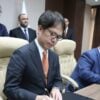
Ziad Ali Fadel, the Minister of Electricity, presided over the signing of a memorandum of understanding for the second phase with the Japanese company Toyota [Toyota Tsusho], aimed at enhancing the networks and capabilities of electrical system.
The Japanese Ambassador to Iraq was also present at the signing ceremony.
According to the Ministry of Electricity, the agreement signifies a collaborative effort to develop Iraq's electrical infrastructure, demonstrating a commitment to improving the efficiency and reliability of the electricity grid.
(Source: Ministry of Electricity)
Posted in Iraq Industry & Trade News Comments Off on Toyota signs MoU for Iraq Electricity Network
Emirati Company eyes Iraqi Renewable Energy Market
Posted on 03 March 2024 .
By John Lee.
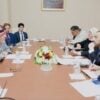
Iraq's Minister of Electricity has held discussions with a delegation from the Emirati company AMEA Power, which specialises in renewable energies.
During the meeting, they reviewed the current status of Iraq's electrical system and the government's efforts to enhance service quality and reliability through strategic projects.
The Minister welcomed Emirati companies interested in operating in Iraq and investing in the electricity sector. He reiterated the government's commitment to providing support and facilities for Arab and foreign companies interested in investing in Iraq.
Both parties agreed to continue meetings and to sign a memorandum of understanding in the near future to strengthen cooperation between the Republic of Iraq and the United Arab Emirates (UAE) in the field of energy and the development of electrical infrastructure.
(Source: Ministry of Electricity)
Posted in Iraq Industry & Trade News Comments Off on Emirati Company eyes Iraqi Renewable Energy Market
Iraqi Minister meets Delegation from Egyptian Transformer Company
Posted on 02 March 2024 .
By John Lee.
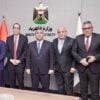
A delegation from the Egyptian company Egytrafo, which specialises in manufacturing electrical transformers, met this week with Ziad Ali Fadel, the Iraqi Minister of Electricity.
During the meeting, which was also attended by the Chargé d'Affaires of the Egyptian Embassy in Iraq, they discussed mutual cooperation between Iraq and Egypt, emphasizing the strong historical ties and the Ministry of Electricity's interest in tapping into the Egyptian market and activating partnerships to develop the electricity sector.
The Minister highlighted successful projects previously undertaken with Egyptian companies. He recalled a fruitful visit to Egypt alongside Prime Minister Mohammed Shiaa Al-Sudani, where significant energy-related matters were discussed. Discussions with the Egyptian Minister of Energy focused on addressing informal settlements, load management, meter installation, increasing production capacities, and the desire to synchronize successful experiences and create a joint file based on cooperation and knowledge exchange between the two countries.
Furthermore, the Minister listened to a comprehensive presentation from the Egyptian company's team regarding its history, transformer products, specifications, and marketing strategies in multiple countries. He affirmed the Ministry's openness to collaboration, especially with impending projects aimed at serving citizens. He emphasized that product adoption would be based on compliance with standards, competitive pricing, prompt delivery, and successful required inspections, directing the Investment and Contracts Department to study the company's profile and commercial and technical proposals for approval and competition.
(Source: Ministry of Electricity)
Posted in Iraq Industry & Trade News Comments Off on Iraqi Minister meets Delegation from Egyptian Transformer Company
Investment Opportunity: Waste-to-Energy Power Plant
Posted on 15 February 2024 .
By John Lee.
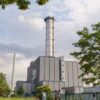
Iraq's National Investment Commission (NIC), in collaboration with the Municipality of Baghdad, Ministry of Electricity, and Ministry of Environment, has announced an investment opportunity to establish a Waste-to-Energy (WtE) power generation plant in Baghdad Governorate/Al-Nahrawan area.
Project Details:
- The project aims to generate power from mixed solid waste, estimated at around 3,000 tons per day.
- It emphasizes high efficiency with Grate Incineration Technology, starting from the fourth generation upwards.
- Key requirements include a power generation efficiency exceeding 30 percnt and a landfill rate below 5 percent.
Full statement from NIC:
Announcement of an International Investment Opportunity
Waste Energy Power Plant with High-Efficiency
Grate Incineration Technology (4th Generation Upwards)
(Design, Build, Own, and Operate- DBOO)
The National Investment Commission, in coordination and cooperation with the Municipality of Baghdad, the Ministry of Electricity, and the Ministry of Environment; announces an investment opportunity to establish a power generation station from mixed solid waste (WtE) according to the Investment Law No. (13 of 2006 amended) and the applicable instructions and valid decisions. The project will be held in the Baghdad Governorate/ Al-Nahrawanarea, on land No. (3/1/43626) under the following conditions:
1. The amount of mixed solid waste is estimated at about (3000) ton/day.
2. The generation of power from mixed solid waste must be with high-efficiency and grate incineration technology (fourth generation upwards), with an electrical power generation efficiency higher than 30% and a landfill rate less than 5%.
3. The advertisement period is (120) days, including 30 days for purchasing the investment portfolio; starting from Sunday 8th November 2023 till Tuesday 8th December 2023.
4. Investors and international companies willing to apply for the investment opportunity must come to the headquarters of the National Investment Commission to purchase the investment portfolio with the required conditions and specifications for an amount of (5) million Iraqi dinars, non-refundable. The "entry visa" will be granted to the company's authorized personnel after submitting an official request via Email:([email protected]).
5. For more information about the project contact the One-Stop Shop Department at the National Investment Commission on working days from 8:30 am to 3:00 pm Baghdad time after 5th November 2023.
6. Investment offers must be delivered within a maximum period of (120) days starting from the date of the announcement to the bid receiving committee at the headquarters of the National Investment Commission. The deadline for receiving the investment offers is Monday 8th March 2024 at 12:00 pm (Baghdad time).
7. A conference will be held to answer all inquiries from investors and interested international companies at the National Investment Commission's headquarters two weeks before the closing date.
8. The National Investment Commission is not obligated to accept the lowest prices for it follows specific criteria in analyzing investment offers.
9. Bids will be opened after the offers' deadline(Tuesday 8th March 2024 (at the headquarter of the National Investment Commission.
For more information, Cell Phone: +9647721111541 or
Email: [email protected]
(Source: National Investment Commission)
Posted in Construction & Engineering In Iraq, Investment, Iraq Public Works News, Tenders Comments Off on Investment Opportunity: Waste-to-Energy Power Plant

IFC Invests in Iraqi Cement Company
Posted on 27 January 2024 .
By John Lee.
The International Finance Corporation (IFC), part of the World Bank Group, is investing in Al-Douh Iraqi Company for Cement Industries ("Al Douh"), a leading cement manufacturer and part of Al-Riyadh Investment Companies Group (RICG).
According to a statement from the IFC, the decision was made to help boost economic diversification and spur sustainable growth in Iraq, while creating hundreds of jobs and bolstering reconstruction efforts.
IFC is providing a financing package of up to $130 million in long-term debt to Al-Douh. The financing will enable Al Douh to expand its cement production capacity by 1.9 million tons per annum enabling the company to reach overall production of approximately 3.0 million tons of cement by the end of 2025. Of the total financing provided, up to $25 million will be mobilized from the Managed Co-lending Portfolio Program (MCPP), IFC's syndications platform for institutional investors. The company's expansion is expected to create more than 2,700 direct and indirect jobs, including along the cement value chain.
IFC's funding will also promote the use of energy-efficient technologies in alignment with the Paris Agreement. The company is planning to install a new high thermal efficiency kiln, a new captive power plant using natural gas as a primary fuel rather than heavy fuel oil (HFO), and a new waste heat recovery for power generation system that will replace up to 30 percent of electricity generated by fossil fuel-based captive power plants. These will enable the project to meet the criteria outlined in the European Union taxonomy for sustainable cement clinker production.
Sheikh Hatam Al-Khawam, Chairman of the Board of Al-Douh Iraqi Company for Cement Industries, said:
"We are very grateful for this partnership with the International Finance Corporation, and we thank them for their great efforts in completing this major and vital agreement. We look forward to building a long-term joint relationship in this project and subsequent projects."
IFC is also providing advisory services to Al-Douh, by deploying IFC's cement decarbonization tool to facilitate a decarbonization roadmap and help decrease its greenhouse gas footprint. Additionally, IFC is supporting the company in setting good governance and environmental, health, and safety standards.
Ashruf Megahed, IFC's Regional Industry Head, Manufacturing, Agribusiness & Services for the Middle East, Central Asia, Türkiye, Afghanistan, and Pakistan, said:
"Growth and decarbonization can go hand in hand, as this investment highlights ... IFC's aim is to empower a key player in Iraq's private sector to take a leading role in the economy's diversification and reconstruction while supporting sustainable development."
Iraq's reconstruction needs are estimated at almost $90 billion, while the country's economy remains substantially dependent on oil revenues, making it vulnerable to oil price fluctuations. Iraq will also need a substantial $230 billion investment by 2040 to embark on a green growth path, according to the World Bank Group's Country Climate and Development Report, underscoring the need to decarbonize the industrial sector to achieve these goals.
IFC has been a pivotal force in Iraq, channeling over $1.2 billion since 2005 to fuel the growth of its private sector. Its current committed portfolio stands at around $188 million, invested in dynamic sectors like energy, telecoms, and banking. Recent initiatives aim to fortify food security, help the country reduce gas flaring and associated GHG emissions, and modernize Umm Qasr, Iraq's largest port, to boost trade.
IFC also signed an agreement in September 2023 to help develop the country's first airport public-private partnership project to modernize Baghdad International Airport.
(Source: IFC)
Posted in Construction & Engineering In Iraq, Investment, Iraq Industry & Trade News Comments Off on IFC Invests in Iraqi Cement Company