


By John Lee.
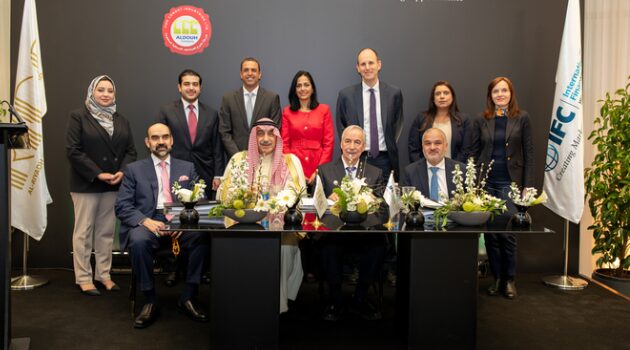
The International Finance Corporation (IFC), part of the World Bank Group, is investing in Al-Douh Iraqi Company for Cement Industries ("Al Douh"), a leading cement manufacturer and part of Al-Riyadh Investment Companies Group (RICG).
According to a statement from the IFC, the decision was made to help boost economic diversification and spur sustainable growth in Iraq, while creating hundreds of jobs and bolstering reconstruction efforts.
IFC is providing a financing package of up to $130 million in long-term debt to Al-Douh. The financing will enable Al Douh to expand its cement production capacity by 1.9 million tons per annum enabling the company to reach overall production of approximately 3.0 million tons of cement by the end of 2025. Of the total financing provided, up to $25 million will be mobilized from the Managed Co-lending Portfolio Program (MCPP), IFC's syndications platform for institutional investors. The company's expansion is expected to create more than 2,700 direct and indirect jobs, including along the cement value chain.
IFC's funding will also promote the use of energy-efficient technologies in alignment with the Paris Agreement. The company is planning to install a new high thermal efficiency kiln, a new captive power plant using natural gas as a primary fuel rather than heavy fuel oil (HFO), and a new waste heat recovery for power generation system that will replace up to 30 percent of electricity generated by fossil fuel-based captive power plants. These will enable the project to meet the criteria outlined in the European Union taxonomy for sustainable cement clinker production.
Sheikh Hatam Al-Khawam, Chairman of the Board of Al-Douh Iraqi Company for Cement Industries, said:
"We are very grateful for this partnership with the International Finance Corporation, and we thank them for their great efforts in completing this major and vital agreement. We look forward to building a long-term joint relationship in this project and subsequent projects."
IFC is also providing advisory services to Al-Douh, by deploying IFC's cement decarbonization tool to facilitate a decarbonization roadmap and help decrease its greenhouse gas footprint. Additionally, IFC is supporting the company in setting good governance and environmental, health, and safety standards.
Ashruf Megahed, IFC's Regional Industry Head, Manufacturing, Agribusiness & Services for the Middle East, Central Asia, Türkiye, Afghanistan, and Pakistan, said:
"Growth and decarbonization can go hand in hand, as this investment highlights ... IFC's aim is to empower a key player in Iraq's private sector to take a leading role in the economy's diversification and reconstruction while supporting sustainable development."
Iraq's reconstruction needs are estimated at almost $90 billion, while the country's economy remains substantially dependent on oil revenues, making it vulnerable to oil price fluctuations. Iraq will also need a substantial $230 billion investment by 2040 to embark on a green growth path, according to the World Bank Group's Country Climate and Development Report, underscoring the need to decarbonize the industrial sector to achieve these goals.
IFC has been a pivotal force in Iraq, channeling over $1.2 billion since 2005 to fuel the growth of its private sector. Its current committed portfolio stands at around $188 million, invested in dynamic sectors like energy, telecoms, and banking. Recent initiatives aim to fortify food security, help the country reduce gas flaring and associated GHG emissions, and modernize Umm Qasr, Iraq's largest port, to boost trade.
IFC also signed an agreement in September 2023 to help develop the country's first airport public-private partnership project to modernize Baghdad International Airport.
(Source: IFC)
Comments are closed.