


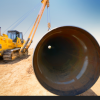
Jordan-Iraq Oil Pipeline to Cost $5-7bn
Posted on 24 March 2017 .
A study by the Iraqi Government into a planned oil pipeline that would extend from Iraq to Jordan has revealed that the project will cost between 5 and 7 billion dollars.
Jordanian press quoted energy minister Ibrahim Seif saying that a decision over the implementation of the project is expected from the Iraqi side soon.
“The pipeline will extend from Iraq’s city of Najaf, along the Saudi borders, to (Jordan’s) al-Aqaba,” the minister said, adding that both countries will be adopting a build-operate-transfer (B.O.T) system within 15-20 years in carrying out the undertaking.
Officials from both countries agreed recently in Amman on the project that is meant to transfer nearly 100 million barrels of oil, covering Jordan’s needs of crude oil, which are estimated at 150.000 barrels a day. The remaining amounts are transferred to Egypt and other countries having oil deals with Iraq.
Jordan and Iraq had already signed a deal involving supplies to Jordan at 10.000 barrels of crude oil per day, surging to 30.000. Oil imports from Iraq are on a halt at present, though, due to the unstable security situation in the country.
(Source: GardaWorld)
Posted in Construction & Engineering In Iraq, Iraq Oil & Gas News Comments Off on Jordan-Iraq Oil Pipeline to Cost $5-7bn
The coming Iran-US Confrontation in Iraq
Posted on 24 March 2017 .
By Zakiyeh Yazdanshenas for Al-Monitor. Any opinions expressed are those of the author, and do not necessarily reflect the views of Iran Business News.
In June 2014, Mosul was seized by the Islamic State (IS), whose leader Abu Bakr al-Baghdadi soon afterward announced a caliphate from the city’s grand mosque. Now the caliphate is seemingly coming to an end.
Iraqi government forces took the eastern part of Mosul from IS on Jan. 24 after three months of fighting. On March 15, a spokesman for Iraq's Counterterrorism Service said 60% of the western part of Mosul is under the control of Iraqi security forces. The day before, Iraqi Prime Minister Haider al-Abadi had said the operation is in its final stage, pledging the defeat of IS.
But military victory in Mosul is just the beginning of a more complicated phase for Iraq. Disparate forces have so far come together to pursue the common objective of expelling IS from Iraq. With the imminent achievement of this goal, many underlying and preceding power struggles will likely re-emerge.
Moreover, it should be borne in mind that various external powers — including Iran and the United States — have become greatly involved in Iraq’s security-related affairs and expanded their spheres of influence within the country since IS' 2014 onslaught.
One key question is who will step in to fill the power vacuum in post-IS Mosul. Will the United States revert to its previous retreat from the Middle East, or will it opt to reassure its regional allies by keeping at least a part of its current forces in Iraq? Will Iran seek to establish a presence in northern Iraq, either directly or through its allies?
After having withdrawn in late 2011, the United States has once again become militarily engaged in the country, deploying over 5,000 troops and special forces, and spending more than $10 billion on combating IS in Iraq and Syria.
Iraq, Iran agree to Resolve Dispute on Joint Oil Fields
Posted on 06 March 2017 .
By Sara al-Qaher for Al Monitor. Any opinions expressed here are those of the author and do not necessarily reflect the views of Iraq Business News.
On Feb. 20, the Iraqi Oil Ministry signed a memorandum of understanding with the Iranian Oil Ministry to settle disputes over the joint oil fields and examine the possibility of building a pipeline to export crude oil from the Kirkuk fields, in the north of Iraq, through Iran. The ministry also wants to study moving Iraqi crude oil to the Iranian Abadan refinery.
According to an Iraqi Oil Ministry statement, Iraqi Oil Minister Jabbar al-Luaibi agreed with his Iranian counterpart Bijan Zanganeh during the latter’s visit to Iraq on coordinating their stances in the Organization of the Petroleum Exporting Countries (OPEC) to achieve balance in the global oil markets, support oil prices and study the construction of pipelines to export crude oil from Kirkuk fields through Iran.
Five Iraqi oil fields are situated along the border with Iran: Dehloran, Shahr, Paydar Gharb, Aban and Al Noor. Baghdad and Tehran share the fields of Majnoon, Abu Ghraib, Bazerkan, Al-Fakkah and Khana. These fields contain huge reserves of light crude oil close to the earth’s surface and reserves exceeding 95 billion barrels. This is the largest reserve of hydrocarbons in the Middle East.
On Feb. 2, Iranian companies resumed drilling 20 new oil wells in the southern Azadegan field, which is one of the shared oil fields between Iraq and Iran.
Oil and Energy Committee member of parliament Ahmad Madloul told Al-Monitor that most disputed oil wells are Iraqi, according to the maps that were published before the Iran-Iraq war. But Iran believes otherwise. The agreement will be decisive for settling the dispute. He said, “If a joint committee is not formed, the oil wells will bring bigger problems in the future for both countries.”
He asked that the committee identify, when formed, the proprietorship of the lands first to find out who rightfully owns the oil wells on the shared borders.
Posted in Iraq Oil & Gas News Comments Off on Iraq, Iran agree to Resolve Dispute on Joint Oil Fields
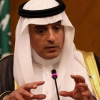
Saudis make surprise trip to Iraq: Why now?
Posted on 03 March 2017 .
By Ali Mamouri for Al Monitor. Any views expressed here are those of the author, and do not necessarily reflect the views of Iraq Business News.
Saudi Foreign Minister Adel al-Jubeir made an unannounced visit Feb. 25 to Baghdad, seeking to re-establish long-severed ties with Iraq, perhaps with an eye toward the Saudi role in the region once the Islamic State (IS) is defeated.
This visit is the first by a top Saudi official since 1990, when then-Foreign Minister Saud al-Faisal came to Baghdad along with King Fahd to attend the Arab summit. Saudi Arabia did send its ambassador, Thamer al-Sabhan, to Iraq for the first time in June 2015 after 25 years of severed diplomatic relations. Sabhan, however, left Baghdad last year at the request of the Iraqi government and no replacement was appointed.
Jubeir said his country will appoint a new ambassador to Iraq soon and is looking forward to forming economic ties on different levels with Iraq.
“Saudi Arabia is looking to build special relations with Iraq, and there is a desire to work together in the war on terror,” Jubeir said during a press conference with his Iraqi counterpart, Ibrahim al-Jaafari.
The pertinent question, however, is what took so long? What made Saudi Arabia wait all these years since Saddam Hussein was overthrown in 2003 to seek special relations and cooperation with Iraq in the war on terror?
Why did the kingdom not take a similar stance when Iraq was most in need of help from neighboring countries when jihadi groups were spreading in the country between 2005 and 2007, and when IS took control of one-third of Iraqi territories and Baghdad was on the verge of falling in 2014?
Saudi Arabia might be thinking of arrangements for the post-IS period and is seeking to extend its influence in Iraq to find a balance with the broad Iranian influence.
Posted in Iraq Industry & Trade News, Iraq Oil & Gas News, Politics, Security Comments Off on Saudis make surprise trip to Iraq: Why now?

US Unlikely to take on Iranian Forces in Iraq
Posted on 01 March 2017 .
By Hamdi Malik for Al Monitor. Any opinions expressed here are those of the author and do not necessarily reflect the views of Iraq Business News.
Despite tough talk, US unlikely to take on Iranian forces in Iraq
US President Donald Trump and Iraqi Prime Minister Haider al-Abadi have spoken over the phone about the Iranian threat in the region, according to a White House statement issued Feb. 10.
On Feb. 1, Trump tweeted, “Iran is rapidly taking over more and more of Iraq.” Iranian influence in Iraq has risen since the fall of Saddam Hussein’s regime in 2003, and especially after the withdrawal of the last US troops at the end of 2011.
Since the new US administration took office on Jan. 20, it has adopted a strict stance toward Iran. As a result, disputes between the two countries have increased.
In response to Iran’s ballistic missile test and following the Iran-backed Houthis’ targeting of a Saudi warship off the Yemeni coast, former US National Security Adviser Michael Flynn officially warned Iran on Feb. 1 and condemned its activities that he said “undermine security, prosperity and stability … in the Middle East.”
On Feb. 4, Secretary of Defense James Mattis described Iran as “the single biggest state sponsor of terrorism in the world.” Vice President Mike Pence echoed Mattis in his speech at the Munich Security Conference on Feb. 18.
In response to the US statements, Iranian Foreign Minister Mohammad Javad Zarif tweeted on Feb. 3, “Iran is unmoved by these threats.” Islamic Revolutionary Guard Corps (IRGC) Commander Gen. Hussein Salami said on Feb. 2, “Our missiles, warships and launchers will increase by the day.”
The commander of the IRGC Ground Forces Brig. Gen. Mohammad Pakpour threatened the United States on Feb. 22 with “a painful slap in the face if it makes a faux pas.” Press reports noted that the United States is taking steps in the region to form an anti-Iranian military alliance including Arab states and sharing intelligence with Israel.
Posted in Politics, Security Comments Off on US Unlikely to take on Iranian Forces in Iraq
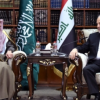
Saudi Foreign Minister in Landmark Visit to Iraq
Posted on 27 February 2017 .
By John Lee.
Saudi Arabia's foreign minister Adel al-Jubeir has met senior Iraqi officials in Baghdad, in the first such visit by a Saudi foreign minister since 1990.
Last year, the Saudis appointed an ambassador in Iraq for the first time in a quarter of a century, but later demanded his removal after he made critical remarks about Iranian influence in Iraq.
(Sources: BBC News, Iraqi Ministry of Foreign Affairs)
Posted in Politics, Security Comments Off on Saudi Foreign Minister in Landmark Visit to Iraq
Military Strikes Continue Against Terrorists
Posted on 16 February 2017 .
U.S. and coalition military forces continued to attack the Islamic State of Iraq and Syria yesterday, Combined Joint Task Force Operation Inherent Resolve officials reported today.
Officials reported details of yesterday’s strikes, noting that assessments of results are based on initial reports.
Strikes in Syria
Attack and fighter aircraft conducted 15 strikes consisting of 19 engagements in Syria:
- Near Abu Kamal, two strikes destroyed four oil pumpjacks.
- Near Dayr Az Zawr, four strikes destroyed four oil refinement stills, two oil tanker trucks, an oil wellhead and an ISIS headquarters.
- Near Shadaddi, four strikes engaged an ISIS staging area, destroyed an ISIS headquarters and a weapons facility; and damaged four supply routes.
- Near Raqqa, five strikes destroyed three tunnels, an oil pumpjack and an oil wellhead.
Strikes in Iraq
Artillery as well as attack, bomber, fighter aircraft conducted nine strikes consisting of 16 engagements in Iraq, coordinated with and in support of Iraq’s government:
- Near Mosul, eight strikes destroyed four weapons caches, two vehicle-bomb facilities and an improvised bomb facility; and damaged three supply routes.
- Near Rawah, a strike destroyed a bunker.
Task force officials define a strike as one or more kinetic events that occur in roughly the same geographic location to produce a single, sometimes cumulative, effect. Therefore, officials explained, a single aircraft delivering a single weapon against a lone ISIS vehicle is one strike, but so is multiple aircraft delivering dozens of weapons against buildings, vehicles and weapon systems in a compound, for example, having the cumulative effect of making those targets harder or impossible for ISIS to use.
Accordingly, officials said, they do not report the number or type of aircraft employed in a strike, the number of munitions dropped in each strike, or the number of individual munition impact points against a target. Ground-based artillery fired in counterfire or in fire support to maneuver roles is not classified as a strike.
Part of Operation Inherent Resolve
The strikes were conducted as part of Operation Inherent Resolve, the operation to eliminate the ISIS terrorist group and the threat it poses to Iraq, Syria, the region and the wider international community. The destruction of targets in Syria and Iraq further limits ISIS' ability to project terror and conduct operations, officials said.
Coalition nations that have conducted strikes in Iraq include the United States, Australia, Belgium, Canada, Denmark, France, Jordan, the Netherlands and the United Kingdom. Coalition nations that have conducted strikes in Syria include the United States, Australia, Bahrain, Canada, Denmark, France, Jordan, the Netherlands, Saudi Arabia, Turkey, United the Arab Emirates and the United Kingdom.
(Source: US Dept of Defense)
Posted in Security Comments Off on Military Strikes Continue Against Terrorists
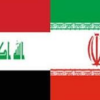
Iran chooses Quds Force stalwart as Ambassador to Iraq
Posted on 15 February 2017 .
By Omar al-Jaffal for Al-Monitor. Any opinions expressed are those of the author, and do not necessarily reflect the views of Iran Business News.
Iran has reportedly appointed Brig. Gen. Iraj Masjedi as its new ambassador to Baghdad, replacing Hassan Dana’i Fer, according to Iranian media reports on Jan. 15.
Masjedi is a prominent leader of the Islamic Revolutionary Guard Corps (IRGC) and serves as an adviser to Qasem Soleimani, the commander of the Iranian Quds Force. Masjedi confirmed the news himself in an official statement but did not say when he would officially assume his new position.
Saudi Minister of State for Gulf Affairs Thamer Sabhan, who served as the first Saudi ambassador in Iraq after 2003, attacked Masjedi on Jan.15, calling him “an internationally wanted war criminal.”
Faleh al-Fayyad, the national security adviser and head of the Popular Mobilization Units (PMU), was quick to reply on Jan. 22, saying, “Our relations with Iraq are not determined by other parties,” a jab at Saudi Arabia. Fayyad welcomed Masjedi as the new ambassador to Iraq and did not miss an opportunity to praise him, calling him “a brother.”
“We have good memories of Masjedi and his long history of supporting Iraq. There is no doubt that he will play an important role in improving relations and defending the interests of both countries,” Fayyad said.
Haidar al-Moul, a parliament member for the Shiite National Alliance, called, albeit reluctantly, the Iraqi Foreign Ministry to vet Masjedi and to investigate whether he is a war criminal.
He classed Masjedi’s presence as part of Iran’s military expansion in Iraq. Many media outlets reported that Masjedi is working on strengthening the military and political presence of the PMU and other armed factions.
There is not much information available on Masjedi, who has been described by the Washington Institute as a "seasoned Quds Force operative." "What is clear is his reportedly deep involvement in Quds Force activities in Iraq over the past several years, many resulting in the death, injury or kidnapping of US and coalition personnel as well as the assassination of Iraqi provincial officials who did not see eye to eye with Tehran,” the article read.
Posted in Iraq Industry & Trade News, Politics, Security Comments Off on Iran chooses Quds Force stalwart as Ambassador to Iraq
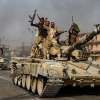
PMUs Threaten to Target Americans in Response to Travel Ban
Posted on 15 February 2017 .
By Hassan al-Shanoun for Al Monitor. Any opinions expressed here are those of the author and do not necessarily reflect the views of Iraq Business News.
Armed Iraqi factions threaten to target Americans in response to travel ban
US President Donald Trump's Jan. 27 executive order to ban nationals of Iraq and six other Muslim-majority countries from entering the United States for 90 days has caused a great uproar among Iraqis.
Although the travel ban has been temporarily halted by the US judiciary, the repercussions of the event are still ongoing in Iraq. Iraqis see the travel ban as an insult and a betrayal of the people standing against and fighting to defeat the Islamic State.
On Jan. 30, the Iraqi parliament voted to recommend that reciprocal measures be taken against the travel ban. The day before, Iraqi Shiite cleric and Sadrist movement leader Muqtada al-Sadr had called on Trump to tell American nationals to leave Iraq.
The Iraqi parliament also recommended calling upon the United Nations, international organizations, the Arab League and the Organization of Islamic Cooperation to take stands on the issue, calling upon the US Congress to review the executive order and demanding that the US administration restudy its decision.
Ibtisam al-Hilali, a member of the Reform Front, told Al-Monitor that the government and executive authorities need to carry out the parliament’s reciprocal measures if the US ban resumes.
Asked whether Iraq could influence the US decision, Hilali said, “Adopting diplomatic approaches is the best means to force the American side to renounce this rushed decision; otherwise the government and the relevant authorities should implement the parliament’s action to maintain Iraq's dignity.”
On Jan. 30, the US Department of Defense said it is cooperating with the White House and other institutions to put together a list of all Iraqi nationals who worked with the United States since its invasion of Iraq in 2003 to exclude them from the travel ban. These efforts, however, have not helped ease the issue in Iraq.
On Jan. 31, Prime Minister Haider al-Abadi announced that his government is discussing a set of options “in response” and expressed his hopes of getting Trump's order changed; Abadi described it as an insult to Iraq and Iraqis. However, he said he has no intention of taking reciprocal measures.
Posted in Security Comments Off on PMUs Threaten to Target Americans in Response to Travel Ban
Details of Latest Strikes in Syria, Iraq
Posted on 15 February 2017 .
U.S. and coalition military forces continued to attack Islamic State of Iraq and Syria terrorists yesterday, Combined Joint Task Force Operation Inherent Resolve officials reported today.
Officials reported details of the latest strikes, noting that assessments of results are based on initial reports.
Strikes in Syria
Attack, bomber and fighter aircraft conducted 17 strikes in 21 engagements in Syria:
- Near Abu Kamal, seven strikes destroyed seven oil refinement stills, five oil storage tanks and three oil wellheads.
- Near Dayr Az Zawr, six strikes destroyed five oil pumpjacks, five oil wellheads, three oil storage tanks, two oil refinement stills and an oil tanker truck.
- Near Raqqa, four strikes destroyed an ISIS headquarters and damaged two supply routes and a bridge.
Strikes in Iraq
Fighter aircraft and rocket artillery conducted five strikes in 21 engagements in Iraq, coordinated with and in support of Iraq’s government:
- Near Kisik, two strikes damaged a tunnel.
- Near Mosul, three strikes engaged an ISIS tactical unit; destroyed three vehicle bomb facilities, two improvised explosive device facilities, a weapons facility, an ISIS-held building, an excavator, a supply cache and a command-and-control node; damaged five supply routes and a supply cache; and suppressed three mortar teams.
Task force officials define a strike as one or more kinetic events that occur in roughly the same geographic location to produce a single, sometimes cumulative, effect. Therefore, officials explained, a single aircraft delivering a single weapon against a lone ISIS vehicle is one strike, but so is multiple aircraft delivering dozens of weapons against buildings, vehicles and weapon systems in a compound, for example, having the cumulative effect of making those targets harder or impossible for ISIS to use. Accordingly, officials said, they do not report the number or type of aircraft employed in a strike, the number of munitions dropped in each strike, or the number of individual munition impact points against a target. Ground-based artillery fired in counterfire or in fire support to maneuver roles is not classified as a strike.
Part of Operation Inherent Resolve
The strikes were conducted as part of Operation Inherent Resolve, the operation to eliminate the ISIS terrorist group and the threat they pose to Iraq, Syria, and the wider international community. The destruction of ISIS targets in Syria and Iraq further limits the terrorist group's ability to project terror and conduct operations, officials said.
Coalition nations that have conducted strikes in Iraq include the United States, Australia, Belgium, Canada, Denmark, France, Jordan, the Netherlands and the United Kingdom. Coalition nations that have conducted strikes in Syria include the United States, Australia, Bahrain, Canada, France, Jordan, the Netherlands, Saudi Arabia, Turkey, the United Arab Emirates and the United Kingdom.
(Source: US Dept of Defense)
Posted in Security Comments Off on Details of Latest Strikes in Syria, Iraq