



Iraq Reinforces its Border with Saudi Arabia
Posted on 07 June 2017 .
By John Lee.
AINA reports that a large convoy of Iraqi Popular Mobilization Units (PMU) has been seen moving towards the Iraqi-Saudi border.
This comes following increasing tensions between Saudi Arabia and Qatar; the Iraqi government has expressed support for Qatar in its conflict with Saudi Arabia.
(Source: AINA)
Posted in Politics, Security Comments Off on Iraq Reinforces its Border with Saudi Arabia
US mulls how best to Control pro-Iran Factions
Posted on 30 May 2017 .
By Adnan Abu Zeed for Al Monitor. Any opinions expressed here are those of the author and do not necessarily reflect the views of Iraq Business News.
US mulls how best to Control pro-Iran Factions in Mideast
As the administration of US President Donald Trump looks ahead to a post-Islamic State (IS) status in the Middle East, it is clear there are concerns over the potential military role the armed organizations backed by Iran could play.
Stuart Jones, the top US diplomat for the Middle East, recently told the Associated Press the United States “is still forming a ‘comprehensive Iran policy’ that addresses Iran's support for Syrian President Bashar al-Assad's government and militant groups in Lebanon, Iraq and Yemen.”
Meanwhile, according to Kuwaiti Al-Rai newspaper, Trump promised Crown Prince Sheikh Mohammed bin Zayed of the United Arab Emirates, during the prince's May 15-17 visit to Washington, that the United States is working to impose sanctions on the Iranian allies who are involved in terrorism — including allies in the Iraqi and Lebanese governments.
A Saudi delegation to the United Nations earlier this month also expressed concern that Iranian militias continue to pose a threat to stability in the region.
It's evident the United States and the Gulf states are worried about the wide Iranian influence in these countries, be it through political leaders, armed organizations or militias. In Lebanon, the biggest player is Hezbollah, backed by Iran. In Iraq, there are armed parties and factions known for their close relationship with Tehran and for receiving financial and political support from it.
Rayan al-Kaldani, the leader of the Babylon Brigade, which is a part of the Popular Mobilization Units (PMU), told Al-Monitor, “The relationship between the PMU and Iran is not based on dependence, as the Gulf states like to promote.” He noted, “Tehran helped Iraq in its war on [IS], and this has been recognized by the Western parties themselves.”
Posted in Politics, Security Comments Off on US mulls how best to Control pro-Iran Factions
Can US-Sunni Alliance lure Baghdad away from Tehran?
Posted on 27 May 2017 .
By Adnan Abu Zeed for Al Monitor. Any opinions expressed here are those of the author and do not necessarily reflect the views of Iraq Business News.
There are strong indications that Gulf states want to keep Iraq away from Iran's influence by including Iraq under the banner of a US-backed Sunni Arab alliance.
The United States sees Iraq as a vital location in need of a clear US policy, especially with the presence there of US military bases and about 8,500 US soldiers, as well as the US impact on the country's overall situation.
The most recent quest in this direction was the Arab Islamic American Summit held May 21 in Riyadh, attended by US President Donald Trump and Iraqi President Fuad Masum.
It also appears that Iraq’s participation in the Eager Lion maneuvers, an annual military exercise, launched May 7 in Jordan with the participation of more than 7,000 soldiers from over 20 countries, was part of the attempt to bring Iraq into the Sunni Arab axis.
The race to convince Iraq to abandon its well-known alliances with Iran and Iran's allies was already underway when Saudi Foreign Minister Adel al-Jubeir visited Baghdad on Feb. 25, declaring that “Saudi Arabia and Iraq face the [same] scourge of terrorism."
This rhetoric reflects Riyadh’s keenness on overcoming the obstacles to developing its relations with Baghdad. Those relations took a bad turn when the Saudi ambassador to Iraq, Thamer al-Sabhan, was expelled from Iraq in August after the Iraqis took offense at his statements about the “Iranian intervention in Iraq” and “Iranian-backed armed Shiite organizations fueling the tension with Sunnis.”
Jubeir’s hopes of extracting Baghdad from Tehran’s grip were revived when Iraqi Prime Minister Haider al-Abadi met March 20 with Trump in Washington.
Posted in Politics, Security Comments Off on Can US-Sunni Alliance lure Baghdad away from Tehran?
Iraq's Christians demand Reconstruction of Religious Sites
Posted on 26 May 2017 .
By Wassim Bassem for Al Monitor. Any opinions expressed here are those of the author and do not necessarily reflect the views of Iraq Business News.
A new era has started in the northern Ninevah Plains, known for its ethnic and religious diversity, following the expulsion of the Islamic State (IS). IS took over the area in June 2014 and forced the Christians living there — estimated at more than 100,000 — to abandon their farms and towns and head to the neighboring Kurdistan Region and other areas in the country, or to leave Iraq altogether.
On May 16, the heads of the Christian churches told the media of their “concerns over the possible return of terrorism” and demanded that “the areas of the Ninevah Plains be protected by the United Nations and enjoy autonomy.”
This fear, however, has not prevented many Christians from returning to their farms and cities and practicing religious rites in their monasteries and churches. During the Easter mass April 15 at the Mar Mattai Syriac Orthodox Monastery in Ninevah, Christians prayed for the safe return of the displaced to their homes and the spread of peace.
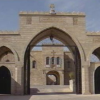
IS reduced several monasteries and churches to ruins, and Christians in the Ninevah Plains are demanding that plans be made for their reconstruction, especially for the monastery of Mar Behnam (pictured). It dates to the fourth century; IS occupied it in 2014 and bombed it in 2015. They are also calling for the reconstruction of the Mar Mattai Monastery, founded more than 1,600 years ago.
Yonadam Kanna, a Christian member of parliament, told Al-Monitor, “IS besieged the Mar Mattai Monastery in 2014 and prevented people from getting to it. So the first thing I did after the liberation of the Ninevah Plains was to restore the road leading to this monastery through the slopes of Mount Maklub, on top of which the monastery is built. [The monastery] extends over about 1 kilometer [0.6 miles] at a height of 2,400 meters [7,874 feet] above sea level."
Posted in Construction & Engineering In Iraq, Security Comments Off on Iraq's Christians demand Reconstruction of Religious Sites

Saudi Arabia, Iraq discuss Economic Cooperation
Posted on 23 May 2017 .
Prime Minister Haider Al-Abadi received the Saudi Arabian Minister of Energy, Industry and Mineral Resources, Khalid bin Abdul Aziz al-Faleh, and his accompanying delegation in his office on Monday.
During the meeting, they discussed boosting cooperation in the oil sector, industry, petrochemicals, electricity, minerals, trade and banks, as well as reviewed cooperation to support OPEC oil prices.
His Excellency Prime minister Dr. Haider Al-Abadi stressed the importance of expanding bilateral steady cooperation for the benefit of the two countries which would lead the region to a comprehensive development beneficial for all.
The Minister of Energy Khalid Al-Falih conveyed the greetings of the Saudi King and the officials in the Kingdom , their blessing for the achievement of Iraq's victories, pointing out that to the importance of Iraq's role in the region and the strenuous steps taken in all fields.
The Minister of Energy Khalid Al-Falih expressed the readiness of the Saudi companies to cooperate and invest in Iraq and Saudi's market desire to obtain Iraqi products.
(Source: Media office of the Prime Minister)
Posted in Iraq Banking & Finance News, Iraq Industry & Trade News 1 Comment
Why Liberating Mosul won't lead to the End of IS
Posted on 12 May 2017 .
By Shelly Kittleson for Al Monitor. Any opinions expressed here are those of the author and do not necessarily reflect the views of Iraq Business News.
Although Islamic State (IS) fighters in western Mosul are cornered within a steadily shrinking area that is expected to be retaken soon, analysts warn that the fight against the group in the country is far from over.
Hisham al-Hashimi, one of Iraq’s most widely respected security and terrorism experts, told Al-Monitor that the transnational terrorist group “has not yet fought at its maximum strength” and has left only a “hindering” force in Mosul, which was previously known as the group’s capital in Iraq.
He claims that many IS members are unknown by name to Iraqi intelligence and that documents found in recaptured areas of Mosul show that IS’ “hidden” men are referred to in their own records using only numbers and no names, making it likely that many have simply melted into the population and will not be flagged during screening procedures.
Moreover, in commenting on an Iraqi military announcement in mid-April that IS currently held less than 7% of the country — down from an estimated 40% in 2014 — Hashimi scoffed, noting that “this is only counting the populated areas. They actually still hold 18% of it.”
“This is important,” he stressed, since “they still hold Hawija, as well as Tal Afar, Al-Baaj,” and the cities of Rawa, Anah and Qaim in the western Anbar province.
“We don’t have enough forces to fight in Hawija. Until we recapture all of Mosul and Tal Afar, we can’t go back to Hawija,” he said, adding that “Hawija is a difficult area due to its agricultural characteristics and the fact that it is a stronghold for militants. Fighters who have fled from the Diyala, Salahuddin and Kirkuk provinces are there.”
Posted in Security Comments Off on Why Liberating Mosul won't lead to the End of IS

$500m Cash Intercepted at Baghdad Airport
Posted on 03 May 2017 .
By John Lee.
Officials at Baghdad International Airport have reportedly intercepted a shipment of dollars and euros worth a total of $500m (£389m).
Writing in The Independent, Patrick Cockburn claims the cash was contained in 23 large bags unloaded from a Qatari plane, and was intended as a ransom for 24 Qataris, several of them leading members of the Qatari royal family, who were kidnapped 16 months ago by a Shia militia task force.
Although the funds were seized by the authorities, the Qataris were subsequently released from captivity.
The full story can be read here.
(Source: The Independent)
Posted in Security Comments Off on $500m Cash Intercepted at Baghdad Airport
Washington sees Iraq as front for Iran Pushback
Posted on 14 April 2017 .
By Omar Sattar for Al Monitor. Any opinions expressed here are those of the author and do not necessarily reflect the views of Iraq Business News.
After the chemical attack in Khan Shaykhun on April 4, followed by the US airstrike on a Syrian air base April 7, tension between Iraq and the United States escalated significantly.
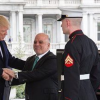
The United States has made it very clear to Iraq that it wants its ally in fighting terrorism to distance itself from Iran. During Iraqi Prime Minister Haider al-Abadi's visit to the United States last month, Abadi and US President Donald Trump discussed Iran, Saudi Arabia and the Popular Mobilization Units (PMU), which indicates that the United States is seeking to bring Baghdad and Riyadh closer and to curb the Iranian role in the region. The visit sparked much controversy in Iraq among Shiite parties.
Moreover, Trump explicitly criticized the Iran nuclear deal in front of Abadi. A few days later, Trump sent his senior adviser and son-in-law Jared Kushner to Iraq to discuss US support to Iraq in the fight against the Islamic State. The visit was read as a sign that the “Trump administration sees Iraq as a place to push back on the growing power of Iran across the region.”
Al-Monitor learned from a source close to the prime minister who asked to not be named that limiting Iran's role in Iraq was at the top of the list of the issues discussed between the two parties.
The National Iraqi Alliance said it was not aware of the details and meeting schedule of Abadi with the American administration. Other Shiite political parties expressed discontent with the visit, especially following the statement of Hisham al-Hashimi, an Iraqi security and political expert, in Asharq al-Awsat newspaper. Hashimi said he received information from the Iraqi delegation to Washington that “the American discussed with Abadi the danger of ‘believers in the velayat-e faqih [a jab at Iranians] and the need to keep them out of the PMU.”
Posted in Politics, Security Comments Off on Washington sees Iraq as front for Iran Pushback

Corruption, Deceit Plague Private Education in Iraq
Posted on 08 April 2017 .
By Salam Zidane for Al Monitor. Any views expressed here are those of the author, and do not necessarily reflect the views of Iraq Business News.
It's said that some college degrees aren't worth the paper they're printed on. Some graduates in Iraq are finding that to be true. Others can't even get the paper.
Dozens of students protested March 8 in front of the private Mazaya College, calling on the Ministry of Higher Education and Scientific Research to accredit their university and issue diplomas.
Mohammed al-Ghazi, who graduated two years ago from the college in southeastern Iraq, said the school still refuses to grant him and others their degrees, instead saying the ministry is reviewing them.
“I spent millions of dinars [1 million dinars equals about $860] at Mazaya College to obtain a degree in computer engineering. After I completed my fourth year, I found out that the college wasn't accredited and its degree is worthless on the market,” Ghazi told Al-Monitor.
After the protests, the ministry decided March 14 that it will develop a special test for Mazaya graduates and that if they pass it, they will be considered qualified in their field of study and receive a certificate from the ministry. The ministry hasn't yet started the process, which it expects to be complicated and lengthy.
In December, Iraq and five other Arab countries were removed from the World Economic Forum (WEF) global education quality index because their schools don't meet basic education standards. The other countries are Syria, Yemen, Libya, Sudan and Somalia.
Arab countries that made the list, with their ranking, are: Qatar, 4; United Arab Emirates, 10; Lebanon, 25; Bahrain, 33; Jordan, 45; and Saudi Arabia, 54. The index includes 140 countries.
After 2003, when the Iraq war began, many international and foreign universities stopped recognizing Iraqi university degrees because their standards couldn't be verified. Iraqis are asked to take proficiency tests before being admitted to some universities abroad. In the United States, each institution develops its own standards and requirements; many use credential verification services.
Posted in Iraq Education and Training News Comments Off on Corruption, Deceit Plague Private Education in Iraq
What role will Iran-linked militias play once IS leaves Iraq?
Posted on 03 April 2017 .
By Hamdi Malik for Al Monitor. Any opinions expressed here are those of the author and do not necessarily reflect the views of Iraq Business News.
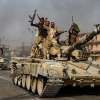
Iraqi Prime Minister Haider al-Abadi said recently that any group taking up arms in Iraq outside the state's official framework will be considered outlaws. However, it seems at least some of the factions fighting under the banner of the Popular Mobilization Units (PMU) in Iraq would not obey Abadi's order.
On March 22, Abadi spoke at a meeting of the Global Coalition to Counter ISIS (Islamic State, or IS) in Washington. Also during his trip, he told the media that IS will be eliminated from Iraq's cities "within weeks."
What will happen then? Hashim al-Musawi, the spokesman for Iran-controlled, Shiite Iraq militia known as the Islamic Resistance Movement in Iraq (al-Nojaba), announced earlier in the month the formation of the Golan Liberation Brigade. But the announcement appeared to be more a declaration that Iran-affiliated Iraqi militias will be ready to take on a greater role in the region once IS is gone. (In addition, Musawi threatened to take military action against Turkish forces stationed near Mosul if they refuse to leave Iraq.)
The brigade announcement carried great symbolism, as the press conference was held in the office of the Iranian news agency Tasnim, which supports the Islamic Revolutionary Guard Corps (IRGC) in Tehran.
Musawi also criticized the United States and Saudi Arabia, stressing that al-Nojaba “will not drop its weapons as long as the region is still threatened." Al-Nojaba will continue its endeavor to reclaim the Golan Heights in Syria from Israel, he added.
Three days after this announcement, a leader of al-Nojaba had something to say on the subject. The militia's secretary-general, Sheikh Akram al-Kaabi, said March 11, “The Golan Liberation Brigade's formation is not propaganda, but one of the Islamic resistance’s true objectives.” He added, “The resistance is capable of beating the 'axis of evil' and the Zionist entity," referring to Israel, Saudi Arabia and the United States.
This isn't the first time Iran-affiliated Iraqi parties have talked about taking action outside Iraq, in line with Iran’s foreign policy in the region.
Posted in Politics, Security Comments Off on What role will Iran-linked militias play once IS leaves Iraq?