


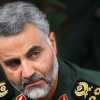
Iraqis Divided over Soleimani's Role
Posted on 28 May 2016 .
By Mustafa Saadoun for Al-Monitor. Any opinions expressed are those of the author, and do not necessarily reflect the views of Iraq Business News.
Iran's Quds Force Commander Qasem Soleimani has stirred a great deal of controversy in Iraq, where people have started arguing over whether his role is a positive or a negative one.
Some Iraqi youths have created social media campaigns in support of Soleimani using the hashtags #WeAreAllSoleimani and #SoleimaniIsOneOfUsIraqis, while others denounce him with #SoleimaniUnderMyFeet.
These campaigns emerged after April 30, when followers of the Sadrist movement shouted slogans against Soleimani and his country in Grand Festivities Square, located in the heavily fortified Green Zone.
On the same day, Iraqi activists shared via YouTube an Al Jazeera broadcast about the raising of Iranian flags in Baghdad's predominantly Sunni area of Adhamiya. "Armed Shiite groups known as the Hezbollah Brigades raised the Iranian flag in Adhamiya," Al Jazeera reported.
Iraqis are divided over Soleimani's role in the battles between Iraqi government forces and the Islamic State (IS). Some believe he is defending Iraq, while others suspect he has an Iranian agenda that could harm their country.
Posted in Politics, Security Comments Off on Iraqis Divided over Soleimani's Role
Saudi Aid to Iraq held up in Baghdad
Posted on 27 May 2016 .
By John Lee.
A consignment of aid from Saudi Arabia, intended for Anbar Province, has reportedly been held up at Baghdad airport because of Iraqi government red tape.
according to a report in a local publication on Thursday.
Arab News says the 315 tons of food, shelter and medicine had been sent on three planes by King Salman, and are being stored incorrectly at Baghdad airport, where workers are "continually tampering with the goods".
Sabah Karhut, chairman of the Anbar Provincial Council, told a local publication that efforts were underway to resolve the problem with the cooperation of the Ministry of Migration and Displacement. He said there was a danger that some of the food sent would perish and urged his government to resolve the situation.
Saudi ambassador in Baghdad Thamer Sabhan issued a message on his Twitter account this week for the government to take action. He said the goods were urgently needed by desperate people in Anbar. There was also a need to store the goods properly, he said.
(Source: Arab News)
(Flag image via Shutterstock)
Posted in Security Comments Off on Saudi Aid to Iraq held up in Baghdad
Counter-ISIL Strikes Target Terrorists in Syria, Iraq
Posted on 27 May 2016 .
U.S. and coalition military forces continued to attack Islamic State of Iraq and the Levant terrorists in Syria and Iraq on Wednesday, Combined Joint Task Force Operation Inherent Resolve officials reported on Thursday.
Officials reported details of the latest strikes, noting that assessments of results are based on initial reports.
Strikes in Syria
Fighter and remotely piloted aircraft conducted five strikes in Syria:
- Near Shaddadi, a strike struck an ISIL tactical unit.
- Near Raqqah, a strike struck an ISIL tactical unit.
- Near Ayn Isa, two strikes struck two separate ISIL tactical units and destroyed two ISIL fighting positions.
- Near Palmyra, a strike struck an ISIL tactical unit and destroyed an ISIL vehicle.
Strikes in Iraq
Rocket artillery and bomber, attack, fighter and remotely piloted aircraft conducted 25 strikes in Iraq, coordinated with and in support of Iraq’s government:
- Near Fallujah, four strikes struck three separate ISIL tactical units and destroyed two ISIL tunnels, four ISIL vehicles, an ISIL artillery piece, an ISIL weapons cache and three ISIL fighting positions.
- Near Habbaniyah, a strike struck a large ISIL tactical unit and destroyed three ISIL fighting positions, three ISIL bunkers and an ISIL heavy machine gun.
- Near Haditha, a strike destroyed an ISIL vehicle bomb.
- Near Hit, a strike destroyed two ISIL vehicles.
- Near Mosul, five strikes struck three separate ISIL tactical units, five ISIL headquarters, an ISIL media center and an ISIL communication headquarters and destroyed two ISIL vehicles, an ISIL weapons cache and an ISIL supply cache.
- Near Qayyarah, two strikes struck two ISIL rocket production facilities and an ISIL headquarters and destroyed an ISIL rocket position.
- Near Sinjar, a strike suppressed an ISIL mortar position.
- Near Sultan Abdallah, two strikes suppressed two ISIL mortar positions.
- Near Tal Afar, eight strikes struck eight ISIL-used bridges and an ISIL-used culvert and suppressed an ISIL mortar position.
Task force officials define a strike as one or more kinetic events that occur in roughly the same geographic location to produce a single, sometimes cumulative, effect. Therefore, officials explained, a single aircraft delivering a single weapon against a lone ISIL vehicle is one strike, but so is multiple aircraft delivering dozens of weapons against buildings, vehicles and weapon systems in a compound, for example, having the cumulative effect of making those targets harder or impossible for ISIL to use. Accordingly, officials said, they do not report the number or type of aircraft employed in a strike, the number of munitions dropped in each strike, or the number of individual munition impact points against a target.
Part of Operation Inherent Resolve
The strikes were conducted as part of Operation Inherent Resolve, the operation to eliminate the ISIL terrorist group and the threat they pose to Iraq, Syria, and the wider international community. The destruction of ISIL targets in Syria and Iraq further limits the terrorist group's ability to project terror and conduct operations, officials said.
Coalition nations that have conducted strikes in Iraq include the United States, Australia, Belgium, Canada, Denmark, France, Jordan, the Netherlands and the United Kingdom. Coalition nations that have conducted strikes in Syria include the United States, Australia, Bahrain, Canada, France, Jordan, the Netherlands, Saudi Arabia, Turkey, the United Arab Emirates and the United Kingdom.
(Source: US Dept of Defense)
Posted in Security Comments Off on Counter-ISIL Strikes Target Terrorists in Syria, Iraq
Coalition Strikes Continue Against ISIL in Iraq, Syria
Posted on 25 May 2016 .
U.S. and coalition military forces continued to attack Islamic State of Iraq and the Levant terrorists in Iraq and Syria yesterday, Combined Joint Task Force Operation Inherent Resolve officials reported today.
Officials reported details of the latest strikes, noting that assessments of results are based on initial reports.
Strikes in Syria
Attack and ground attack aircraft conducted two strikes in Syria:
- Near Ayn Isa, a strike destroyed an ISIL fighting position.
- Near Mara, a strike destroyed an ISIL vehicle and an ISIL mortar system.
Strikes in Iraq
Bomber, fighter and remotely piloted aircraft and rocket artillery conducted 18 strikes in Iraq, coordinated with and in support of Iraq’s government:
- Near Baghdadi, a strike destroyed an ISIL mortar position.
- Near Beiji, a strike struck an ISIL tactical unit and destroyed an ISIL mortar system.
- Near Fallujah, three strikes struck an ISIL tactical unit and destroyed an ISIL vehicle and an ISIL front end loader.
- Near Habbaniyah, three strikes destroyed an ISIL fighting position, four ISIL weapons caches and an ISIL tunnel and suppressed an ISIL mortar position.
- Near Kisik, a strike destroyed an ISIL fighting position and an ISIL heavy machine gun.
- Near Mosul, three strikes struck two separate ISIL tactical units; destroyed an ISIL fighting position, an ISIL vehicle, three ISIL assembly areas, three ISIL bed-down locations, and an ISIL tunnel; and suppressed an ISIL mortar position.
- Near Qayyarah, a strike destroyed two ISIL mortar systems.
- Near Sultan Abdallah, two strikes struck two separate ISIL tactical units and destroyed two ISIL assembly areas.
Task force officials define a strike as one or more kinetic events that occur in roughly the same geographic location to produce a single, sometimes cumulative, effect. Therefore, officials explained, a single aircraft delivering a single weapon against a lone ISIL vehicle is one strike, but so is multiple aircraft delivering dozens of weapons against buildings, vehicles and weapon systems in a compound, for example, having the cumulative effect of making those targets harder or impossible for ISIL to use. Accordingly, officials said, they do not report the number or type of aircraft employed in a strike, the number of munitions dropped in each strike, or the number of individual munition impact points against a target. Ground-based artillery fired in counterfire or in fire support to maneuver roles is not classified as a strike.
Part of Operation Inherent Resolve
The strikes were conducted as part of Operation Inherent Resolve, the operation to eliminate the ISIL terrorist group and the threat they pose to Iraq, Syria, and the wider international community. The destruction of ISIL targets in Syria and Iraq further limits the terrorist group's ability to project terror and conduct operations, officials said.
Coalition nations that have conducted strikes in Iraq include the United States, Australia, Belgium, Canada, Denmark, France, Jordan, the Netherlands and the United Kingdom. Coalition nations that have conducted strikes in Syria include the United States, Australia, Bahrain, Canada, France, Jordan, the Netherlands, Saudi Arabia, Turkey, the United Arab Emirates and the United Kingdom.
(Source: US Dept of Defense)
Posted in Security Comments Off on Coalition Strikes Continue Against ISIL in Iraq, Syria
Military Strikes Continue Against ISIL Terrorists
Posted on 24 May 2016 .
U.S. and coalition military forces continued to attack Islamic State of Iraq and the Levant terrorists in Iraq and Syria on Sunday, Combined Joint Task Force Operation Inherent Resolve officials reported on Monday.
Officials reported details of the latest strikes, noting that assessments of results are based on initial reports.
Strikes in Syria
Attack, fighter, bomber and remotely piloted aircraft conducted seven strikes in Syria:
- Near Shadaddi, a strike struck an ISIL tactical unit and destroyed an ISIL vehicle.
- Near Raqqah, three strikes destroyed an ISIL vehicle bomb-making facility and an ISIL oil pump-jack.
- Near Ayn Isa, a strike struck an ISIL tactical unit and destroyed an ISIL vehicle.
- Near Mar’a, two strikes struck an ISIL weapons storage facility and destroyed an ISIL rocket rail.
Strikes in Iraq
Attack and fighter aircraft conducted 10 strikes in Iraq, coordinated with and in support of Iraq’s government:
- Near Huwayjah, a strike suppressed an ISIL heavy machine gun position.
- Near Fallujah, two strikes struck an ISIL weapons facility and an ISIL improvised weapons factory and destroyed three ISIL bunkers and two ISIL tunnel entrances.
- Near Habbaniyah, a strike struck an ISIL tactical unit and destroyed two ISIL fighting positions, an ISIL supply cache, and an ISIL vehicle, and denied ISIL access to terrain.
- Near Mosul, five strikes struck an ISIL communications control center and destroyed two ISIL vehicle bombs, two ISIL mortar systems, and two ISIL supply caches and suppressed an ISIL mortar position.
- Near Qayyarah, a strike destroyed an ISIL mortar system.
Additionally, due to an administrative error the following strikes in Syria were not included in the May 22 news release:
- Near Raqqah, two strikes destroyed an ISIL weapons cache.
- Near Ayn Isa, two strikes struck an ISIL tactical unit and destroyed an ISIL vehicle.
Task force officials define a strike as one or more kinetic events that occur in roughly the same geographic location to produce a single, sometimes cumulative, effect. Therefore, officials explained, a single aircraft delivering a single weapon against a lone ISIL vehicle is one strike, but so is multiple aircraft delivering dozens of weapons against buildings, vehicles and weapon systems in a compound, for example, having the cumulative effect of making those targets harder or impossible for ISIL to use. Accordingly, officials said, they do not report the number or type of aircraft employed in a strike, the number of munitions dropped in each strike, or the number of individual munition impact points against a target.
Part of Operation Inherent Resolve
The strikes were conducted as part of Operation Inherent Resolve, the operation to eliminate the ISIL terrorist group and the threat they pose to Iraq, Syria, and the wider international community. The destruction of ISIL targets in Syria and Iraq further limits the terrorist group's ability to project terror and conduct operations, officials said.
Coalition nations that have conducted strikes in Iraq include the United States, Australia, Belgium, Canada, Denmark, France, Jordan, the Netherlands and the United Kingdom. Coalition nations that have conducted strikes in Syria include the United States, Australia, Bahrain, Canada, France, Jordan, the Netherlands, Saudi Arabia, Turkey, the United Arab Emirates and the United Kingdom.
(Source: US Dept of Defense)
Posted in Security 3 Comments
Counter-ISIL Strikes Hit Terrorists in Syria, Iraq
Posted on 18 May 2016 .
U.S. and coalition military forces continued to attack Islamic State of Iraq and the Levant terrorists in Syria and Iraq on Monday, Combined Joint Task Force Operation Inherent Resolve officials reported on Tuesday.
Officials reported details of yesterday’s strikes, noting that assessments of results are based on initial reports
Strikes in Syria
Attack and remotely piloted aircraft conducted two strikes in Syria:
- Near Shadaddi, a strike struck an ISIL tactical unit and destroyed an ISIL vehicle.
- Near Mara, a strike destroyed an ISIL artillery piece.
Strikes in Iraq
Attack, fighter ground attack and remotely piloted aircraft conducted 10 strikes in Iraq, coordinated with and in support of Iraq’s government:
- Near Baghdadi, two strikes destroyed an ISIL bunker and two ISIL rocket rails.
- Near Albu Hayat, a strike struck an ISIL tactical unit.
- Near Rutbah, a strike destroyed two ISIL fighting positions, an ISIL fuel tanker, an ISIL vehicle bomb and an ISIL front-end loader.
- Near Kisik, a strike struck an ISIL tactical unit and destroyed an ISIL fighting position and two ISIL heavy machine guns.
- Near Qayyarah, five strikes struck three separate ISIL headquarters; destroyed an ISIL vehicle, an ISIL assembly area and two ISIL rocket rails; and suppressed two ISIL mortar positions.
Task force officials define a strike as one or more kinetic events that occur in roughly the same geographic location to produce a single, sometimes cumulative, effect. Therefore, officials explained, a single aircraft delivering a single weapon against a lone ISIL vehicle is one strike, but so is multiple aircraft delivering dozens of weapons against buildings, vehicles and weapon systems in a compound, for example, having the cumulative effect of making those targets harder or impossible for ISIL to use. Accordingly, officials said, they do not report the number or type of aircraft employed in a strike, the number of munitions dropped in each strike, or the number of individual munition impact points against a target. Ground-based artillery fired in counterfire or in fire support to maneuver roles is not classified as a strike.
Part of Operation Inherent Resolve
The strikes were conducted as part of Operation Inherent Resolve, the operation to eliminate the ISIL terrorist group and the threat they pose to Iraq, Syria, the region, and the wider international community. The destruction of ISIL targets in Syria and Iraq further limits the terrorist group's ability to project terror and conduct operations, officials said.
Coalition nations that have conducted strikes in Iraq include the United States, Australia, Belgium, Canada, Denmark, France, Jordan, the Netherlands and the United Kingdom. Coalition nations that have conducted strikes in Syria include the United States, Australia, Bahrain, Canada, France, Jordan, the Netherlands, Saudi Arabia, Turkey, the United Arab Emirates and the United Kingdom.
(Source: US Dept of Defense)
Posted in Security 3 Comments
Military Strikes Target ISIL Terrorists in Syria, Iraq
Posted on 17 May 2016 .
U.S. and coalition military forces continued to attack Islamic State of Iraq and the Levant terrorists in Syria and Iraq on Sunday, Combined Joint Task Force Operation Inherent Resolve officials reported on Monday.
Officials reported details of yesterday’s strikes, noting that assessments of results are based on initial reports.
Strikes in Syria
Bomber, fighter and attack aircraft conducted six strikes in Syria:
- Near Abu Kamal, a strike struck an ISIL financial headquarters.
- Near Tanf, a strike destroyed an ISIL vehicle and damaged an ISIL supply cache.
- Near Manbij, a strike destroyed an ISIL rocket rail.
- Near Mara, three strikes struck three separate ISIL tactical units and destroyed four ISIL fighting positions.
Strikes in Iraq
Bomber and fighter aircraft conducted eight strikes in Iraq, coordinated with and in support of Iraq’s government:
- Near Albu Hayat, a strike struck an ISIL tactical unit.
- Near Rutbah, a strike destroyed eight ISIL fighting positions and denied ISIL access to terrain.
- Near Habbaniyah, two strikes struck two separate ISIL tactical units and destroyed an ISIL fighting position, an ISIL bunker, an ISIL front end loader, an ISIL artillery piece and an ISIL recoilless rifle.
- Near Kisik, a strike suppressed an ISIL mortar position.
- Near Mosul, three strikes struck three separate ISIL tactical units and destroyed two ISIL vehicles and three ISIL assembly areas.
Additionally, a May 13 strike in Iraq near Albu Hayat was not reported due to administrative error. The strike destroyed an ISIL vehicle bomb-making facility.
Task force officials define a strike as one or more kinetic events that occur in roughly the same geographic location to produce a single, sometimes cumulative, effect. Therefore, officials explained, a single aircraft delivering a single weapon against a lone ISIL vehicle is one strike, but so is multiple aircraft delivering dozens of weapons against buildings, vehicles and weapon systems in a compound, for example, having the cumulative effect of making those targets harder or impossible for ISIL to use. Accordingly, officials said, they do not report the number or type of aircraft employed in a strike, the number of munitions dropped in each strike, or the number of individual munition impact points against a target. Ground-based artillery fired in counterfire or in fire support to maneuver roles is not classified as a strike.
Part of Operation Inherent Resolve
The strikes were conducted as part of Operation Inherent Resolve, the operation to eliminate the ISIL terrorist group and the threat they pose to Iraq, Syria, the region, and the wider international community. The destruction of ISIL targets in Syria and Iraq further limits the terrorist group's ability to project terror and conduct operations, officials said.
Coalition nations that have conducted strikes in Iraq include the United States, Australia, Belgium, Canada, Denmark, France, Jordan, the Netherlands and the United Kingdom. Coalition nations that have conducted strikes in Syria include the United States, Australia, Bahrain, Canada, France, Jordan, the Netherlands, Saudi Arabia, Turkey, the United Arab Emirates and the United Kingdom.
(Source: US Dept of Defense)
Posted in Security 4 Comments
Strikes Against ISIL in Syria, Iraq
Posted on 16 May 2016 .
U.S. and coalition military forces continued to attack Islamic State of Iraq and the Levant terrorists in Syria and Iraq on Saturday, Combined Joint Task Force Operation Inherent Resolve officials reported on Sunday.
Officials reported details of yesterday’s strikes, noting that assessments of results are based on initial reports.
Strikes in Syria
Attack, fighter, and remotely piloted aircraft conducted seven strikes in Syria:
- Near Shadaddi, two strikes struck an ISIL tactical unit and destroyed an ISIL vehicle.
- Near Manbij, four strikes struck two separate ISIL tactical units and destroyed an ISIL mortar system, six ISIL artillery pieces and an ISIL vehicle.
- Near Mara, one strike struck an ISIL tactical unit and destroyed an ISIL fighting position.
Strikes in Iraq
Rocket artillery and bomber and fighter aircraft conducted nine strikes in Iraq, coordinated with and in support of the Iraqi government:
- Near Mosul, four strikes struck three separate ISIL tactical units and destroyed an ISIL fighting position, an ISIL assembly area and three ISIL vehicles.
- Near Qayyarah, two strikes struck an ISIL vehicle-borne bomb storage facility and destroyed two ISIL boats.
- Near Ramadi, a strike struck an ISIL tactical unit and destroyed two ISIL fighting positions, an ISIL supply cache, two ISIL rockets, an ISIL vehicle and two ISIL heavy machine guns.
- Near Sinjar, a strike struck an ISIL tactical unit and destroyed two ISIL fighting positions.
- Near Waleed, a strike struck an ISIL tactical unit and destroyed an ISIL vehicle, an ISIL mortar system and three ISIL weapons storage facilities.
Task force officials define a strike as one or more kinetic events that occur in roughly the same geographic location to produce a single, sometimes cumulative, effect. Therefore, officials explained, a single aircraft delivering a single weapon against a lone ISIL vehicle is one strike, but so is multiple aircraft delivering dozens of weapons against buildings, vehicles and weapon systems in a compound, for example, having the cumulative effect of making those targets harder or impossible for ISIL to use. Accordingly, officials said, they do not report the number or type of aircraft employed in a strike, the number of munitions dropped in each strike, or the number of individual munition impact points against a target. Ground-based artillery fired in counterfire or in fire support to maneuver roles is not classified as a strike.
Part of Operation Inherent Resolve
The strikes were conducted as part of Operation Inherent Resolve, the operation to eliminate the ISIL terrorist group and the threat they pose to Iraq, Syria, the region, and the wider international community. The destruction of ISIL targets in Syria and Iraq further limits the terrorist group's ability to project terror and conduct operations, officials said.
Coalition nations that have conducted strikes in Iraq include the United States, Australia, Belgium, Canada, Denmark, France, Jordan, the Netherlands and the United Kingdom. Coalition nations that have conducted strikes in Syria include the United States, Australia, Bahrain, Canada, France, Jordan, the Netherlands, Saudi Arabia, Turkey, United Arab Emirates and the United Kingdom.
(Source: US Dept of Defense)
Why Shiites are divided over Iranian role in Iraq
Posted on 15 May 2016 .
By Ali Mamouri for Al-Monitor. Any opinions expressed are those of the author, and do not necessarily reflect the views of Iraq Business News.
On the night of April 30, the crowd that stormed the Green Zone gathered in the Great Celebrations Square inside the zone and chanted “Iran Out Out” and “Qasem Soleimani … Sadr is a divine person,” in reference to Shiite cleric Muqtada al-Sadr.
This indicates that feelings and political stances hostile to the policy that Iran has adopted in regard to Iraq since 2003 have been revived among the Shiites.
It is understandable that hatred for Iran prevails within the Iraqi Sunni community, due to sectarian considerations that are influenced by the current sectarian conflict in the region. Hatred for Iran, based on the Arab nationalist considerations hostile to Persian nationalism, which prevailed under the rule of Saddam Hussein, is also understandable.
Yet, what happened in Celebrations Square points to the unique reasons behind the feelings that prevail among the Shiites, which are supposed to be on the side of the Iranians in the current conflict.
The emergence of this new political stance away from the sectarian affiliation is an important development in the Shiite community’s political awareness, which has been a result of the Iranian bias and arrogance in dealing with the Iraqi issue after the fall of the Baath regime.
The criticism of the Iranian stances by Iraqi Shiite religious and political leaders is growing. On March 8, 2015, Ali Younesi, President Hassan Rouhani's adviser on ethnic and religious minorities affairs, said that Iraq is a part of the great Iranian civilization.
In response to these remarks, the spokesman for Iraq's top Shiite cleric Ali al-Sistani, Sayyid Ahmad al-Safi, said on March 13, 2015, "We are proud of our country, our identity, our independence and our sovereignty. While we welcome any help offered today from our brothers and friends in our fight against terrorism and thank them for it, it doesn’t mean that we would ignore our identity and independence in any way. For we are writing our history with the souls, wounds and blood that our sons from all constituents and ethnicities shed during the battles against terrorism.”
Posted in Politics, Security Comments Off on Why Shiites are divided over Iranian role in Iraq
Latest Counter-ISIL Strikes in Syria, Iraq
Posted on 13 May 2016 .
U.S. and coalition military forces continued to attack Islamic State of Iraq and the Levant terrorists in Syria and Iraq Wednesday, Combined Joint Task Force Operation Inherent Resolve officials reported Thursday.
Officials reported details of yesterday’s strikes, noting that assessments of results are based on initial reports.
Strikes in Syria
Attack and remotely piloted aircraft conducted six strikes in Syria:
- Near Shadaddi, a strike struck an ISIL tactical unit and destroyed an ISIL vehicle.
- Near Mara, four strikes struck two separate ISIL tactical units and an ISIL staging facility and destroyed an ISIL vehicle and 12 ISIL fighting positions.
- Near Manbij, a strike denied ISIL access to terrain.
Strikes in Iraq
Attack, fighter, and remotely piloted aircraft conducted 13 strikes in Iraq, coordinated with and in support of the Iraqi government:
- Near Baghdadi, two strikes struck two separate ISIL tactical units and destroyed an ISIL boat, an ISIL fighting position and three ISIL staging areas.
- Near Bashir, a strike struck an ISIL tactical unit and destroyed an ISIL assembly area.
- Near Beiji, a strike destroyed an ISIL tunnel entrance.
- Near Fallujah, two strikes struck an ISIL tactical unit and destroyed an ISIL mortar position and two ISIL rocket rails.
- Near Kisik, a strike struck an ISIL tactical unit.
- Near Mosul, two strikes destroyed nine ISIL rocket rails, an ISIL vehicle and an ISIL assembly area.
- Near Qayyarah, a strike destroyed two ISIL vehicles, an ISIL heavy machine gun and an ISIL assembly area.
- Near Sinjar, a strike destroyed an ISIL assembly area.
- Near Sultan Abdallah, a strike destroyed an ISIL rocket system and an ISIL vehicle.
- Near Tal Afar, a strike destroyed an ISIL fighting position.
Task force officials define a strike as one or more kinetic events that occur in roughly the same geographic location to produce a single, sometimes cumulative, effect. Therefore, officials explained, a single aircraft delivering a single weapon against a lone ISIL vehicle is one strike, but so is multiple aircraft delivering dozens of weapons against buildings, vehicles and weapon systems in a compound, for example, having the cumulative effect of making those targets harder or impossible for ISIL to use. Accordingly, officials said, they do not report the number or type of aircraft employed in a strike, the number of munitions dropped in each strike, or the number of individual munition impact points against a target. Ground-based artillery fired in counterfire or in fire support to maneuver roles is not classified as a strike.
Part of Operation Inherent Resolve
The strikes were conducted as part of Operation Inherent Resolve, the operation to eliminate the ISIL terrorist group and the threat they pose to Iraq, Syria, the region, and the wider international community. The destruction of ISIL targets in Syria and Iraq further limits the terrorist group's ability to project terror and conduct operations, officials said.
Coalition nations that have conducted strikes in Iraq include the United States, Australia, Belgium, Canada, Denmark, France, Jordan, the Netherlands and the United Kingdom Coalition nations that have conducted strikes in Syria include the United States, Australia, Bahrain, Canada, France, Jordan, the Netherlands, Saudi Arabia, Turkey, United Arab Emirates and the United Kingdom.
(Source: US Dept of Defense)
Posted in Security 2 Comments