


Counter-ISIL Strikes Hit Terrorists in Syria, Iraq
Posted on 26 April 2016 .
U.S. and coalition military forces continued to attack Islamic State of Iraq and the Levant terrorists in Syria and Iraq on Monday, Combined Joint Task Force Operation Inherent Resolve officials reported on Tuesday.
Officials reported details of yesterday’s strikes, noting that assessments of results are based on initial reports.
Strikes in Syria
Attack, fighter, and remotely piloted aircraft conducted seven strikes in Syria:
- Near Manbij, a strike struck an ISIL tactical unit and destroyed two ISIL fighting positions and an ISIL vehicle.
- Near Mara, six strikes struck four separate ISIL tactical units and destroyed two ISIL fighting positions and two ISIL vehicles.
Strikes in Iraq
Bomber, ground-attack, fighter, and remotely piloted aircraft conducted 18 strikes in Iraq, coordinated with and in support of Iraq’s government:
- Near Baghdadi, a strike destroyed an ISIL mortar position.
- Near Rutbah, a strike struck an ISIL tactical unit.
- Near Beiji, a strike struck an ISIL tactical unit.
- Near Fallujah, six strikes struck two separate ISIL tactical units; destroyed 11 ISIL fighting positions, two ISIL-used bridges, an ISIL bunker and two ISIL heavy machine guns; and damaged a separate ISIL fighting position.
- Near Habbaniyah, a strike struck an ISIL tactical unit.
- Near Hit, two strikes struck two separate ISIL tactical units and destroyed four ISIL fighting positions and an ISIL heavy machine gun.
- Near Kirkuk, two strikes struck two separate ISIL tactical units and destroyed an ISIL command and control node, an ISIL assembly area and an ISIL fighting position.
- Near Kisik, a strike struck an ISIL tactical unit and an ISIL assembly area.
- Near Mosul, two strikes struck an ISIL tactical unit and an ISIL weapons storage facility and destroyed an ISIL supply cache.
- Near Sinjar, a strike destroyed an ISIL fighting position and an ISIL vehicle.
Task force officials define a strike as one or more kinetic events that occur in roughly the same geographic location to produce a single, sometimes cumulative, effect. Therefore, officials explained, a single aircraft delivering a single weapon against a lone ISIL vehicle is one strike, but so is multiple aircraft delivering dozens of weapons against buildings, vehicles and weapon systems in a compound, for example, having the cumulative effect of making those targets harder or impossible for ISIL to use. Accordingly, officials said, they do not report the number or type of aircraft employed in a strike, the number of munitions dropped in each strike, or the number of individual munition impact points against a target. Ground-based artillery fired in counterfire or in fire support to maneuver roles is not classified as a strike.
Part of Operation Inherent Resolve
The strikes were conducted as part of Operation Inherent Resolve, the operation to eliminate the ISIL terrorist group and the threat they pose to Iraq, Syria, and the wider international community. The destruction of ISIL targets in Syria and Iraq further limits the group's ability to project terror and conduct operations.
Coalition nations that have conducted strikes in Iraq include the United States, Australia, Belgium, Canada, Denmark, France, Jordan, the Netherlands and the United Kingdom. Coalition nations which have conducted strikes in Syria include the United States, Australia, Bahrain, Canada, France, Jordan, the Netherlands, Saudi Arabia, Turkey, the United Arab Emirates and the United Kingdom.
(Source: US Dept of Defense)
Posted in Security 2 Comments
Strikes Continue Against ISIL in Syria, Iraq
Posted on 25 April 2016 .
U.S. and coalition military forces continued to attack Islamic State of Iraq and the Levant terrorists in Syria and Iraq yesterday, Combined Joint Task Force Operation Inherent Resolve officials reported on Sunday.
Officials reported details of yesterday’s strikes, noting that assessments of results are based on initial reports.
Strikes in Syria
Attack aircraft conducted four strikes in Syria:
- Near Manbij, two strikes struck an ISIL tactical unit and destroyed an ISIL fighting position, and an ISIL anti-air artillery system.
- Near Mar’a, two strikes struck two separate ISIL tactical units and destroyed an ISIL fighting position, and an ISIL bomb.
Strikes in Iraq
Bomber, fighter, and remotely piloted aircraft conducted 24 strikes in Iraq, coordinated with and in support of Iraq’s government:
- Near Baghdadi, a strike struck an ISIL tactical unit and destroyed two ISIL weapons caches, an ISIL recoilless rifle, an ISIL bomb factory, and suppressed an ISIL tactical unit.
- Near Huwayjah, a strike destroyed an ISIL tunnel system and an ISIL generator.
- Near Beiji, a strike destroyed three ISIL fighting positions.
- Near Fallujah, five strikes struck three separate ISIL tactical units and destroyed an ISIL heavy machine gun, an ISIL vehicle, an ISIL fighting position, an ISIL bunker, and three ISIL trench systems.
- Near Habbaniyah, two strikes struck an ISIL tactical unit and destroyed an ISIL fighting position, an ISIL weapons cache, and an ISIL trench system.
- Near Hit, a strike struck an ISIL tactical unit and destroyed an ISIL heavy machine gun and an ISIL recoilless rifle.
- Near Kisik, four strikes struck an ISIL tactical unit and destroyed two ISIL assembly areas, four ISIL improvised explosive devices, an ISIL observation camera and suppressed an ISIL fighting position and an ISIL mortar position.
- Near Mosul, four strikes struck an ISIL modular refinery and an ISIL headquarters and destroyed an ISIL assembly area and two ISIL vehicles and damaged an ISIL vehicle.
- Near Ramadi, a strike struck a large ISIL tactical unit and destroyed an ISIL fighting position.
- Near Sinjar, a strike destroyed an ISIL vehicle.
- Near Sultan Abdallah, three strikes struck two separate ISIL tactical units, an ISIL bomb and weapons facility and destroyed six ISIL assembly areas, an ISIL mortar system, and an ISIL supply cache.
Task force officials define a strike as one or more kinetic events that occur in roughly the same geographic location to produce a single, sometimes cumulative, effect. Therefore, officials explained, a single aircraft delivering a single weapon against a lone ISIL vehicle is one strike, but so is multiple aircraft delivering dozens of weapons against buildings, vehicles and weapon systems in a compound, for example, having the cumulative effect of making those targets harder or impossible for ISIL to use. Accordingly, officials said, they do not report the number or type of aircraft employed in a strike, the number of munitions dropped in each strike, or the number of individual munition impact points against a target. Ground-based artillery fired in counterfire or in fire support to maneuver roles is not classified as a strike.
Part of Operation Inherent Resolve
The strikes were conducted as part of Operation Inherent Resolve, the operation to eliminate the ISIL terrorist group and the threat they pose to Iraq, Syria, and the wider international community. The destruction of ISIL targets in Syria and Iraq further limits the group's ability to project terror and conduct operations.
Coalition nations that have conducted strikes in Iraq include the United States, Australia, Belgium, Canada, Denmark, France, Jordan, the Netherlands and the United Kingdom. Coalition nations that have conducted strikes in Syria include the United States, Australia, Bahrain, Canada, France, Jordan, the Netherlands, Saudi Arabia, Turkey, the United Arab Emirates and the United Kingdom.
(Source: US Dept of Defense)
Posted in Security 4 Comments
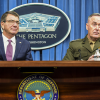
Defense Secretary Carter Urges GCC to Help Iraq
Posted on 20 April 2016 .
By Simon Kent.
US Defense Secretary Ash Carter has met with Gulf Cooperation Council Secretary-General Abdullatif al-Zayani and six of his counterparts from the GCC, to discuss the war against the so called Islamic State in Iraq.
The meeting comes ahead of a planned GCC summit this week, which Barack Obama will attend. But underlying the recent meeting were concerns that the GCC (Saudi Arabia, Kuwait, Bahrain, United Arab Emirates, Oman and Qatar) were not pulling their weight in the war.
In Iraq, one US frustration was the slowness to commit reconstruction funds, a pressing concern in Ramadi, the Sunni majority city which needs billions of dollars for reconstruction following more than a year of fighting against ISIS.
Carter was allegedly told that defense secretaries in the GCC wanted more assurance that the Iraqi government would be more inclusive of Sunnis in the political process before committing more aid. This is a worrying request since many Sunni sheikhs in Anbar and Salahaddin are already on the government side, while many Sunni politicians lack the appeal of tribal leaders and are widely seen by Sunnis as corrupt.
The US military is now apparently working on partnerships with GCC army Special Forces units, but it is unclear what the aim of such partnerships would be. GCC defense secretaries apparently expressed ongoing concerns about Iran.
(Source: ABC News)
Posted in Security 9 Comments
Coalition Strikes Hit ISIL Targets in Iraq, Syria
Posted on 16 April 2016 .
U.S. and coalition military forces continued to attack Islamic State of Iraq and the Levant terrorists in Iraq and Syria yesterday, Combined Joint Task Force Operation Inherent Resolve officials reported on Friday.
Officials reported details of the latest strikes, noting that assessments of results are based on initial reports.
Strikes in Syria
Attack and ground attack aircraft conducted six strikes in Syria:
- Near Raqqah, a strike destroyed an ISIL bulldozer.
- Near Mara, five strikes struck five separate ISIL tactical units and destroyed two ISIL fighting positions and four ISIL vehicles.
Strikes in Iraq
Attack, fighter and ground attack aircraft conducted 30 strikes in Iraq, coordinated with and in support of Iraq’s government:
- Near Hit, three strikes struck a large ISIL tactical unit and destroyed 18 ISIL boats, an ISIL command and control node and an ISIL weapons cache and denied ISIL access to terrain.
- Near Kisik, a strike struck an ISIL tactical unit and destroyed an ISIL tunnel system.
- Near Mosul, 21 strikes struck an ISIL tactical unit, 18 ISIL modular oil refineries and two ISIL crude oil stills and destroyed an ISIL assembly area.
- Near Qayyarah, a strike destroyed 33 ISIL boats.
- Near Sultan Abdallah, three strikes struck an ISIL tactical unit and destroyed an ISIL assembly area, an ISIL fighting position, an ISIL mortar cache and an ISIL mortar system.
- Near Tal Afar, a strike suppressed an ISIL mortar position.
Task force officials define a strike as one or more kinetic events that occur in roughly the same geographic location to produce a single, sometimes cumulative, effect. Therefore, officials explained, a single aircraft delivering a single weapon against a lone ISIL vehicle is one strike, but so is multiple aircraft delivering dozens of weapons against buildings, vehicles and weapon systems in a compound, for example, having the cumulative effect of making those targets harder or impossible for ISIL to use. Accordingly, officials said, they do not report the number or type of aircraft employed in a strike, the number of munitions dropped in each strike, or the number of individual munition impact points against a target.
Part of Operation Inherent Resolve
The strikes were conducted as part of Operation Inherent Resolve, the operation to eliminate the ISIL terrorist group and the threat they pose to Iraq, Syria, and the wider international community. The destruction of ISIL targets in Syria and Iraq further limits the terrorist group's ability to project terror and conduct operations, officials said.
Coalition nations that have conducted strikes in Iraq include the United States, Australia, Belgium, Canada, Denmark, France, Jordan, the Netherlands and the United Kingdom. Coalition nations that have conducted strikes in Syria include the United States, Australia, Bahrain, Canada, France, Jordan, the Netherlands, Saudi Arabia, Turkey, the United Arab Emirates and the United Kingdom.
(Source: US Dept of Defense)
Posted in Security 6 Comments
Military Strikes Hit ISIL Targets in Iraq, Syria
Posted on 14 April 2016 .
U.S. and coalition military forces continued to attack Islamic State of Iraq and the Levant terrorists in Iraq and Syria yesterday, Combined Joint Task Force Operation Inherent Resolve officials reported on Wednesday.
Officials reported details of the latest strikes, noting that assessments of results are based on initial reports.
Strikes in Syria
Attack and fighter aircraft conducted two strikes in Syria:
- Near Hawl, a strike destroyed an ISIL fighting position.
- Near Mara, a strike struck an ISIL tactical unit.
Strikes in Iraq
Attack, fighter and ground attack aircraft conducted seven strikes in Iraq, coordinated with and in support of Iraq’s government:
- Near Huwayjah, a strike struck an ISIL tactical unit and destroyed an ISIL assembly area.
- Near Hit, two strikes struck two separate ISIL tactical units and destroyed six ISIL machine gun positions and four ISIL fighting positions.
- Near Mosul, two strikes struck two separate ISIL tactical units and destroyed four ISIL assembly areas and an ISIL fighting position.
- Near Qayyarah, a strike destroyed an ISIL vehicle bomb.
- Near Tal Afar, a strike produced inconclusive results.
Task force officials define a strike as one or more kinetic events that occur in roughly the same geographic location to produce a single, sometimes cumulative, effect. Therefore, officials explained, a single aircraft delivering a single weapon against a lone ISIL vehicle is one strike, but so is multiple aircraft delivering dozens of weapons against buildings, vehicles and weapon systems in a compound, for example, having the cumulative effect of making those targets harder or impossible for ISIL to use. Accordingly, officials said, they do not report the number or type of aircraft employed in a strike, the number of munitions dropped in each strike, or the number of individual munition impact points against a target.
Part of Operation Inherent Resolve
The strikes were conducted as part of Operation Inherent Resolve, the operation to eliminate the ISIL terrorist group and the threat they pose to Iraq, Syria, and the wider international community. The destruction of ISIL targets in Syria and Iraq further limits the terrorist group's ability to project terror and conduct operations, officials said.
Coalition nations that have conducted strikes in Iraq include the United States, Australia, Belgium, Canada, Denmark, France, Jordan, the Netherlands and the United Kingdom. Coalition nations that have conducted strikes in Syria include the United States, Australia, Bahrain, Canada, France, Jordan, the Netherlands, Saudi Arabia, Turkey, the United Arab Emirates and the United Kingdom.
(Source: US Dept of Defense)
Posted in Security 5 Comments
Storms, Flood Threat, for Iran, Iraq and Saudi Arabia
Posted on 13 April 2016 .
By John Lee.
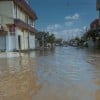
AccuWeather reports that a slow-moving storm system will lead to flash flooding from Iraq and western Iran into Saudi Arabia and Yemen on Wednesday and Thursday.
Rainfall of 12-25 mm will be common with locally higher amounts in the strongest thunderstorms.
Areas such as Baghdad and Basrah will get multiple downpours.
(Source: AccuWeather)
(Flooding in Baghdad, October 2015. Image via Shutterstock)
Posted in Agriculture, Iraq Industry & Trade News 4 Comments
IBBC Women’s Group Holds First Roundtable
Posted on 12 April 2016 .
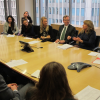
IBBC Women’s Group Roundtable: Judge Marilyn Mornington on Women in the Workplace
The Iraq Britain Business Council (IBBC) Women’s Group held its first roundtable with District Judge Marilyn Mornington as the key note speaker.
The event was held at G4S offices in Victoria on the 7th April and was attended by representatives of member universities and international companies, think tanks, Iraqi guests and the Iraqi government.
Angelique Lecorps, Senior Consultant at G4S and Chairman of the IBBC Women’s Group, gave an introduction on the Group’s background and explained its aim to become a networking platform to help Iraqi women to enter and advance in the work place.
Judge Mornington asked for a minute of silence to remember Zaha Hadid, the famous Iraqi-British architect who died last week, as ‘a role model for women around the world’. The judge praised Zaha Hadid and pointed out how she overcame her situation as a female working in a male dominated sector, as a refugee and as an immigrant.
The roundtable touched upon topics such as women’s access to education and the workplace, how women’s choices affect the next generations, and the Judge’s experience in countries such as the UK, Pakistan, Saudi Arabia and the UAE. The contradictory fact of highly educated Muslim women being forced into arranged marriages, the existence of laws that protect women but are not enforced by the society, and the difficulty of the work-life balance were highlighted.
Iraqi guests from the audience gave their views about the situation of women in their country, highlighting how poverty, regional and social aspects have direct impact on women’s access to the work place.
Participants spoke about successful female entrepreneurship programmes and encouraged the Group and the IBBC to think about a way of promoting this amongst Iraqi women. ‘Women have the duty to help other women’ said Judge Mornington whilst explaining her own experience as a mentor. She was quick to add that ‘the best work I’ve done though is with the best men’, highlighting the importance of getting men on board in any initiative towards women empowerment.
The IBBC Women’s Group hopes to hold another roundtable in June/July 2016 on Women in Iraq and the KRI.
-------------
Judge Mornington is an international lecturer, broadcaster and writer on international women’s rights, domestic violence, gender crime and international peace and has dedicated her life to eradicating violence against children and women. For over 20 years she has been instrumental in advancing many UK policies, laws and practices concerning issues of domestic violence, forced marriage and honour‐based violence.
She has founded and chaired many prestigious committees, advised governments, written and lectured to a wide range of audiences, on Family Law and issues affecting Asian/Muslim communities, nationally and internationally, recently including giving the concluding keynote speech in Abu Dhabi at the Worldwide Forum for “The Promotion of Peace in Muslim Communities” at the invitation of HRH Sheikh Abdullah Bin Zayed Al Nahyan, Foreign Minister and Deputy Prime Minister UAE.
(Source: IBBC)
Posted in Construction & Engineering In Iraq, Employment, Iraq Industry & Trade News, Iraq Oil & Gas News, Politics, Security 5 Comments
Coalition Strikes Target ISIL Terrorists in Syria, Iraq
Posted on 12 April 2016 .
U.S. and coalition military forces continued to attack Islamic State of Iraq and the Levant terrorists in Iraq and Syria yesterday, Combined Joint Task Force Operation Inherent Resolve officials reported today.
Officials reported details of the latest strikes, noting that assessments of results are based on initial reports.
Strikes in Syria
Attack aircraft conducted four strikes in Syria:
- Near Manbij, a strike struck a large ISIL tactical unit and destroyed two ISIL fighting positions and an ISIL mortar system.
- Near Mara, three strikes struck three separate ISIL tactical units and destroyed two ISIL vehicles, an ISIL tunnel entrance, two ISIL fighting positions and an ISIL improvised explosive device.
Strikes in Iraq
Fighter aircraft and rocket artillery conducted nine strikes in Iraq, coordinated with and in support of Iraq’s government:
- Near Hit, two strikes struck two ISIL tactical units and destroyed 20 ISIL fighting positions, 16 ISIL heavy machine guns, four ISIL rocket-propelled grenade systems, an ISIL anti-air artillery piece and two ISIL staging areas and denied ISL access to terrain.
- Near Mosul, four strikes struck an ISIL tactical unit and two separate ISIL headquarters and destroyed an ISIL fighting position and an ISIL assembly area.
- Near Qayyarah, a strike destroyed three ISIL machine guns and denied ISIL access to terrain.
- Near Sinjar, two strikes destroyed an ISIL staging area and suppressed an ISIL mortar position.
Task force officials define a strike as one or more kinetic events that occur in roughly the same geographic location to produce a single, sometimes cumulative, effect. Therefore, officials explained, a single aircraft delivering a single weapon against a lone ISIL vehicle is one strike, but so is multiple aircraft delivering dozens of weapons against buildings, vehicles and weapon systems in a compound, for example, having the cumulative effect of making those targets harder or impossible for ISIL to use. Accordingly, officials said, they do not report the number or type of aircraft employed in a strike, the number of munitions dropped in each strike, or the number of individual munition impact points against a target.
Part of Operation Inherent Resolve
The strikes were conducted as part of Operation Inherent Resolve, the operation to eliminate the ISIL terrorist group and the threat they pose to Iraq, Syria, and the wider international community. The destruction of ISIL targets in Syria and Iraq further limits the terrorist group's ability to project terror and conduct operations, officials said.
Coalition nations that have conducted strikes in Iraq include the United States, Australia, Belgium, Canada, Denmark, France, Jordan, the Netherlands and the United Kingdom. Coalition nations that have conducted strikes in Syria include the United States, Australia, Bahrain, Canada, France, Jordan, the Netherlands, Saudi Arabia, Turkey, the United Arab Emirates and the United Kingdom.
(Source: US Dept of Defense)
Coalition Strikes Target ISIL Terrorists in Syria, Iraq
Posted on 11 April 2016 .
U.S. and coalition military forces continued to attack Islamic State of Iraq and the Levant terrorists in Iraq and Syria yesterday, Combined Joint Task Force Operation Inherent Resolve officials reported on Sunday.
Officials reported details of the latest strikes, noting that assessments of results are based on initial reports.
Strikes in Syria
Attack aircraft conducted one strike in Syria:
- Near Raqqah, a strike destroyed two ISIL oil pump jacks.
Strikes in Iraq
Fighter, ground attack and remotely piloted aircraft and rocket artillery conducted 24 strikes in Iraq, coordinated with and in support of Iraq’s government:
- Near Huwayjah, a strike destroyed an ISIL heavy machine gun.
- Near Albu Hayat, two strikes struck a large ISIL tactical unit and destroyed an ISIL tactical vehicle and three ISIL fighting positions.
- Near Fallujah, a strike struck an ISIL tactical unit.
- Near Haditha, a strike struck an ISIL tactical unit and destroyed an ISIL fighting position.
- Near Hit, two strikes struck a large ISIL tactical unit and destroyed nine ISIL fighting positions, an ISIL heavy machine gun and an ISIL mortar system and denied ISIL access to terrain.
- Near Kirkuk, four strikes struck three separate ISIL tactical units and destroyed two ISIL heavy machine guns, an ISIL fighting position, five ISIL assembly areas and an ISIL supply cache.
- Near Mosul, eight strikes struck three separate ISIL tactical units and five ISIL communication facilities and destroyed two ISIL vehicles and an ISIL boat.
- Near Qayyarah, three strikes destroyed two ISIL boats and an ISIL vehicle and denied ISIL access to terrain.
- Near Sinjar, a strike struck an ISIL tactical unit and destroyed an ISIL assembly area.
- Near Sultan Abdallah, two strikes destroyed an ISIL heavy machine gun.
Task force officials define a strike as one or more kinetic events that occur in roughly the same geographic location to produce a single, sometimes cumulative, effect. Therefore, officials explained, a single aircraft delivering a single weapon against a lone ISIL vehicle is one strike, but so is multiple aircraft delivering dozens of weapons against buildings, vehicles and weapon systems in a compound, for example, having the cumulative effect of making those targets harder or impossible for ISIL to use. Accordingly, officials said, they do not report the number or type of aircraft employed in a strike, the number of munitions dropped in each strike, or the number of individual munition impact points against a target.
Part of Operation Inherent Resolve
The strikes were conducted as part of Operation Inherent Resolve, the operation to eliminate the ISIL terrorist group and the threat they pose to Iraq, Syria, and the wider international community. The destruction of ISIL targets in Syria and Iraq further limits the terrorist group's ability to project terror and conduct operations, officials said.
Coalition nations that have conducted strikes in Iraq include the United States, Australia, Belgium, Canada, Denmark, France, Jordan, the Netherlands and the United Kingdom. Coalition nations that have conducted strikes in Syria include the United States, Australia, Bahrain, Canada, France, Jordan, the Netherlands, Saudi Arabia, Turkey, the United Arab Emirates and the United Kingdom.
(Source: US Dept of Defense)
Posted in Security 3 Comments
Why Iraqi-Saudi ties are Backsliding yet Again
Posted on 10 April 2016 .
By Mustafa Saadoun for Al-Monitor. Any opinions expressed are those of the author, and do not necessarily reflect the views of Iraq Business News.
Iraq is facing a new crisis with Saudi Arabia as a result of their differing points of view regarding regional issues, most notably those related to Lebanon-based Hezbollah, which was recently classified by the Arab League and the Gulf Cooperation Council (GCC) as a terrorist organization.
The crisis started March 11 when Iraqi Foreign Minister Ibrahim al-Jaafari dropped a bombshell during the Arab League meetings in Cairo. He said, “Iraq’s Popular Mobilization Units and Lebanon’s Hezbollah preserved the dignity of the Arabs. Those accusing them of terrorism are the terrorists.”
The Saudi delegation withdrew from the meeting, but returned after Jaafari finished speaking.
Tense Saudi-Iranian ties were already affecting the whole region. In a Jan. 19 article by Saudi Foreign Minister Adel al-Jubeir, Saudi Arabia accused Iran of “supporting all radical and violent groups, including Hezbollah in Lebanon, the Houthis in Yemen and sectarian militias in Iraq.”
At the March 11 meeting, Saudi Arabia was obviously angered by the Iraqi minister defending Hezbollah. However, Jaafari told the press later that day that his defense of Hezbollah “will not affect Iraqi-Saudi ties, and it is normal that two countries have different perspectives." Those divergent views will not harm bilateral ties between Arab parties, he added.
Posted in Iraq Industry & Trade News, Iraq Oil & Gas News, Politics, Security Comments Off on Why Iraqi-Saudi ties are Backsliding yet Again