


Rate Cuts to Boost Lending
Posted on 12 April 2010 .
Iraq's central bank slashed its base rate by 100 base points to six per cent as of April 1 in reaction to subdued inflation and to boost bank lending, senior advisers at the bank said.
The bank's website said that the rate cut - the first in nine months - was effective as of April 3.
The bank has also cut banks' reserve requirements to 20pc from 25pc, a central bank adviser said.
The rate move reflects the bank's policy of keeping real interest rates two points above core inflation, officials said.
One adviser said the central bank had decided to cut minimum reserve requirements for private banks, which was also aimed at boosting lending to lift the Iraqi economy.
The IMF forecasts economic growth of 7.3pc this year, accelerating from estimated 4.2pc growth last year but well off the 9.5pc growth in 2008 when oil prices were at record highs.
The official interest rate in Iraq is more of a guide to bank rates than a direct monetary mechanism as the banking sector is small and capital markets are undeveloped. In addition, the exchange rate is determined by the central bank at regular currency auctions.
"One of the reasons (for the rate cut) is to encourage banks to lend to traders and investors," adviser Hassan Al Haidari said.
The central bank last cut its interest rate, by 200 basis points, last June to 7pc. Mudher Kasim, also a senior adviser at the central bank, said that the bank had lowered minimum reserve requirements for private banks to 20pc from 25pc.
"This will give liquidity to the banks ... to encourage investment," he said.
( Gulf Daily News )
Posted in Iraq Banking & Finance News Comments Off on Rate Cuts to Boost Lending
Dollar Sales Drop to 132m on Sunday
Posted on 12 April 2010 .
The Central Bank of Iraq’s (CBI) dollar sales reached $132.874 million in its daily auction on Sunday, compared to $167.325 in the previous session.
“The demand hit $7.570 million in cash, covered at an exchange rate of 1,183 Iraqi dinars per dollar, and $125.304 million in foreign transfers outside the country, covered at an exchange rate of 1,173 Iraqi dinars per dollar,” according to a CBI news bulletin received by Aswat al-Iraq news agency.
None of the 13 banks that participated in today’s session offered to sell dollars.
( Aswat Al Iraq )
Posted in Iraq Banking & Finance News Comments Off on Dollar Sales Drop to 132m on Sunday
Did Big Oil Win the War in Iraq?
Posted on 12 April 2010 .
12 April 2010 - AlertNet
Posted on November 14, 2009
Last week, ExxonMobil became the first U.S. oil company in 35 years to sign an oil-production contract with the government of Iraq.
Do these contracts represent a "victory" for Big Oil in Iraq? Yes, but not one as big as the companies had hoped for (at least, not yet).
Before the United States and Britain invaded Iraq in March 2003, their oil companies were shut out of oil-production contracts being negotiated by the government of Saddam Hussein. Today, more than six years of war later, Saddam is gone, and the U.S. and British oil companies are not only in on the oil contracts, they have managed to sweeten the terms.
However, organized resistance by Iraqis and people around the world has thus far succeeded in denying Big Oil its Big Prize: passage of the Iraq Oil Law, alternatively called Iraq Hydrocarbons Law, which would grant far greater control over Iraqi oil to foreign companies on terms much less favorable to Iraq than the current contracts provide.
If the negotiations proceed on their current path, foreign companies will produce the vast majority of Iraq’s oil. How much control they will exert, and who will reap the greatest benefits (and endure the steepest costs) is yet to be determined.
Before the Invasion
In January 2000, 10 days into President George W. Bush’s first term, representatives of the largest oil and energy companies joined the new administration to form the Cheney Energy Task Force. As part of its deliberations, the task force reviewed a series of lists titled "Foreign Suitors for Iraqi Oilfield Contracts" naming more than 60 companies from some 30 countries with contracts in various stages of negotiation.
None of contracts were with American nor major British companies, and none could take effect while the U.N. Security Council sanctions against Iraq remained in place. Three countries held the largest contracts: China, Russia and France -- all members of the Security Council and all in a position to advocate for the end of sanctions.
Were Saddam to remain in power and the sanctions to be removed, these contracts would take effect, and the U.S. and its closest ally would be shut out of Iraq’s great oil bonanza.
After the Invasion
The invasion of Iraq dealt handily with the problem of U.S. and British exclusion. ExxonMobil, Chevron, BP, ConocoPhillips and other major oil companies met with the Iraqi government on countless occasions, and the Iraqis tried to make deals.
But the oil companies, backed aggressively by the Bush administration, steadfastly insisted that contracts would only be signed after the Iraq Oil Law was passed. They nearly prevailed on several occasions, but organized resistance in and outside of Iraq has continually stymied the law’s passage.
Several forces have conspired to bring the oil companies to the negotiating table today.
Most recently and significantly, Iraq’s Parliament has refused to even consider the law until after the January 2010 elections. It is quite likely that a new government hostile to the interests of foreign (particularly U.S. and British) oil companies could come to power in those elections, making passage of the law much less likely. The deals being offered today would be the best the companies would be likely to get.
President Barack Obama and his administration have been vocal and active proponents of the law’s passage. However, this administration’s allegiance to the oil industry is not as steadfast as that of its predecessor.
The Obama administration’s push for passage of the law comes at the same time that it pursues withdrawal of all but a residual U.S. troop presence. It is hard to underestimate the added negotiating weight brought by 150,000 members of the U.S. (and until very recently British) military. Bush announced his most public declaration for passage of the Iraq Oil Law at the same time that he announced the surge of an additional 20,000 U.S. troops into Iraq. The pending loss of its most potent negotiating stick has clearly made the oil companies’ more willing to deal.
Secretary of State Hillary Rodham Clinton may have best put forward the administration’s position at the U.S.-Iraq Business and Investment Conference on Oct. 20, explaining: "A comprehensive hydrocarbon law is vital for regulating the [Iraq] oil sector. Parliament has delayed this vote until after January, but steps can be taken in the interim; for example, by holding transparent, credible auctions on oil and gas fields as we are seeing ..."
In other words, 'we know you want the law, but Parliament isn’t biting, and we’re not keeping 150,000 U.S. soldiers in Iraq indefinitely for you to get it. So, sign the d*** contracts.'
And finally, under immense pressure, the Iraqi Oil Ministry also has steadily been sweetening the deals.
The New Oil Contracts
The Iraq Oil Ministry began a bidding round in June for eight currently producing oil fields, which are among the largest in the world. Only one consortium -- BP and the Chinese National Petroleum Corp. -- agreed to the terms. The rest of the companies balked, saying the terms just simply were not generous enough. The terms have since been sweetened (and applied retroactively to BP and CNPC's deal), and the companies are now jumping on board.
Because the U.S. and British companies have, to a large degree, squeezed into pre-existing negotiations, some strange bedfellows have emerged to sign these new contracts, and more odd pairings are expected soon.
- BP and CNPC finalized the first new oil contract issued by Baghdad for the largest oil field in the country, the 17 billion barrel Rumaila field.
- ExxonMobil, with junior partner Royal Dutch Shell, won a bidding war against Russia’s Lukoil and junior partner ConocoPhillips for the 8.7 billion barrel West Qurna Phase 1 project.
- Italy's Eni SpA, with California’s Occidental Petroleum and the Korea Gas Corp., was awarded Iraq's Zubair oil field with estimated reserves of 4.4 billion barrels.
- Japan's Nippon Corp., leading a consortium of Japanese companies including Inpex Corp. and JGC Corp., is at an advanced stage in talks to win the Nassiriyah oil field.
- Shell, with partners CNPC and the Turkish Petroleum Corp., is also in discussions for the giant Kirkuk oil field, although negotiations have been delayed until after Iraq’s January elections.
The Terms
These contracts are complex and unique, representing a hybrid of existing models. They are not the best that the oil companies hoped for, which would have been production sharing agreements (PSAs). Nor are they the worst the companies might have feared; Iraq is not maintaining its nationalized system, closed to foreign oil company production participation (U.S. and other foreign oil companies sell Iraqi oil now and have done so for decades).
They are also not technical service contracts (TSCs), although this is what the Iraqi Oil Ministry has named them (likely in an attempt to thwart opposition to the contracts for offering too much to foreign oil companies). Greg Muttitt, an Iraq oil expert with Platform, told me, "TSCs generally last just a few years, they're generally for a specific job (e.g. installing pumps) rather than managing a field, and they go to service companies like Baker Hughes and Halliburton."
On the positive side for the companies, where the development production contracts (DPC) that Iraq was signing prior to the 2003 invasion offered 12-year contracts, today’s run for 20 to 25 years. And while as recently as a year ago the Iraqis offered the foreign companies a 50 percent ownership stake, today’s contracts offer them a 75 percent stake (25 percent for the Iraqi government).
On the other hand, where the PSAs sought under the Iraq Oil Law would give the companies an equity stake and the ability to book the oil in the fields as their own, these contracts provide reimbursement fees for capital and operational expenses and a fixed fee per barrel of oil produced and deny the companies the ability to book reserves.
It remains unclear whether the foreign companies or the Iraqi government ultimately has production decision-making authority. And some of the benefits included in the contracts would be annulled if the Iraq Oil Law were passed, including requirements to hire and train Iraqi workers and the transfer of needed technology.
Finally, the Iraqis apparently sweetened the deals further in the last few weeks by reducing the amount the foreign companies pay in taxes and allowing them to use private security forces to protect their facilities.
The Next Bidding Round
On Dec. 11 and 12, the second, much larger, bidding round will be launched in Baghdad. Forty-four international companies have been prequalified to bid on run for 11 groups of oil and gas fields in already producing and undiscovered fields. Negotiations will include the super giant Majnoon field, which Chevron and France’s Total have teamed up to bid for.
The contracts for these fields are expected to mirror those described above, but no "model contract" has been made publicly available.
Sunlight
The Iraq Oil Law has remained an elusive goal of the world’s most powerful industry and governments because a massive organized global resistance movement has been shining a bright spotlight on its content, its backers, and on the consequences of its passage.
We must continue to shine this spotlight on the new contract negotiations to help ensure that 1) the military occupation of Iraq will be able to conclude, and 2) that the Iraqis are not freed from a foreign military occupation only to be brought under foreign economic control.
Posted in Iraq Oil & Gas News Comments Off on Did Big Oil Win the War in Iraq?
Future of Iraq's Oil Deals Uncertain
Posted on 06 April 2010 .
Now that the votes have been counted, the first big test facing Iraq’s fragile democracy is whether it can make the transition from one administration to the next without too much bloodshed or violence.
If this weekend's horrific sectarian slaughter and suicide bombings are any harbinger, things aren't looking good. But there will also come another test: whether the lucrative oil deals negotiated by the previous administration can survive the transition.
After a spectacularly successful auction of drilling rights last December, Prime Minister Nouri al-Maliki’s government spent the first few months of this year putting the finishing touches on 10 separate deals that, if implemented successfully, could see Iraq challenging Saudi Arabia as the world’s leading producer within the decade.
By any measure, these deals were the singular accomplishment of Maliki’s tenure. Oil Minister Hussain al-Shahristani earned the respect of the international oil community for driving a very hard bargain and delivering a deal that should quickly put his nation on the path to prosperity.
But in Iraq’s fevered political climate, no deal makes everyone happy, and the oil contracts could easily become a casualty as Iyad Allawi, the declared winner in last month’s election, begins the messy process of stitching together a governing coalition.
“The Maliki government did everything in their power to make sure those contracts would survive. They fast-forwarded the effective date of many of the contracts ... [and] they also had the contracts ratified by the Council of Ministers very quickly. Whether these actions are enough will be the main question,” said Thomas Donovan, an attorney with the Iraq Law Alliance, who has followed the process closely.
“My sense is that they will survive the challenge, and that they will last throughout the next transitional government and any government thereafter,” he said.
That is what some of the world’s largest oil companies — Exxon Mobil, BP, Royal Dutch Shell, Russia’s Lukoil and others — are banking on as they bet billions on Iraq’s ability to provide a politically stable and physically secure environment for them to go about their business.
And it is a gamble, says Giacomo Luciani, an oil industry scholar at the Gulf Research Center in Geneva.
“At the moment, we don’t know what’s going to happen. But we do know that the oil contracts are the main source of power, the main source of money, the main source of everything in Iraq,” Luciani said.
“We have to see what kind of coalition emerges and whether it finds it tactically convenient to raise objections to the oil deals,” he said.
Iraq nationalized oil production in 1961, and thereafter the notion of keeping Iraq’s oil under Iraqi control has played well for nationalist politicians from Saddam Hussein to today’s crop of Sunni and Shiite rivals. The reality, however, is that the dilapidation of Iraq’s oil fields that resulted from years of war and sanctions can only be repaired by a massive influx of capital and technology from international oil companies.
And Shahristani, the oil minister, can hardly be accused of giving away the store when he auctioned off the rights to develop some of Iraq’s prize oil patches. The successful bidders signed 20-year service contracts that will pay them a relatively modest per-barrel fee for each barrel they produce above an agreed minimum.
“He [Shahristani] obtained a very good deal for Iraq, but that doesn’t mean the deal will be confirmed. You are assuming that everyone is pursuing Iraq’s national interest, and that might not be the case,” said Luciani.
“In principle, I don’t think there’s a prejudice against foreign companies’ involvement. But one can see how it becomes part of someone’s political agenda,” he said.
Another major worry is security. With the U.S. planning to reduce the number of troops in Iraq to 50,000 by the end of August, and to effect a complete withdrawal by the end of 2011, providing security for the oil companies will fall to the Iraqis.
The worry was highlighted two weeks ago when authorities in oil-rich Basra province found a small weapons cache and a note threatening foreign oil companies. The incident appeared to be more theater than threat, but security experts admit it is hard to gauge the level of grassroots mistrust of foreign oil companies and how this might be exploited by those wishing to destabilize the government.
Much will depend on the new government and its choice of oil minister, said Ben Lando, editor of the influential Iraq Oil Report.
Although Allawi, a former interim prime minister, has been declared the winner in the March 7 election, it is not clear if he will be able to pull together enough allies to form a governing coalition. Even less certain is who will get the job as oil minister.
Shahristani, a former nuclear scientist who spent time in Saddam’s prisons, is widely respected in oil circles and could be asked to stay on, no matter who leads the next government.
“Shahristani is definitely not out of contention, though any coalition with the Kurds involved drastically reduces his chances to the point of elimination.” said Lando.
That’s because of the ongoing dispute over control of reserves in the semi-autonomous Kurdish region. Shahristani has antagonized the Kurds by refusing to recognize the contracts signed by nearly two dozen foreign oil companies with the Kurdistan Regional Government.
Others who might be considered for the oil post include Thamir Ghadhban and Ibrahim Bahr al-Uloom. Both held the job previously and are known in the oil community.
Even the wily Ahmad Chalabi’s name has been mentioned. Chalalbi, famous for providing the Bush administration with dubious intelligence about Saddam’s weapons of mass destruction, served as interim oil minister for a few weeks in 2005. He is also Allawi’s cousin, although in their case blood does not appear to be thicker than oil.
Posted in Iraq Oil & Gas News Comments Off on Future of Iraq's Oil Deals Uncertain

Shell to Boost Iraq Majnoon Oil Output, Eyes Gas
Posted on 30 March 2010 .
Iraq's Majnoon oilfield is targeting production of 175,000 barrels of oil equivalent per day in 2012, a senior Royal Dutch Shell executive said on Monday.
Iraq's largest field is currently pumping at 45,000 boe/d, Shell's Mounir Bouaziz, Vice-President New Business LNG for the Middle East and North Africa, told an industry event.
Shell and Malaysia's Petronas signed a final contract earlier this year to develop the Majnoon oilfield, one of the world's biggest.
"We have already started work at Majnoon...we have already taken over operations," Bouaziz told Reuters on the sidelines.
"The effective (start) date was on March 1."
The eventual production target for the field is 1.8 million barrels per day (bpd).
Shell and Petronas won the rights in an auction held in Baghdad in December for the field in southern Iraq, estimated to hold 12.6 billion barrels of oil.
The 20-year development contract is one of several deals that Iraq has sealed to try to catapult the country to third place from 11th in the league of oil producing nations.
GAS
Shell has not yet reached a final agreement on a natural gas venture around the southern oil hub of Basra, Bouaziz said.
Earlier this month Iraq's oil minister Hussain al-Sharistani said the OPEC member had extended a memorandum of understanding with Shell on the venture, but a final deal would be left to the new government.
Iraq has been working to finalise a multi-billion-dollar joint venture between its South Gas Company, Shell and Mitsubishi, that would capture huge amounts of gas now being wasted and use it in the domestic market or for exports.
Bouaziz said that delays in capturing the flared gas was costing Iraq about $50 a second.
Iraq is losing 1 billion cubic feet per day (cfd) of gas through flaring, mostly from the south, Bouaziz said.
"What they are flaring now is sufficient to produce power generation for a country like Jordan, twice," Bouaziz said.
"People are getting an average of two hours of electricity a day, there are plans to add power generation but that needs fuel...gas is the natural solution."
Bouaziz said that the basic infrastructure was already in place to start capturing the gas being burned.
"But the task to really get it to work, to improve it, to upgrade it and increase the capacity is huge because of a legacy of many, many years of lack of maintenance and underdevelopment," he said.
Bouaziz said Iraq could start exporting gas "very very quickly".
Bouaziz said the construction of Shell's Pearl gas-to-liquids (GTL) project in Qatar is expected to be completed by the end of 2010, with a ramp up in production expected to start in 2011.
"This will take 12 months," he said.
Posted in Iraq Oil & Gas News 15 Comments
Iraq Muddies Oil Plans with OPEC Quota Talk
Posted on 29 March 2010 .
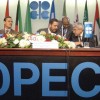
Iraq's oil minister has raised questions over the country's planned energy expansion by indicating Baghdad would consider OPEC output curbs that may keep supply well short of ambitious capacity targets.
After Baghdad signed contracts to add around 10 million barrels per day (bpd) to its oil supply, tough talks were expected within the Organization of the Petroleum Exporting Countries on an eventual output target for Iraq.
But Iraqi Oil Minister Hussain al-Shahristani seems to have jumped straight to the end game before even sitting down at the negotiating table with his fellow ministers.
In Vienna for an OPEC meeting last week, Shahristani said Baghdad would participate in OPEC agreements to curb oil supply when output reached 4 million bpd, some 8 million bpd short of Iraq's envisaged target.
An OPEC quota for Iraq of around 4 million bpd would prove more supportive for oil prices in the medium term than was the prospect of the country remaining outside the system as it expanded supplies to near 12 million bpd.
With the group's market share expected to rise in future, Iraq's return to OPEC limits would strengthen its hand.
"Bringing Iraq into the quota system and managing the growth and sharing the growth is constructive to bullish for prices," said Mike Wittner, global head of oil research at Societe Generale.
"The supply and demand trends are heading in OPEC's direction and they should be able to reach agreement."
Oil is trading around $80 a barrel now and investors expect it to trade at $91 by December 2018, suggesting little concern among investors that supply would be scarcer later this decade than it is now.
Iraq is one of OPEC's founder members but has been exempt from quotas for years due to sanctions and war.
Baghdad holds ambitious deals with the world's biggest energy companies to boost output to around 12 million bpd in around seven years from just 2.5 million bpd. The petrodollars are to bankroll Iraq's reconstruction.
Oil executives said the prospect of an OPEC quota for Iraq early into that expansion raised big questions over the contracts.
"Either he doesn't believe in the contracts he's signed, or he's saying it's not his problem," said an executive at an oil firm which recently signed a deal to work on Iraq's fields.
"But it is his problem, because it is Iraq's problem. They still have to pay for all this capacity."
SKEPTICISM
Shahristani may soon be in no position to bargain for Iraq. He may be replaced when a new government is formed after Iraqi elections earlier this month.
Other Iraqi officials downplayed the issue, saying it would be a few years before Iraq reached 4 million bpd anyway.
"We are talking about 2.5 to 3 years for Iraq to reach 4 million bpd," said Thamir Ghadhban, the top energy advisor to Iraqi Prime Minister Nuri al-Maliki.
In any case, increasing oil output rapidly was always likely to put Iraq at odds with the producer group's aims to keep oil demand and supply in balance and bolster prices by limiting supplies.
Iraq's OPEC quota used to be similar to that of Iran, which has a limit of 3.34 million bpd. OPEC quotas are based partly on reserves, and Iraqi reserves -- the world's third-largest -- are a little smaller than Iran's.
The subject is tricky for OPEC as the talks would need to balance the plans of many members to expand supplies and may need to address the unhappiness of some, such as Nigeria and Angola, with their current quotas.
But OPEC officials have stressed that the group would seek to accommodate Iraq. A smooth reintegration of Iraq would enhance the group's image for market management.
"If and when Iraq gets to the stage where it needs a quota, OPEC will discuss it," said an OPEC delegate. "It should not be a problem."
BLOW?
That may not be the case for the oil companies expecting to expand Iraq's oil industry.
After years of lacking easy access to the Middle East's easy-to-produce oil, firms jumped at the chance to work in Iraq when Baghdad offered contracts on its biggest fields in two oil auctions last year.
The return rate on the contracts depends on firms hitting their targets fast. A cap on oil output would make that impossible and diminish returns. Deals would have to be renegotiated for oil firms to avoid losses.
"On the face of it, this could be a big blow to firms with contracts," said Colin Lothian, senior analyst for the Middle East at consultancy Wood Mackenzie. "But more likely, Iraq will wait until production reaches 4 million bpd at least before it considers its position."
There was provision in the contracts that does not penalise contractors for government-set output limits, Lothian said. The issue was whether, with lower supply, firms could still cover the costs and fee in the same timeframe, he added.
The clause was as good as any similar clause in other OPEC states where foreign firms operate, said the oil executive. It states that output limits would be shared equally among firms and that they would be "fully compensated," he added.
But a quota as low as 4 million bpd would mean renegotiating all the contracts, and would leave oil firms with deals with little resemblance to those already signed, he added. The terms, already seen as tough by the industry, could worsen.
"Maybe Iraq would extend the life of the deals to 40 years from 20, but really, that sort of thing is not so good for oil firms," he said.
Posted in Iraq Oil & Gas News 1 Comment
Malaysian-Japanese Consortium Embarks on Developing Gharraf Oilfield
Posted on 29 March 2010 .
A consortium of Malaysia’s Petronas and Japan’s Japex embarked on developing the al-Gharraf oilfield it had obtained during the second round of oil licensing, an oil official in Thi-Qar province on Thursday.
“The Japanese-Malaysian consortium started initial works to upgrade al-Gharraf oilfield, (25 km) north of al-Nasseriya,” Kareem Yasser Hashem, the director of oilfields in Thi-Qar, told Aswat al-Iraq news agency.
Gharraf is one of five key oilfields in Thi-Qar whose combined reserves are up to 12 billion barrels. Gharraf alone is estimated to contain 3 billion barrels.
The two companies will receive fees of US$1.49 (S$2.09) per barrel produced.
Petronas will take 60 per cent while Japex will take the remaining 40 per cent.
Iraq auctioned Gharraf to the pair on December 12, the second day of a two-day oilfield auction which dramatically increased Iraq’s projected crude production to 12 million barrels per day (bpd) within seven years.
Iraq boasts actual oil reserves of 120 billion barrels, 11% of the total global reserves, ranking third worldwide despite suspended exploration and development since the 1970s. U.S. studies, however, concluded that Iraq is sitting on a lake of petroleum estimated to hit 350 billion barrels in reserves.
Nasseriya, the capital city of the province of Thi-Qar, lies 380 km south of Baghdad.
Posted in Iraq Oil & Gas News 1 Comment
$US Sales Rise Dramatically to 251m
Posted on 23 March 2010 .
Sales went up by the CBI of the dollar in the auction for the sale of currencies, on Thursday, to reach a maximum of $251 million versus $181 million during the previous session.
The bulletin issued by the CBI , that "the total volume of demand for the dollar stood at 251 million and 565 thousand dollars, covered by the central bank at the basis of 1170 dinars per dollar."
( Iraq Directory )
Posted in Iraq Banking & Finance News Comments Off on $US Sales Rise Dramatically to 251m

Oil Supply Surge, Price Drop in Iraqi Auction
Posted on 21 March 2010 .
Washington, 19 March 2010 (Oil & Gas Journal )
Iraq’s December 2009 auction of rights to develop 60 billion bbl of crude oil reserves in 10 fields will lift the country’s production to 9.6 million b/d by 2017 if several major obstacles can be overcome, a new Energy Policy Research Foundation Inc. (EPRINC) report concluded.
“By any standard, the Iraqi auction represents a major event in the history of the world oil market: It is the largest single transfer of reserves into the production stream since the beginning of the petroleum era,” the report maintained, saying the supply effect might lower oil prices enough to strain alternative fuels.
The report suggested that, although a wide range of external and internal threats and more traditional obstacles could derail Iraq’s prospects for a massive crude oil production increase, the prospect that it could send a supply shock into world markets can no longer be dismissed.
Expanded Iraqi production also could prevent a price spike if production outside the Organization of Petroleum Exporting Countries drops over an extended period, according to the report.
“In this scenario, the role of Iraqi supplies may be more of a brake on rising prices than a catalyst to a lower price path,” it explained. “In any case, the Iraqi auction clearly opens the door for a careful review of the conventional wisdom on the outlook for oil prices over the next 20 years.”
Under the new contracts, companies have committed to bring 9.6 million b/d online by 2017, which with production expected from fields not covered by the auction would meet the Iraqi government’s expectations for 12 million b/d. The EPRINC report assumed companies will be able to achieve only 50-75% of the targeted levels by 2017 but included scenarios under which total Iraqi production would approach or exceed the 12-million b/d benchmark by 2020.
The scenarios, it said, “clearly raise the potential for downward price adjustments in crude oil against a range of business-as-usual cases.” Several likely price outcomes, it added, “may also place alternative transportation fuels into severe financial distress.” Biofuels with economics marginal while crude oil prices are $80/bbl would require additional subsidies, “which may not be easily obtained in an era of ‘fiscal fatigue.’”
The US Energy Information Administration estimates Iraq’s reserves at 115 billion bbl, third behind Saudi Arabia and Iran. “However, credible estimates . . . suggest Iraq contains over 200 billion bbl of recoverable reserves and potential reserves of over 400 billion bbl,” EPRINC’s report indicated. It is available online at www.eprinc.org/pdf/EPRINC-Iraq-FirstLook.pdf.
Moving quickly
The unprecedented scale of the Iraqi government’s commitment and the project-management experience of many of the companies winning technical service contracts provide potential for field development to progress quickly, the report said. “Some of the difficult political issues have been met in the auction decision and process; others are being met, if grudgingly, by the very large and unexpected revenues which will be distributed to all Iraqi provinces on an equal per capita basis,” it said.
“The pitched rhetoric between the Kurdish government and the central government has softened, but substantial areas of disagreement remain,” it continued. “In line with their historical pursuit of autonomy, the Kurds have initiated and want to pursue a separate energy enclave. Under the proposed revenue distribution structure from the central government, the Kurdish government would receive 17%. It would be a great deal of money, much greater than the Kurds are likely to achieve from their regional oil development program.”
Other risks include the absence of a comprehensive law justifying the legal framework for the auctions, resolution of the Kurdish-Arab struggle for Kirkuk and oil and gas resources in Kurdistan, and Iraq’s outstanding debt with Kuwait, Saudi Arabia, and the United Nations.
“Several major oil companies, who chose not to bid, could not get comfortable with the lack of clarity on performance conditions of the contracts, stability of the tax regime, and the large carried interest of the Iraqi national oil company (approximately 25%) in the fields won by the bidders,” the report added.
Other problems include security, delivery of rigs, the handling of water for secondary recovery, and completion of government projects to upgrade pipelines and ports.
“None of these uncertainties are insurmountable, but resolving all these issues is critical if the Iraqis are to move forward on the ambitious production program,” the report said.
New ground
Besides scale, the auction broke new ground in two crucial ways, the report said. It would be the first time so many development projects of this size are started simultaneously with identical target completion dates. And the auction represents the first major break from the prevailing oil industry structure in almost 40 years.
EPRINC observed that since many producing countries began to nationalize their oil resources in the 1970s, multinational oil companies have had limited ability to explore for or develop reserves in those countries, particularly around the Persian Gulf. “The Iraqi auction will stand as an action that marries the interests of oil companies and of a government which controls a very large reserve base,” the report said.
“With its action Iraq has established a format for reserves development which leapfrogs the models of the other major Gulf oil producers—a transparent contractual arrangement that offers international companies an acceptable return on investment.”
Posted in Iraq Industry & Trade News, Iraq Oil & Gas News 48 Comments
China Now Largest Oil and Gas Investor in Iraq
Posted on 17 March 2010 .
China has become the biggest single investor in Iraq's oil and gas sector, with nearly one fifth of the reserves that have been auctioned over the past year under its control, Meed has reported.
China is spending a total of $577m in signing on fees to give it access to an estimated 24 billion barrels, or about 18% of the reserves on offer, the magazine said, citing its own data.
Chinese investment doubles the US' signing on fees, which has committed $296m to control about 12 billion barrels, the magazine added.
(AME Info FZ LLC)
Posted in Iraq Oil & Gas News 4 Comments