


Iraq to Launch Gas Field Auction: Ministry
Posted on 06 May 2010 .
Iraq is set to call for bids from energy firms to develop its gas fields, the oil ministry said on Wednesday, as the war-ravaged country seeks new revenue sources to rebuild its battered economy.
"The ministry will announce tomorrow (Thursday) the launch of a tender to develop gas fields and it will invite international companies to participate," ministry spokesman Assem Jihad said.
"The product of these fields will initially be used to supply electricity stations and for other domestic needs, with the rest to be exported. The ministry hopes that Iraq will reach the level of other gas producers in the region."
Iraq produces a negligible quantity of gas compared with the size of its reserves, and currently flares off most of what it produces.
A report last month in the Middle East Economic Survey (MEES), a regional oil and gas newsletter, said Iraq will offer three gas fields with more than 7.5 trillion cubic feet (tcf/210 billion cubic metres) of combined proven non-associated, or free gas reserves.
They are the 4.5 tcf (trillion cubic feet) Akkaz field in the western province of Anbar, the Mansuriya field in Diyala with three tcf and Sibba field in Basra with 60 billion cubic feet, MEES said, adding that 15 firms have been pre-qualified and invitations will be issued soon.
Akkaz and Mansuriya were offered in a round of bidding on oil fields last June but were not awarded.
French oil giant Total has already said it would "definitely" participate in the gas bid round.
Last year, Iraq awarded international oil majors contracts to develop 10 large oil fields in an attempt to ramp up its crude production capacity to 12 million barrels per day by 2017, from around 2.5 million bpd.
Iraq is highly dependent on crude exports for its government revenues, with 85 percent of its income coming from oil sales.
It has launched a major programme to build gas-fired power stations in an effort to triple electricity supply nationwide by 2014, according to the planning ministry.
As part of the expansion plan, the government has signed contracts worth more than five billion dollars with General Electric and Siemens.
( AFP )
Posted in Iraq Oil & Gas News Comments Off on Iraq to Launch Gas Field Auction: Ministry
CBI Dollar Sales Up to $156m
Posted on 04 May 2010 .
The Central Bank of Iraq’s (CBI) dollar sales went up to reach $156.425 million in its daily auction on Monday, compared to $127.650 in the previous session.
“The demand hit $5.400 million in cash, covered at an exchange rate of 1,183 Iraqi dinars per dollar, and $151.025 million in foreign transfers outside the country, covered at an exchange rate of 1,173 Iraqi dinars per dollar,” according to a CBI news bulletin received by Aswat al-Iraq news agency.
None of the 17 banks that participated in today’s session offered to sell dollars.
( Aswat Al Iraq )
Posted in Iraq Banking & Finance News Comments Off on CBI Dollar Sales Up to $156m
Iraq oil development swift despite politics
Posted on 30 April 2010 .
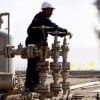
Development of Iraq's oilfields by foreign oil companies is progressing swiftly despite the lengthy process of government formation after Iraqi elections in March, a senior Statoil executive said on Tuesday.
"The major oil companies are starting to move forward at a very high speed. Oil companies are tendering huge contracts and making commitments in the market," said Kjetil Tonstad, Statoil's vice-president for International Exploration and Production, Middle East. "Execution is going full speed ahead despite the political situation."
International oil firms have signed up to deals that could vault Iraq into the top three of world oil producers in 2017. But final deals were signed just months before elections in March, leading to concern that politics could delay work.
Iraq is in a political vacuum after an inconclusive vote, with former Prime Minister Iyad Allawi winning a slim lead over Prime Minister Nuri al-Maliki and neither side yet to conclude tie-ups with groups that would give them a majority.
"Both Maliki and Allawi are positive on the contracts," said Tonstad, talking to reporters on the sidelines of an energy event. "No questions were raised in the election campaign or after questioning the contracts. A contract is a contract, it's awarded and then you have an obligation to go ahead."
Norway's Statoil and Russian partner LUKOIL would increase output to 120,000 barrels per day (bpd) at Iraq's West Qurna phase two oilfield in 2012, Tonstad said. That was the level set by Iraq for first commercial production at the field.
The consortium has already started issuing tenders for work at the field, he said. He declined to give further details.
Lukoil and Statoil sealed the 20-year deal to develop the West Qurna Phase Two, a 12.9 billion barrel oilfield in the south, in an auction in December.
In a presentation to an industry event, Tonstad hailed the opening of Iraq's oilfields to foreign investment last year as marking the largest opening in an oilfield province since the collapse of the former Soviet Union.
"We still haven't captured the significance of this historical moment," he said.
Plans to reach around 12 million bpd of output under the contracts in 2017 were feasible, but faced a myriad of challenges, he said. The development would mark an unprecedented build in capacity in the oil industry, marking an increase of around 10 million bpd from Iraq's current capacity of 2.5 million bpd.
Challenges included security in a country emerging from war and sectarian violence, access to water, and limited construction capacity and workforce availability, he said.
The ability of the world oil market to absorb 10 million bpd of increased output in such a short time was also unclear, he said.
"From my point of view, the fields can deliver, the infrastructure can be dealt with, but can the market take all this oil? And if not, does Iraq want to invest billions of dollars in building capacity that would remain idle?"
Statoil was evaluating the possibility of taking part in an upcoming bidding round for Iraqi gas fields, he said.
Posted in Iraq Oil & Gas News Comments Off on Iraq oil development swift despite politics
Iraq Oil Plan to Drill 15 Oil Wells
Posted on 25 April 2010 .
Baghdad, 23 April 2010 - Reuters
The initial development plan agreed by Royal Dutch Shell, Malaysian partner Petronas and Iraqi oil officials includes inviting oil service firms to drill 15 new wells, an Iraqi oil official said.
The plan also includes building two new crude processing plants with a capacity of 50,000 barrels per day each and boosting capacity at an existing processor to 120,000 bpd from 100,000 bpd, the official said, asking not to be identified.
The plan was put together at a meeting last Thursday in the southern oil hub of Basra of officials from Iraq's South Oil Co (SOC) and executives of Shell and state-run Petronas.
The two companies won the right to develop the 12.6 billion barrel Majnoon oilfield, one of the world's biggest, in the second auction held by Iraq last year of oilfield development contracts, and the contract was signed early this year.
It is one of 10 oilfield development deals that could take Iraq to third place among oil producing nations from 11th now and boost its capacity to Saudi levels of 12 million barrels per day from around 2.5 million bpd currently.
""We discussed preliminary plans to raise the output in the Majnoon oilfield and if everything goes according to the plan an output of 175,000 barrels of oil equivalent per day could be achieved in 24 months,"" said the SOC oil official, who was not authorized to speak to the media.
The SOC nominated Abdul Sahib Qutub, a former deputy oil minister and current adviser to Oil Minister Hussain al-Shahristani, to head the Majnoon joint management committee, the official said.
For Majnoon, the Shell-led group proposed a per-barrel remuneration fee of $1.39 and pledged to increase output to 1.8 million bpd from a current production level of around 45,000 bpd.
Posted in Iraq Oil & Gas News 1 Comment
Total Wants Bigger Stake in Iraq's Halfaya Field
Posted on 25 April 2010 .
23 April 2010 - Reuters
Total is consdering a bigger stake in the Halfaya oilfield, in a bid to increase its presence in Iraq, its chief executive said on Thursday.
China National Petroleum Company (CNPC) is the majority partner in the oilfield and Total owns an 18.75 percent stake in the field. "Iraq is a strong part of our strategy in the world and we certainly don't intend to remain a minority partner in the Halfaya field," Christophe de Margerie told an international oil conference in Paris. Iraq, which has the world's third largest oil proven reserves, signed a final contract earlier this year to develop Halfaya with CNPC, Total and Malaysian state firm Petronas.
Halfaya, in southern Iraq, has estimated reserves of 4.1 billion barrels of oil.
The field could help turn Iraq into one of the world's three biggest oil producers and earn Iraq billions of dollars it needs to rebuild after decades of war, sanctions and economic decline.
The deals emerging from two oil contract auctions could raise Iraqi output capacity in seven years to 12 million barrels per day, rivalling top producer Saudi Arabia, from around 2.5 million barrels oer day now.
But Iraq's oil minister has raised questions over the planned expansion as Baghdad considers OPEC output curbs that may keep supply well short of ambitious capacity targets.
Posted in Iraq Oil & Gas News 3 Comments
Exxon to Lead Water Injection Project in Iraq
Posted on 20 April 2010 .
Baghdad, 20 April 2010 ( Reuters )
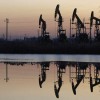
Exxon Mobil has been picked to lead a "multibillion-dollar" water-injection project on behalf of international oil companies that won contracts in southern Iraqi oilfields, an official said on Monday.
The cost of the project would be distributed among those majors that won development contracts for southern oilfields in the two auctions Iraq held last year, said Abdul-Mahdy al-Ameedi, director of the Oil Ministry's licensing office.
Posted in Iraq Oil & Gas News 1 Comment
Iraq Announces New Gas Tenders
Posted on 19 April 2010 .
(Source: Petroleumworld.com)
Iraq Prepares New Gas Field Licensing, Cuts Oilfield Signatory Bonuses Retroactively
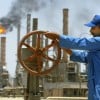
Iraq's Oil Ministry has released plans to tender three gas fields—previously part of the first and second licensing rounds—to 15 invited companies and has named Shell, Total, and KOGAS as frontrunners, while also confirming that signatory bonuses for the renegotiated West Qurna-1 and Zubair oilfields have been slashed.
IHS Global Insight Perspective
Significance
Iraq will invite 15 oil companies to bid for the Akkas, Siba, and Mansuriya gas fields later this year, and has already named Shell, Total and KOGAS as preferred bidders at this stage, while the ExxonMobil/Shell West Qurna-1 oilfield project and the Eni-led Zubair development are seeing their signatory bonuses slashed significantly now that the election has passed.
Implications
Oil companies said that Iraq's financial terms were significantly improved as contracts from the first licensing round were renegotiated in late 2009 and the second (more successful) licensing round was drawing near, although full details of the improvements have remained elusive. Meanwhile, Iraq needs to get some core gas fields onstream, mainly to raise north and central gas feedstock availability for power generation—but pronouncing frontrunners before the tender might prove controversial.
Outlook
As IHS Global Insight has previously written, lower signatory bonuses—reducing upfront risk exposure—were understood to be under discussion early on in the contract renegotiations at West Qurna-1 and Zubair, although too politically risky to present in Iraq before the election as the government was loath to appear to be giving in to corporate interests.
Gas Trio Re-Offered
Fifteen oil companies—expected to be mainly among the companies that pre-qualified for Iraq's first and second licensing rounds—will be invited to bid for three strategic gas fields in Iraq. The Akkas and Mansuriya gas fields were initially offered as part of Iraq's first licensing round in mid-2009, but failed to be awarded, while the Siba field was initially to be offered as part of the late 2009 second licensing round, but was removed as that round's focus changed somewhat under political pressure to encompass more border-area fields in the north and east.
The Akkas field has been thought for a long time to be the closest to development, with large expectations in 2007 and 2008 that the field would be offered to bidders on a singular project basis, given its relatively fast development and export revenue-generating potential. The Akkas field is located in Western Iraq, on the border with Syria, and has always been seen primarily as an export field, given the proximity to Syrian gas pipelines on the other side of the border and the expense of reaching Iraq's domestic market through the construction of a pipeline traversing the Western Desert into central Iraq. In the 1990s and early 2000s Total and Shell expressed interest in the field, but a consortium of Italy's Edison, Malaysia's Petronas, China's CNPC, KOGAS, and Turkey's state-owned TPAO was the only bidder for the field in the first licensing round, which thus failed to meet the government's maximum remuneration level.
The Siba field has previously been eyed by Kuwait as a source of imports, but after having initially sounded optimistic about a bilateral deal in the post-2003 war environment, the Iraqi government earmarked the field for domestic supplies. Mansuriya in the north could, in theory, be interesting for potential future gas exports across Turkey on to Europe—currently being prepared from some gas fields in Iraqi Kurdistan under the leadership of Dana Gas, OMV and MOL—but domestic demands for gas feedstock for Iraq's power generation, as the rebuilding of the electricity sector gathers pace, are likely to make exports from Mansuriya a relatively distant prospect for now.
| Iraqi Gas Fields On Offer | ||
| Gas Field | Reserves (tcf) | Production Capacity (mmcf/d) |
| Mansuriya | 3.3 | 330 |
| Akkas | 2.1 | 350 |
| Siba | . . | 125 |
Jumping the Gun
In a staggering pre-judgement of any competitive bidding, Sabah Abdul Kadhim, legal and commercial chief of the Oil Ministry's Petroleum Contracts and Licensing Directorate (PCLD) told Reuters that "we are keen to select international companies with experience with gas and which have gas projects across the world", adding however that "Shell, Total and KOGAS will be at the top of the list because they have good experience in the gas industry and gas operations worldwide". Thus jumping the gun, Kadhim might find himself the centre of criticism, as any suggestions that Iraqi contracts have not been completely competitively awarded (for example, at Shell's South Gas Project) have drawn significant—and often damaging—disapproval. Currently the attempts and negotiations to form a new Iraqi government in the aftermath of the March elections mean that the focus is elsewhere, but the politicisation of the oil industry is likely to return as a new government settles in—and with it attempts by parliamentarians to gain influence over oil policies and supervise the privatisation process. Being mentioned as a frontrunner by one of the licensing round's organisers before it has even started is thus probably not a blessing at all for the companies and could well backfire if they do indeed secure any contracts.
Cutting Bonuses
Meanwhile, Reuters is reporting that Iraq's Oil Ministry has also agreed to slash signatory soft-loan bonuses on two of the flagship projects significantly, albeit turning the remaining sums into unrecoverable payments. The long-term soft loan initially required will be cut from US$400 million at ExxonMobil's and Shell's West Qurna-1 project, to US$100 million, while the US$300-million soft-loan signatory bonus to be paid by the Eni-led consortium developing Zubair also will be cut to US$100 million—in both cases being changed into a straight non-refundable signatory bonus, according to Kadhim.
The contracts for the deals in question were signed in January and renegotiated (both mega-fields were initially unsuccessfully offered in the first licensing round) during the latter part of 2009, indicating that there has been an understanding regarding this term improvement since before the definitive signing. As oil companies came back to the Oil Ministry and renegotiated some of their failed first-round bids just ahead of the second licensing round, oil executives indicated that Iraq had relented on its excessively tight terms and helped forge compromises that made the contracts more attractive. Iraqi Oil Ministry personnel and Oil Minister Hussein al-Shahristani, however, maintained that Iraq had not eased terms in any material way, fearing a domestic political backlash ahead of the March elections if the Iraqi government was to be seen as going to oil companies cap in hand and caving in to their economic demands. While little since then has emerged on exactly what had made the contracts significantly more attractive—apart from certain changes to how taxes were applied—rumours of the signatory bonuses being cut prevailed.
Outlook and Implications
The signatory bonuses were always relatively unpopular, demanding that the companies pay large sums upfront at a time when political risk and legal uncertainty ahead of the 2010 elections still loomed large and the fear of political parties winning and later changing or scrapping the contracts as completely illegal could not be ruled out. Hence scrapping them, or lowering them significantly, was always going to have a huge impact on the companies' risk exposure as they approached the planning and waiting time between the early 2010 signings of their contracts and the deadline for full deployment, some time after the likely installation of a new government. For the Iraqi government and Oil Ministry political considerations were always at the heart of their financial negotiations, and the need for secrecy surrounding the concessions that would make deals possible were always clear—and impressed upon their counterparties.
Iraq's gas plans show that the Oil Ministry now is moving forwards with its attempts to tie up some of the remaining loose ends from its first and second licensing rounds. Iraq will need to raise its gas production fast in order to meet domestic demand from its electricity sector as it is rebuilt, and although a lot more associated gas is likely to be produced as the oil mega-projects begin, both Siba and Mansuriya have the geographical capacity to act as early stable producers—and later as buffers—while oil companies decide on how much associated gas they need for reinjection and how much they can spare. In the case of Akkas, however, exports remain the most cost-efficient option, given that the field is much closer to Syrian pipelines then to Iraqi demand and domestic markets. Appearing to jump the gun and declare three companies as frontrunners for the late 2010 auction—even if misinterpreted—might cause both the Oil Ministry and the named companies some level of later aggravation.
Posted in Iraq Oil & Gas News 2 Comments
Petronas Recruiting Hundreds of Staff for Four Iraqi Projects
Posted on 18 April 2010 .
Malaysia's Petroliam Nasional Bhd, or Petronas, has started recruiting hundreds of Iraqis for four oil projects the company won during Iraq's second post-war licensing auction in December, a senior Iraqi oil official said yesterday.
"Petronas is looking for Iraqis to staff its two offices it is planning to open in Iraq and also some security personnel," the official told Dow Jones Newswires.
Petronas will open an office in Baghdad and another one in Missan province where the firm along with China National Petroleum Corp and Total S.A. won a deal to develop the 4.1-billion-barrel Halfaya oil field in the southern Missan province. Petronas' officials weren't immediately available for comment.
The Malaysian firm in a team with Japan Petroleum Exploration Co Ltd also won a deal to develop the 1-billion-barrel Garraf oil field in Dhi Qar province in southern Iraq. Petronas is the field operator.
The company will hold the first joint management meeting with the Iraqi authorities on May 1, the official said. The meeting will discuss a preliminary plan and a one-year tentative budget for the field development.
Petronas also won the right to develop the super-giant 12.8-billion-barrel Iraq's Majnoon oil field in partnership with Royal Dutch Shell. Shell holds 45 per cent in the venture, while Petronas owns 30 per cent and Iraq's state-run South Oil Co holds 25 per cent.
The Malaysian firm also has a stake along with Russia's Gazprom, Turkey's TPAO and South Korea's state-run Korea Gas Corp, or Kogas, on the Badra oil field in Diyala province in eastern Iraq.
Meanwhile, the Iraqi oil ministry is seeking unrecoverable signature bonuses, rather than recoverable five-year soft loans, from international oil companies planning to develop two of the country's giant oil fields, a senior Iraqi oil official said yesterday.
"We have asked companies to pay signature bonuses instead of the soft loans for West Qurna Phase 1 and Zubair oil fields," Abdul Mahdy Al Ameedi, director-general of the oil ministry's Petroleum Contracts and Licensing Directorate, said.
Posted in Construction & Engineering In Iraq 6 Comments
Iraq Plans New Licensing Auction for 3 Gas Fields
Posted on 15 April 2010 .
15 April 2010 ( Dow Jones )
The Iraqi Oil Ministry is planning to hold this year a third licensing auction to develop three discovered gas fields Akkas, Mansouriya and Siba, a senior official at the ministry said Wednesday.
Abdul Mahdy al-Ameedi, director-general of the Ministry's Petroleum Contracts and Licensing Directorate, told Dow Jones Newswires that out of the 44 international companies pre-qualified for last year's first and second bidding rounds, only 15 will be invited to submit bids for the gas fields.
He didn't name them, but described them as "the large integrated firms which can develop both oil and gas fields and those specialized in developing gas fields."
Ameedi said he expected the licensing auction for these three fields to take place by the end of this year. The Oil Ministry is offering a 20-year long technical service contracts similar to those awarded during the first and second bidding rounds.
Iraq awarded 10 oil deals to international companies during the first and second bid rounds last year with the aim of boosting its crude oil production to 12 million barrels a day in six to seven years. Iraq is currently producing 2.4 million barrels a day.
Among the companies which won oil deals are Royal Dutch Shell PLC, BP PLC, Exxon Mobil Corp, Italy's giat Eni SpA, Russia's Lukoil OAO France's Total, Japan Petroleum Exploration Co., China National Petroleum Corp. and Malaysia's Petronas.
Both Akkas and Mansouriya fields were included in the first bid round last June.
A consortium led by Italy's Edison SpA, which was the sole bidder for the 4 trillion-cubic-feet untapped Akkas field in the western Anbar province, was rejected because it sought $38 for each extra barrel of oil equivalent produced while the ministry offered a maximum fee of $8.50 a barrel.
None of the 33 participating companies submitted a bid for the untapped 3.3 trillion-cubic-feet Mansouriya gas field located in the restive Diyala governorate in eastern Iraq.
Siba gas field, with estimated proven reserves of more than 3 billion cubic meters in Basra governorate near the border with Iran, was dropped from the list of oil and gas fields listed in the second bid round which took place last December.
Ameedi said it was decided to offer these gas fields for development because Iraq desperately needs gas to feed its power generators which are providing less than half of the country's need.
The announcement of the new bid round came only a few days after a senior Iraqi oil official said that a Shell gas development project was in trouble. Shell failed last month to sign a 25-year deal with Baghdad to produce gas from southern oil fields which is currently being flared. Both Iraq and Shell agreed to extend negotiations for another six months.
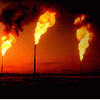
Iraq, which has proven natural-gas reserves of 3.15 trillion cubic meters, has a daily natural-gas production of 1.64 billion cubic feet, 70% of which is flared.
Posted in Iraq Oil & Gas News 1 Comment
CBI Sells $175m on Tuesday
Posted on 14 April 2010 .
The Central Bank of Iraq’s (CBI) dollar sales increased to $175.486 million in its daily auction on Tuesday, compared to $93.53 million in the previous session.
“The demand hit $7.5 million in cash, covered at an exchange rate of 1,183 Iraqi dinars per dollar, and $167.986 million in foreign transfers outside the country, covered at an exchange rate of 1,173 Iraqi dinars per dollar,” according to a CBI news bulletin received by Aswat al-Iraq news agency.
None of the 14 banks that participated in today’s session offered to sell dollars.
( Aswat Al Iraq )
Posted in Iraq Banking & Finance News 1 Comment