



UNDP Donates Sanitation Tankers to Dohuk
Posted on 23 May 2015 .
The UN Development Programme (UNDP) today donated three dislodging tankers to local authorities in Dohuk, Kurdistan Region of Iraq, to improve WASH services in a governorate, which contends with one of the largest numbers of internally displaced persons in the world.
The dislodging tankers will provide sanitation services to at least three camps, or some 20,000 displaced persons in the northern governorate. These services will also benefit to schools within host communities.
“In the face of such a large population displacement, safe disposal and treatment of human waste is a pressing development and humanitarian issue,” the UNDP Deputy Country Director Sultan Hajiyev noted.
“UNDP is proud to help the Governorate of Dohuk and municipal authorities improve sanitation services, and thus the health, of all those affected in camp and non-camp settings,” he said.
Mid-2014, when the city of Dohuk and neighbouring villages and communities hosted displaced people in public buildings, UNDP had funded emergency dislodging services through rented tankers, which served more than 100 schools.
UNDP’s Iraq Crisis Response and Recovery Programme 2014–2015, which spearheads resilience approaches by rehabilitating basic social infrastructure, creating employment and sustainable livelihoods and preventing gender-based violence, is supported by funds from Saudi Arabia, Kuwait, Japan, Switzerland, the UN Central Emergency Response Fund (CERF), as well as UNDP core contributions—yet $26.8 million dollars US in total.
The Kurdistan region hosts nearly half of the 2.8 million displaced persons in Iraq, in addition to some 250,000 Syrian refugees.
(Source: UNDP in Iraq)
Posted in Construction & Engineering In Iraq, Iraq Public Works News Comments Off on UNDP Donates Sanitation Tankers to Dohuk
How IS Uses Water as Weapon of War
Posted on 15 May 2015 .
By Walaa Hussein for Al-Monitor. Any opinions expressed are those of the author, and do not necessarily reflect the views of Iraq Business News.
The Middle East is facing a water crisis. As the region experiences conflicts over water and faces the continuous risk of war breaking out, experts on water predict that the Islamic State (IS) aims to exacerbate this water crisis, as evidenced by its efforts to seize rivers and dams in Syria and Iraq, starting in 2013.
The Arab League has worked since 2008 to establish a new Arab convention on water usage, which would establish parameters on how to deal with the water crisis. However, the final draft is still under review because of the reservations of some member states.
PricewaterhouseCoopers, an international consulting organization, has identified numerous regions where the water crisis threatens to transform into a global conflict. Turkey, Syria and Iraq are included on that list, due to the Turkish dams controlling the Tigris and Euphrates rivers. Iran and Iraq are also witnessing a competition over the confluence of the Tigris and Euphrates rivers, known as Shatt al-Arab.
Also included is Egypt, Sudan and Ethiopia, which are witnessing a conflict over the Nile. Egypt, Sudan, Libya, Chad and Niger are also experiencing a crisis in relation to an 800-meter (0.5-mile) deep underground water field and the Nubian sandstone aquifer. Libya wants to invest in this aquifer to extend an artificial river and supply its coastline with freshwater.
Mahmoud Abu Zeid, president of the Arab Water Council, told Al-Monitor that the Arab region is facing a crisis because of the lack of rain and available water resources. The Arab region accounts for less than 7% of the world's water reserves, according to Abu Zeid, and less than 1% of the flowing water, while rain does not exceed 2% of the global average.
“Arab water is facing a great danger, which portends the exacerbation of the water conflict given that freshwater resources are limited. However, there is a food gap that increases with the growing population, which threatens a famine by 2025 in the absence of concerted efforts,” Abu Zeid said.
Abu Zeid also warned against IS using water as a weapon. “IS’ expansion has become concentrated in water resource regions in Syria and Iraq, and it is very clear that IS is seeking to acquire parts of Arab water sources," he said. "Given that water represents life, seizing such resources in Arab countries would be very serious and would constitute an inhumane means of pressure.”
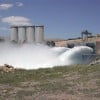
IS fighters control most of the upper areas of the Tigris and Euphrates rivers, which flow from Turkey in the north to the Gulf in the south. All of Iraq and a large part of Syria rely on these rivers for food, water and industry. Abu Zeid predicted that IS’ attempts to control Arab water resources would lead to a water crisis that would overshadow the ongoing oil conflict, since water is a matter of life or death.
Abu Zeid said the Arab Water Council is preparing a report on the tense water situation in IS-controlled areas. The council’s experts have monitored a series of serious moves by IS that aim to gain control of Arab water sources as a means to exert pressure, such as the seizing of an Iraqi dam and controlling water resources in Syria. “We will work on raising this problem at the international level because it is a sign of a humanitarian disaster, given the number of countries [IS] is stationed in,” he said.
According to a September 2014 report from the Beirut Center for Middle East Studies, IS considers controlling rivers and dams to be a weapon more important than oil.
IS’ attempts to control water resources are in line with the group's announcement to extend its so-called caliphate from the Levant to Egypt, Ethiopia and the Maghreb, according to the group's caliphate map published in July 2014 on social media. This caliphate would extend into the headwaters of the Nile. The allegiance sworn by Boko Haram in March 2015 to IS emir Abu Bakr al-Baghdadi was probably aimed at supporting the IS conspiracy to control the headwaters of the Nile.
Asked about the Arab Water Council's strategy to confront the water crisis, Abu Zeid said, “We are currently working on maximizing water resources in the Arab region, especially since the Arab water conflict includes Arab-Arab conflicts due to the presence of common rivers between a number of Arab countries, as well as Arab conflicts with other countries, especially since the water quantity that comes from outside the Arab world accounts for more than 60% of the water used in Arab countries.
“This is the threat that prompted us to resort to non-traditional water, especially treated agricultural water and wastewater,” he said. “We are currently working on the direct exploitation of brackish water, which is abundantly found in the subsoil Arab aquifers, in agriculture. We are also seeking to mix this non-fresh water with pure water. We recently issued a manual outlining their uses. Add to this the desalination techniques of seawater that were adopted by several Arab countries, such as Saudi Arabia and the UAE, to face water scarcity.”
The water war is a ghost threatening the Middle East.
Though the poor populations of this region are the only ones paying for the price of the oil conflict, the water wars will not spare anyone.
(Picture: Mosul Dam)
Posted in Agriculture, Security 2 Comments
IOM Aids Construction IDP Camp
Posted on 10 May 2015 .
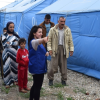
Over 500 families have moved into the newly opened Shekhan camp for internally displaced people (IDPs) in northern Iraq over the past week and hundreds more will move in in the coming days.
The camp has been constructed by a consortium of humanitarian partners with the support of multiple donors and will eventually provide shelter forsome 1,000 displaced families.
The International Organization for Migration (IOM), with funding from the Kingdom of Saudi Arabia, contributed the lead technical role in camp design and construction, and provided the internal electrical network, gravelled roads, prefabricated buildings for administrative offices and a health center, and private kitchens for each family, including sinks and electrical connections.
IOM will also staff and manage the camp primary health care centre, which will be handicap accessible, and will provide psychosocial support to displaced families, particularly women and children. Activities will include psycho-social consultations, individual and group counselling, and opportunities for sports and recreation, including a playground area.
IOM also provided transport for displaced families to get to Shekhan, in coordination with the Dohuk Governorate Bureau of Relief and Humanitarian Affairs (BRHA), and a UNHCR multi-functional team, which jointly carried out the process of family selection. Most of the families were living in unfinished and abandoned buildings in Dohuk Governorate.
Shekhan was built under the guidance of Dohuk Governorate BRHA. Partners included IOM and the International Humanitarian Partnership, Technisches Hilfswerk and Action Against Hunger. UNHCR held a coordination role. The camp is now fully operational and will be officially handed over to Dohuk Governorate BRHA in mid-May.
Dohuk hosts the most IDPs of all Iraq governorates. Shekhan camp is the 16th IDP camp in the area administered by Dohuk Governorate and two additional camps are under construction. But there is still insufficient housing for the displaced population.
Posted in Construction & Engineering In Iraq, Security Comments Off on IOM Aids Construction IDP Camp
Kurds Struggle to Avoid Regional Conflicts
Posted on 07 May 2015 .
By Mohammed A. Salih for Al-Monitor. Any opinions expressed are those of the author, and do not necessarily reflect the views of Iraq Business News.
As a coalition of Sunni Arab states led by Saudi Arabia targets Shiite Houthi forces and their allies in Yemen, Iraqi Kurds are watching with concern and caution, wondering how the repercussions of the region's deepening sectarian conflicts might affect them.
Sandwiched geographically between opposing Shiite and Sunni regional powers such as Iran and Turkey, Iraqi Kurds wonder how long until they are dragged into the unfolding regional hostilities.
"If the struggle reaches its pinnacle and leads to an even deeper polarization, Kurds might be forced to become part of it," said Muthana Amin, a member of the Iraqi parliament from the Kurdistan Islamic Union. "If Kurds become part of this struggle, then we will be serving outside agendas and will end up empty-handed."
In recent years, Kurds have shown signs of division in face of regional polarization. The eruption of the Syrian revolution in 2011 divided the largely united Iraqi Kurds regarding the Kurdish response to Syrian events. The two major Iraqi Kurdish groups, the Kurdistan Democratic Party (KDP) and the Patriotic Union of Kurdistan (PUK), appeared to be aligning themselves with opposite regional camps.
The KDP, led by Iraqi Kurdistan President Massoud Barzani, adopted a pro-opposition stance, as did most of the Sunni states in the region, from Turkey to Saudi Arabia and Qatar. The PUK, led by former Iraqi President Jalal Talabani, refrained from supporting that policy and has been seen as closer to the Iran-led camp.
While most other regional actors possibly chose allies based on sectarian identities, Iraqi Kurdish politics are hardly defined in terms of Sunni-Shiite affiliations. In fact, both the KDP and PUK are heavily dominated by secular elites.
Posted in Politics, Security 2 Comments

UNESCO opens New School for IDPs
Posted on 03 May 2015 .
UNESCO and its partners celebrated with students and teachers the opening of the newly constructed Migrant Birds Intermediate School for internally displaced persons at Al-Souq Al Asry Camp in Basrah, Iraq.
The opening of the school in Al Souq Al Asry camp shortly follows the opening of the Baharka Secondary School and the Dawodiyah Secondary School and is another milestone in UNESCO’s efforts to provide quality education to children and adolescents of IDP communities and to ensure equal opportunities to education for both girls and boys.
The opening ceremony was held in the presence of government and education officials from Basrah. Also attended by students, parents and teachers along with members of local NGOs and the international community, the event featured a school tour and several student activities including dance and song performances and poetry readings.
Speaking to the students UNESCO Project Officer Zulfiqar Ali said:
“Education brings peace and normalcy to the lives of IDPs, and the opening of the Migrant Birds school will provide IDPs with a renewed sense of hope for the future.”
Also speaking at the opening ceremony, Head of the Human Rights Committee of the Provincial Council of Basrah, Ektifaa Sabahee expressed her gratitude for UNESCO’s support in establishing Migrant Birds Intermediate School stating that:
“The school will help protect IDPs, in particular young girls and offer them the opportunity to receive high quality education.”
Amin Mansoor, Head of the Education Committee and Maki Mahous, Director General of Education in Basrah stressed the positive change that the opening of the school will bring about at the camp, reminding parents of their responsibility to enrol their children at the school. 270 families – all together 2400 people - are currently residing in Al-Souk Al-Asari camp; the opening of this intermediate school will enable many students to continue their education.
The new school will cater to 300 students (150 boys and 150 girls) and ten teachers in two shifts. The school, with its six classrooms, two multipurpose halls, five toilets, and a play area, is the third school and first intermediate school to be constructed by UNESCO within the framework of the project ‘Providing access to quality education to adolescents and young adults in conflict-affected areas in Iraq’, funded by the Kingdom of Saudi Arabia.
(Source: UN)
Posted in Iraq Education and Training News Comments Off on UNESCO opens New School for IDPs
Iraq Maintains Neutrality in Regional Conflicts
Posted on 01 May 2015 .
By Mustafa al-Kadhimi for Al-Monitor. Any opinions expressed are those of the author, and do not necessarily reflect the views of Iraq Business News.
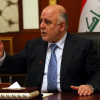
It appears that neither Iran nor Saudi Arabia, the two rival parties to the proxy and direct wars in the Middle East, was satisfied with the signals sent by Iraqi Prime Minister Haider al-Abadi during his visit to Washington April 14-17.
Abadi criticized the showy demeanor of Gen. Qasem Soleimani in presenting himself as the leader of the battle for Tikrit, saying of Iran’s military involvement in the Iraqi crisis, “I am extremely upset with what is happening, and I voiced my concerns to the Iranians.” He prefaced this remark by noting, “Iraqis do not accept the fact that some people say they are working on their behalf.”
Abadi also stressed the importance of the image of the government, stating, “The people have to believe that democracy can triumph.” Abadi also made sharp comments about Saudi Arabia's attitude toward Iraq, noting Riyadh's failure to take serious steps to improve relations, including pointing out that the Saudis have not yet opened an embassy in Baghdad.
He also questioned Operation Decisive Storm, the Saudi-led military intervention in Yemen, asserting that the operations there are not logical and wondering aloud, “What are the objectives behind the military operation?” In light of the current situation in the region, it would be impossible to satisfy all parties and actors.
IFC Invests in Al Safi Danone Iraq
Posted on 22 April 2015 .
The International Finance Corporation (IFC), a member of the World Bank Group, is investing up to $18 million in Saudi dairy company Al Safi Danone’s Iraq-based subsidiary, to expand its operations in order to improve domestic food security, boost Iraq’s non-oil sector, and reduce its reliance on imported dairy products.
IFC’s long-term investment, which is structured as an Islamic Finance transaction, will help Al Safi Danone Iraq, a pioneer in the Iraqi food production industry, increase production of high-quality dairy products to meet rising demand, improve food distribution standards, and create more than 250 new jobs in the next two years.
The company’s new greenfield dairy processing facility in the Kurdistan Region has a target production capacity of around 59,000 tons per year, focusing initially on a range of spoonable and drinkable yogurt products, as well as cheese and UHT milk.
George Abi Najem, General Manager GCC, Iraq and Levant, of Al Safi Danone, said:
“This investment will help us establish a modern dairy enterprise with the latest processing and packaging equipment and train our employees to international standards.
“Thanks to this technology, the local market will enjoy higher quality dairy products at affordable prices. Al Safi Danone’s new factory in northern Iraq is just the first sign of the group’s commitment to Iraq, one of the most important markets in the region, despite its challenges.”
IFC’s investment is part of a broader World Bank Group strategy to encourage South-South investments, while supporting the diversification of Iraq’s economy and improved agricultural production to boost growth. Food production and distribution will play a key role in transitioning Iraq from an oil-based economy to a more diversified one.
Mouayed Makhlouf, IFC Director for the Middle East and North Africa, added:
“Our developmental role in Iraq is more important than ever, especially in providing funding to competitive companies in the non-oil sector and facilitating investments from other countries within the region into Iraq.
“We hope our commitment to this project will encourage other international and domestic investors to invest in Iraq.”
Over the next few years, IFC is planning to step up its investment and advisory services in Iraq, investing $100-130 million per year, depending on the security situation, in priority sectors such as infrastructure and financial markets.
Al Safi Danone Iraq is a joint venture of the Saudi dairy company Al Safi Danone, Saudi conglomerate Al Faisaliah Group, French-based multinational Danone Group, and Iraq based retailing, sales, and distribution company Al Yasra. Its mission is to provide healthy products to support the well-being of Iraqi families based on a balanced diet that includes dairy products. Al Safi Danone Iraq is working to serve the Iraqi market with a range of products of the highest international quality standards, such as Activia.
(Source: IFC)
Posted in Agriculture, Employment, Investment, Iraq Industry & Trade News 5 Comments
Video: No Foreign Military in Iraq - Jaafari
Posted on 22 April 2015 .
From Al Jazeera. Any opinions expressed are those of the authors, and do not necessarily reflect the views of Iraq Business News.
In its fight against the Islamic State in Iraq and the Levant (ISIL, ISIS, IS), Iraq is now desperate for advanced weapons and help from the United States.
A delegation led by Iraq's Prime Minister Haider al-Abbadi is at the White House trying to convince US President Barack Obama to provide substantial financial and military aid.
For Iraqi Foreign Minister Ibrahim al-Jaafari, however, defeating ISIL is really just a matter of time, he says.
But there are serious problems. Iraq's army has been weakened over the last few years, so instead the fight is led by predominantly Shia militias known as Popular Mobilisation Forces, and they are at the forefront of the battles in Tikrit, Ramadi and Mosul.
But even as they push back against ISIL, they now have to defend themselves against allegations that they, in turn, are committing atrocities against Sunnis; accusations that al-Jaafari denies.
Iraq of course is not the only area in the Middle East where fighting along sectarian lines is taking place.
In Yemen, a Saudi-led coalition is now waging attacks on the Houthis who are receiving assistance from the Iranians. But Iraqis have decided to stay out of the fight, saying that diplomacy should be given a chance.
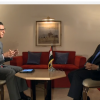
Iraq's Foreign Minister Ibrahim al-Jaafari talks to Al Jazeera about the fight against ISIL, sectarianism and the ongoing confrontations in the Middle East.
"Too Much Competition" for Karbala's Biggest Business
Posted on 19 April 2015 .
This article was originally published by Niqash. Any opinions expressed are those of the author, and do not necessarily reflect the views of Iraq Business News.
Iraq's Canning Can't: Too Much Competition For What Was Once Karbala's Biggest Business
Once canning foods and juices was one of the biggest businesses in Karbala. Today, under pressure from imports and the security crisis, it's failing – and companies from places like Iran are taking advantage.
Shoppers patronising the centre of the Iraqi city of Karbala, on Talim Street, come out of the markets carrying all kinds of canned foods, from a variety of countries. The shelves are stacked high with canned products from Turkey, Lebanon, Jordan, Kuwait, Saudi Arabia and Iran and the cans are cleaned of dust by supermarket workers continuously during the day, so they are shiny and appealing to customers. Cans produced in Karbala are in the minority.
But shoppers here don't seem to mind; they may even prefer the imported cans of food as they leave the stores with bags of things like dairy products and date syrups that are not made locally.
Customer attitudes and a variety of other factors are leading to a decline in the manufacture of canned products from Karbala itself, a metropolis that was once renowned for it's canning businesses; a canning factory was one of the largest firms in the city once. Many Iraqis remember the advertisements that would always appear for Karbala's canned produce – the products were made even when Iraq faced economic sanctions.
And although there are still plenty of canning factories around the city, many of them look like they are badly in need of maintenance. Places that used to employ hundreds of locals and produce billions of cans stand dormant now.
It is hard to get accurate statistics but its is estimated that the canning business used to provide more than 3,200 jobs here and there's no doubt that it fuelled the local agricultural sector, especially in tomatoes, dates and certain fruits. There used to be around 14 production lines in local plants and now there are only two, employing about 80 people. A molasses factory that once boasted an output of about 7,000 tonnes per year produced just 300 tonnes in 2014.
“The reason why there's been a decline in canning is the high cost of production,” says Jafar Sadiq, the manager of a canning company in Karbala. “The materials for canning used to be produced in the country but now they are mostly imported from elsewhere. Containers of cheese, jams or molasses are imported from outside of Iraq at high prices. When you add the cost of importing to the cost of canning, then the price ends up higher than that of imported cans.”
There's also the fact that the country is open to relatively unrestricted imports. And, as Sadiq notes, “the packaging on the imported cans is elegant and attracts more customers.”
Previously his company had been producing all kinds of things, he said, including tomato paste, jam, syrup, soft drinks, juices, pickles and several kinds of sauces. Now the company only makes date syrup and a couple of juices.
“We haven't been able to renovate the plant properly and to bring in all new canning machines,” Sadiq explained. “So we're still using some of the older machines. The problem is that the new machines are expensive and, as a business, it's impossible to compete in the market properly under the unstable conditions that Iraq is currently experiencing.”
Local economist Abbas al-Haddad says that at the moment it seems that local industry can't continue without some sort of government support or market protection. “The fact that these factories have to import raw materials makes their products vulnerable to price fluctuations and forces them to have a higher price,” al-Haddad argues. He also believes that this kind of thing is a negative sign for the Iraqi economy in general.
“There's a lack of integration,” al-Haddad explains. Different industries should complement one another – as in, the raw materials should be made in Iraq and then manufacturing should follow suit.
International canning companies are taking advantage of the Iraqi businesses' problems and have also opened branches in Karbala. One Iranian company, Kala, now has a major storage depot and showroom facility in the city. The latter is very popular with local shoppers who believe the prices are better than local canned goods.
Karbala shopkeeper Ahmed Saidi says buying canned goods from the Kala warehouse saves him money because he doesn't have to go elsewhere to get all his supplies. “Almost all of the food items in my store are now from outside Iraq,” he adds. “Local products seem to slowly be disappearing from the market. If you compare them with imported foods, there are hardly any there.”
Saidi told NIQASH that people have all kinds of reasons for preferring international products.
In fact, during the interview one of his customers was standing beside him at the counter and agreed. “I trust the imported products more,” the customer, Jassim Ali, said. “I feel more comfortable with their production methods and their hygiene. The prices are better too.”
Ali said he'd heard a lot of bad stories about the conditions in which local products were made. “A lot of other people have also heard these stories and they have the same feelings as me,” Ali explained. “We don't trust the people responsible for the canning industry in Karbala any more.”
Posted in Agriculture, Iraq Industry & Trade News Comments Off on "Too Much Competition" for Karbala's Biggest Business
Yemen War Fuels Iraqi Sectarianism
Posted on 19 April 2015 .
By Adnan Abu Zeed for Al-Monitor. Any opinions expressed are those of the author, and do not necessarily reflect the views of Iraq Business News.
Operation Decisive Storm in Yemen has stirred the Iraqi sectarian divide.
While the Shiite majority opposes the campaign, the Sunnis are voicing support for it. These differing positions, expressed for the Shiites by the National Alliance and for the Sunnis by the Union of Nationalist Forces, led to a disagreement at a meeting of Iraqi political forces held at the home of parliament Speaker Salim al-Jubouri on March 29, when the Sunnis rejected a Shiite alliance proposal to issue a statement condemning the Saudi-led military operation.
Vice president Osama Najafi, a Sunni, had on March 28 announced his support for the “Arab alliance, which aims to undermine the Houthi influence in Yemen.” In an April 1 TV interview, Ammar al-Hakim, a Shiite and head of the Islamic Supreme Council, described the military intervention in Yemen as “a costly adventure with uncalculated consequences.”
Laith Shubbar, an academic researcher and presidential adviser, told Al-Monitor, “This war has effectively contributed to fueling sectarianism not only in the Iraqi conflict, but in the entire region. The wars, disputes and media fuss plaguing the area clearly reflect ongoing sectarian mobilization, which distracts the people of the region with internal fighting and conflicts in a bid to weaken them.”
Operation Decisive Storm has also divided Iraq's religious institutions. The Sunni Association of Muslim Scholars announced its backing of the campaign in a statement issued March 29, referring to it as the “Arab effort aimed at supporting the Yemeni people and confronting the Iranian tide.” On the other hand, the cleric Muqtada al-Sadr, leader of the Sadrist movement, categorized the operation in a March 27 interview as “interference in the affairs of the Yemeni people.”
Posted in Security Comments Off on Yemen War Fuels Iraqi Sectarianism