



Iraqis on Social Media Fight Extremists Online
Posted on 17 April 2015 .
This article was originally published by Niqash. Any opinions expressed are those of the author, and do not necessarily reflect the views of Iraq Business News.
The extremist Islamic State group has worked the Internet to it's advantage from the very start of its campaign in Iraq. Locals have lagged behind. But now, some say, they are coming together online to fight back.
Shortly after the extremist group known as the Islamic State took over the northern city of Mosul last June, the Iraqi government shut down various forms of online social media and Internet services. It was supposed to halt the transmission of sensitive and intimidating material being transmitted between the Islamic State, or IS, group, their supporters and potential enemies.
But it didn't really work, says Iraqi blogger and activist Tahseen al-Zarkani. “The former Iraqi government made a big mistake by blocking those sites,” he told NIQASH. “Because they basically left the IS group alone online, to occupy Facebook and Twitter, with their own propaganda.”
Ordinary Iraqis could only access these sites with difficulty and nobody else was able to put out any information about what was really happening in Iraq; so all the news people were getting was one sided and made the IS group look victorious.
“Iraqi activists were defeated before the battle for social media even began,” al-Zarkani says. “At first they were helpless and really didn't know what to do. But this has changed. Local activists have been able to get more experience and training to confront the IS group online since then.”
He now believes that Iraq's online activists have come together, many from different backgrounds, and are trying to counter the IS group's propaganda and “make up for the opportunity they missed before”.
“Most Iraqi activists tend to use Facebook and only a few of them use Twitter,” says Hisham al-Hashimi, a researcher into armed militias in Iraq who also advises the Iraqi government.
Posted in Iraqi Communications News, Security Comments Off on Iraqis on Social Media Fight Extremists Online
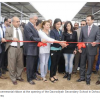
UNESCO Opens New School for IDPs
Posted on 09 April 2015 .
The United Nations education agency today celebrated the opening of a new school at Dawodiyah Camp in Dohouk, Iraq, as part of its efforts to provide quality secondary education to children and adolescents in internally displaced persons communities.
The opening of the new school represents another major milestone in the UN Educational, Scientific and Cultural Organization’s (UNESCO) work to improve access to quality education in Iraq following the opening of the Baharka Secondary School in March this year.
“Regardless of the circumstances you are in, remember that education is your right, demand for it and take advantage of it,” said Ali Zulfiqar, the UNESCO Project Manager, who spoke on behalf to the new students on behalf of the UNESCO Office for Iraq Director, Axel Plathe.
The Dawodiyah Secondary School, for which UNESCO received financial support from the Government of Saudi Arabia, has six classrooms and will host up to 500 students and 20 teachers in two shifts. Children will attend catch-up classes over the next three months, before sitting for exams at the end of June.
With 4,017 people and 661 families currently residing in Dawodiyah camp, the opening of the new school will allow a large number of students to continue their education and restore a sense of normality and stability to their lives and helps fulfil the aims of UNESCO’s project to continue ensuring that quality education reaches the children of displaced people.
Government and education officials from the regional capital, Erbil, attended the opening ceremony, as did students, parents and teachers along with members of the international humanitarian community and civil society organizations.
“We are thankful for UNESCO’s support in constructing the Dawodiyah Secondary School for IDPs [internally displaced persons],” said Abed Yousef, Director General of Education in Dohouk during his speech at the opening ceremony, “and for helping the Ministry of Education of the Kurdistan Regional Government in conducting teacher training workshops and providing catch up classes as well as the necessary stationery for students to continue their education.”
(Source: United Nations News Centre)
Posted in Iraq Education and Training News 7 Comments
Army sets Sights on Fallujah, Mosul
Posted on 08 April 2015 .
By Mustafa al-Kadhimi for Al-Monitor. Any opinions expressed are those of the author, and do not necessarily reflect the views of Iraq Business News.
On the evening of April 2, Iraqi Prime Minister Haider al-Abadi announced the liberation of Tikrit from the Islamic State (IS) and the raising of the Iraqi flag over the local government building.
Tikrit is the first major Iraqi city to be retaken from the extremist group. IS first occupied Fallujah in January 2014 and then took Mosul and Tikrit in June. The liberation of Tikrit is informative in a number of ways in highlighting the approach needed for success in future battles against IS.
First, the military operation in Tikrit was an example of the integration of the Iraqi army and police on the one hand and the popular mobilization forces and the tribes on the other, along with support from the international coalition assembled to launch air strikes against IS. The coalition played a pivotal role in targeting IS fortifications in Tikrit.
Second, holding ground in Tikrit, which will not be easy, will require trained forces able to completely cleanse the city of gunmen and IS members, rehabilitate it and allow inhabitants to return and restore normal life there.
Third, the battle for Tikrit has sent the message to IS that the Iraqi forces have overcome the shock of their initial defeat by the group and have shifted into fighting mode. Eliminating IS in Iraq is now only a matter of time.
Fourth, speeding the rehabilitation and reconstruction of Tikrit to permit the return of displaced residents will undermine the momentum of IS’ propaganda campaign, which has portrayed Iraqi forces simply as militias seeking revenge. Thus, a key factor is that the forces stationed in Tikrit remain disciplined and that they hand over security to the local police, as ordered April 1 by Abadi after the city is fully secured.
It will be a message of reassurance to local residents that security in the city will be the task of the police after the army and the popular mobilization forces wrap up their operations, restoring the civilian character of Tikrit. On the first day of the city's liberation, fighters in the popular mobilization forces torched and looted a number of homes.
Abadi condemned such acts and threatened to sanction anyone caught violating the rights and property of Tikrit residents. Numerous violators were arrested. The process of reconstructing infrastructure in the city has already begun.
Posted in Security 8 Comments
Iraq has World's 4th Highest Rate of Executions
Posted on 02 April 2015 .
By John Lee.
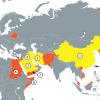
A report from Amnesty International USA says that Iraq had the world's fourth highest rate of executions in 2014.
China again carried out more executions than the rest of the world put together; Amnesty International believes thousands are executed and sentenced to death there every year, but with numbers kept a state secret the true figure is impossible to determine.
The other countries making up the world’s top five executioners in 2014 were Iran (289 officially announced and at least 454 more that were not acknowledged by the authorities), Saudi Arabia (at least 90), Iraq (at least 61) and the USA (35).
The report added that death sentences in Iraq are often handed down following grossly unfair trials.
(Source: Amnesty International USA)
Posted in Security 2 Comments
Imported Goods Crowd Out Local Production
Posted on 29 March 2015 .
By Wassim Bassem for Al-Monitor. Any opinions expressed are those of the author, and do not necessarily reflect the views of Iraq Business News.
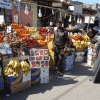
Qasim al-Rubaie, a teacher from Babil province, told Al-Monitor in front of a grocery store, “You will not find any Iraqi grown vegetables and fruits. Instead you'll find imported goods from Jordan, Turkey, Iran and the Gulf countries.”
In fact, Iraqi agricultural products are not found in many local grocery stores, as if Iraq is no longer producing food products. The same applies to locally manufactured products, such as tissues, luxury items and drinks, which cannot be found in the markets. Yet, markets are overflowing with all sorts of imported goods.
This phenomenon is not new, according to Alaa Najm, a merchant. He told Al-Monitor, “The presence of domestic goods in the markets began to decline in the late 1980s. The reason for that was the former regime’s military expenditures. Then agricultural and industrial production decreased, and the government’s support for these sectors vanished, factories became obsolete and agricultural land reclamation projects no longer exist.”
Najm began traveling to China in 2003, along with hundreds of Iraqi retail and wholesale traders, to import goods at a cheap price. Because of the traders’ import activities, foreign products have become abundant on the Iraqi market, in the absence of mechanisms to protect local production, obsolete production techniques and an unimplemented customs tariff law on imported goods.
In an interview with Al-Monitor, Maytham Elaibi, an economist and academic researcher at the University of Baghdad, said that the major collapse in the domestic production of goods is attributed to “the economic policies that have failed to support factories and farm owners in making their products profitable.”
Elaibi said, “The low salaries have prompted workers to move from the private to the public sector, which increased disguised unemployment, which is unproductive.”
Posted in Iraq Industry & Trade News Comments Off on Imported Goods Crowd Out Local Production
Is the Shiite Revival Here?
Posted on 29 March 2015 .
By Ali Mamouri for Al-Monitor. Any opinions expressed are those of the author, and do not necessarily reflect the views of Iraq Business News.
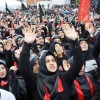
In the book "The Shia Revival: How Conflicts within Islam Will Shape the Future," Vali Nasr, an Iranian-American researcher on the crises in the Middle East, came to the conclusion in 2006 that the religious struggle resulting from the rise of the Shiite identity in the region would reshape the Middle East. Developments in recent years have proved that this view seems accurate.
Today, Shiite forces are strongly present in Lebanon, Syria, Iraq and Yemen. They are united and firmly associated with the Iranian axis. This new situation did not happen by chance or overnight. Rather, it was preceded by many arrangements that Iran has been making for decades.
The sectarian rivalry in the region began with the Iranian Revolution in 1979, when Saudi Arabia and Iran raced to find and endorse revolutionary groups that fought different governments based on Islamic ideology and inspired by the Quranic terms of jihad in the Middle East. These groups include al-Qaeda for the Sunnis and Hezbollah and the Houthi movement for the Shiites.
While Saudi Arabia has invested in jihadist organizations in Afghanistan — such as the Afghan Arabs, or the Arab mujahedeen, during the Soviet occupation of Afghanistan — Iran has invested in the Shiite opposition forces in the Arab countries, such as Hezbollah in Lebanon, Hezbollah al-Hejaz in Bahrain and the Badr Brigade in Iraq.
The Saudi investment has lost, as it has turned against Saudi Arabia. It has evolved into al-Qaeda, the Islamic State (IS) and other Salafist organizations that have placed Saudi Arabia at the top of their enemy list. The Iranian investment has, however, greatly succeeded and was gradually expanded toward non-Shiite majority areas such as Syria and Yemen. Today, 30% of Yemen’s population is Shiite, and the most influential group there is the Houthi movement, which is close to Iran. In Syria, Iran has succeeded in protecting the Bashar al-Assad regime, which is under the control of the Alawite minority close to the Shiites.
Posted in Security Comments Off on Is the Shiite Revival Here?
Reforming Iraq’s National Grid
Posted on 16 March 2015 .
Report first published in nina-iraq.com, the magazine for Iraqi women everywhere.
By Dr. Basil Al-Fakhri, formerly of the Electricity Power Commission-IRAQ [1988-1989], consultant in Western power Utility, KBR consultant and SMEC consultant-Australia[2004-2012].
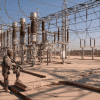
It is my belief that the Ministry of Electricity [ME] needs to engage with international consulting firms (this is what happens with oil contracts).
These consultation periods should last no less than 10 years and should explore planning, studies, production, transmission, and distribution.
It is suggested that countries such as Britain, Sweden, Germany, France and Japan. should take the lead in this as they have accumulated expertise for systems which can be implemented in Iraq.
In addition, these consulting utilities firm possess advanced training in power generation and supply, and hence this will put Iraq on the right track also. Indeed, if we plan wisely we can leapfrog other nations in the region – overtaking Libya and Jordan, Turkey, Iran and Saudi Arabia as market leaders.
Implementation of the right kind of technology at every stage will of course play a crucial part.
Posted in Construction & Engineering In Iraq 2 Comments
Poll: Does Iran have too much Influence on Iraq
Posted on 13 March 2015 .
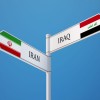
Iran's increasing influence on Iraq is very obvious, commercially, politically and militarily, but did the Saudi Arabian Foreign Minister go too far in claiming that "Iran is Taking Over Iraq"?
The claim has been rejected by Iraq's Foreign Minister, who also pointed to his country's improving relations with Saudi Arabia.
But what do, our readers, think? Please let us know your thoughts in this poll, and in the comments section below:
[poll id="5"]
(Iran/Iraq image via Shutterstock)
Posted in Iraq Industry & Trade News, Politics, Security 5 Comments

Saudi FM: Iran is Taking Over Iraq
Posted on 12 March 2015 .
By John Lee.
The Saudi Foreign Minister, Saud al-Faisal (pictured), has told reporters in Riyadh that “Iran is taking over Iraq.”
The comments were made during a joint press conference with US Secretary of State John Kerry, in which Kerry said the United States was keeping an eye on Iran's 'destabilizing' acts, adding that his country was aware of Iranian military commander Qassem Soleimani’s presence and activity in Iraq.
Soleimani is reportedly overseeing Shiite militias in the major offensive to expel Islamic State of Iraq and Syria (ISIS) militants from the city of Tikrit, according to Al Arabiya News.
Responding to the claim, Iraqi Foreign Minister Ibrahim al-Jaafari told Reuters:
"Iran has supported Iraq but did not send armies to Iraq and did not interfere in Iraq's sovereignty.
"We want relations with Saudi Arabia and with Iran ... Our openness to Saudi Arabia does not mean our relations with other countries will flag ... and this does not mean Iraq is becoming Persian."
(Source: Al Arabiya News, Reuters)
Posted in Politics, Security Comments Off on Saudi FM: Iran is Taking Over Iraq
Weekly Security Update: 24 February - 03 March 2015
Posted on 03 March 2015 .
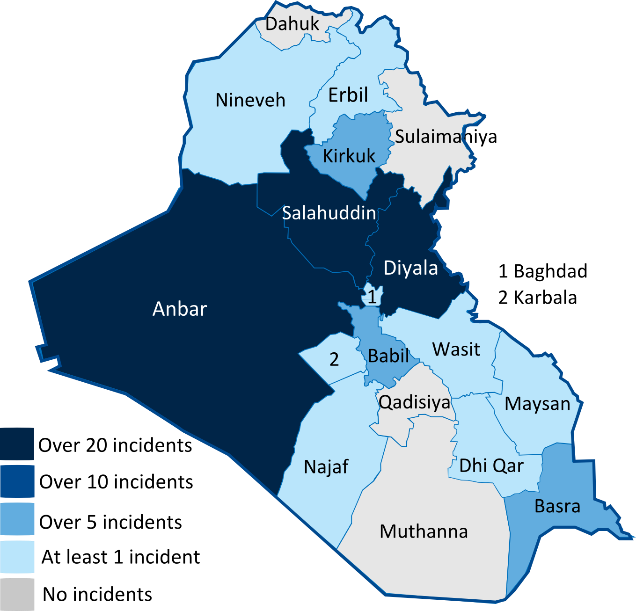
National Overview
As total nationwide fatalities hit their highest point since October 2014, the Iraqi Government launched the largest anti-ISIS offensive to date, in an attempt to retake one of the Islamic State group’s mains strongholds; Tikrit. The operation will be an important test case for Iraq’s Shiite-led government as it tries to reassert authority over the divided country. After three days of heavy fighting, security forces are yet to enter the city, indicating that a long battle may lie ahead. Following last week’s announcement that the United States has committed to training a joint Arab-Kurdish force, including divisions of former Mosul residents, which will be deployed to liberate Iraq’s second city, US officials have stated that no timeline should be imposed on Iraqi forces planning an offensive to retake Mosul, as the operation will require elaborate preparations. It was previously announced that an eventual counter-offensive against ISIS in Mosul would likely come in April or May, prompting an angry response from the Iraqi Government. Nationwide, heavy fighting continued in al-Baghdadi, as the Iraqi army, backed by international airstrikes, stepped up operations to retake the town and to clear the area of Juba, to the north. ISF sweeps also continued in Hit, Fallujah and Ramadi. A wave of bombings in central Baghdad and neighbouring districts contributed to an unstable security situation around the capital, with the number of reported incidents more than doubling from the previous week.
North
The battle for control of Tikrit intensified this week with the 27 February announcement of a new Iraqi offensive to retake the city. Iranian commanders are helping to co-ordinate the operation, including issuing directives from the village of Albu Rayash, 55km east of Tikrit, which was recaptured from the militants on 28 February. A force of about 30,000 troops and militia are understood to be attacking from multiple directions along number of different fronts, supported by air offensives from Iraqi fighter jets. Fierce clashes are now reported around Tikrit as soldiers attack ISIS positions in the centre of the town, with battles taking place in the suburb of al-Dour, the western al-Zuhur district, and in the northern area of Qadisiyah, where 8 Popular Mobilization members are reported to have died so far, with a further 42 injured. Iraqi security forces have yet to enter Tikrit and have been slowed by roadside bombs planted by ISIS, however they are believed to be amassing at Camp Speicher, west of Tikrit, awaiting orders to advance on the city. On 28 February ISF forces came under attack in Samarra, where they had gathered in preparation for the Tikrit operation, with the detonation of three VBIED’s and coordinated ISIS attacks from the west, which killed at least 14 people. Further east in Diyala province, 11 people were killed in a twin car bombing in the town of Balad Roz. ISF and Shiite militias have driven ISIS out of nearly all of Diyala province, however Saturday’s blasts showed that the militants are still capable of launching attacks in the area. Elsewhere in the region, Peshmerga forces repelled an attack by ISIS militants near the Dubz front lines, west of Kirkuk, on 28 February. ISIS intensified attacks in the Kirkuk region in late January but still seem unable to push back Peshmerga forces in the area, thanks to coordinated support from coalition airstrikes. Over 50 militants are also reported to have been killed in Shingal on 2 March as Peshmerga forces repelled a four-pronged attack on Kurdish positions in the city.
Central
Several successive bomb attacks killed at least 7 and wounded 33 others across Baghdad yesterday. They included an explosion in al-Husayniyah, northern Baghdad, a bomb attack near a market place in al-Dawra district, and further explosions in al-Mashtal, central Baghdad and Abu Ghraib. On Saturday night a bomb also killed four people in western Baghdad, while another in the neighbourhood of Abu Dashir killed three people and wounded eight. Four mortar shells additionally hit homes in Sabaa al-Bour, just north of Baghdad, killing three people and wounding six. Heavy fighting continued in the Anbar town of al-Baghdadi over the reporting period, as the Iraqi army stepped up efforts to retake areas of the town from ISIS militants. International airstrikes and on the ground fighting are understood to have broken the prolonged ISIS siege on the strategically important area, which is just 7km away from the Ain al-Assad airbase where the US military is training thousands of Iraqi fighters. A further joint operation was launched on 2 March to clear the Juba area, north of al-Baghdadi. ISIS militants are reported to have executed dozens of youths in Juba before fleeing to Hit. ISF operations also continued in Fallujah, Hit and Ramadi, with over 120 militants reported to have been killed and numerous IED’s cleared in security sweeps. Further west, Iraqi border guards are reported to have repelled an attack by ISIS militants on the Iraqi-Saudi border on 28 February, killing several militants.
South
As before, activity by ISIS and other extremist Sunni organizations remains limited in Iraq’s southern governorates at present, most likely as a consequence of a diversion of resources to the central and northern battlefields. This has in turn limited the potential for major VBIED or other high profile bombings in Shia religious spaces, although with large quantities of small arms still proliferating among the region’s criminal and paramilitary entities, an underlying threat exists for international organizations. Although outbreaks of tribal violence have lessened since the launch of ISF disarmament operations in areas north of Basra at the start of February, there were a number of reported tribal clashes this week, including fighting in Qarmat Ali and south of Qurna town, indicating that underlying tribal differences remain unresolved. Small scale demonstrations also continued during the reporting period, in Nasiriya and Kit al-Hajaj on 28 February and 1 March respectively, but remained peaceful and contained. Additionally, there were three reports of kidnappings and shootings of non-Baswari Iraqi nationals, driving concerns of potential sectarian motivation among the local Basra population.
Posted in Weekly Security Update 7 Comments