


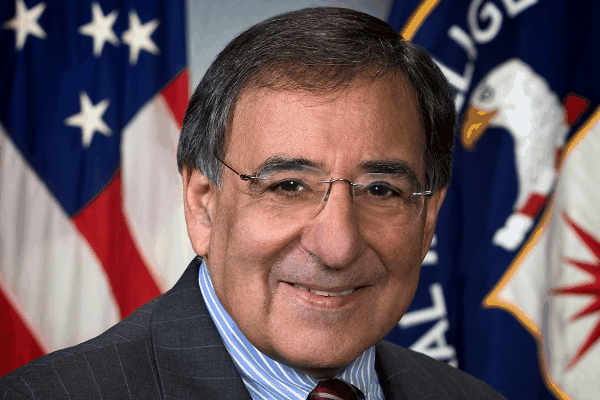
In April, outgoing Defence Secretary Robert Gates said that American troops could, if required by Iraq, stay in the country beyond the withdrawal date.
Mr Gates had also expressed hope that Baghdad would make such a request. Gates said last month that a continued U.S. military presence in Iraq would be "reassuring" to Gulf states. He added it would not be reassuring to neighboring Iran and "that's a good thing."
Reuters reports that while Prime Minister Nouri al-Maliki has called for a "mutual and unified national stand" on the issue by 1st August, the political bloc of anti-American Shi'ite cleric Moqtada al-Sadr openly opposes a continuing U.S. military presence. Sadr has threatened to escalate protests and even "military resistance" if U.S. . troops remain.
The BBC's Andrew North in Washington says it seems likely that the US has offered Iraq some inducements to maintain its troop presence.
But any suggestion that President Barack Obama will allow some American forces to remain behind is bound to be seen as backpeddling by both his opponents and supporters on his commitment to pull out entirely from Iraq by this year, our correspondent says.
He adds that it will be controversial in Iraq as well, where there has been an increase in attacks on US bases apparently aimed at derailing any moves to keep American troops on.
US fatalities in Iraq have been rare since Washington officially ended combat operations in the country last August.
But earlier this week, five American soldiers were killed in central Iraq, in what is believed to be the US military's single most serious incident in the country in more than two years.
(Sources: BBC, Reuters)
[...] the withdrawal of U.S. military forces from Iraq, which is supposed to happen in December, although it is expected that troops may asked to remain in Iraq for longer.The new mercenary force, which has been called a State Department “private army,” would [...]