


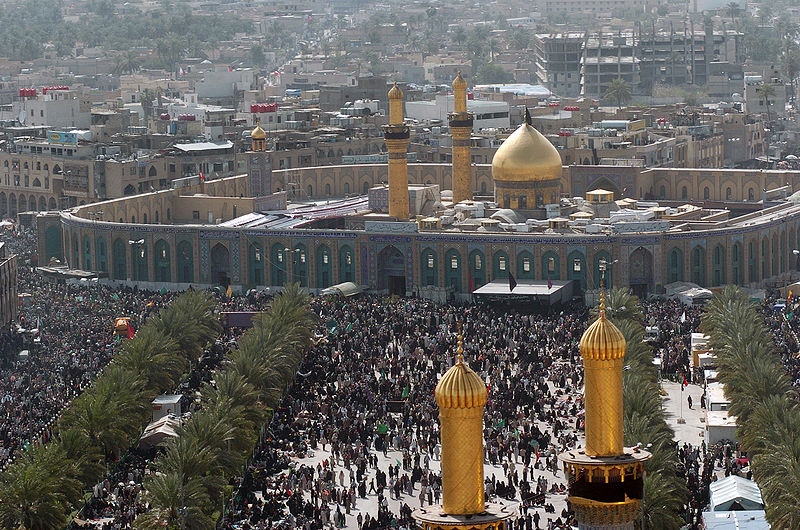
While visitors from the Gulf States or others not travelling with Shamsa arrange their own transportation and meals in Karbala, the Iranians with Shamsa all eat lunch and dinner at the central kitchens owned by the Iranian company and staffed by Iranians. Local Iraqi hotels only provide breakfast.
“And Shamsa even interferes in this meal,” Haider complained. “We have to provide certain kinds of food to the pilgrims, such as a certain kind of Iranian cheese.”
“The company’s representatives even visit the hotel rooms every day to check the garbage cans in each room. They behave as if they’re the hotel managers,” he continued.
While NIQASH was interviewing Haider, a man went into the lobby of his hotel. Haider stopped speaking and just nodded his head. As the man moved further into his hotel, Haider continued. As he explained, the individual was a Shamsa representative doing his daily inspection of the Iraqi hotels. If the Shamsa man had overheard his criticism, Haider said, the Iranian company would take its business elsewhere and in a market as competitive as Karbala, where Shamsa’s guests dominated, the hotel simply couldn’t afford that loss of business.
The competitiveness is actually one of the reasons why Karbala’s hotel owners feel so helpless, notes Karim Damad, an economics professor at the University of Karbala. They’ve been unable to form any kind of union for collective negotiation with Shamsa. “If they could take a united position then they would be able to embarrass Shamsa,” he said. And the company takes opportunistic advantage of the hotel owners. “It simply threatens to go to other hotels, if one hotel owner doesn’t accept its terms,” Damad argued.
After Shamsa charges a premium on package tourists for transport, lodging and food inside Iraq, “Iraqis are left with very little opportunity to make profit from religious tourism,” Damad said. Shamsa makes big profits on tourism in Iraq yet does not put money back into Iraq. “Iraqi companies should be able to invest in developing religious tourism inside their own country – but they cannot,” Damad said.
Comments are closed.