


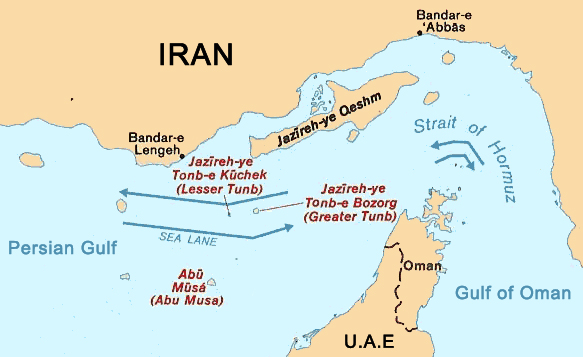
A spokesperson for Iran’s Foreign Ministry, Ramin Mehmanparast, reported that the letter had duly been delivered. Three copies were received and one was delivered by al-Talabani. The next step in Iraq’s diplomatic journey will be the Iraqi Minister of Oil’s visit to Tehran Thursday.
Officially Iraq’s Foreign Ministry has yet to make any statement on this issue as parliament remains in recess.
On the whole though, it seems that hardly anyone believes the Iranians will carry out their threat. Military analysts from both the West and the Middle East have said they feel it is really just sabre rattling, an attempt to discourage sanctions being imposed upon them.
In fact, they note that Iran has been making similar threats since the 1980s and throughout the 1990s. They also point out that Iran would be doing itself a major disservice if it did close the Strait of Hormuz. Iran too relies heavily on oil sales; closing the Strait would be economic suicide. Recently Russia’s foreign minister said that, in his opinion, the potential sanctions by the West were just an effort to try and create public antipathy toward the Iranian leaders inside Iran. There is an election due to be held in Iran in early March.
Overall in Baghdad now, many Iraqi politicians think the scenario also offers up another opportunity: to rethink how oil is exported out of the country.
MP Mutashar al-Samarrai, also a member of the parliamentary commission on energy, agreed. He told al-Alam, a Baghdad newspaper, that this issue with the Hormuz Strait should be encouraging the Iraqi government to look beyond the troubled waterway and into other transport options, toward perhaps working with nations like Syria and Jordan.
“If you want to produce more oil, as the government says it does, then you need to look into other windows of opportunity for exporting,” al-Samarrai concluded.
Comments are closed.