


Central Iraq (Baghdad and Anbar)
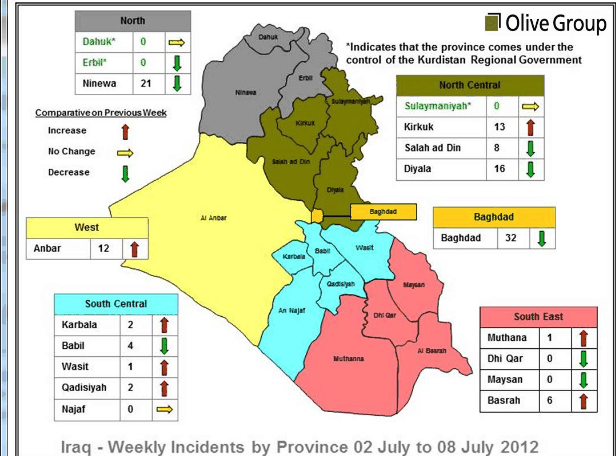
Incidents in Baghdad reduced slightly from the sharp increase seen last week, however, the total still surpasses the weekly average for 2012. Reporting is unlikely to truly represent the extent of violence in the capital as many lower level incidents are thought to go unreported. Attacks continued in the west of the capital, with Sunni districts in Mansour and southern Kadhimiya witnessing the majority of IED incidents. In the rural districts to the north of the city, violence continued to rise, with a concentration of attacks in Taji.
In the first four months of 2012, Taji recorded just two violent incidents. In comparison, from May 2012 to the time of writing, eighteen incidents have been observed, with a third of attacks occurring since the beginning of July. Taji sits on what was known to be a traditional transit route linking AQI strongholds in Anbar with Baquba and surrounding towns in Diyala. It is also a cross-sectarian melting pot where both AQI and Shiite militias vie for influence within their respective communities.
Elsewhere, shooting attacks formed the bulk of reporting from Shia areas, in particular northeast Baghdad, including Sadr City (an indicator of ongoing intra-Sadrist feuding). Attacks this week included sixteen IEDs, eleven small arms fire attacks, a VBIED in Waziriya district, and four under-vehicle “sticky bombs” elsewhere in the city.
From a sharp statistical increase seen two weeks ago, it appears that ISF activity and a natural decline in extremist tempo has led to a return towards average levels for 2012. Nevertheless, the situation in Anbar is still showing a longer term trend of slowly deteriorating security, and it is of significant note that 40 percent of all VBIED or suicide attacks in the entire province for 2012 have occurred within the last three weeks, and exclusively within the city limits of Ramadi or Fallujah.
This week, incidents included six IEDs, two shooting attacks, an SVIED, one under-vehicle “sticky bomb” and a single VBIED. As Anbar remains a key strategic territory for AQI, it is likely that attacks will continue over coming weeks. In particular, the month of Ramadan traditionally sees higher incident rates in Anbar (approximately 20-30%), and therefore a rise in violence can be expected.
Comments are closed.