


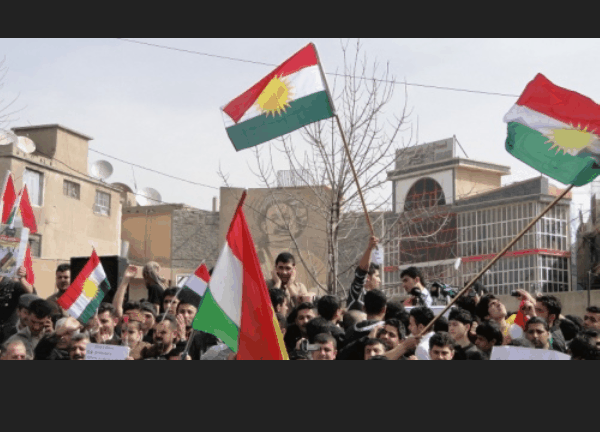
It is possible that Iraqi Kurdistan is politically mature enough to be independent – but the region is not ready for such a step in economic or military terms. And it is true that, over time, the political consequences of Kurdish independence have always been considered greater than the economic consequences. But that no longer applies.
A clear example is the Kurdish rebellion against former Iraqi leader Saddam Hussein’s regime in the early 1970s. When Hussein started to become friendly with the Soviet Union, then-US President Richard Nixon began to fund, and encourage, the Kurdish to fight for their independence against Hussein, as part of a strategy to weaken Hussein’s regime and general policy against the USSR. But just as the Kurdish revolutionaries seemed to be succeeding, it became clear that none of the parties supporting the Kurds actually wanted them to win their independence – the ploy was purely political – and support was withdrawn.
Additionally the question of Kurdish independence has always troubled the surrounding countries; none of them have ever wanted a Kurdish State.
But now, given Iraqi Kurdistan’s oil and gas potential and the benefits that could bring surrounding countries in terms of trade, those neighbours have softened their stand on Kurdish independence – and they’re likely to soften even further as trade ties develop.
There are also strong economic overtones to Baghdad’s policy toward Kurdish independence. Baghdad sees the various disputes over revenue sharing, oil contracts and oil exports currently going on between Baghdad and Iraqi Kurdistan as necessary to its centralist agenda. Partially, it is about deterring other Iraqi regions, some of which have suggested the idea, from asking for independence to become a region with autonomy similar to that enjoyed by Iraqi Kurdistan.
Comments are closed.