


Al-Barzani’s own son is also taking steps upward. Having headed the KDP’s own security services since 1995, Masrour has been known in security circles for some time. His key position inside the state’s military has now been cemented by this appointment, which also has ministerial level status.
In addition to the positions held by Najirvan and Masrour, many other members of the al-Barzani family – brothers, nephews, cousins – occupy sensitive military, administrative and commercial positions. In fact al-Barzani senior himself inherited his position as head of the KDP when his father, Mustafa, former head of the party, died in 1979.
And all of this is well acknowledged inside Iraqi Kurdistan. When the announcement of Masrour’s appointment to the new Security Council was made, politically-conscious wits wrote sarcastic messages on al-Barzani’s Facebook page asking him to: “quick, prepare another member of his family to head the Iraqi Kurdish parliament”. This is in reference to the fact that two out of the three top jobs in the semi-autonomous region belong to al-Barzanis. This new job atop the Security Council makes three out of four.
However the desire to retain power in loyal family hands is hardly confined to the al-Barzani clan and the KDP. The other major political party in the region, the PUK, headed by Jalal Talabani, is doing similar things. The so-called “green sector” is following in the footsteps of the so-called “yellow sector”.
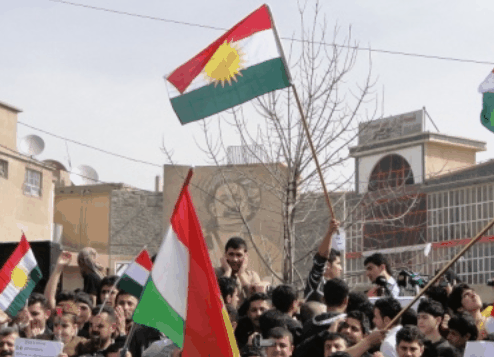
The coloured sector names were first used during 1990s when the KDP and PUK fought one another in an Iraqi Kurdish civil war which saw what is now Iraqi Kurdistan basically divided in two, with areas around Erbil and Dohuk under KDP control and the Sulaymaniyah area under the PUK’s control. Green (PUK) and yellow (KDP) were the colours of the two party’s separate flags.
Comments are closed.