


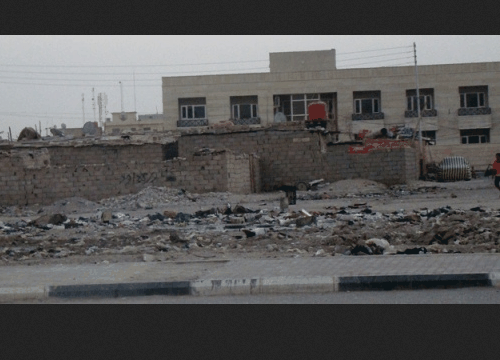
“But we were told the committee was unable to take any action,” he explained. Al-Mohsen was told he had to negotiate directly with the representative of the families living there. He did so and found out that the families’ representative was working with (and protected by) tribal connections who had promised to register the land in the families’ names. They would do this in return for the political support of the families. Eventually after a series of negotiations al-Mohsen reports that his firm agreed to pay each squatter family IQD5 million (around US$3,300). “But as soon as we demolished those houses, we were shocked to find new ones there almost immediately,” al-Mohsen says. “It was so quick that we don’t even know how, or when, they managed to build them.”
It is true that the squatter neighbourhoods are like shifting sands on a beach – as soon as one area is demolished another springs up, possible – as in al-Mohsen’s story – in the same place.
There is also a political dimension to the situation. The location of the houses and the electoral role that their inhabitants may play in upcoming elections is also controversial.
“During previous elections, some political forces have used this issue - of illegal housing – for their own ends, and in a very ugly way,” Ali Faleh al-Kanaan, public relations officer for the local branch of Iraqi political party, the Islamic Supreme Council of Iraq, said. “And that’s part of the reason why this problem has yet to be solved.”
For example, in early 2010, just two months before national elections, the current Prime Minister Nouri al-Maliki, instructed authorities that they should not evict squatters from municipal land without compensating them somehow.
Comments are closed.