


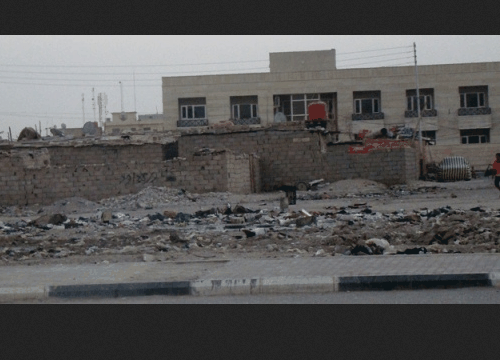
The local government department, formed to look into the squatter housing and try and resolve problems such as al-Muhsen’s, has its own problems.
There are 35 employees working there but according to department head, Makkie al-Tamimi, more are needed to adequately cover the area.
“The map of Basra is covered in squatter housing,” al-Tamimi complained, noting that they only had one bulldozer at their disposal with which to demolish the shanty towns. “There are even locations strategic to security that are now occupied by this kind of housing. In fact, some of these families have even occupied the naval premises, out of action since 2003. Some have even built their houses next to oil pipelines. A hospital development has been obstructed by squatter houses,” al-Tamimi explains.
Al-Tamimi says that he and other committee members are often threatened by the squatter families or those they’re allied with. “I was beaten up inside my own home,” al-Tamimi says. “And most of the committee members have experienced some kind of intimidation or threats.” That’s why, he concluded, it was so hard for the committee to get anything done.
Then again, others say that Basra’s new inhabitants cannot be blamed for taking matters into their own hands and building accommodation where they can. Basra has very high rent prices and no major housing projects have been completed for around 30 years. Various housing developments, started in the 1970s, were never completed because of the war waged against Iran by former Iraqi leader Saddam Hussein – now squatters and low income locals live in these half-built homes.
These days Fadel Muhsen is one of the squatters. Originally from Basra, Muhsen spent around two decades working in other parts of Iraq, for a phosphate company in the central Iraqi city Ramadi and also in the north in Kirkuk and elsewhere.
“When I came back here I was 50,” Muhsen explains, lighting up a cigarette; he’s smoking one of Iraq’s cheapest brands. “I have four daughters who are all at school and I’m the family’s only provider. Temporary employment contracts don’t come with many benefits and when I came back here I had to start from scratch. We lived with relatives for a while but eventually I was forced to buy one of the squatter houses so that my family had shelter.”
The price of land and housing, even in the squatter towns has risen dramatically due to the increased demand. A small shack with a tin roof costs around IQD10 million (US$7,000) in central Basra. “The prices are crazy,” Muhsen explains. “Rents are also high. I have to work day and night to keep my family in our own house.”
Comments are closed.