


For example, the Russian Federation objected to international sanctions against Iraq for their alleged nuclear weapons programme, saying that these sanctions harmed Russia’s commercial interests too. Russia also objected to any use of military force against Iraq – such as the 2003 US-led invasion of Iraq – and insisted that weapons inspectors be allowed to return to the country again.
Having looked at the history of Russia’s relationship with Iraq and the current relationship between the two and it certainly starts to look as though the conclusions made during a half-hour Al Jazeera television special about the Russian-Iraqi weapons rings true.
The interviewees on that show – including Sabah al-Mukhtar, head of the Arab Lawyers Association in the UK and Dmitry Babich an analyst for the Voice of Russia radio station – said that, despite Russia and Iraq’s shared opinions on the Syria conflict (neither want outside interference), the arms deal was basically a business opportunity.
It could be construed as an indicator of growing Iraqi independence from the US as well as Russia’s urge to increase allies in the region – especially as the Syrian regime, with which it has a historic friendship, was in danger; Russia also already sells a lot of weaponry to Iran and Syria.
However on the whole, the speakers thought it was more of a business deal than any kind of long term indicator of Russian desires or any kind of Iraqi-Iranian-Syrian conspiracy in the Middle East.
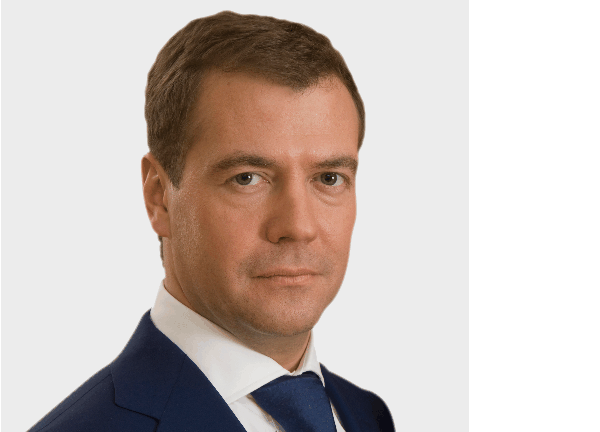
Under the current Russian President, Dmitry Medvedev, there has been a further increase in bilateral agreements between Iraq and Russia. New Russian consulates have opened in Erbil in the semi-autonomous region of Iraqi Kurdistan and also in Basra in southern Iraq. Both of those cities are becoming economic hubs.
Comments are closed.