


According to preliminary results the State of Law Coalition, led by the incumbent Prime Minister Al-Maliki has unsurprisingly taken a compelling lead and looks to have won the vote, however the party would appear to have lost 20 seats indicating that his Sunni ally, Saleh al-Mutlaq, was not able to achieve a breakthrough in the Sunni arena as Al-Maliki would have wanted. Despite the fact that this leaves the Shia coalition in a somewhat more fractious situation, as they will now have to possibly form alliances with groups over whom they have previously had no leverage, it undoubtedly set the conditions for the violence precipitated by the government against the Sunni protest movement on Tuesday and Wednesday.
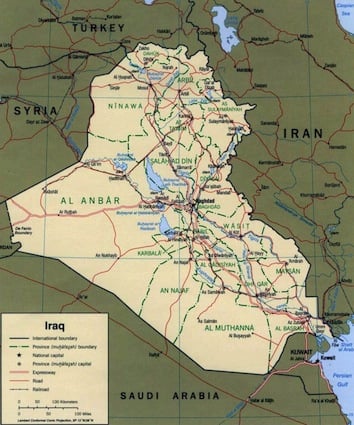
On 23 Apr emboldened Iraqi forces stormed a Sunni Muslim protest camp triggering a gunfight between troops and demonstrators that spread to army clashes with Sunni militants and killed more than 40 people. Iraq's defense ministry said fighting erupted when troops opened fire early on Tuesday after coming under attack from gunmen during a raid on the for the makeshift protest camp in a square in Hawija, near Kirkuk, 170 km (100 miles) north of Baghdad. The defense ministry and military said troops found rocket-propelled grenades, sniper rifles, and other weapons, but protest leaders have contradicted this version of events saying they were unarmed when security forces stormed in and started shooting in the morning. Amidst confused reporting it has been difficult to establish whether the ISF were responsible. In recent weeks Baghdad has, under the auspices of providing security to the populous, been bolstering its security presence in the northern regions in an attempt wrest back control in restive provinces and assert itself in areas where it has lost ground, thus placing Baghdad in a strong position to counter the Sunni protest movement. Later in the day the defense ministry said what is described as 20 gunmen were killed at the camp along with three of its officers. Military sources said 20 people and six soldiers died, all of which contradict independent reports, which suggest that over 40 people were killed.
After the Hawija raid, security forces imposed a curfew in the surrounding province of Salahuddin, burned protesters' tents and cleared the square, which further inflamed tribal sensibilities resulting in violence spreading across the Sunni strongholds with gunmen attacking army posts to the south of Kirkuk.
Throughout the day as the violence spread, mortar attacks; bombs and gunmen killed at least 21 worshippers as they left two Sunni mosques in Baghdad and another in Diyala province in the north. Three soldiers were killed during clashes with protesters who attacked a passing army convoy, and militants burned two army Humvees on the highway outside Ramadi and further north outside Tuz Khurmato, 170 km (105 miles) north of the capital, militants used a mosque loudspeaker to call Sunnis to mobilize before clashing with troops which killed untold numbers of militants and civilians, with officials confirming the deaths of four soldiers killed in the fighting.
Despite the shock felt by many in the country and widespread international condemnation of the GoI action Wednesday 24 April saw a continuation of the violence. More than 30 people were killed in gun battles between Iraqi forces and militants as sporadic battles continued on Wednesday with hardline tribal leaders warning that protests could turn into open revolt against the Baghdad government, even as many Sunni moderates and foreign diplomats called for restraint.
In Sulaiman Pek 160 km (100 miles) north of Baghdad militants briefly took over a police station and an army base and burned a small Shi'ite mosque before army helicopters drove gunmen out of the town with at least 18 killed, including 10 gunmen and five soldiers, officials said. This was followed by an ambush on an army convoy near Tikrit, executed with roadside IEDs and rocket-propelled grenades, which killed three more soldiers. Reports suggested that three more troops were also killed in an attack in Diyala province. Later on Wednesday, clashes erupted in the northern city of Mosul, where gunmen launched an attack after using a mosque loudspeaker to once again call Sunnis to join their fight. After a bloody day the cycle of violence culminated in a separate attack, where at least eight people were also killed and 23 more wounded when a car bomb exploded in eastern Baghdad.
The situation remains extremely precarious as we see a continually deteriorating cycle of confrontation between the central government and protesters that will undoubtedly benefit extremist groups, as has already been witnessed in the emboldened stance taken by the ISI. With less than favourable election results Iraq's Sunni community remains deeply divided between moderates more keen to work within Al-Maliki's government and those who see resistance as the only way to confront Baghdad. The severity of the situation and Iraq’s ‘tinderbox’ sectarian nature present a dangerous dynamic, much of which depends on the Sunni community’s ability to stay calm in the face of severe provocation, however the words of one local protest leader in Anbar province ring loud and clear to many - "The Maliki government's aggression against our people in Hawija has forced us to take our uprising on another course”…
Comments are closed.