


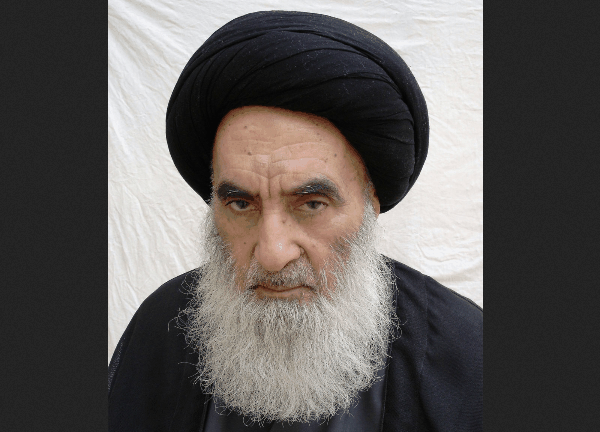
The growing calls for the intervention of the religious Hawza in Najaf are due to the failure of the dialogue initiative launched by the Sunni and Shiite Waqf in Iraq, which are two intergovernmental institutions that take care of the religious affairs of the two communities in Iraq.
The initiative's failure was due to the loss of public confidence in the Sunni and Shiite officials in these institutions. These are often accused of subordination to Maliki, as some observers, commentators and journalists in Iraq say.
However, Sistani is not interfering as per the Iranian way either. He is setting the stage for a "secular" idea that separates the state from religious institutions, but makes an appearance whenever the political process reaches dangerous stages. Sistani is adopting his own ways, the most recent of which consisted of abstaining, three years ago, from meeting with political leaders in protest against their negligence in “civilian jobs” and “their neglect of the needs of the public.”
Since the outbreak of Sunni protests, Sistani has pushed Maliki to make concessions, and prompted him in January 2013 to make concessions and “give justice to the Sunnis in Iraq.” As Maliki demanded the dissolution of parliament — which is headed by Osama al-Najafi, a leader of the Sunni Iraqiya List — the authority channels informed two envoys of the government that “the supreme authority refuses to dissolve parliament, and recommends dialogue and maintaining calm.”
But the current crisis reflects significant risks threatening the future of the democratic experiment in the country, unless the parties to the conflict return to dialogue. A student in the Najaf Hawza said that “the center of religious authority is surrounded by great concerns about the situation and there is a strong resentment of the performance of Iraqi politicians,” but no one knows, precisely, what Sistani is up to in the coming days.”
Ali Abel Sadah is a writer and journalist from Baghdad working in both Iraqi and Arab media. He was the editorial manager of a number of local newspapers, and was a political and cultural reporter for more than 10 years. He has published in various newspapers and magazines covering Iraqi political affairs, human rights and civil society.
Comments are closed.