


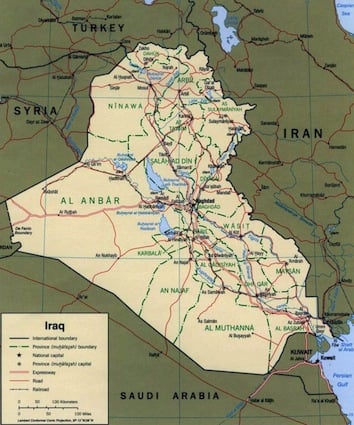
Whilst violence somewhat decreased this week from the highs of the past two weeks Iraq was by no means spared. On Wednesday 01 May at least 26 people were killed in a series of bomb blasts and skirmishes across Iraq. A suicide bomber wearing an explosives vest detonated himself in the midst of a group of government-backed Sunni fighters who were collecting their salaries east of the city of Fallujah, killing six, and in Baiji, 180 km north of Baghdad, ISF reported that a roadside bomb had killed four policemen. These attacks were followed by numerous bombings in Baghdad and Al-Anbar. A car bomb in a Shi'ite district in northeastern Baghdad killed at least three people and wounded 14, while another car bomb north of the city of Ramadi killed two policemen and wounded another 10 later in the day.
As is so often the case Friday Prayers saw further attacks against the Sunni community in Baghdad. Similar to events last week a roadside bomb killed a Sunni cleric and five worshippers when they left a mosque in Baghdad after Friday prayers. A further 31 people were wounded in the blast outside the mosque in al-Rashidiya district of Baghdad in an attack typical of the revenge and score settling pattern that plagues Baghdad on a daily basis.
Further across Iraq sporadic violence continued throughout Friday, which saw at least 31 people killed in mainly SAF exchanges. Fighting intensified in and around Mosul where ten members of the ISF were killed, with an as yet unspecified number of insurgent and civillian fatalities. The ISF remain stretched across the northern provinces providing plenty of operating space for insurgent groups to press home their local advantage at this time of national political uncertainty.
With Shia, Sunni and Kurd communities feeling under threat and pressured to exact revenge for lost ones the bloodletting continued into the new week with further attacks and bombings against religious sites and ISF checkpoints, particularly in Baghdad. At least 17 people were killed by three bombs and a grenade attack on a mosque in the Iraqi capital Baghdad on Monday as unidentified assailants threw hand grenades at Sunni Muslim worshippers as they left a mosque on Monday evening, killing six people, according to ISF national reporting chains. Earlier in the day, two car bombs exploded near police checkpoints at the entrance to the Shi'ite district of Hussainiya in the north of the city as Sunni insurgents probed into Shia residential areas, killing one member of the ISF and seven civilians. Later a third bomb killed three near a restaurant frequented by police in the southern district of Doura. At least 33 people were wounded in the three attacks.
What will happen over the next few weeks remains open to question and the ability of the Iraqi leadership – on both sides of the sectarian divide - to act decisively and cohesively. Now, Iraqis on both sides of the divide say the chance to quell Sunni anger by revising past political wrongs seems to have been lost. Sunni protesters have already symbolically set fire to their list of demands and now seem intent on further physical action. Shiite leaders say reconciliation is politically impossible, given the sectarian polarization set off by the recent violence here and the continuing civil war in Syria, which is increasingly aggravating the region’s sectarian fault lines. Much is down to the future actions of the Sunni tribal leadership and their desire to either foment or contain the rising anger and violence.
Title of your weekly security update (posted 9 May) is not correct: must be 01-08 May 2013, instead of April ????
Thank you for pointing this out to me. Amended as required.