


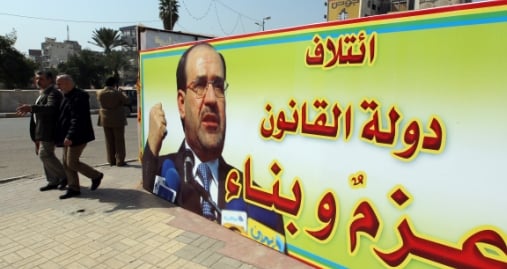
Meanwhile other Shiite Muslim dominated parties did particularly well. The Prime Minister’s former allies, the Sadrist movement, won 58 seats and the Islamic Supreme Council of Iraq, currently led by young cleric Ammar al-Hakim, won 61. Between them the two groups have 118 seats around the country. Some analysts suggest that the two may form a closer alliance, something which would doubtless concern al-Maliki’s State of Law coalition, with it’s around 20 fewer seats.
Should the two Shiite Muslim-dominated parties choose to get together they would effectively prevent al-Maliki’s bloc from dominating Iraq’s southern provincial councils, as it has done in the past. Such an alliance could also take control of provincial authorities in Baghdad.
“In previous elections we only won 41 seats in all Iraq’s provinces but today, we can form the alliances we want,” Diaa al-Asadi said at a press conference after the election results were announced. Al-Asadi heads the Ahrar bloc in Iraq’s Parliament, the political wing of the Sadrist movement, a multi-million-member group that follows crusading Shiite Muslim cleric Muqtada al-Sadr; he says his party counts itself as one of the most successful in these elections because of the gain in seats.
“We are now negotiating with all the lists and there is debate and dialogue going on. We haven’t yet made our final decisions as to whom we might enter into coalitions with,” said al-Asadi in his press conference.
Still, one cannot forget the skill with which the State of Law bloc has managed to build coalitions over recent years. And it may still be difficult for the Sadrists or Islamic Supreme Council to form alliances in various provinces. For example, the Iraqi Communist Party did comparatively well, winning most of the 10 seats that its bloc gained around the country.
“Even though we didn’t spend anything near what other parties did, we got good results with our campaigning,” Jassim al-Hilfi, a member of the central committee of the Iraqi Communist Party, told NIQASH. And it’s not just a change in law about smaller parties that’s helped parties like his do better. “There’s a change in the Iraqi people’s mood,” he says. “And that is due to poor state services and other conflicts.”
maybe they are dancing in the streets according dinar peddlers?