


Moreover, Tariq Jawhar, the media adviser for the speaker of the Kurdistan Region Parliament, told Al-Monitor that they included these exceptions in the law based on the democratic countries’ models. He added that the specific situation in the Kurdistan Region of Iraq and deliberations between all blocs in more than one parliamentary session were taken into consideration to reach an agreement on these exceptions.
Jawhar noted, “The draft law on the right to information in Iraqi Kurdistan goes back to the second parliamentary session, which ended in 2008. A number of MPs adopted the draft law in the third session.” He added, “Several discussions, workshops and seminars were held to examine the law and take into consideration what journalists, citizens and civil society organizations need in the Kurdistan Region.”
Speaking on the importance of this law, Jawhar stressed that the draft law was added to the list of laws on which a consensus must be reached between all blocs before they are discussed in parliament sessions.
He said, “All parliamentary blocs agreed on the law, and an agreement was reached between the relevant parliamentary committees and representatives of all parliamentary blocs.”
He added, “Everyone agreed on a joint report that was re-drafted by consensus. The views and tendencies of all parliamentary blocs and those of civil society organizations and media institutions in the Kurdistan Region were taken into consideration.”
Although the opposition and ruling forces reached agreement on a formula on these exceptions and included them in the law on access to information, this has not dispelled journalists' concerns and fear of the government tightening its grip on them and obstructing their access to information, even information unrelated to issues and matters included in the exceptions.
In this regard, journalist Rashid Abdul Aziz told Al-Monitor, “The most important thing in this law is the practical implementation and government commitment, particularly the implementation mechanism, appointing the spokespersons and the availability of information to journalists, media professionals and citizens.”
He added, “So far, we have not seen any cooperation from the government. These exceptions in the law will raise concerns and obstruct the work of journalists and citizens in accessing information, particularly in the military or security fields.”
Abdul Aziz stressed that there is no need for all these exceptions. He said, “We now live in a time when nothing can be hidden, and I think that these exceptions will negatively impact the atmosphere of the informational world we live in today.”
Abdel Hamid Zebari is a contributing writer for Al-Monitor’s Iraq Pulse. A reporter from Erbil who works in print and radio, he has published in local and international media, including Agence France-Press and Radio Free Iraq (Radio Free Europe).
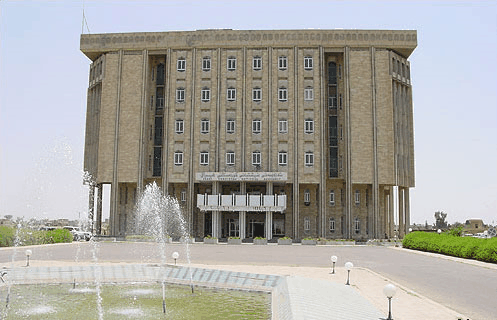
(Picture: Kurdistan Parliament Building (KRG))
Comments are closed.