


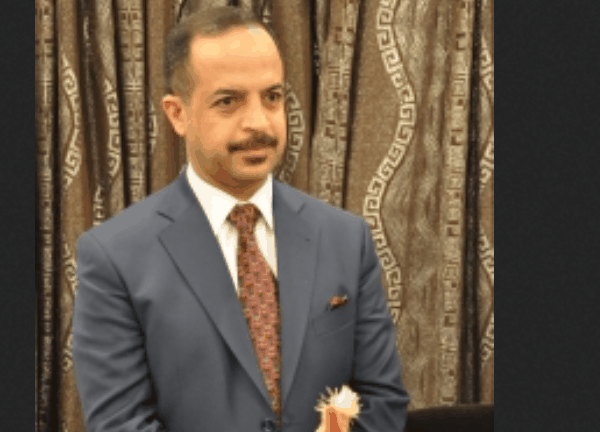
Ayad al-Korawi, a member of Diyala provincial council, warned that the literacy program in the province may face setbacks because of the inability to pay the lecturers’ salaries over the past four months. Lecturers in more than 300 literacy centers spread across the province's districts and areas have not been receiving their financial entitlements since December 2012.
Some 43,000 residents of Diyala are illiterate.
In a statement to Al-Monitor, Korawi said, “Keeping the situation as it is now will push numerous lecturers to stop working, hindering the implementation of the literacy program.”
Korawi called on the minister of education to “immediately intervene in order to come up with logical solutions to ensure the payment of delayed financial entitlements to the lecturers and to find a fixed mechanism for salary disbursement.”
But Minister of Education Mohammad Tamim resigned from his post last March, after having objected to the Iraqi army’s entry into the town of Hawija.
In this context, the UNESCO office in Iraq has opened a literacy network in the country.
International supervisors of the network said, “Most of the available statistics on the literacy rate are based on old data dating back to more than 10 years ago, since the last official census in Iraq was conducted in 1997.”
Iraqi society comprises a young population, as the proportion of persons under 15 years of age represents 42.9% of the total population.
The UNESCO office confirmed in a statement that “the surveys recently conducted offered a more recent idea about the status of combating illiteracy but not as comprehensive as the official census."
Comments are closed.