


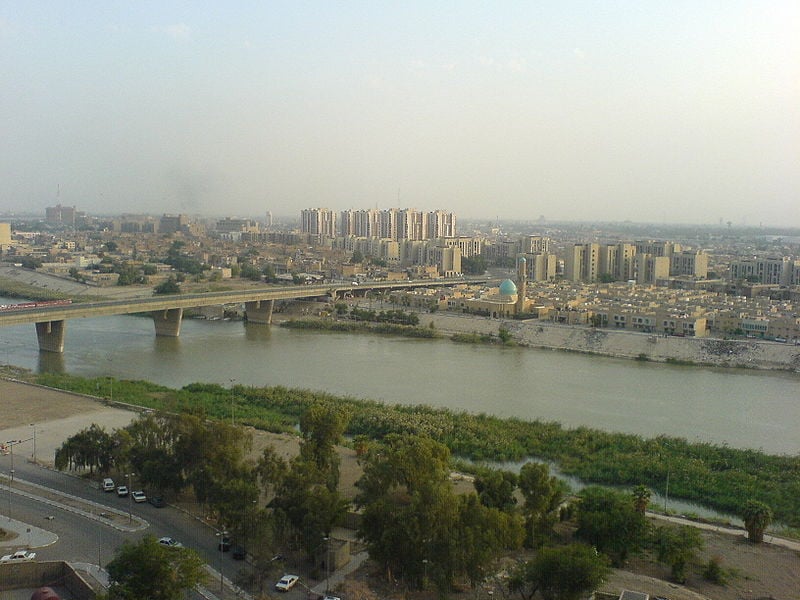
The Sunni Mutahidoun bloc was given the most prominent legislative position in the city — head of the provincial council — while the position of governor was allocated to the Sadrist movement, and Ammar al-Hakim’s party obtained the position of mayor of Baghdad. This represents a new step in understanding the nature of the conflict in Iraq and finding a way to resolve it.
The conviction that led to the formation of Baghdad’s government a few days ago was that the country needs all of its parties to share responsibility, and feel that they are an integral part of Iraq’s future. It is this conviction, not electoral calculations, which led to the recent agreements in Baghdad.
On the ground, the experience of the local government in Baghdad over the past years was not successful. The Iraqi capital hit rock bottom in the areas of security, services, infrastructure and investment projects. It is worth mentioning that Baghdad was classified in 2012 as the worst capital in the world, according to Mercer's Quality of Living index.
These terrifying results may be justified through comparison, in terms of the magnitude of the political and security conflict in the city. But no one imagined that several cities in Iraq, including, of course, the cities of the Kurdistan region, would surpass the capital in almost all categories.
Perhaps the new distribution of powers in the local government in Baghdad may be explained as a response to this fact, but the implications stretch much further.
The traditional Iraqi Shiite forces believe today more than ever that there is a clear imbalance in the Iraqi governing mechanisms and that this imbalance is what led to the ongoing security and political turmoil.
Comments are closed.