


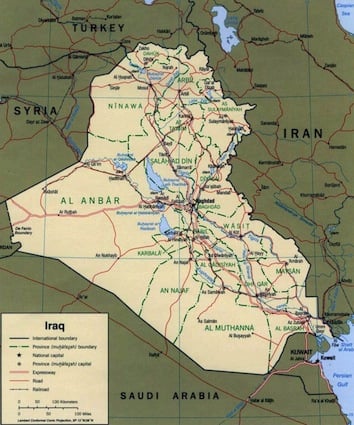
In other developments further south a suicide bomber tried to enter a Shi'ite mosque in Jbeila, north of Hilla, 100 km south of Baghdad. He failed to fully detonate his device, which succeeded in only blowing himself up, killing a policeman who had blocked his way. Another policeman was killed in an almost identical incident on Thursday.
Much of the weekend remained quiet however Sunday 21 July saw a shift towards Baghdad as at least 30 people were slain in a series of devastating car bombs that targeted mainly Shia business and commercial districts.
Most of the attacks struck in busy commercial areas where people had gathered to shop and socialise after breaking their daily fast for the Muslim holy month of Ramadan with the deadliest explosion taking place in the northern neighbourhood of Tobchi, where 10 people were killed when a car bomb exploded in a busy street filled with shoppers. Another car bomb exploded in a commercial street in the Karrada neighbourhood, killing at least four people. There were further blasts in Zaafaraniya, Muwasalat, al-Shurta and New Baghdad.
Also during the day in the town of Madaen, about 30 km southeast of Baghdad, a bomb planted in the garden of a Sunni government-backed "Sahwa" militia fighter killing five people in an attack that has all the hallmarks of the ISI. In line with previous reporting it is increasingly evident that there is a determined effort specifically by the ISI to erode the confidence and capability of the Sunni moderates with concentrated attacks against moderate elements and the government backed militias, whom have been instrumental in combating the influence and capability of Al Qaeda in the Sunni heartlands.
Comments are closed.