


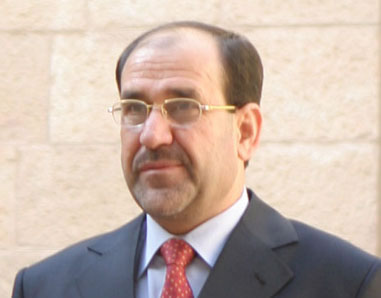
The really important point though is that according to the accountability and justice law, the decision on the head of the de-Baathification committee must be made by an absolute majority, i.e. 163 out of the 325 parliament members. We must assume the decision was made in this way, and that an absolute-majority opposition to Maliki is beginning to consolidate in the Iraqi parliament.
That is a threatening proposition even to a prime minister who has expertly sidelined the assembly in the past. Going forward to the parliamentary elections of 2014, he must especially be wary of the burgeoning coalition of Shiite Islamists (Sadrists and ISCI) and Sunnis/secularists (the Nujayfi bloc in particular) that reportedly pushed forward Shanshal’s approval.
Beyond the numbers, there is the strong symbolism of the personalities involved. Shanshal, of course, was sidelined by Maliki earlier this year after having attempted to remove Midhat Mahmud – the supreme court chief and a key Maliki ally in his efforts to keep the Iraqi parliament at an arm’s length. Now Shanshal is being reinstated, suggesting more criticism of Maliki’s regime of the deeper kind focusing on his relations with the judiciary could be coming up.
On a more humoristic note, the abnormally high attendance rates in the Iraqi parliament in July, in the middle of Ramadan, raise some questions about what is going on. Could it be related to superior provision of air condition at a time when most other Iraqis suffer in the 50 degrees Celsius heat? Surely, if the trend continues like this, the assembly might actually get things done, which would be a welcome change from the recent past in Iraqi politics.
Comments are closed.