


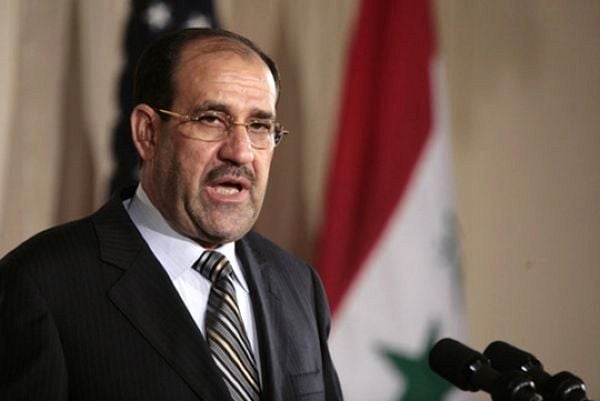
During the July 23 meeting, Maliki also asserted, “Reports about the end of the electricity crisis in Iraq and power exportation later this year are incorrect. I have MPs who do not assume their responsibilities.” He continued, “I personally signed a contract with GE to build power stations that supply the Iraqi system with 7,000 MW, and I signed a contract with Siemens to build power stations capable of generating 3,300 MW, an amount capable of meeting Iraq’s needs. But it turned out that there are defects and stupidity on the part of the specialist who agreed on those contracts. The contracted stations operate on gas, while Iraq has no gas.”
Musab al-Mudares, spokesman for the Ministry of Electricity, told Al-Monitor, “The ministry’s engineers are working hard to provide energy.” He refused, however, to comment on the prime minister's remarks regarding flawed contracts for the construction of power plants.
Meanwhile, Mudares said that the Oil and Energy Committee had concluded that the electricity crisis will not be resolved before 2015, and the 2013 production level will only satisfy 30% of Iraqis' actual needs.
Furat al-Shara, a Shiite member of the parliamentary Oil and Energy Committee, told Al-Monitor, “Iraq’s actual need for electric power amounts to 17,000 MW.” He added, “The total amount produced by Iraqi power stations does not exceed 7,200 MW, at best.” Shara also revealed that “not all the quantities that go out of the central generators reach Iraqi citizens, due to a great deal of leakage that results from poorly wired energy carriers.” In total, he said, only 5,500 MW of the electricity generated reaches Iraqi homes.
This decrease in distribution comes amid a harsh, hot summer. Near the entrance to the University of Technology in central Baghdad, the most prominent engineering institute in the country, a large thermometer records temperatures. It has been registering daily peaks of 51 degrees Celsius [123 Fahrenheit]. In cars equipped with air conditioners, the temperature inside does not go below 24 degrees '[75 degrees Fahrenheit].
RT @iraqbiznews: Iraq Suffers Power Crisis As Temperatures Soar: By Ali Abdel Sadah for Al-Monitor. Any opinio... http://t.co/Y4TvxRt5r4
#Iraq Suffers #Power Crisis As Temperatures Soar http://t.co/zGje5x3RdJ
RT @IraqDaily: #Iraq Suffers #Power Crisis As Temperatures Soar http://t.co/zGje5x3RdJ
[…] hold a lot of meaning for the future of Iraq. On average, residents of Baghdad can expect to have six hours of electricity each day. Climate change could result in increased water scarcity and […]