


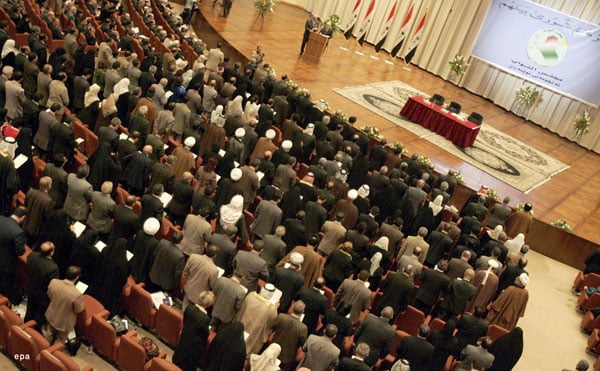
But just a few days ago, a list of potential Council members was sent to Parliament. However as soon as it was sighted by MPs, and reviewed by the various different political blocs, the objections began. Originally the Council members were supposed to be independent and well qualified civilians. But it seems that politicians believe the Council members should come from among their own number.
One source from inside Parliament, who preferred to remain anonymous, noted that the prospective Council was made up of members of major political parties and that they had been allotted seats using the unofficial quota system that is so often used in Iraqi politics to keep the peace and to maintain a balance between all the different, and often competing and conflicted, ethnic and religious factions. The candidates included five Shiite Muslims affiliated with al-Maliki's ruling coalition, two Iraqi Kurdish and two Sunni Muslims.
After the 2003 US-led invasion of Iraq, the quota system was used to put together an interim government. The religious and ethnic background of would-be politicians in the interim leadership was based on demographics. For instance, the last figures suggest that the majority of the country is Shiite Muslim – so Shiite Muslim politicians took up most of the chairs at that particular table. Although the quota system was never based in law, it has continued to be used in Iraqi politics today.
At a meeting of various leading members of the parliamentary blocs, held to discuss the prospective Council members, it was noted that the majority were allied to al-Maliki and also that the Council would be headed by someone from al-Maliki's party while the deputy would be an Iraqi Kurdish politician from the Patriotic Union of Kurdistan, or PUK. Meanwhile a senior representative of the opposition Iraqiya bloc, Salman al-Jumaili, apparently insisted that someone from his bloc occupy the top of the council. Which held things up even more.
Comments are closed.