


After the targeted attacks of last week that dealt severe blows against the Shia community we appear to have seen an uptick in Shia militant activity and a series of reprisals, an example being the killing of six people in a house in Yousufiya, south of Baghdad, where a Sunni family were preparing the body of a man for burial. By way of confirmation Iraqi sources confirmed that the Mahdi Army had begun to mobilise in greater numbers these past few months. An offshoot group, the Najaba’ group, which includes several battalions of Shiite fighters, issued a statement threatening to strike American interests and facilities in Iraq in the event of a military strike on Syria. They also spoek more specifically to their ability and desire to continue to resist the increased Sunni insurgent campaign in defence of the Shia community. Saaidi, a cleric who was part of the Mahdi army and who engaged US troops in Baghdad, Najaf and southern Iraq, said that he is sending fighters to Syria to protect the Sayyida Zeinab shrine but that he had also retained Shia fighters to combat the growing threat from Al Qaeda in the southern provinces.
Despite this increase in Shia militant activity against the Sunni threat, a dynamic which could become ever more toxic, it appears to have done little to dampen the capability and reach of the ISI and other Sunni groups, especially in the northern belts where the Shia community are less strong and oft the minority. The sheer intensity and reach, undoubtedly helped by the Syrian conflict and the recent jailbreak in Abu Ghraib, has all but overwhelmed the ISF and Shia groups, of whom the ISF are overstretched and the Shia groups more focused on the Syrian campaign and on defending key religious sites in Syria.
Despite the increased Shia militant activity Sunni insurgents pressed home their campaign on Wednesday with a series of typically well-coordinated car and suicide bomb attack on a Shi'ite mosque in the Iraqi capital, which killed at least 33 people on Wednesday evening. Worshippers were leaving the mosque after evening prayers when the car bomb exploded, and as onlookers rushed to help the wounded, a suicide bomber blew himself up in their midst. Policemen saw a second man fumbling to detonate an explosive belt and managed to stop him, but an angry mob overcame them and stabbed the would-be-suicide bomber to death. Further across the city a further 55 people were wounded, some critically, in separate blasts, which took place in the northwestern Kasra district of Baghdad.
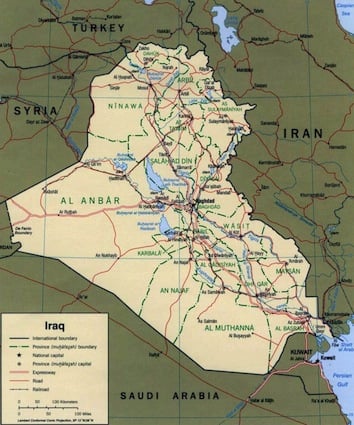
Whilst there remains a daily churn of violence across the country Baghdad for obvious reasons appears to be becoming the central focal point for the ISI campaign and we will continue to see heavy insurgent activity in the coming weeks and months. The city provides cover and a rich target list as well as proximity to resupply in the western desert. It is also the seat of power for the Shia majority. Aside from the KRG in the north one could argue that the fate of Iraq and whether it descends further into the abyss will be decided in Baghdad over these coming months. The recent posturing and threat of intervention on behalf of the Syrian Kurd nation by the KRG would appear to have quieted the Sunni insurgent threat in the north, which could explain why we have witnessed much more activity in and around Baghdad.
Weekly Security Update 04 – 11 September 2013 | Iraq Business News http://t.co/LVuKCpPz7c
#Iraq Weekly Security Update 04 – 11 September 2013 http://t.co/chrSaMOm2E